
RYK Antibodies
Background
RYK gene encodes a transmembrane protein belonging to the receptor tyrosine kinase family, which plays a key role in central nervous system development, tissue homeostasis and cell signal transduction. This protein, as an atypical receptor of the Wnt signaling pathway, participates in embryonic morphogenesis and organ formation by regulating cell proliferation, differentiation and axon orientation processes. Since its first identification in 1992, RYK has attracted much attention due to its unique kinase domain inactivation characteristics. The feature of its extracellular segment being rich in leucine-rich repeat sequences provides an important model for studying the mechanism of receptor isomerization. Mutations in this gene have been confirmed to be associated with various neurodevelopmental abnormalities and cancer pathologies, and its unique signal transduction pattern continues to provide new perspectives for targeted therapy research.
Structure of RYK
RYK is a receptor tyrosine kinase with a molecular weight of approximately 90 kDa. The specific value may vary slightly among different species and transcript isomers. This gene has a highly conserved domain composition in a variety of mammals.
| Species | Human | Mouse | Rat | Bovine | Zebrafish |
| Molecular Weight (kDa) | 90 | 89.5 | 89.8 | 90.2 | 88.6 |
| Primary Structural Differences | Containing the Wnt binding domain, the kinase domain is inactivated | Similar to inactivated kinase domains | Extracellular leucine repeat sequence | Highly conserved intracellular segments | Retain the key signal peptides |
The RYK protein is composed of approximately 600 amino acids, and its primary structure includes a typical extracellular leucine-enriched repeat region, a transmembrane segment, and an inactivated intracellular kinase domain. The secondary structure of this protein is mainly composed of α -helices and β -folds, which together form an extracellular region that can bind to Wnt ligands. The Fri domain near the membrane side and the intracellular segment conserved DDL motif are crucial for their participation in non-classical Wnt signal transduction. These characteristic structures jointly regulate their functions in axon orientation and tissue development.
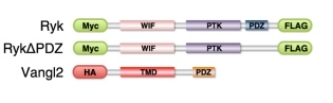 Fig. 1 Construct designs of Ryk-FLAG and RykΔPDZ-FLAG for Co-IP.1
Key structural properties of RYK:
- Extracellular leucine-rich repeat sequences (LRR) and Wnt binding domains
- Inactivated intracellular kinase domains
- Conservative Fri domains and intracellular DDL motifs
Functions of RYK
The main function of the RYK gene is to act as an atypical receptor tyrosine kinase in regulating the Wnt signaling pathway. However, it also extensively involves a variety of key developmental and cellular processes.
| Function | Description |
| Wnt signal transmission | As a receptor for Wnt proteins (such as Wnt5a), it activates non-classical Wnt signaling pathways and regulates cell polarization and migration. |
| Nerve axon guidance | The search for the path that guides axon growth cones in the development of the nervous system is crucial for the formation of neural connections in the brain. |
| Bone development | Involved in regulation of osteoblast and differentiation and function of cartilage cells, affect the skeletal growth and morphogenesis. |
| Cell fate determination | By regulating symmetrical and asymmetrical cell division, it affects the maintenance and differentiation of stem cells as well as tissue homeostasis. |
| Tumorigenesis and inhibition | In different cancer plays a dual role, as well as act as cancer gene promote cell, also can be used as a tumor suppressor genes play a role. |
Due to the inactivation of its kinase domain, RYK needs to rely on other kinases (such as the Src family) for trans-phosphorylation to transmit downstream signals. This unique mechanism distinguishes it from other typical receptor tyrosine kinases.
Applications of RYK and RYK Antibody in Literature
1. Gonzalez, Ricardo D., et al. "MKX-AS1 Gene Expression Associated with Variation in Drug Response to Oxaliplatin and Clinical Outcomes in Colorectal Cancer Patients." Pharmaceuticals 16.5 (2023): 757. https://doi.org/10.3390/ph16050726
The article indicates that based on GWAS findings, single nucleotide polymorphisms of the RYK gene are associated with temozolomide responses. Studies have shown that the expression level of RYK has predictive value for the survival of patients with IDH mutant glioma, and in IDH wild-type glioblastoma, the combination of RYK expression and MGMT status can serve as a potential biomarker.
2. Shen, Zhe, et al. "Astrocytic Ryk signaling coordinates scarring and wound healing after spinal cord injury." Proceedings of the National Academy of Sciences 122.15 (2025): e2417400122. https://doi.org/10.1073/pnas.2417400122
The article indicates that in spinal cord injury, Ryk is upregulated in astrocytes. By inhibiting NrCAM, it hinders their morphological changes, regulates injury responses and intercellular signal transduction, and is a potential therapeutic target for promoting wound healing and functional recovery.
3. Jeong, Seon-Yeong, et al. "Ryk modulates the niche activity of mesenchymal stromal cells by fine-tuning canonical Wnt signaling." Experimental & Molecular Medicine 52.7 (2020): 1140-1151. https://doi.org/10.1038/s12276-020-0477-y
Research has found that Ryk bidirectionally regulates the Wnt signaling intensity in bone marrow stromal cells through its intracellular pseudokinase domain: it enhances the supportive activity of hematopoietic progenitor cells at low concentrations and inhibits signal transduction at high concentrations, thereby precisely regulating the function of the hematopoietic microenvironment.
4. Vaivads, Mārtiņš, Ilze Akota, and Māra Pilmane. "PAX7, PAX9 and RYK expression in cleft affected tissue." Medicina 57.10 (2021): 1075. https://doi.org/10.3390/medicina57101075
Research has found that RYK is significantly correlated with the transcription factors PAX7/PAX9 in non-syndromic cleft lip and palate tissues. The number of immune-positive cells varies significantly between various CLEFT tissues and the control group, suggesting that RYK may be widely involved in the morphogenesis process of different types of facial cleft.
5. Adamo, Assunta, et al. "RYK promotes the stemness of glioblastoma cells via the WNT/β-catenin pathway." Oncotarget 8.8 (2017): 13476. https://doi.org/10.18632/oncotarget.14564
Studies have found that RYK is highly expressed in glioblastoma (GBM) and tumor stem cells. By activating the Wnt/β-catenin pathway and the pluripotent transcriptional network, it significantly enhances the stemness, self-renewal and tumorigenicity of tumors. Knocking down RYK inhibits this phenotype, indicating that it is a potential therapeutic target.
Creative Biolabs: RYK Antibodies for Research
Creative Biolabs specializes in the production of high-quality RYK antibodies for research and industrial applications. Our portfolio includes monoclonal antibodies tailored for ELISA, Flow Cytometry, Western blot, immunohistochemistry, and other diagnostic methodologies.
- Custom RYK Antibody Development: Tailor-made solutions to meet specific research requirements.
- Bulk Production: Large-scale antibody manufacturing for industry partners.
- Technical Support: Expert consultation for protocol optimization and troubleshooting.
- Aliquoting Services: Conveniently sized aliquots for long-term storage and consistent experimental outcomes.
For more details on our RYK antibodies, custom preparations, or technical support, contact us at email.
Reference
- Duan,, Yarong Gao, and Yaobo Liu. "Ryk regulates Wnt5a repulsion of mouse corticospinal tract through modulating planar cell polarity signaling." Cell discovery 3.1 (2017): 1-22. https://doi.org/10.1038/celldisc.2017.15
Anti-RYK antibodies
 Loading...
 Compare




Hot products 
-
Mouse Anti-ADIPOR2 Recombinant Antibody (V2-179983) (CBMAB-A1369-YC)

-
Mouse Anti-BACE1 Recombinant Antibody (CBLNB-121) (CBMAB-1180-CN)

-
Mouse Anti-2C TCR Recombinant Antibody (V2-1556) (CBMAB-0951-LY)

-
Rabbit Anti-DLK1 Recombinant Antibody (9D8) (CBMAB-D1061-YC)

-
Mouse Anti-CD83 Recombinant Antibody (HB15) (CBMAB-C1765-CQ)

-
Mouse Anti-CALR Recombinant Antibody (CBFYC-0763) (CBMAB-C0818-FY)

-
Mouse Anti-BIRC7 Recombinant Antibody (88C570) (CBMAB-L0261-YJ)

-
Mouse Anti-dsDNA Recombinant Antibody (22) (CBMAB-AP1954LY)

-
Mouse Anti-8-oxoguanine Recombinant Antibody (V2-7697) (CBMAB-1869CQ)

-
Mouse Anti-FOXA3 Recombinant Antibody (2A9) (CBMAB-0377-YC)

-
Human Anti-SARS-CoV-2 Spike Recombinant Antibody (CBC05) (CBMAB-CR005LY)

-
Mouse Anti-BCL2L1 Recombinant Antibody (H5) (CBMAB-1025CQ)

-
Mouse Anti-BMI1 Recombinant Antibody (CBYC-P026) (CBMAB-P0108-YC)

-
Mouse Anti-ARID3A Antibody (A4) (CBMAB-0128-YC)

-
Mouse Anti-FYN Recombinant Antibody (10) (CBMAB-S6332-CQ)

-
Mouse Anti-GPR34 Recombinant Antibody (CBFYH-0457) (CBMAB-H1331-FY)

-
Mouse Anti-ALPL Antibody (B4-78) (CBMAB-1009CQ)

-
Mouse Anti-ADGRE2 Recombinant Antibody (V2-261270) (CBMAB-C0813-LY)

-
Mouse Anti-COL12A1 Recombinant Antibody (CBYY-C3117) (CBMAB-C4560-YY)

-
Mouse Anti-COL1A2 Recombinant Antibody (CF108) (V2LY-1206-LY626)

- AActivation
- AGAgonist
- APApoptosis
- BBlocking
- BABioassay
- BIBioimaging
- CImmunohistochemistry-Frozen Sections
- CIChromatin Immunoprecipitation
- CTCytotoxicity
- CSCostimulation
- DDepletion
- DBDot Blot
- EELISA
- ECELISA(Cap)
- EDELISA(Det)
- ESELISpot
- EMElectron Microscopy
- FFlow Cytometry
- FNFunction Assay
- GSGel Supershift
- IInhibition
- IAEnzyme Immunoassay
- ICImmunocytochemistry
- IDImmunodiffusion
- IEImmunoelectrophoresis
- IFImmunofluorescence
- IGImmunochromatography
- IHImmunohistochemistry
- IMImmunomicroscopy
- IOImmunoassay
- IPImmunoprecipitation
- ISIntracellular Staining for Flow Cytometry
- LALuminex Assay
- LFLateral Flow Immunoassay
- MMicroarray
- MCMass Cytometry/CyTOF
- MDMeDIP
- MSElectrophoretic Mobility Shift Assay
- NNeutralization
- PImmunohistologyp-Paraffin Sections
- PAPeptide Array
- PEPeptide ELISA
- PLProximity Ligation Assay
- RRadioimmunoassay
- SStimulation
- SESandwich ELISA
- SHIn situ hybridization
- TCTissue Culture
- WBWestern Blot
