
CCL11 Antibodies
Background
CCL11 is a small molecule secreted protein belonging to the chemokine family. It is mainly expressed in various immune cells, endothelial cells, and fibroblasts. This protein can recruit and activate eosinophils, basophils, and mast cells by binding to the chemokine receptor CCR3. Thus, it plays a crucial role in allergic reactions and immune regulation. In particular, in the pathogenesis of allergic diseases such as asthma, allergic rhinitis, and atopic dermatitis, the immune cell aggregation mediated by CCL11 is considered an important link in the disease progression. In 1994, multiple research teams independently identified CCL11 almost simultaneously and confirmed its chemotactic activity in allergic disease models. Due to its close association with allergic reactions, CCL11 has become one of the important targets for drug development in allergic diseases, providing a crucial scientific basis for understanding the mechanism of immune cell migration and developing new anti-allergic therapies.
Structure of CCL11
CCL11 is a small molecule secreted protein with a molecular weight of approximately 8-10 kDa. Due to differences in amino acid sequences among different species, the molecular weight may vary slightly. Human CCL11 consists of 97 amino acids and its three-dimensional structure contains typical chemokine folding characteristics, consisting of three β-sheet segments and a C-terminal α-helix. The positively charged regions on the surface of the protein structure are closely related to the binding with the receptor CCR3. Two pairs of highly conserved disulfide bonds (Cys34-Cys50, Cys11-Cys36) within the protein are crucial for maintaining its spatial conformation and biological activity. Similar to many chemokines, CCL11 often exists in a dimeric form in solution, and this oligomeric state may be involved in regulating its chemotactic activity in the body.
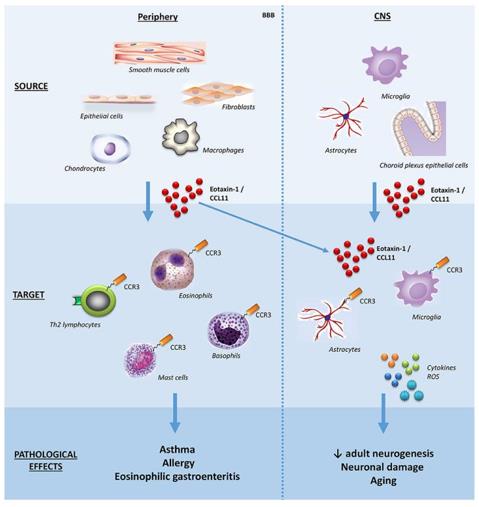 Fig. 1 Schematic effects of eotaxin-1/CCL11 in adult subjects.1
Key structural properties of CCL11:
- Typical chemokine folding conformation
- Three β-sheet strands and a C-terminal α-helix
- Two pairs of conserved disulfide bonds stabilizing the spatial structure
- The surface positive charge region mediates the binding to the CCR3 receptor
Functions of CCL11
The core function of CCL11 is to attract and activate specific immune cells. Additionally, it is involved in various physiological and pathological processes, including allergic reactions, tissue inflammation, and immune regulation.
| Function | Description |
| Eosinophil chemotaxis | CCL11 specifically attracts eosinophils to the inflammatory site by binding to the CCR3 receptor. |
| Immune cell activation | In addition to the chemotactic effect, it can also activate eosinophils, promoting their degranulation and release of inflammatory mediators. |
| Mediation of allergic reactions | When in allergic asthma, rhinitis, and atopic dermatitis and other diseases, the level of CCL11 increases, driving eosinophil infiltration. |
| Participation in tissue remodeling | By recruiting immune cells, it indirectly participates in airway remodeling and fibrosis processes. |
| Vascularization regulation | Studies have shown that CCL11 may have certain effects on vascular endothelial cells and participate in pathological angiogenesis. |
The expression of CCL11 is significantly upregulated under allergen stimulation or induction by Th2-type cytokines (such as IL-4, IL-13), and its key role in allergic diseases makes it an important target for therapeutic intervention.
Applications of CCL11 and CCL11 Antibody in Literature
1. Teixeira, Antonio L., et al. "Revisiting the role of eotaxin-1/CCL11 in psychiatric disorders." Frontiers in psychiatry 9 (2018): 241. https://doi.org/10.3389/fpsyt.2018.00241
The article indicates that Eotaxin-1/CCL11 not only participates in the type 2 immune response during allergic reactions, but also affects neurogenesis and microglia. Its levels are elevated in mental disorders (such as schizophrenia) and neurodegenerative diseases, and are associated with cognitive impairment, suggesting that it may mediate the "accelerated aging" mechanism, or become a prognostic marker and therapeutic target.
2. Zhang, Tanwei, et al. "CCL11 (Eotaxin) Promotes the Advancement of Aging-Related Cardiovascular Diseases." Reviews in Cardiovascular Medicine 26.2 (2025): 26020. https://doi.org/10.31083/RCM26020
The article indicates that CCL11, as an inflammatory factor, is closely related to aging and cardiovascular diseases, etc. The inflammatory aging clock confirms that its level can predict the risk of related diseases. Its role is clear in neurodegenerative diseases, but the mechanism in cardiovascular diseases remains to be elucidated.
3. Zhang, Min, et al. "CCL11/CCR3-dependent eosinophilia alleviates malignant pleural effusions and improves prognosis." NPJ Precision Oncology 8.1 (2024): 138. https://doi.org/10.1038/s41698-024-00608-8
Eosinophilia in malignant pleural effusion (MPE) indicates a better prognosis. Studies have shown that eosinophils migrate to the pleural cavity through the CCL11/CCR3 axis, improving the microenvironment and exerting anti-tumor effects, thereby inhibiting the progression of MPE. Adoptive transfer or expansion of these cells has therapeutic potential.
4. Wakabayashi, Kuninobu, et al. "Eotaxin-1/CCL11 is involved in cell migration in rheumatoid arthritis." Scientific Reports 11.1 (2021): 7937. https://doi.org/10.1038/s41598-021-87199-7
Studies have shown that in rheumatoid arthritis, TNF-α can induce high expression of CCL11 in synovial fibroblasts. This CCL11, through the CCR3 receptor, promotes the migration of both the cells themselves and monocytes, forming a self-amplifying loop. Blocking this axis can reduce cell migration, suggesting that it is a potential therapeutic target.
5. Bhattacharyya, Sohinee, et al. "Autotaxin–lysolipid signaling suppresses a CCL11–eosinophil axis to promote pancreatic cancer progression." Nature Cancer 5.2 (2024): 283-298. https://doi.org/10.1038/s43018-023-00703-y
Studies have shown that in pancreatic ductal carcinoma, the autocrine motility factor inhibits the transcription factor c-Jun through the LPA signaling pathway, thereby reducing the expression of CCL11 and preventing eosinophils from infiltrating the tumor. Inhibiting this pathway can recruit eosinophils, promote cancer cell apoptosis, and prolong the survival of patients.
Creative Biolabs: CCL11 Antibodies for Research
Creative Biolabs specializes in the production of high-quality CCL11 antibodies for research and industrial applications. Our portfolio includes monoclonal and polyclonal antibodies tailored for ELISA, Flow Cytometry, Western blot, immunohistochemistry, and other diagnostic methodologies.
- Custom CCL11 Antibody Development: Tailor-made solutions to meet specific research requirements.
- Bulk Production: Large-scale antibody manufacturing for industry partners.
- Technical Support: Expert consultation for protocol optimization and troubleshooting.
- Aliquoting Services: Conveniently sized aliquots for long-term storage and consistent experimental outcomes.
For more details on our CCL11 antibodies, custom preparations, or technical support, contact us at email.
Reference
- Teixeira, Antonio L., et al. "Revisiting the role of eotaxin-1/CCL11 in psychiatric disorders." Frontiers in psychiatry 9 (2018): 241. Distributed under Open Access license CC BY 4.0, without modification.https://doi.org/10.3389/fpsyt.2018.00241
Anti-CCL11 antibodies
 Loading...
 Compare




Hot products 
-
Mouse Anti-CCL18 Recombinant Antibody (64507) (CBMAB-C7910-LY)

-
Mouse Anti-F11R Recombinant Antibody (402) (CBMAB-0026-WJ)

-
Mouse Anti-AKT1 (Phosphorylated S473) Recombinant Antibody (V2-505430) (PTM-CBMAB-0067LY)

-
Rabbit Anti-ALOX5AP Recombinant Antibody (CBXF-1219) (CBMAB-F0750-CQ)

-
Rabbit Anti-AKT2 (Phosphorylated S474) Recombinant Antibody (V2-556130) (PTM-CBMAB-0605LY)

-
Mouse Anti-ABCA3 Recombinant Antibody (V2-178911) (CBMAB-A0145-YC)

-
Rat Anti-C5AR1 Recombinant Antibody (8D6) (CBMAB-C9139-LY)

-
Mouse Anti-GDF5 Recombinant Antibody (1F4) (CBMAB-G2740-LY)

-
Mouse Anti-ABIN2 Recombinant Antibody (V2-179106) (CBMAB-A0349-YC)

-
Mouse Anti-GGT1 Recombinant Antibody (1F9) (CBMAB-G3273-LY)

-
Mouse Anti-AMH Recombinant Antibody (5/6) (CBMAB-A2527-YC)

-
Mouse Anti-CHRNA9 Recombinant Antibody (8E4) (CBMAB-C9161-LY)

-
Mouse Anti-AOC3 Recombinant Antibody (CBYY-0014) (CBMAB-0014-YY)

-
Mouse Anti-CD33 Recombinant Antibody (P67.6) (CBMAB-C10189-LY)

-
Mouse Anti-H1-0 Recombinant Antibody (CBFYH-0565) (CBMAB-H1451-FY)

-
Mouse Anti-AZGP1 Recombinant Antibody (CBWJZ-007) (CBMAB-Z0012-WJ)

-
Mouse Anti-BSN Recombinant Antibody (219E1) (CBMAB-1228-CN)

-
Mouse Anti-ATM Recombinant Antibody (2C1) (CBMAB-A3970-YC)

-
Mouse Anti-HTLV-1 gp46 Recombinant Antibody (CBMW-H1006) (CBMAB-V208-1154-FY)

-
Mouse Anti-CD24 Recombinant Antibody (2Q1282) (CBMAB-C1624-CN)

- AActivation
- AGAgonist
- APApoptosis
- BBlocking
- BABioassay
- BIBioimaging
- CImmunohistochemistry-Frozen Sections
- CIChromatin Immunoprecipitation
- CTCytotoxicity
- CSCostimulation
- DDepletion
- DBDot Blot
- EELISA
- ECELISA(Cap)
- EDELISA(Det)
- ESELISpot
- EMElectron Microscopy
- FFlow Cytometry
- FNFunction Assay
- GSGel Supershift
- IInhibition
- IAEnzyme Immunoassay
- ICImmunocytochemistry
- IDImmunodiffusion
- IEImmunoelectrophoresis
- IFImmunofluorescence
- IGImmunochromatography
- IHImmunohistochemistry
- IMImmunomicroscopy
- IOImmunoassay
- IPImmunoprecipitation
- ISIntracellular Staining for Flow Cytometry
- LALuminex Assay
- LFLateral Flow Immunoassay
- MMicroarray
- MCMass Cytometry/CyTOF
- MDMeDIP
- MSElectrophoretic Mobility Shift Assay
- NNeutralization
- PImmunohistologyp-Paraffin Sections
- PAPeptide Array
- PEPeptide ELISA
- PLProximity Ligation Assay
- RRadioimmunoassay
- SStimulation
- SESandwich ELISA
- SHIn situ hybridization
- TCTissue Culture
- WBWestern Blot
