
CTBS Antibodies
Background
Cathepsin B encoded by the CTBS gene is a cysteine protease widely distributed in lysosomes, mainly involved in the metabolic degradation of intracellular proteins and antigen presentation processes. This enzyme decomposes intracellular senescent proteins and foreign antigens by hydrolyzing peptide bonds, and can also activate certain bioactive molecules, playing a key role in maintaining cellular homeostasis and immune regulation. Research has found that abnormal expression of the CTBS gene is closely related to tumor metastasis, inflammatory diseases and neurodegenerative diseases. This gene was first discovered in the 1980s through protein purification technology. Its crystal structure was analyzed by X-ray diffraction in the 1990s, providing an important template for revealing the catalytic mechanism and substrate specificity of the cysteine protease family, and greatly promoting the research on targeted therapy for diseases related to lysosomal dysfunction.
Structure of CTBS
Cathepsin B encoded by the CTBS gene is a double-stranded protease with a molecular weight of approximately 37-38 kDa. Its precursor protein, after enzymatic digestion processing, forms a mature structure containing both heavy and light chains. This enzyme belongs to the papain family, and its active center is composed of a catalytic triad of Cys29, His199 and Asn219. The following table shows the molecular characteristics of CTBS among different species:
| Species | Human | Mouse | Bovine | Rat | Chicken |
| Molecular Weight (kDa) | 37.2 | 37.1 | 37.3 | 37.0 | 36.8 |
| Primary Structural Differences | Contains the propeptide inhibitory domain and the oc-loop structure | Differences in propeptide sequences | Substrate-binding pocket variation | Completely conservative catalytic residues | The glycation sites are different |
The mature form of this protein is composed of 251 amino acids, and its three-dimensional structure presents a typical double-leafed folding pattern: the N-terminal domain mainly undertakes substrate recognition function, while the C-terminal domain performs catalytic hydrolysis through highly conserved cysteine residues. The unique "oc-loop" region around the active site can undergo conformational changes when binding to substrates. This structural characteristic enables it to not only degrade intracellular proteins but also participate in the remodeling process of the extracellular matrix.
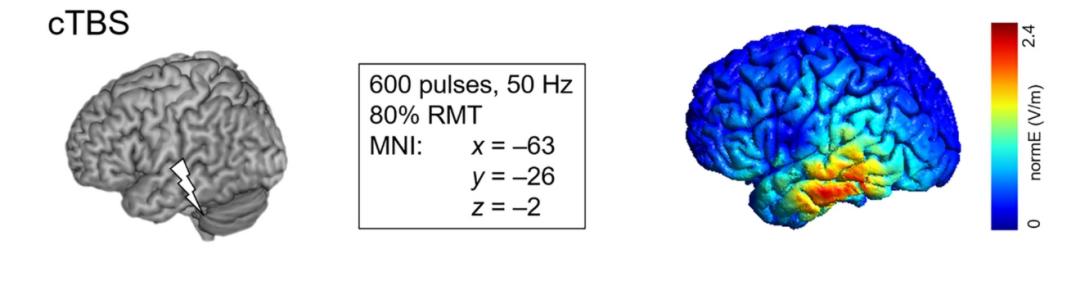 Fig. 1 Target Site and Simulated Electric Field of cTBS.1
Key structural properties of CTBS:
- Double-domain papain folding configuration
- Highly conserved cysteine-histidine-asparagine catalytic triad
- Conformational convertible oc-loop loop structure region
Functions of CTBS
Cathepsin B encoded by the CTBS gene mainly undertakes the function of intracellular protein degradation and is also involved in a variety of pathophysiological processes:
| Function | Description |
| Protein degradation | Hydrolyze peptide bonds in the acidic environment of lysosomes, decompose endocytic proteins and damaged organelles. |
| Antigen presentation | Protein antigens are cleaved into short peptides for presentation by MHC Class II molecules to activate immune responses. |
| Regulation of apoptosis | By cleaving Bid and other apoptosis-related proteins, it participates in the activation of mitochondrial apoptosis pathway. |
| Organizational Reshaping | The degradation of extracellular matrix at the front of tumor invasion promotes cancer cell migration and invasion. |
| Inflammatory regulation | Cut the precursors of inflammatory factors and regulate the maturation and release of pro-inflammatory factors such as IL-1β. |
The catalytic efficiency of this enzyme peaks at pH4.5-5.5, and its activity is strictly regulated by the endogenous inhibitor stefin A/B. This narrow pH activity range and multiple regulatory mechanisms enable it to not only effectively perform lysosomal clearance tasks but also avoid abnormal activation in the cytoplasm that leads to cell damage.
Applications of CTBS and CTBS Antibody in Literature
1. Or, Justin KN, and Dorita HF Chang. "cTBS over ventral cortex enhances depth perception." Frontiers in Neuroscience 18 (2024): 1499030. https://doi.org/10.3389/fnins.2024.1499030
This study explored the influence of continuous theta pulse stimulation (cTBS) on stereoscopic vision. It was found that stimulating the lateral occipital complex area (LOC) could significantly improve depth perception ability, while stimulating the occipital cortex and control area had no such effect. This indicates that LOC is a key brain region for regulating the plasticity of stereoscopic vision, and cTBS may enhance the ability to process depth information by suppressing neural noise.
2. Harvey, Denise Y., et al. "Variability in cTBS aftereffects attributed to the interaction of stimulus intensity with BDNF Val66Met polymorphism." Frontiers in Human Neuroscience 15 (2021): 585533. https://doi.org/10.3389/fnhum.2021.585533
This study explores how the Val66Met polymorphism of the BDNF gene affects the therapeutic effect of cTBS. It was found that individuals carrying the Met allele are particularly sensitive to stimulus intensity. Higher intensity can trigger abnormal excitability enhancement effects, which explains some individual differences in cTBS responses and provides a basis for clinical personalized applications.
3. Abuleil, Dania, Daphne McCulloch, and Benjamin Thompson. "Visual cortex cTBS increases mixed percept duration while a-tDCS has no effect on binocular rivalry." PLoS One 16.2 (2021): e0239349. https://doi.org/10.1371/journal.pone.0239349
In this study, through binocular competition tasks, it was found that cTBS in the visual cortex unexpectedly prolonged the duration of mixed perception, which is contrary to its usual inhibitory effect on GABA. This result indicates that there may be differences in the neurochemical mechanisms of cTBS in the visual cortex and motor cortex.
4. Opitz, Alexander, et al. "Is sham cTBS real cTBS? The effect on EEG dynamics." Frontiers in Human Neuroscience 8 (2015): 1043. https://doi.org/10.3389/fnhum.2014.01043
This study explored the influence of cTBS on neural circuits. It was found that even pseudo-stimulus cTBS with an intensity of only 5% of the real stimulus could alter local and cross-brain region neural activities, such as down-regulating the prefrontal lobe evoked potential and enhancing the phase coupling of the α-β band in the prefrontal and parietal lobes. This indicates that weak electric fields can also regulate neural functions.
5. López-Caballero, Fran, et al. "Effects of cTBS on the frequency-following response and other auditory evoked potentials." Frontiers in Human Neuroscience 14 (2020): 250. https://doi.org/10.3389/fnhum.2020.00250
This study utilized cTBS to inhibit the primary auditory cortex and explored its impact on the frequency-following response. The results showed that cTBS did not significantly alter the FFR induced by high and low frequency sounds, and had no obvious effect on cortical potential and brainstem response either, indicating that cTBS targeting this specific brain region might not be sufficient to modulate auditory evoked potentials.
Creative Biolabs: CTBS Antibodies for Research
Creative Biolabs specializes in the production of high-quality CTBS antibodies for research and industrial applications. Our portfolio includes monoclonal antibodies tailored for ELISA, Flow Cytometry, Western blot, immunohistochemistry, and other diagnostic methodologies.
- Custom CTBS Antibody Development: Tailor-made solutions to meet specific research requirements.
- Bulk Production: Large-scale antibody manufacturing for industry partners.
- Technical Support: Expert consultation for protocol optimization and troubleshooting.
- Aliquoting Services: Conveniently sized aliquots for long-term storage and consistent experimental outcomes.
For more details on our CTBS antibodies, custom preparations, or technical support, contact us at email.
Reference
- Klaus, Jana, Dennis JLG Schutter, and Vitória Piai. "Transient perturbation of the left temporal cortex evokes plasticity‐related reconfiguration of the lexical network." Human Brain Mapping 41.4 (2020): 1061-1071. https://doi.org/10.1002/hbm.24860
Anti-CTBS antibodies
 Loading...
 Compare




Hot products 
- AActivation
- AGAgonist
- APApoptosis
- BBlocking
- BABioassay
- BIBioimaging
- CImmunohistochemistry-Frozen Sections
- CIChromatin Immunoprecipitation
- CTCytotoxicity
- CSCostimulation
- DDepletion
- DBDot Blot
- EELISA
- ECELISA(Cap)
- EDELISA(Det)
- ESELISpot
- EMElectron Microscopy
- FFlow Cytometry
- FNFunction Assay
- GSGel Supershift
- IInhibition
- IAEnzyme Immunoassay
- ICImmunocytochemistry
- IDImmunodiffusion
- IEImmunoelectrophoresis
- IFImmunofluorescence
- IGImmunochromatography
- IHImmunohistochemistry
- IMImmunomicroscopy
- IOImmunoassay
- IPImmunoprecipitation
- ISIntracellular Staining for Flow Cytometry
- LALuminex Assay
- LFLateral Flow Immunoassay
- MMicroarray
- MCMass Cytometry/CyTOF
- MDMeDIP
- MSElectrophoretic Mobility Shift Assay
- NNeutralization
- PImmunohistologyp-Paraffin Sections
- PAPeptide Array
- PEPeptide ELISA
- PLProximity Ligation Assay
- RRadioimmunoassay
- SStimulation
- SESandwich ELISA
- SHIn situ hybridization
- TCTissue Culture
- WBWestern Blot
