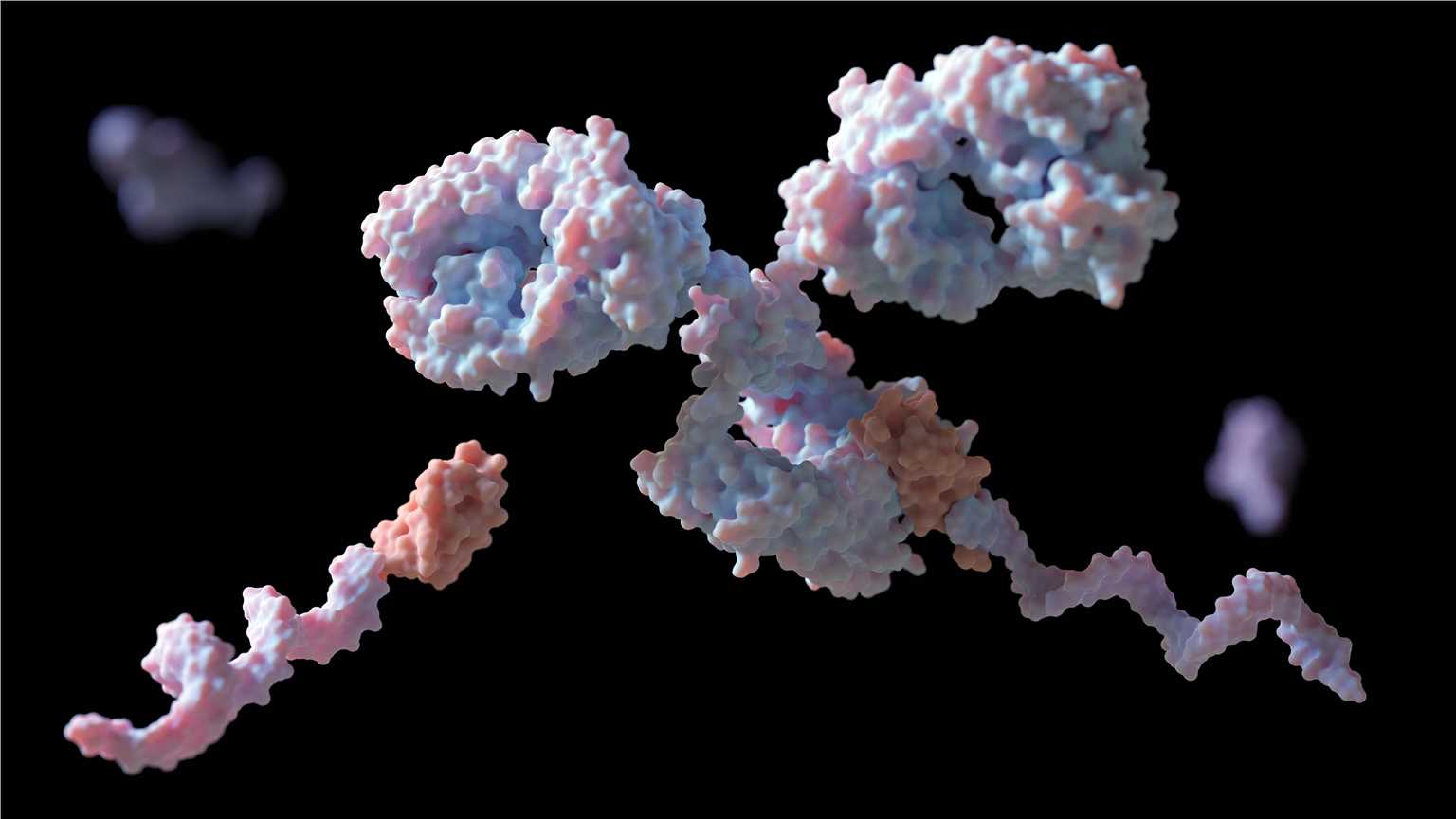
High-quality antibody conjugation is a foundational requirement for robust, reproducible immunoassay performance. Leveraging decades of bioconjugation expertise and structural biology insights, Creative Biolabs provides scalable, highly stable, and batch-to-batch consistent antibody labeling solutions. From pilot studies utilizing sub-milligram quantities to large-scale research applications requiring gram-scale production, our bioconjugation team ensures optimal dye-to-protein (F/P) ratios while meticulously preserving native antigen-binding affinity.
Tailored Antibody Conjugation and Labeling Solutions
Creative Biolabs deploys advanced conjugation chemistries to support a vast array of downstream applications. We offer customized attachment strategies (including amine-directed, sulfhydryl-directed, carbohydrate-targeted chemistries, etc.) across multiple label categories:
Enzymatic Labeling
We perform covalent cross-linking of antibodies to highly active reporting enzymes, primarily Horseradish Peroxidase (HRP), Alkaline Phosphatase (AP), and Glucose Oxidase. Our protocols utilize optimized heterobifunctional crosslinkers to minimize unspecific polymerization and steric hindrance.
Fluorescent Dye Conjugation
Our platform spans the full visible and near-infrared (NIR) spectrum. Services encompass conjugation with classical fluorophores (fluorescein, rhodamine derivatives), high-quantum-yield cyanine-based dyes, and intensely fluorescent phycobiliproteins (such as R-PE and APC). We also synthesize precision tandem dye conjugates for complex, multiparametric spectral separation.
Biotinylation and Streptavidin Conjugation
We provide high-efficiency biotinylation services featuring custom spacer arm lengths (e.g., PEGylated linkers). Extended spacer arms significantly enhance aqueous solubility and reduce steric shielding, ensuring maximum streptavidin binding in complex amplification cascades.
Oligonucleotide-Antibody Conjugation
Advanced, site-specific attachment of single-stranded DNA oligonucleotides to target antibodies. This specialized service supports cutting-edge Immuno-PCR (iPCR) architectures and spatially resolved multiplexed tissue imaging technologies.
Nanoparticle and Colloidal Labeling
Precision conjugation of immunoglobulins to colloidal gold (available in tightly controlled nanometer ranges), magnetic nanobeads, europium chelates, and quantum dots. These specific formulations are essential for high-contrast lateral flow assays and highly sensitive time-resolved fluorescence immunoassays (TRFIA).
Why Choose Creative Biolabs for Your Conjugation and Labeling Needs
Exceptional Batch-to-Batch Reproducibility
For longitudinal studies and rigorous assay development, consistency is paramount. We employ highly standardized conjugation protocols and proprietary stabilization matrices. Combined with our strict lot-to-lot bioanalytical matching, we guarantee minimal variance in conjugation efficiency and functional performance across production runs, ensuring your assays remain robust and reliable over time.
Optimized Degree of Labeling (DOL)
Empirical determination and tight control of the optimal molar ratio of label to antibody. This maximizes the signal-to-noise ratio and fluorescence intensity without inducing target masking, precipitation, or compromising avidity.
Unparalleled Technical Consultation
From initial conjugation strategy consultation to downstream application troubleshooting, our team of PhD-level bioconjugation experts provides end-to-end guidance. We act as an extension of your research team, offering dedicated project management, detailed protocol optimization, and comprehensive data interpretation to ensure the seamless integration of our conjugates into your specific assays.
Unmatched Scalability
Seamless transition capabilities from microgram (μg) feasibility and optimization aliquots to bulk gram (g) production lots, all manufactured under strict internal Quality Management Systems.
Recommended Labels for Key Immunoassay Applications
Immunoassay Applications
Recommended Conjugation & Labeling
Enzyme-Linked Immunosorbent Assay (ELISA)
Enzymes (e.g., HRP, AP)
High-affinity Biotin/Streptavidin
Fluorescent Dyes (e.g., FITC, TRITC, and cyanine-based fluorophores)
Flow Cytometry
Fluorescent Proteins (e.g., PE, APC)
Fluorescent Dyes (e.g., FITC, TRITC, and cyanine-based fluorophores)
Tandem Dyes
Immunofluorescence (IF)
Fluorescent Dyes (e.g., FITC, TRITC, and cyanine-based fluorophores)
Immunohistochemistry (IHC)
Enzymes (e.g., HRP, AP)
High-affinity Biotin/Streptavidin
Western Blotting (WB)
Enzymes (e.g., HRP, AP)
Immunoprecipitation (IP / Co-IP)
Magnetic Nanoparticles
High-affinity Biotin/Streptavidin
Immuno-PCR (iPCR)
Oligonucleotides
Recommended Products
To augment our custom solutions, we offer a handpicked selection of high-performance reagents and analytical tools:
Affinity loss typically occurs when labels attach too close to the complementarity-determining regions (CDRs). We prevent this by employing strict stoichiometric controls. For highly sensitive clones, we utilize targeted conjugation chemistries, such as hinge-region specific labeling via selectively reduced sulfhydryls or Fc-targeted carbohydrate oxidation, strictly avoiding amine modifications near the binding site.
Antibodies should ideally be supplied in an amine-free buffer (such as standard PBS) without exogenous carrier proteins like BSA or gelatin, and strictly free of sodium azide. If your sample currently contains these interfering additives, our biochemical team will perform rigorous dialysis or specialized desalination procedures before initiating the labeling protocol.
Yes. We routinely process modified oligonucleotides (e.g., aminated or thiolated DNA fragments) utilizing advanced bifunctional crosslinkers. This ensures stable, covalent thioether or amide bond formations that will withstand the rigorous thermal cycling required for downstream PCR amplification protocols.