
IL12 Antibodies
Background
IL12 gene encoding a called interleukin - 12 heterologous dimer somatic cell factors, mainly by antigen-presenting cells such as scavenger dendritic cells. This gene plays a core role in the bridge connection between innate and adaptive immune responses by activating the differentiation of natural killer cells and T cells and the synthesis of interferon -γ. Its functional abnormalities are closely related to autoimmune diseases, infection control and anti-tumor immune responses. This gene was jointly identified by multiple research teams in the early 1990s. The discovery of its receptor signaling pathway JAK-STAT greatly promoted the analysis of immune regulatory mechanisms and provided a theoretical basis for the development of tumor immunotherapy drugs (such as immune checkpoint inhibitors). The pleiotropic regulatory mechanism of the IL12 gene remains an important research direction in immunology and precision medicine to this day.
Structure of IL12
IL12 is a heterodimer cytokine with a molecular weight of approximately 70-75 kDa. This weight may vary slightly due to differences in the degree of subunit glycosylation.
| Species | >Human | Mouse | ||
| Molecular Weight (kDa) | p70: 40-50 | p40: 30-35 | p70: 40-50 | p40: 30-35 |
| Primary Structural Differences | Two subunits, IL12A(p35) and IL12B(p40), are linked by a disulfide bond | Highly homologous to humans, but with specific inter-species immune specificity | ||
This protein is composed of two subunits, IL12A (p35) and IL12B (p40), covalently linked by disulfide bonds. Its tertiary structure forms a compact heterodimer, in which the p40 subunit contains a fibronectin type III domain similar to the α chain of the IL-6 receptor, which is responsible for binding to the receptor. The p35 subunit forms a four-beam α -helical bundle, which together constitute the functional interface for interaction with the receptor. The stability of this structure is crucial for its immune function of activating NK cells and T cells and inducing interferon - γ production.
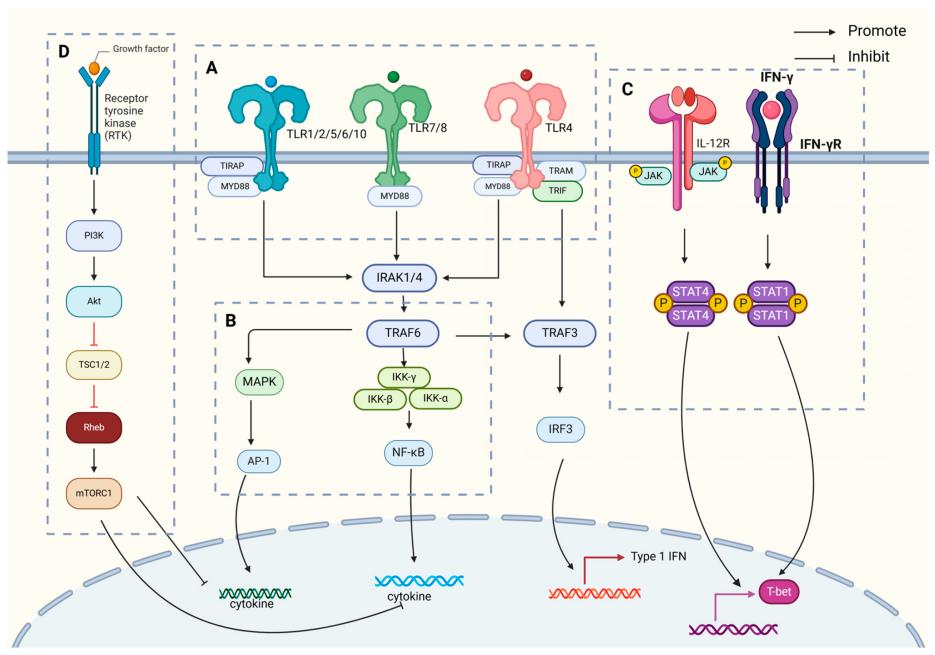 Fig. 1 IL-12 generation associated signal transduction pathway diagram.1
Key structural properties of IL12:
- Heterodimer structure (composed of p35 and p40 subunits linked by disulfide bonds)
- P40 subunit contains fibronectin III structure domain
- The p35 subunit forms four α -helical bundles
Functions of IL12
The main function of IL12 is to connect innate immunity with adaptive immune responses. However, it is also widely involved in a variety of pathophysiological processes, including the regulation of autoimmune diseases, anti-tumor immunity and infectious diseases.
| Function | Description |
| Induce the production of IFN-γ | The activation of natural killer (NK) cells and T cells to produce a large amount of interferon -γ is the core driving force of Th1-type immune response. |
| Promote cellular immunity | Strongly promote the initiative to Th1 CD4 + T cell subtype differentiation, and increase of cytotoxic T lymphocyte (CTL) activity. |
| Anti-tumor immunity | By activating effector cells and inhibiting tumor angiogenesis, it exerts a significant anti-tumor effect and is an important target for tumor immunotherapy. |
| Anti-intracellular infection | Essential for defense against intracellular bacterial (such as Mycobacterium tuberculosis) and parasitic infections, by enhancing the bactericidal capacity of macrophages. |
| Regulation of immune balance | The dysfunction and a variety of autoimmune diseases such as multiple sclerosis, psoriasis pathogenesis are closely related. |
The signal transduction of IL12 is mainly mediated by activating the JAK-STAT pathway (especially the phosphorylation of STAT4), and its biological effects are dose-dependent. An appropriate amount enhances immune defense, while overexpression may lead to immunopathological damage.
Applications of IL12 and IL12 Antibody in Literature
1. Nguyen, Khue G., et al. "Localized interleukin-12 for cancer immunotherapy." Frontiers in immunology 11 (2020): 575597. https://doi.org/10.3389/fimmu.2020.575597
The article indicates that IL-12 is a highly efficient but highly toxic anti-tumor cytokine when administered systemically. In recent years, targeting the tumor microenvironment through local delivery strategies (such as fusion proteins, nanoparticles, etc.) to reduce toxicity while enhancing efficacy is promoting the clinical revival of IL-12 tumor immunotherapy.
2. Geils, Christian, and Katie L. Kathrein. "Augmentation of Solid Tumor Immunotherapy With IL‐12." The Journal of Gene Medicine 26.12 (2024): e70000. https://doi.org/10.1002/jgm.70000
The article indicates that IL-12 is a potent pro-inflammatory cytokine that can activate anti-tumor immunity. The severe toxicity of systemic administration limits its clinical application. Current research, through local delivery strategies such as cell and molecular engineering, aims to reduce toxicity while enhancing efficacy, bringing new hope for its clinical application.
3. Lipinski, Britta, et al. "Taming interleukin‐12: Engineering of bispecific antibody‐based IL‐12 mimetics with biased agonism capacities." Protein Science 34.3 (2025): e70072. https://doi.org/10.1002/pro.70072
In this study, a bispecific IL-12 agonist targeting IL-12Rβ1/β2 was constructed using camel-derived single-domain antibodies (sdAbs). This molecule is linked through an Fc heterodimer and exhibits a tendency to activate T cells, which can induce STAT4 phosphorylation and IFN-γ release, while reducing off-target toxicity to NK cells, providing a new strategy for the design of novel IL-12 therapies.
4. Lasek, Witold, Radosław Zagożdżon, and Marek Jakobisiak. "Interleukin 12: still a promising candidate for tumor immunotherapy?." Cancer Immunology, Immunotherapy 63.5 (2014): 419-435. https://doi.org/10.1007/s00262-014-1523-1
The article indicates that IL-12 can activate innate and adaptive immunity, but it is limited due to the toxicity of systemic administration and poor early clinical efficacy. Current research is shifting towards using it as a vaccine adjuvant, gene therapy or tumor-targeted immune cytokine to reduce toxicity through local delivery, which is expected to bring new therapies to specific patient groups.
5. Pavlin, Darja, et al. "IL-12 based gene therapy in veterinary medicine." Journal of translational medicine 10.1 (2012): 234. https://doi.org/10.1186/1479-5876-10-234
The article indicates that IL-12-based gene therapy has demonstrated excellent anti-tumor effects and safety in the treatment of spontaneous tumors in large animals such as dogs, cats, and horses, providing an important preclinical basis for the clinical transformation of human medicine.
Creative Biolabs: IL12 Antibodies for Research
Creative Biolabs specializes in the production of high-quality IL12 antibodies for research and industrial applications. Our portfolio includes monoclonal antibodies tailored for ELISA, Flow Cytometry, Western blot, immunohistochemistry, and other diagnostic methodologies.
- Custom IL12 Antibody Development: Tailor-made solutions to meet specific research requirements.
- Bulk Production: Large-scale antibody manufacturing for industry partners.
- Technical Support: Expert consultation for protocol optimization and troubleshooting.
- Aliquoting Services: Conveniently sized aliquots for long-term storage and consistent experimental outcomes.
For more details on our IL12 antibodies, custom preparations, or technical support, contact us at email.
Reference
- Wang, Hangxing, et al. "The Role and Potential Application of IL-12 in the Immune Regulation of Tuberculosis." International Journal of Molecular Sciences 26.7 (2025): 3106. https://doi.org/10.3390/ijms26073106
Anti-IL12 antibodies
 Loading...
 Compare



Hot products 
- AActivation
- AGAgonist
- APApoptosis
- BBlocking
- BABioassay
- BIBioimaging
- CImmunohistochemistry-Frozen Sections
- CIChromatin Immunoprecipitation
- CTCytotoxicity
- CSCostimulation
- DDepletion
- DBDot Blot
- EELISA
- ECELISA(Cap)
- EDELISA(Det)
- ESELISpot
- EMElectron Microscopy
- FFlow Cytometry
- FNFunction Assay
- GSGel Supershift
- IInhibition
- IAEnzyme Immunoassay
- ICImmunocytochemistry
- IDImmunodiffusion
- IEImmunoelectrophoresis
- IFImmunofluorescence
- IGImmunochromatography
- IHImmunohistochemistry
- IMImmunomicroscopy
- IOImmunoassay
- IPImmunoprecipitation
- ISIntracellular Staining for Flow Cytometry
- LALuminex Assay
- LFLateral Flow Immunoassay
- MMicroarray
- MCMass Cytometry/CyTOF
- MDMeDIP
- MSElectrophoretic Mobility Shift Assay
- NNeutralization
- PImmunohistologyp-Paraffin Sections
- PAPeptide Array
- PEPeptide ELISA
- PLProximity Ligation Assay
- RRadioimmunoassay
- SStimulation
- SESandwich ELISA
- SHIn situ hybridization
- TCTissue Culture
- WBWestern Blot
