
NISCH Antibodies
Background
NISCH gene encoding a protein called Nischarin, mainly distributed in the mammalian brain, liver, and muscles. This protein, as a scaffold protein, participates in regulating cell migration, signal transduction and autophagy processes, especially influencing the metastasis of tumor cells by inhibiting the integrin signaling pathway. It was first identified by a team from the University of Michigan in the United States in 2000. Its name is derived from the Hindi word "nischal" (meaning stability), reflecting the role of this protein in maintaining cellular homeostasis. Subsequent studies have found that the polymorphism of the NISCH gene is associated with diseases such as hypertension and schizophrenia. Its unique LIM domain and interaction mechanism provide an important model for the study of cell signaling networks and have potential value in the field of cancer therapeutic target development.
Structure of NISCH
The Nischarin protein encoded by the NISCH gene is a large scaffold protein with a molecular weight of approximately 200 kDa, and its precise molecular weight varies slightly among different species.
| Species | Human | Mouse | Rat |
| Molecular Weight (kDa) | 200 | 199 | 198 |
| Primary Structural Differences | Contains multiple functional domains (such as LIM and PH domains) | Highly conserved, with a homology of over 90% to humans | Critical phosphorylation sites are slightly different |
The NISCH protein is composed of approximately 1,800 amino acids, and its structure contains multiple interaction domains, such as the LIM domain (mediating protein-protein interactions) and the PH domain (involved in membrane localization). This protein affects cell migration by regulating the integrin signaling pathway, and its C-terminal region is crucial for binding downstream effector molecules such as PAK1 and Rac1. Phosphorylation modification of NISCH (such as at the Ser1456 site) can regulate its function of inhibiting tumor metastasis, while the nuclear locus signal at its N-terminal enables it to shuttle between the nucleus and cytoplasm, participating in transcriptional regulation.
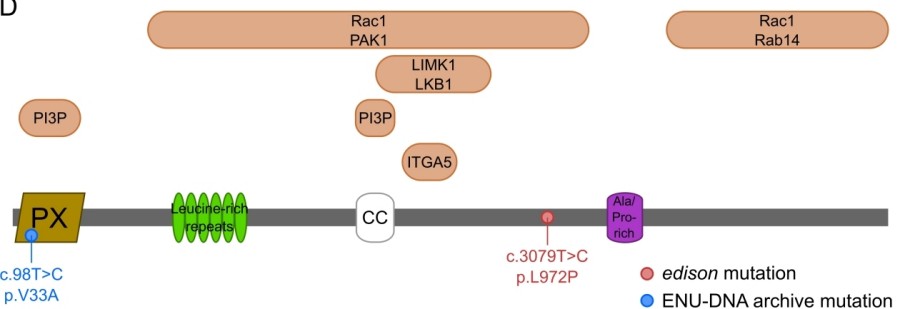 Fig. 1 Schematic of the full length NISCH peptide (1593 amino acids).1
Key structural properties of NISCH:
- Multi-domain scaffold protein
- The C control area contains key PAK1 and Rac1 binding sites
- Phosphorylation sites such as Ser1456 regulate its tumor suppressive function
Functions of NISCH
The core function of the NISCH gene-encoded protein (Nischarin) is to regulate cell migration and signal transduction, and it also plays a key role in various pathophysiological processes.
| Function | Description |
| Tumor metastasis inhibition | By inhibiting the integrin signaling pathway and PAK1 kinase activity, the invasion and metastasis processes of tumor cells are blocked. |
| Autophagy regulation | As a selective autophagy receptor, it interacts with the LC3 protein through the LIR motif to clear damaged organelles. |
| Metabolic regulation | Regulate the insulin signaling pathway, affect the transport of GLUT4 vesicles, and participate in the occurrence and development of type 2 diabetes. |
| Neuroprotection | By regulating synaptic plasticity and axon orientation of neurons, it affects the pathological process of Alzheimer's disease. |
| Cardiovascular homeostasis | Inhibiting the abnormal migration of vascular smooth muscle cells is closely related to the occurrence of hypertension and atherosclerosis. |
The mode of action of NISCH protein presents typical characteristics of scaffold proteins: its multi-domain composition (including LIM, PH, etc.) forms a "signal hub", precisely controlling the activation threshold of downstream signaling pathways through steric hindrance effects and allosteric regulation. This regulatory approach is more network coordinated than that of single-pathway inhibitors. It is worth noting that this gene shows down-regulation in various cancers, and its tumor suppressor function is closely related to epigenetic modifications such as promoter methylation.
Applications of NISCH and NISCH Antibody in Literature
1. Krishnamurthy, Kritika, et al. "Evaluating NISCH and CDH1 promoter hypermethylation in nonsmokers, cancer free smokers and lung cancer patients: a case control study." Indian Journal of Clinical Biochemistry 34.4 (2019): 458-464. https://doi.org/10.1007/s12291-018-0767-5
The article indicates that the hypermethylation frequencies of the tumor suppressor genes NISCH and CDH1 promoters in the plasma cfDNA of lung cancer patients are significantly higher than those in the non-smoking control group (p<0.05), and NISCH methylation is also highly prevalent in high-risk smoking populations, suggesting that it may serve as a common early marker for lung cancer caused by different etiologies. The degree of methylation is not related to the clinical stage.
2. Yang, Zhi-Hui, et al. "Identification of a psychiatric risk gene NISCH at 3p21. 1 GWAS locus mediating dendritic spine morphogenesis and cognitive function." BMC medicine 21.1 (2023): 254. https://doi.org/10.1186/s12916-023-02931-6
Research has found that the Alu polymorphism rs71052682 at the risk locus 3p21.1 for schizophrenia and bipolar disorder can enhance NISCH expression. Overexpression of NISCH leads to abnormal morphology of neuronal dendritic spines and impaired spatial working memory in mice, while antihypertensive drugs can reduce its expression and improve cognitive deficits, suggesting that NISCH may be a potential therapeutic target for mental disorders.
3. Nguyen, Tina H., et al. "Nischarin Deletion Reduces Oxidative Metabolism and Overall ATP: A Study Using a Novel NISCH Δ5-6 Knockout Mouse Model." International Journal of Molecular Sciences 23.3 (2022): 1374.https://doi.org/10.3390/ijms23031374
The research found that for the first time, a NISCH full knockout mouse model was constructed. It was discovered that the absence of this gene led to a reduction in the size of embryos and adults and promoted cell migration. Metabolic analysis revealed that the absence of NISCH reduced cellular oxygen consumption rate and ATP production, while upregulating the expression of lipid metabolism-related genes, indicating that NISCH plays a key regulatory role in metabolic homeostasis.
4. Dong, Shengli, et al. "Nischarin inhibition alters energy metabolism by activating AMP-activated protein kinase." Journal of Biological Chemistry 292.41 (2017): 16833-16846.https://doi.org/10.1074/jbc.M117.784256
Research has found that NISCH, as an AMPK inhibitor, regulates energy metabolism, and its deletion mutation leads to delayed development and weight loss in mice. Mechanically, NISCH maintains the body's metabolic homeostasis by binding to and inhibiting AMPK activity, regulating the mTOR signaling pathway, and influencing glucose oxidation and energy expenditure.
5. Zhao, n, et al. "Transcription factor KLF15 inhibits the proliferation and migration of gastric cancer cells via regulating the TFAP2A-AS1/NISCH axis." Biology Direct 16.1 (2021): 21.https://doi.org/10.1186/s13062-021-00300-y
Studies have found that lncRNA TFAP2A-AS1 inhibits the proliferation and migration of gastric cancer cells through the miR-3657/NISCH axis. The transcription factor KLF15 positively regulates the expression of TFAP2A-AS1, and NISCH, as a downstream effector molecule of this pathway, also has a tumor suppressor effect.
Creative Biolabs: NISCH Antibodies for Research
Creative Biolabs specializes in the production of high-quality NISCH antibodies for research and industrial applications. Our portfolio includes monoclonal antibodies tailored for ELISA, Flow Cytometry, Western blot, immunohistochemistry, and other diagnostic methodologies.
- Custom NISCH Antibody Development: Tailor-made solutions to meet specific research requirements.
- Bulk Production: Large-scale antibody manufacturing for industry partners.
- Technical Support: Expert consultation for protocol optimization and troubleshooting.
- Aliquoting Services: Conveniently sized aliquots for long-term storage and consistent experimental outcomes.
For more details on our NISCH antibodies, custom preparations, or technical support, contact us at email.
Reference
- Crompton, Michael, et al. "A mutation in Nischarin causes otitis media via LIMK1 and NF-κB pathways." PLoS genetics 13.8 (2017): e1006969. https://doi.org/10.1371/journal.pgen.1006969
Anti-NISCH antibodies
 Loading...
 Compare




Hot products 
- AActivation
- AGAgonist
- APApoptosis
- BBlocking
- BABioassay
- BIBioimaging
- CImmunohistochemistry-Frozen Sections
- CIChromatin Immunoprecipitation
- CTCytotoxicity
- CSCostimulation
- DDepletion
- DBDot Blot
- EELISA
- ECELISA(Cap)
- EDELISA(Det)
- ESELISpot
- EMElectron Microscopy
- FFlow Cytometry
- FNFunction Assay
- GSGel Supershift
- IInhibition
- IAEnzyme Immunoassay
- ICImmunocytochemistry
- IDImmunodiffusion
- IEImmunoelectrophoresis
- IFImmunofluorescence
- IGImmunochromatography
- IHImmunohistochemistry
- IMImmunomicroscopy
- IOImmunoassay
- IPImmunoprecipitation
- ISIntracellular Staining for Flow Cytometry
- LALuminex Assay
- LFLateral Flow Immunoassay
- MMicroarray
- MCMass Cytometry/CyTOF
- MDMeDIP
- MSElectrophoretic Mobility Shift Assay
- NNeutralization
- PImmunohistologyp-Paraffin Sections
- PAPeptide Array
- PEPeptide ELISA
- PLProximity Ligation Assay
- RRadioimmunoassay
- SStimulation
- SESandwich ELISA
- SHIn situ hybridization
- TCTissue Culture
- WBWestern Blot
