
CA8 Antibodies
Background
The CA8 gene encodes the carbonic anhydrase-related protein 8 (CA8), which is a non-catalytic protein mainly expressed in neurons of the cerebellum and brain. This protein does not possess the typical enzymatic activity of carbonic anhydrase, but can interact with other proteins such as glutamate receptors, participating in neural signal transmission and maintaining cellular homeostasis. The discovery of the function of the CA8 gene originated from the research on the function of the cerebellum in the 1990s. The structural analysis further revealed its unique conformation in protein-protein interactions. Mutations in this gene are closely related to neurological diseases such as human cerebellar ataxia, making it an important model for understanding neural development and disease mechanisms, and providing key clues for protein function diversity and neurobiology research.
Structure of CA8
The CA8 gene encodes the carbonic anhydrase-related protein 8 (CA8), which is a protein with a molecular weight of approximately 28-30 kDa. The exact molecular weight varies slightly among different species and is mainly influenced by post-translational modifications.
| Species | Human | Mouse | Rat | Bovine |
| Molecular Weight (kDa) | ~29 | ~29 | ~29 | ~30 |
| Primary Structural Differences | Expressed highly in Purkinje cells, regulating neuronal signals | The expression pattern is similar and used for the disease model | Commonly used as a model for neurophysiological research | Highly conservative in function, structural research model |
The CA8 protein is composed of approximately 260 amino acids and exhibits a typical folding structure of the carbonic anhydrase β family. However, the key histidine residues at the active site have been replaced, thus losing the classic catalytic function of carbonic anhydrase. Its tertiary structure forms a compact spherical core, mainly composed of β-sheet structures and containing several key surface loop regions. These loop regions are responsible for interacting with target proteins (such as the receptor-type tyrosine phosphatase RPTPβ), thereby playing an important regulatory role in neural development and cerebellar motor coordination.
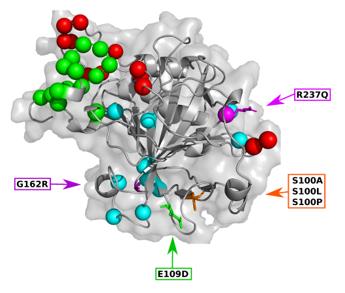 Fig. 1 Three-Dimensional Structural Features of Human CA-VIII.1
Key structural properties of CA8:
- With typical of carbonic anhydrase beta family beta folding core barrel structure
- Active site key histidine replaced, which leads to the absence of catalytic function
- The surface loop region determines its specific protein-protein interaction ability
- By zinc ions structure variation to realize the control function of binding sites
Functions of CA8
The main function of the protein encoded by the CA8 gene is to participate in neuronal signal transmission and maintain calcium homeostasis in the cerebellum. Although it lacks carbonic anhydrase activity, it plays a crucial role in various physiological processes.
| Function | Description |
| Neuronal Signal Regulation | By interacting with receptor-type protein tyrosine phosphatases (such as RPTPβ), it regulates synaptic signal transmission in cerebellar Purkinje cells. |
| Maintenance of calcium homeostasis | It participates in the regulation of intracellular calcium ion concentration and affects the excitability and plasticity of neurons. |
| Support for Cerebellar Development | It is crucial for the normal development, migration and dendritic morphology formation of Purkinje cells. |
| Disease Association | The absence or mutation of its function is closely related to human cerebellar ataxia and cognitive dysfunction. |
| Protein Interaction Hub | As a non-catalytic scaffold protein, it integrates multiple signaling pathways and maintains the homeostasis of the nervous system. |
The mechanism of action of CA8 protein does not rely on typical enzymatic reactions. Instead, it achieves its purpose through its unique protein interaction interface, binding with specific target proteins with high affinity, thereby precisely regulating the downstream signaling network. This is in sharp contrast to the catalytically active members of the classical carbonic anhydrase family.
Applications of CA8 and CA8 Antibody in Literature
1. Sanyanga, Taremekedzwa Allan, and Özlem Tastan Bishop. "Structural characterization of carbonic anhydrase VIII and effects of missense single nucleotide variations to protein structure and function." International Journal of Molecular Sciences 21.8 (2020): 2764. https://doi.org/10.3390/ijms21082764
The article indicates that although carbonic anhydrase VIII (CA8) has no catalytic activity, it is crucial for maintaining calcium homeostasis. In this study, through molecular simulation analysis of pathogenic mutations, it was found that these mutations increase protein rigidity and affect the accessibility of binding sites, providing a new direction for elucidating the mechanisms of related diseases.
2. Yang, Meiyan, et al. "Isolation and characterization of the novel phages vB_VpS_BA3 and vB_VpS_CA8 for lysing Vibrio parahaemolyticus." Frontiers in microbiology 11 (2020): 259. https://doi.org/10.3389/fmicb.2020.00259
The article indicates that a new type of bacteriophage vB_VpS_CA8 has been isolated, which has a lytic effect on multi-drug resistant Vibrio parahaemolyticus. In vitro, it can reduce the bacterial count by approximately 3.65 logarithmic units, and it is expected to be applied in biological control.
3. Türkmen, Seval, et al. "CA8 mutations cause a novel syndrome characterized by ataxia and mild mental retardation with predisposition to quadrupedal gait." PLoS genetics 5.5 (2009): e1000487. https://doi.org/10.1371/journal.pgen.1000487
In an Iraqi consanguineous family, the patient suffered from a homozygous mutation of S100P in the CA8 gene, which led to the degradation of this protein and disrupted the calcium signal transduction in the cerebellum. As a result, the patient exhibited intellectual disability, ataxia, and a rare quadrupedal gait.
4. Peng, Jianya, et al. "Carbonic anhydrase 8 regulates basophil activation and interleukin 4 production." Frontiers in immunology 16 (2025): 1694105. https://doi.org/10.3389/fimmu.2025.1694105
The article indicates that carbonic anhydrase 8 is highly expressed in basophilic granulocytes. The study found that although Car8-deficient mice do not affect the development of basophilic granulocytes, they can inhibit the release of IL-4 and improve dermatitis-like inflammation, revealing its new function in the regulation of basophilic granulocyte activation.
5. Ma, Huai-Lu, et al. "CA8 promotes RCC proliferation and migration though its expression level is lower in tumor compared to adjacent normal tissue." Biomedicine & Pharmacotherapy 121 (2020): 109578. https://doi.org/10.1016/j.biopha.2019.109578
The article indicates that in renal cell carcinoma, the CA8 gene shows low expression. However, experiments have confirmed that its overexpression can promote cancer cell proliferation and migration by activating the pAKT/MMP2 pathway.
Creative Biolabs: CA8 Antibodies for Research
Creative Biolabs specializes in the production of high-quality CA8 antibodies for research and industrial applications. Our portfolio includes monoclonal and polyclonal antibodies tailored for ELISA, Flow Cytometry, Western blot, immunohistochemistry, and other diagnostic methodologies.
- Custom CA8 Antibody Development: Tailor-made solutions to meet specific research requirements.
- Bulk Production: Large-scale antibody manufacturing for industry partners.
- Technical Support: Expert consultation for protocol optimization and troubleshooting.
- Aliquoting Services: Conveniently sized aliquots for long-term storage and consistent experimental outcomes.
For more details on our CA8 antibodies, custom preparations, or technical support, contact us at email.
Reference
- Sanyanga, Taremekedzwa Allan, and Özlem Tastan Bishop. "Structural characterization of carbonic anhydrase VIII and effects of missense single nucleotide variations to protein structure and function." International Journal of Molecular Sciences 21.8 (2020): 2764. Distributed under Open Access license CC BY 4.0, without modification. https://doi.org/10.3390/ijms21082764
Anti-CA8 antibodies
 Loading...
 Compare



Hot products 
- AActivation
- AGAgonist
- APApoptosis
- BBlocking
- BABioassay
- BIBioimaging
- CImmunohistochemistry-Frozen Sections
- CIChromatin Immunoprecipitation
- CTCytotoxicity
- CSCostimulation
- DDepletion
- DBDot Blot
- EELISA
- ECELISA(Cap)
- EDELISA(Det)
- ESELISpot
- EMElectron Microscopy
- FFlow Cytometry
- FNFunction Assay
- GSGel Supershift
- IInhibition
- IAEnzyme Immunoassay
- ICImmunocytochemistry
- IDImmunodiffusion
- IEImmunoelectrophoresis
- IFImmunofluorescence
- IGImmunochromatography
- IHImmunohistochemistry
- IMImmunomicroscopy
- IOImmunoassay
- IPImmunoprecipitation
- ISIntracellular Staining for Flow Cytometry
- LALuminex Assay
- LFLateral Flow Immunoassay
- MMicroarray
- MCMass Cytometry/CyTOF
- MDMeDIP
- MSElectrophoretic Mobility Shift Assay
- NNeutralization
- PImmunohistologyp-Paraffin Sections
- PAPeptide Array
- PEPeptide ELISA
- PLProximity Ligation Assay
- RRadioimmunoassay
- SStimulation
- SESandwich ELISA
- SHIn situ hybridization
- TCTissue Culture
- WBWestern Blot
