
GSPT1 Antibodies
Background
The GSPT1 gene encodes a GTPase protein called eukaryotic peptide chain release factor eRF3, which is mainly present in the cytoplasm of eukaryotic cells. This protein participates in regulating the messenger RNA translation termination process by interacting with eRF1, which is crucial for ensuring the accuracy and efficiency of protein synthesis. Cell proliferation, apoptosis and other life activities rely on the GSPT1 gene to maintain the normal function of translation termination, and its abnormal expression is closely related to the occurrence and development of various tumors. This gene was first identified in the 1990s. Its three-dimensional structure and mechanism of action have been gradually analyzed through techniques such as cryo-electron microscopy, making it a key focus in the field of translation regulation research. The in-depth study of its functional network continuously promotes the progress in understanding the regulation of gene expression, the process of the cell cycle, and the mechanisms of targeted cancer therapy.
Structure of GSPT1
GSPT1 is a protein with a molecular weight of approximately 82 kDa. Its molecular weight may vary slightly among different species, mainly due to minor changes in the coding region sequence.
| Species | Human | Mouse | Zebrafish | Fruit fly |
| Molecular Weight (kDa) | 82.0 | 81.5 | 79.8 | 73.2 |
| Primary Structural Differences | Participate in translation termination and unrighteous mediated mRNA degradation | The core function is conservative and it is a commonly used model organism | Plays a key role in early development | The function of the homologous gene (eRF3) is highly conserved |
The GSPT1 protein is composed of approximately 720 amino acids, and its spatial structure exhibits the typical folding characteristics of GTPase. The structural core of this protein is a GTP-binding domain, which provides energy for translation termination by hydrolyzing GTP. The N-terminal region of the protein is responsible for specifically binding to the key interaction factor eRF1. The tertiary structure of GSPT1 forms a binding pocket to accommodate the GTP molecule, where the key lysine and aspartic acid residues are crucial for the hydrolytic activity of GTP. Its C-terminal domain mediates the interaction with ribosomes and the translation quality control complex, thereby ensuring that the translation process terminates at the correct position.
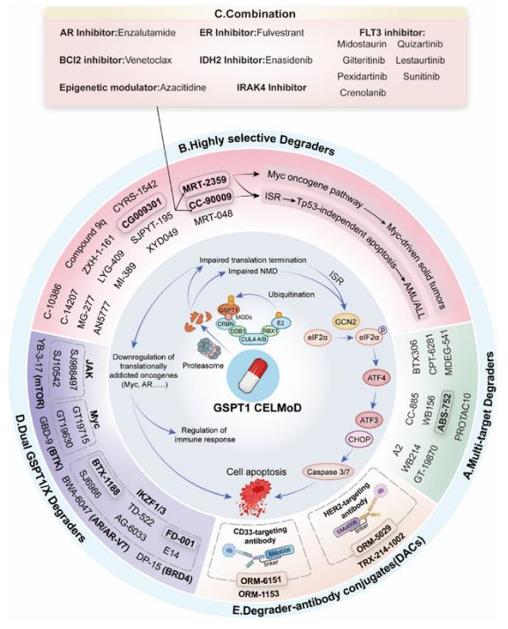 Fig. 1 Targeted drug and therapy development of GSPT1 degraders.1
Key structural properties of GSPT1:
- Classical GTPase folded conformations containing the GTP-binding domain
- Hydrophobic pockets wrap GTP molecules to catalyze hydrolysis
- GTP binding sites regulate the energy supply of translation termination
Functions of GSPT1
The core function of the GSPT1 gene is to participate in and regulate the termination process of protein translation in eukaryotic cells. However, it also involves other key cellular activities, including nonsense mediated mRNA degradation and cell cycle regulation.
| Function | Description |
| Translation termination | As a eukaryotic release factor eRF3, it works in synergy with eRF1 to recognize the stop codon and catalyze the release of the nascent peptide chain from the ribosome. |
| Gtpase activity | Hydrolyzing GTP provides the necessary energy for the translation termination process, ensuring the efficiency and fidelity of this crucial step. |
| Translation quality control | Participate in the mRNA degradation pathway mediated by unrighteousness, and prevent the generation of truncated harmful proteins by identifying and eliminating abnormal mrnas containing prematurely terminated codons. |
| Cell cycle regulation | The expression and activity is closely related to cell proliferation, dysfunctional can affect cell cycle progression, and related to the occurrence of a wide variety of tumor development. |
| Ribosome recovery | After the translation is terminated, it assists in the dissociation and recovery of ribosome subunits, preparing for the start of a new round of translation. |
The GTP hydrolytic activity of the GSPT1 protein is at the core of its function, and its kinetic characteristics present a typical Michaelis-Menten curve, which is different from the oxygenation curve of myoglobin. This reflects its characteristic as a molecular switch, precisely regulating the timing of translation termination through the cycle of GTP binding and hydrolysis.
Applications of GSPT1 and GSPT1 Antibody in Literature
1. Sasayama, Takashi, et al. "Potential of GSPT1 as a novel target for glioblastoma therapy." Cell Death & Disease 15.8 (2024): 572. https://doi.org/10.1038/s41419-024-06967-1
The article indicates that GSPT1 is an essential protein for the growth of glioblastoma. Its degradation or knockout can inhibit tumors and induce apoptosis. Although it is not related to the prognosis of patients, it remains a potential therapeutic target.
2. Lin, Qiqi, et al. "Cancer Biology of GSPT1: Mechanisms and Targeted Therapy Opportunities of Molecular Glue Degraders." Advanced Science (2025): e11789. https://doi.org/10.1002/advs.202511789
The article indicates that GSPT1 is a key protein regulating translation termination and tumor progression. This article reviews its structure, expression and network of action in tumors, with a focus on exploring the clinical potential and challenges of molecular gel degraders targeting GSPT1 in precise tumor treatment.
3. Sellar, Rob S., et al. "Degradation of GSPT1 causes TP53-independent cell death in leukemia while sparing normal hematopoietic stem cells." The Journal of clinical investigation 132.16 (2022). https://doi.org/10.1172/JCI153514
This study reveals the mechanism by which GSPT1 protein degradation induces TP53-independent cell death by hindering translation termination and activating stress responses. Research has confirmed that highly translational active cells are more sensitive to this and has constructed a mouse model that can simulate drug effects, providing a key theoretical basis for GSPT1-targeted therapy, especially for TP53-mutated leukemia.
4. Long, Xuan, et al. "Identification of GSPT1 as prognostic biomarker and promoter of malignant colon cancer cell phenotypes via the GSK-3β/CyclinD1 pathway." Aging (Albany NY) 13.7 (2021): 10354. https://doi.org/10.18632/aging.202796
The article indicates that GSPT1 is highly expressed in colon cancer and promotes tumor proliferation and metastasis. Knocking down GSPT1 can inhibit cell growth, invasion and induce apoptosis. The GSPT1/GSK signaling pathway is a key mechanism for the occurrence and development of colon cancer and is expected to become a new therapeutic target.
5. Perzolli, Alicia, et al. "PROTAC-Mediated GSPT1 Degradation Impairs the Expression of Fusion Genes in Acute Myeloid Leukemia." Cancers 17.2 (2025): 211. https://doi.org/10.3390/cancers17020211
The article indicates that GSPT1-targeted degradation drugs have shown potential in the treatment of acute myeloid leukemia in children. Studies have confirmed that this type of PROTAC drug can effectively inhibit the growth of RUNX1::RUNX1T1 and FUS::ERG subtype tumors, while reducing the expression of oncogenic fusion genes, providing a new strategy for targeted therapy.
Creative Biolabs: GSPT1 Antibodies for Research
Creative Biolabs specializes in the production of high-quality GSPT1 antibodies for research and industrial applications. Our portfolio includes monoclonal antibodies tailored for ELISA, Flow Cytometry, Western blot, immunohistochemistry, and other diagnostic methodologies.
- Custom GSPT1 Antibody Development: Tailor-made solutions to meet specific research requirements.
- Bulk Production: Large-scale antibody manufacturing for industry partners.
- Technical Support: Expert consultation for protocol optimization and troubleshooting.
- Aliquoting Services: Conveniently sized aliquots for long-term storage and consistent experimental outcomes.
For more details on our GSPT1 antibodies, custom preparations, or technical support, contact us at email.
Reference
- Lin, Qiqi, et al. "Cancer Biology of GSPT1: Mechanisms and Targeted Therapy Opportunities of Molecular Glue Degraders." Advanced Science (2025): e11789. https://doi.org/10.1002/advs.202511789
Anti-GSPT1 antibodies
 Loading...
 Compare




Hot products 
- AActivation
- AGAgonist
- APApoptosis
- BBlocking
- BABioassay
- BIBioimaging
- CImmunohistochemistry-Frozen Sections
- CIChromatin Immunoprecipitation
- CTCytotoxicity
- CSCostimulation
- DDepletion
- DBDot Blot
- EELISA
- ECELISA(Cap)
- EDELISA(Det)
- ESELISpot
- EMElectron Microscopy
- FFlow Cytometry
- FNFunction Assay
- GSGel Supershift
- IInhibition
- IAEnzyme Immunoassay
- ICImmunocytochemistry
- IDImmunodiffusion
- IEImmunoelectrophoresis
- IFImmunofluorescence
- IGImmunochromatography
- IHImmunohistochemistry
- IMImmunomicroscopy
- IOImmunoassay
- IPImmunoprecipitation
- ISIntracellular Staining for Flow Cytometry
- LALuminex Assay
- LFLateral Flow Immunoassay
- MMicroarray
- MCMass Cytometry/CyTOF
- MDMeDIP
- MSElectrophoretic Mobility Shift Assay
- NNeutralization
- PImmunohistologyp-Paraffin Sections
- PAPeptide Array
- PEPeptide ELISA
- PLProximity Ligation Assay
- RRadioimmunoassay
- SStimulation
- SESandwich ELISA
- SHIn situ hybridization
- TCTissue Culture
- WBWestern Blot
