
Human Serum Albumin Antibodies
Background
Human serum albumin is a spherical non-glycosylated protein synthesized by the liver. As the most abundant transport protein in plasma, it maintains the colloid osmotic pressure and dynamic balance of substances in the blood by binding and transporting hydrophobic substances such as fatty acids, hormones and drugs. This protein is encoded by the ALB gene located on human chromosome 4. Its tertiary structure was analyzed by X-ray diffraction in 1975, presenting a characteristic cardioid three-dimensional conformation. It is a flexible structure rich in ligand binding sites, formed by the repeated arrangement of three homologous domains. This unique molecular design not only makes albumin an irreplaceable blood volume expander in clinical shock treatment, but also provides a natural molecular template for the research of nanomedicine delivery systems and targeted therapy. The study of its structure and function continues to drive the development of the field of biomedical engineering.
Structure of Human Serum Albumin
Human serum albumin is a large globular protein with a molecular weight of approximately 66.5 kDa. Its precise molecular weight varies slightly among different species, mainly due to changes in amino acid composition and sequence.
| Species | Human | Bovine | Mouse | Rat | Rabbit |
| Molecular Weight (kDa) | 16.7 | 16.9 | 16.8 | 16.5 | 16.7 |
| Primary Structural Differences | Containing 585 amino acids, containing 17 disulfide bond | The sequence is highly conserved, with slightly different binding sites | High homology with human | They can be used for animal experimental model | Often used in the study of immunology |
This protein is composed of a single polypeptide chain, and its tertiary structure is rich in α -helices, forming three homologous domains (I, II, III), which together enclose a heart-shaped molecular structure. Each domain is composed of two subdomains, which are connected by flexible loops. This conformation forms multiple binding pockets, which can reversibly bind fatty acids, hormones, bilirubin and various drug molecules. Its structural stability is mainly maintained by 17 pairs of disulfide bonds within the molecule, while the negative charge clusters on the surface are responsible for interacting with cell receptors and other proteins. The natural light yellow color of human serum albumin stems from the encapsulation of aromatic amino acids such as tryptophan and tyrosine in its structure.
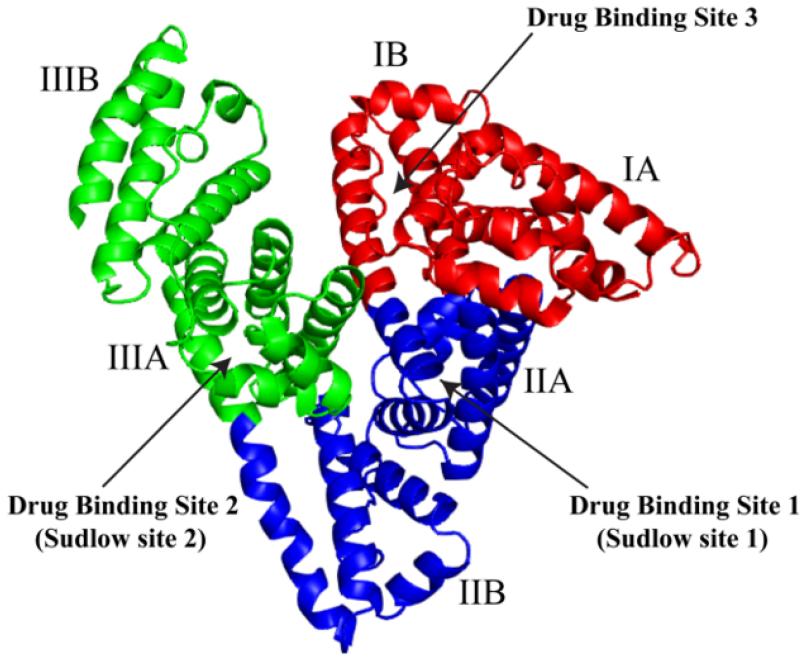 Fig. 1 Domain organization of human serum albumin.1
Key structural properties of Human serum albumin:
- Domain is made up of three homologous structures (I, II, III) consisting of a flexible structure of heart
- Each domain contains two subdomains, forming multiple hydrophobic binding pockets
- Charged polar residues are distributed on the surface of the molecule and are responsible for reversibly binding to a variety of ligands
Functions of Human Serum Albumin
The main function of human serum albumin is to maintain the colloid osmotic pressure of plasma and material transport, and it is also widely involved in the regulation of various physiological and pathological processes in the body.
| Function | Description |
| Colloid osmotic pressure is maintained | As the most abundant protein in plasma, it effectively maintains the fluid balance inside and outside blood vessels and prevents tissue edema. |
| Material combination and transportation | Reversibly bind fatty acids, hormones, bilirubin and various drug molecules, regulating their metabolism, distribution and bioavailability. |
| Antioxidant effect | By combining free heme and reactive oxygen species (ROS), it reduces the damage of oxidative stress to tissues. |
| Endothelial function regulation | Reversibly combines with nitric oxide (NO) to regulate vascular tone and affect microcirculation and blood pressure stability. |
| Trauma repair and inflammation regulation | Under inflammatory conditions, it exudes into the interstitial Spaces of tissues, regulates cytokine activity, and participates in tissue repair and immune regulation processes. |
The binding of human serum albumin to ligands shows multiple synergy. Its multiple binding sites (such as Sudlow site I and II) have different affinities and specificities, jointly achieving its broad-spectrum transport and precise regulation capabilities for a variety of endogenous and exogenous substances.
Applications of Human Serum Albumin and Human Serum Albumin Antibody in Literature
1. di Masi, Alessandra. "Human serum albumin: from molecular aspects to biotechnological applications." International journal of molecular sciences 24.4 (2023): 4081. https://doi.org/10.3390/ijms24044081
The article indicates that human serum albumin (HSA) is the most abundant protein in plasma, which has functions such as maintaining plasma osmotic pressure and regulating fluid distribution, and serves as a biomarker in various diseases. Recent studies have found that it can neutralize pathogen toxins in innate immunity, and its structural binding ability to drugs provides a new direction for drug development.
2. Caridi, Gianluca, et al. "Variations in the human serum albumin gene: molecular and functional aspects." International Journal of Molecular Sciences 23.3 (2022): 1159. https://doi.org/10.3390/ijms23031159
The article indicates that the human serum albumin gene is located on chromosome 4. Its various genetic variations usually do not cause disease, but can lead to congenital analbuminemia or cause abnormal hormone transport, and have clinical and therapeutic research value.
3. Paar, Margret, et al. "Redox state of human serum albumin in multiple sclerosis: A pilot study." International Journal of Molecular Sciences 23.24 (2022): 15806. https://doi.org/10.3390/ijms232415806
The article indicates that the REDOX state of human serum albumin (HSA) can reflect the degree of oxidative stress. In patients with multiple sclerosis, the proportion of reduced HSA in cerebrospinal fluid is relatively high, and its oxidation state is different from that in serum, and is respectively related to disease activity and severity.
4. Mishra, Vibhor, and Richard J. Heath. "Structural and biochemical features of human serum albumin essential for eukaryotic cell culture." International journal of molecular sciences 22.16 (2021): 8411. https://doi.org/10.3390/ijms22168411
The article indicates that human serum albumin (HSA) can bind to various bioactive substances and eliminate reactive oxygen species, significantly promoting the growth and survival of eukaryotic cells in vitro. Its high-purity recombinant form is an ideal additive component in cell and tissue culture.
5. Al-Harthi, Samah, et al. "Towards the functional high-resolution coordination chemistry of blood plasma human serum albumin." Journal of inorganic biochemistry 198 (2019): 110716. https://doi.org/10.1016/j.jinorgbio.2019.110716
The article indicates that human serum albumin (HSA) is a multifunctional carrier protein abundant in the blood and has multiple ligand binding sites. An in-depth analysis of its dynamic structure and the ligand interaction mechanism at the atomic level is of great significance for the development of new diagnostic and therapeutic tools and drug delivery systems.
Creative Biolabs: Human Serum Albumin Antibodies for Research
Creative Biolabs specializes in the production of high-quality Human Serum Albumin antibodies for research and industrial applications. Our portfolio includes monoclonal antibodies tailored for ELISA, Flow Cytometry, Western blot, immunohistochemistry, and other diagnostic methodologies.
- Custom Human Serum Albumin Antibody Development: Tailor-made solutions to meet specific research requirements.
- Bulk Production: Large-scale antibody manufacturing for industry partners.
- Technical Support: Expert consultation for protocol optimization and troubleshooting.
- Aliquoting Services: Conveniently sized aliquots for long-term storage and consistent experimental outcomes.
For more details on our Human Serum Albumin antibodies, custom preparations, or technical support, contact us at email.
Reference
- Mishra, Vibhor, and Richard J. Heath. "Structural and biochemical features of human serum albumin essential for eukaryotic cell culture." International journal of molecular sciences 22.16 (2021): 8411. https://doi.org/10.3390/ijms22168411
Anti-Human Serum Albumin antibodies
 Loading...
 Compare



Hot products 
- AActivation
- AGAgonist
- APApoptosis
- BBlocking
- BABioassay
- BIBioimaging
- CImmunohistochemistry-Frozen Sections
- CIChromatin Immunoprecipitation
- CTCytotoxicity
- CSCostimulation
- DDepletion
- DBDot Blot
- EELISA
- ECELISA(Cap)
- EDELISA(Det)
- ESELISpot
- EMElectron Microscopy
- FFlow Cytometry
- FNFunction Assay
- GSGel Supershift
- IInhibition
- IAEnzyme Immunoassay
- ICImmunocytochemistry
- IDImmunodiffusion
- IEImmunoelectrophoresis
- IFImmunofluorescence
- IGImmunochromatography
- IHImmunohistochemistry
- IMImmunomicroscopy
- IOImmunoassay
- IPImmunoprecipitation
- ISIntracellular Staining for Flow Cytometry
- LALuminex Assay
- LFLateral Flow Immunoassay
- MMicroarray
- MCMass Cytometry/CyTOF
- MDMeDIP
- MSElectrophoretic Mobility Shift Assay
- NNeutralization
- PImmunohistologyp-Paraffin Sections
- PAPeptide Array
- PEPeptide ELISA
- PLProximity Ligation Assay
- RRadioimmunoassay
- SStimulation
- SESandwich ELISA
- SHIn situ hybridization
- TCTissue Culture
- WBWestern Blot
