
FABP4 Antibodies
Background
FABP4 (fatty acid binding protein 4) is a small cytoplasmic protein mainly present in adipocytes and macrophages, responsible for binding and transporting hydrophobic fatty acid molecules, thereby regulating intracellular lipid metabolism, energy balance and inflammatory response processes. This protein plays a key role in metabolic and cardiovascular diseases such as insulin sensitivity and atherosclerosis, and its expression level is often closely related to obesity and related pathological conditions. FABP4 was first identified in 1987. Its three-dimensional structure was analyzed by nuclear magnetic resonance and X-ray crystallography, revealing typical β-barrel folding and flexible ligand binding mechanisms. As an important model in metabolic research, the exploration of the structure and function of FABP4 has deepened people's understanding of lipid signal transduction, cellular metabolic regulation, and the molecular mechanisms of chronic diseases.
Structure of FABP4
FABP4 is a small intracellular lipid-binding protein with a molecular weight of approximately 14.7 kDa. Its molecular weight fluctuates slightly among different species due to subtle differences in amino acid sequences.
| Species | Human | Mouse | Rat | Pig | Bovine |
| Molecular Weight (kDa) | 14.7 | 14.6 | 14.6 | 14.8 | 14.7 |
| Primary Structural Differences | Highly conserved and highly expressed in adipocytes | Highly homologous to humans, it is a commonly used model in obesity research | Similar to human functions, it is often used in metabolic experiments | Fat metabolism model with slightly different sequences | Sequences are highly conserved and used in agricultural studies |
This protein is composed of approximately 132 amino acids and folds into a typical β -barrel structure, with a hydrophobic cavity formed inside for binding long-chain fatty acid molecules. Its tertiary structure is stable, consisting of ten anti-parallel β-folded sheets forming a "molecular pocket", with the entrance covered by an α-helix. Key binding and recognition sites, such as arginine and tyrosine residues, are located inside the cavity and are responsible for precisely capturing and stabilizing fatty acid ligands through ionic and hydrophobic interactions.
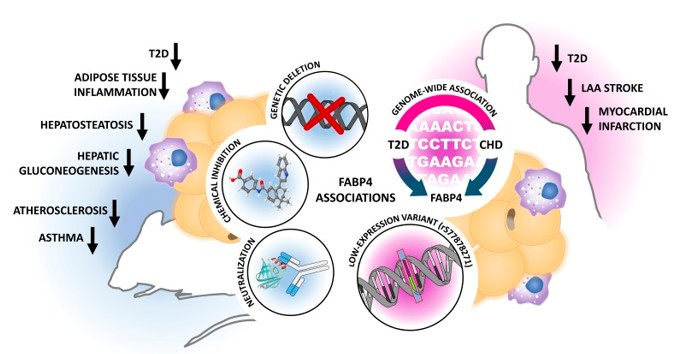 Fig. 1 Evidence for a key role of FABP4/aP2 in immunometabolic diseases.1
Key structural properties of FABP4:
- Typical β-folded barrel structure
- Internal hydrophobic cavity as fatty acids combined with pockets
- No prosthetic group dependent, combining side chain amino acids and fatty acids directly
- Specific arginine and tyrosine residues are responsible for stabilizing ligands and regulating affinity
Functions of FABP4
The main function of FABP4 is to act as a "molecular chaperone" of fatty acids within cells, responsible for regulating lipid metabolism and signal transduction. Its specific functions are as follows:
| Function | Description |
| Regulation of lipid metabolism | Combination and transshipment of long chain fatty acids in fat cells, involved in fatty acids in the absorption, storage and oxidative decomposition, which affect energy balance. |
| Regulation of inflammatory response | In immune cells such as macrophages, FABP4 participates in metabolic inflammatory processes by regulating the synthesis of inflammatory mediators and is a key factor connecting obesity and inflammation. |
| Regulation of insulin sensitivity | By influencing the lipid metabolism and signal transduction in cells, involved in regulating insulin sensitivity. Its overexpression is closely related to insulin resistance. |
| Influence on vascular function | In endothelial cells, FABP4 can participate in the process of vascular lesions such as atherosclerosis by influencing mechanisms like the bioavailability of nitric oxide (NO). |
| Obesity and disease markers | The expression level and obesity, type 2 diabetes and cardiovascular disease risk was positively related, is considered a potential therapeutic targets and biomarkers of disease. |
FABP4 has an extremely high affinity for fatty acids and a wide binding range. Its function is highly dependent on its interaction with multiple signaling pathways rather than a single storage or transport role, which makes it a key hub in the metabolic network.
Applications of FABP4 and FABP4 Antibody in Literature
1. van der Ark-Vonk, Ellen M., et al. "The effects of FABP4 on cardiovascular disease in the aging population." Current atherosclerosis reports 26.5 (2024): 163-175. https://doi.org/10.1007/s11883-024-01196-5
The article indicates that FABP4 exacerbates atherosclerosis through inflammatory pathways and is an effective biomarker for cardiovascular diseases. Genetic variations affect their serum levels. The development of related targeted drugs has been initiated, but clinical validation and safety still require in-depth research.
2. Yorek, Matthew, et al. "FABP4-mediated lipid accumulation and lipolysis in tumor-associated macrophages promote breast cancer metastasis." Elife 13 (2024): RP101221. https://doi.org/10.7554/eLife.101221.2
The article indicates that in breast cancer, unsaturated fatty acids promote lipid accumulation in macrophages by activating the FABP4/CEBPα pathway. FABP4 simultaneously enhances the utilization of fatty acids by cancer cells, drives migration and metastasis, and is a key lipid metabolism regulatory factor in the tumor microenvironment.
3. Su, Xiaomin, et al. "FABP4 in Paneth cells regulates antimicrobial protein expression to reprogram gut microbiota." Gut Microbes 14.1 (2022): 2139978. https://doi.org/10.1080/19490976.2022.2139978
Research has found that FABP4 in intestinal Pan's cells can inhibit defensin expression and weaken antibacterial ability by ubiquitinating and degrading PPARγ. A high-fat diet exacerbates this process by inducing FABP4 and reshapes the gut microbiota, a mechanism that exists in both mice and humans.
4. Yang, Haoran, et al. "Targeted Inhibition of LPL/FABP4/CPT1 fatty acid metabolic axis can effectively prevent the progression of nonalcoholic steatohepatitis to liver cancer." International Journal of Biological Sciences 17.15 (2021): 4207. https://doi.org/10.7150/ijbs.64714
Research has found that the LPL/FABP4/CPT1 molecular axis, which is specifically activated in the NASH stage, maintains the characteristics of liver cancer stem cells and promotes their malignant transformation through the synergistic effect of driving fatty acid metabolic reprogramming and oncogenic signaling, making it a potential target for the prevention and treatment of NASH-related liver cancer.
5. Prentice, Kacey J., Jani Saksi, and Gökhan S. Hotamisligil. "Adipokine FABP4 integrates energy stores and counterregulatory metabolic responses." Journal of Lipid Research 60.4 (2019): 734-740. https://doi.org/10.1194/jlr.S091793
Research has found that FABP4, as a key hormone secreted by adipose tissue, regulates glucose metabolism during stress responses, but chronic high expression can exacerbate obesity-related metabolic diseases. Its circulation level is positively correlated with disease risk, and inhibiting FABP4 may become a new therapeutic direction for improving metabolic health.
Creative Biolabs: FABP4 Antibodies for Research
Creative Biolabs specializes in the production of high-quality FABP4 antibodies for research and industrial applications. Our portfolio includes monoclonal antibodies tailored for ELISA, Flow Cytometry, Western blot, immunohistochemistry, and other diagnostic methodologies.
- Custom FABP4 Antibody Development: Tailor-made solutions to meet specific research requirements.
- Bulk Production: Large-scale antibody manufacturing for industry partners.
- Technical Support: Expert consultation for protocol optimization and troubleshooting.
- Aliquoting Services: Conveniently sized aliquots for long-term storage and consistent experimental outcomes.
For more details on our FABP4 antibodies, custom preparations, or technical support, contact us at email.
Reference
- Prentice, Kacey J., Jani Saksi, and Gökhan S. Hotamisligil. "Adipokine FABP4 integrates energy stores and counterregulatory metabolic responses." Journal of Lipid Research 60.4 (2019): 734-740. https://doi.org/10.1194/jlr.S091793
Anti-FABP4 antibodies
 Loading...
 Compare




Hot products 
- AActivation
- AGAgonist
- APApoptosis
- BBlocking
- BABioassay
- BIBioimaging
- CImmunohistochemistry-Frozen Sections
- CIChromatin Immunoprecipitation
- CTCytotoxicity
- CSCostimulation
- DDepletion
- DBDot Blot
- EELISA
- ECELISA(Cap)
- EDELISA(Det)
- ESELISpot
- EMElectron Microscopy
- FFlow Cytometry
- FNFunction Assay
- GSGel Supershift
- IInhibition
- IAEnzyme Immunoassay
- ICImmunocytochemistry
- IDImmunodiffusion
- IEImmunoelectrophoresis
- IFImmunofluorescence
- IGImmunochromatography
- IHImmunohistochemistry
- IMImmunomicroscopy
- IOImmunoassay
- IPImmunoprecipitation
- ISIntracellular Staining for Flow Cytometry
- LALuminex Assay
- LFLateral Flow Immunoassay
- MMicroarray
- MCMass Cytometry/CyTOF
- MDMeDIP
- MSElectrophoretic Mobility Shift Assay
- NNeutralization
- PImmunohistologyp-Paraffin Sections
- PAPeptide Array
- PEPeptide ELISA
- PLProximity Ligation Assay
- RRadioimmunoassay
- SStimulation
- SESandwich ELISA
- SHIn situ hybridization
- TCTissue Culture
- WBWestern Blot
