
MARCKS Antibodies
Background
MARCKS is an intracellular protein widely distributed in eukaryotic cells, mainly functioning as a key substrate for protein kinase C (PKC). This protein interacts dynamically with phosphatidylinositol 4, 5-diphosphate (PIP2) and calmodulin on the cell membrane through its effector domain, thereby participating in the regulation of cell morphology maintenance, membrane transport, and cell signal transduction processes. Research has found that MARCKS have important regulatory functions in physiological and pathological processes such as neural development, inflammatory response and tumor metastasis. Its unique "cardamylation switch" mechanism enables it to shuttle between the cell membrane and cytoplasm in a phosphorylation-dependent manner. This characteristic has become a classic model for studying dynamic protein-membrane interactions and provides an important perspective for revealing the spatiotemporal coordination mechanism of cellular signaling networks.
Structure of MARCKS
MARCKS is an intracellular protein with a molecular weight of approximately 29-32 kDa, and its exact weight varies slightly depending on the species and the state of post-translational modification.
| Species | Human | Mouse | Rat | Bovine | Chicken |
| Molecular Weight (kDa) | 29.7 | 29.8 | 29.6 | 29.9 | 30.1 |
| Primary Structural Differences | 332 amino acids, including 13 arginine | 331 amino acids with highly conserved effector domains | 332 amino acids, with PKC phosphorylation sites conserved | 333 amino acids, with conserved cardamom acylation sitese | 330 amino acids, serine-rich region |
This protein is composed of approximately 330 amino acids and has three characteristic domains: the N-terminal cardamylation site (MGXXXS/T), a positively charged central effect-acting domain (ED), and multiple conserved serine phosphorylation sites. The effector domain binds to phosphatidylinositol 4, 5-diphosphate (PIP2) on the cell membrane through electrostatic interaction, and protein kinase C-mediated phosphorylation causes conformational changes, leading to the dissociation of this protein from the membrane and regulating the dynamics of the cytoskeleton.
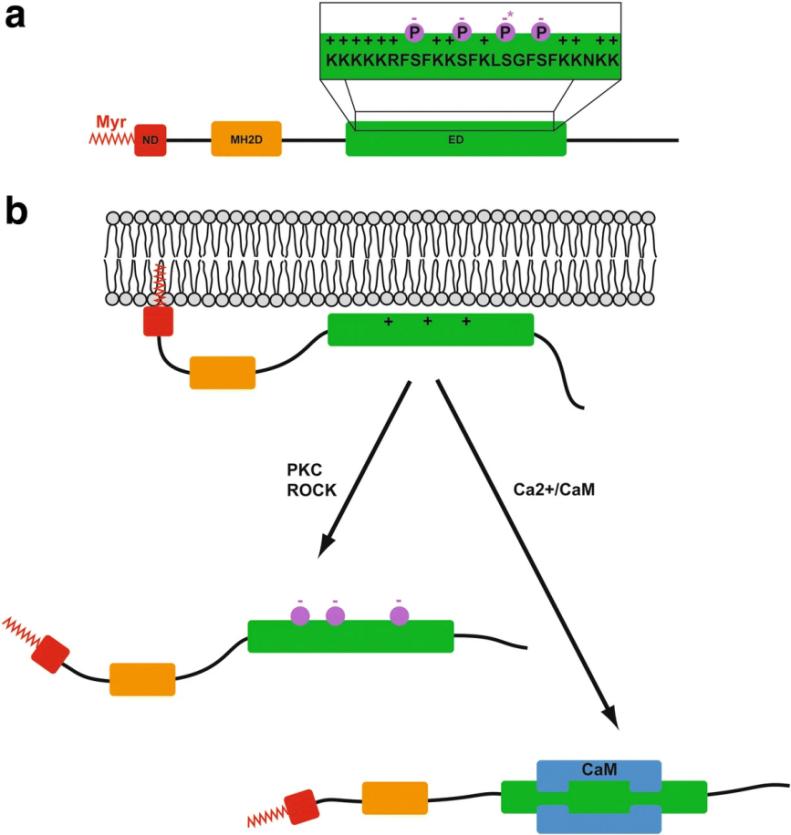 Fig. 1 MARCKS protein structure and electrostatic switch.1
Key structural properties of MARCKS:
- Highly conserved myristoylated N-terminal domain
- Positively charged central effect domain
- Multiple phosphorylation sites of protein kinase C
Functions of MARCKS
The primary function of the MARCKS protein is to serve as a key regulatory factor for cell signal transduction and cytoskeletal dynamics. In addition, it is also involved in a variety of cellular processes, including membrane transport, inflammatory responses and tumor metastasis, etc.
| Function | Description |
| Cell signal integration | As the intersection point of multiple signaling pathways such as PKC and calmodulin, it coordinates the spatiotemporal dynamics of the intracellular signaling network. |
| Cell membrane - cytoskeleton connection | By binding to the membrane phospholipid PIP2 through the effector domain, it regulates the recombination of the actin cytoskeleton and membrane stability. |
| Neurodevelopmental regulation | Involved in neuronal migration, axon guidance and synapse formation, plays an important role in cerebral development. |
| Regulation of inflammatory response | Regulate the activation and migration of immune cells such as macrophages, and influence the production of inflammatory factors and immune responses. |
| Promotion of tumor metastasis | In a variety of cancer expression, by enhancing cell motility and invasion ability promote the process of tumor metastasis. |
The functional state of MARCKS is strictly regulated by phosphorylation: the non-phosphorylated form binds to the membrane and stabilizes the actin skeleton; Pkc-mediated phosphorylation causes it to dissociate from the membrane, leading to cytoskeletal recombination and the release of PIP2, which in turn activates downstream signaling pathways. This "molecular switch" characteristic makes it a key regulator of cellular polar movement and morphogenesis.
Applications of Applications of MARCKS and MARCKS Antibody in Literature
1. El Amri, Mohamed, Una Fitzgerald, and Gerhard Schlosser. "MARCKS and MARCKS-like proteins in development and regeneration." Journal of biomedical science 25.1 (2018): 43. https://doi.org/10.1186/s12929-018-0445-1
The article indicates that MARCKS and MARCKSL1 are PKC substrates. They participate in the development and regeneration processes by regulating the cytoskeleton and membrane transport, playing a significant role in neuroformation, tissue repair, etc., and are potential targets for regenerative medicine.
2. Chiu, Chun-Lung, et al. "The role of MARCKS in metastasis and treatment resistance of solid tumors." Cancers 14.19 (2022): 4925. https://doi.org/10.3390/cancers14194925
The article indicates that MARCKS is a PKC substrate involved in cell migration and adhesion. It promotes cancer progression in various solid tumors by regulating metastasis, stem cell characteristics, and drug resistance, and has become a potential therapeutic target.
3. Li, Yaming, et al. "CircTRIM1 encodes TRIM1-269aa to promote chemoresistance and metastasis of TNBC via enhancing CaM-dependent MARCKS translocation and PI3K/AKT/mTOR activation." Molecular Cancer 23.1 (2024): 102. https://doi.org/10.1186/s12943-024-02019-6
The article indicates that the TRIM1-269aa protein encoded by circTRIM1 circular RNA can promote calcium-dependent translocation of MARCKS by enhancing the interaction between MARCKS and calmodulin, thereby activating the PI3K/AKT/mTOR pathway and inducing chemotherapy resistance and metastasis in triple-negative breast cancer.
4. Peng, Xue-Qi, et al. "Marcks overexpression in retinal ganglion cells promotes optic nerve regeneration." Cell Death & Disease 15.12 (2024): 906. https://doi.org/10.1038/s41419-024-07281-6
The article indicates that the overexpression of MARCKS and their effector domains (ED) can significantly promote axonal regeneration in the central nervous system, and the effect is enhanced when combined with CNTF, without relying on known regeneration-related genes, providing a new therapeutic strategy for nerve injury repair.
5. Manai, Maroua, et al. "MARCKS as a potential therapeutic target in inflammatory breast cancer." Cells 11.18 (2022): 2926. https://doi.org/10.3390/cells11182926
The article indicates that MARCKS are highly expressed in inflammatory breast cancer (IBC) and are associated with a poor prognosis. Its inhibitor MPS can inhibit the proliferation, migration and invasion of IBC cells, and upregulate PTEN and suppress the AKT/MAPK pathway. Patients with IBC who are MARCKS negative or PTEN positive have a better prognosis, indicating that MARCKS are potential therapeutic targets.
Creative Biolabs: MARCKS Antibodies for Research
Creative Biolabs specializes in the production of high-quality MARCKS antibodies for research and industrial applications. Our portfolio includes monoclonal antibodies tailored for ELISA, Flow Cytometry, Western blot, immunohistochemistry, and other diagnostic methodologies.
- Custom MARCKS Antibody Development: Tailor-made solutions to meet specific research requirements.
- Bulk Production: Large-scale antibody manufacturing for industry partners.
- Technical Support: Expert consultation for protocol optimization and troubleshooting.
- Aliquoting Services: Conveniently sized aliquots for long-term storage and consistent experimental outcomes.
For more details on our MARCKS antibodies, custom preparations, or technical support, contact us at email.
Reference
- El Amri, Mohamed, Una Fitzgerald, and Gerhard Schlosser. "MARCKS and MARCKS-like proteins in development and regeneration." Journal of biomedical science 25.1 (2018): 43. https://doi.org/10.1186/s12929-018-0445-1
Anti-MARCKS antibodies
 Loading...

 Compare




Hot products 
- AActivation
- AGAgonist
- APApoptosis
- BBlocking
- BABioassay
- BIBioimaging
- CImmunohistochemistry-Frozen Sections
- CIChromatin Immunoprecipitation
- CTCytotoxicity
- CSCostimulation
- DDepletion
- DBDot Blot
- EELISA
- ECELISA(Cap)
- EDELISA(Det)
- ESELISpot
- EMElectron Microscopy
- FFlow Cytometry
- FNFunction Assay
- GSGel Supershift
- IInhibition
- IAEnzyme Immunoassay
- ICImmunocytochemistry
- IDImmunodiffusion
- IEImmunoelectrophoresis
- IFImmunofluorescence
- IGImmunochromatography
- IHImmunohistochemistry
- IMImmunomicroscopy
- IOImmunoassay
- IPImmunoprecipitation
- ISIntracellular Staining for Flow Cytometry
- LALuminex Assay
- LFLateral Flow Immunoassay
- MMicroarray
- MCMass Cytometry/CyTOF
- MDMeDIP
- MSElectrophoretic Mobility Shift Assay
- NNeutralization
- PImmunohistologyp-Paraffin Sections
- PAPeptide Array
- PEPeptide ELISA
- PLProximity Ligation Assay
- RRadioimmunoassay
- SStimulation
- SESandwich ELISA
- SHIn situ hybridization
- TCTissue Culture
- WBWestern Blot
