
By Research Area


Hot products 
-
Mouse Anti-BANF1 Recombinant Antibody (3F10-4G12) (CBMAB-A0707-LY)

-
Mouse Anti-FOSB Recombinant Antibody (CBXF-3593) (CBMAB-F2522-CQ)

-
Mouse Anti-ESR1 Recombinant Antibody (Y31) (CBMAB-1208-YC)

-
Mouse Anti-ARIH1 Recombinant Antibody (C-7) (CBMAB-A3563-YC)

-
Mouse Anti-CDKL5 Recombinant Antibody (CBFYC-1629) (CBMAB-C1689-FY)

-
Mouse Anti-ALB Recombinant Antibody (V2-55272) (CBMAB-H0819-FY)

-
Mouse Anti-dsDNA Recombinant Antibody (22) (CBMAB-AP1954LY)

-
Mouse Anti-CFL1 (Phospho-Ser3) Recombinant Antibody (CBFYC-1770) (CBMAB-C1832-FY)

-
Mouse Anti-ABCA3 Recombinant Antibody (V2-178911) (CBMAB-A0145-YC)

-
Mouse Anti-ALPL Antibody (B4-78) (CBMAB-1009CQ)

-
Mouse Anti-CD33 Recombinant Antibody (P67.6) (CBMAB-C10189-LY)

-
Mouse Anti-GNA12 Recombinant Antibody (CBFYH-0402) (CBMAB-H1272-FY)

-
Rat Anti-EPO Recombinant Antibody (16) (CBMAB-E1578-FY)

-
Mouse Anti-CD2AP Recombinant Antibody (BR083) (CBMAB-BR083LY)

-
Mouse Anti-BIRC7 Recombinant Antibody (88C570) (CBMAB-L0261-YJ)

-
Mouse Anti-ASH1L Monoclonal Antibody (ASH5H03) (CBMAB-1372-YC)

-
Mouse Anti-ASB9 Recombinant Antibody (1D8) (CBMAB-A0529-LY)

-
Mouse Anti-AHCYL1 Recombinant Antibody (V2-180270) (CBMAB-A1703-YC)

-
Rat Anti-4-1BB Recombinant Antibody (V2-1558) (CBMAB-0953-LY)

-
Rabbit Anti-ENO2 Recombinant Antibody (BA0013) (CBMAB-0272CQ)

Herpes Simplex Virus 1 (HSV-1) in Alzheimer's Disease
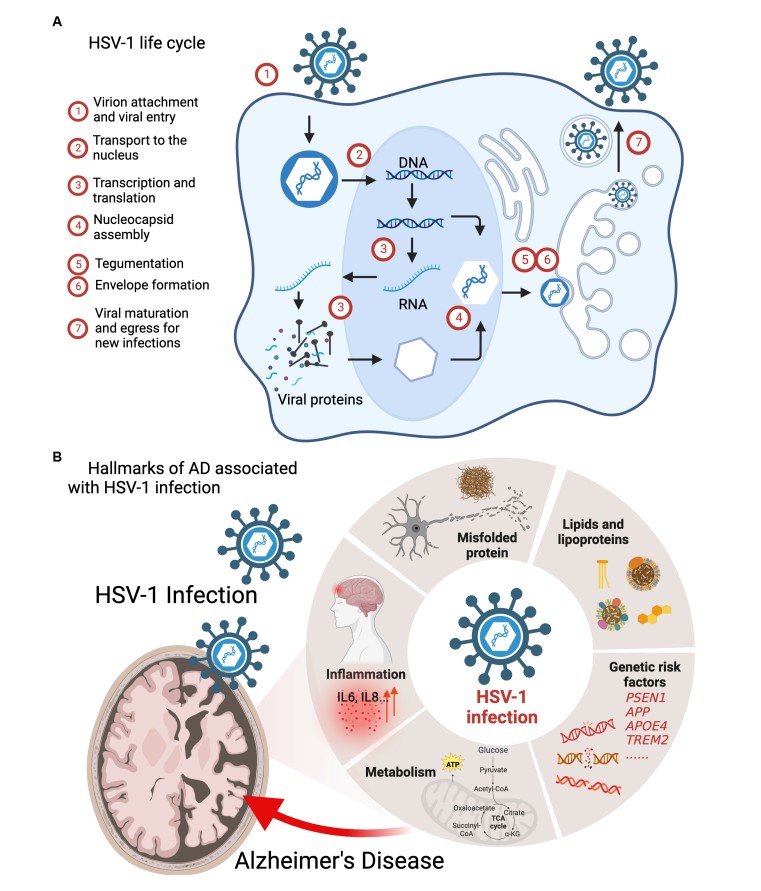
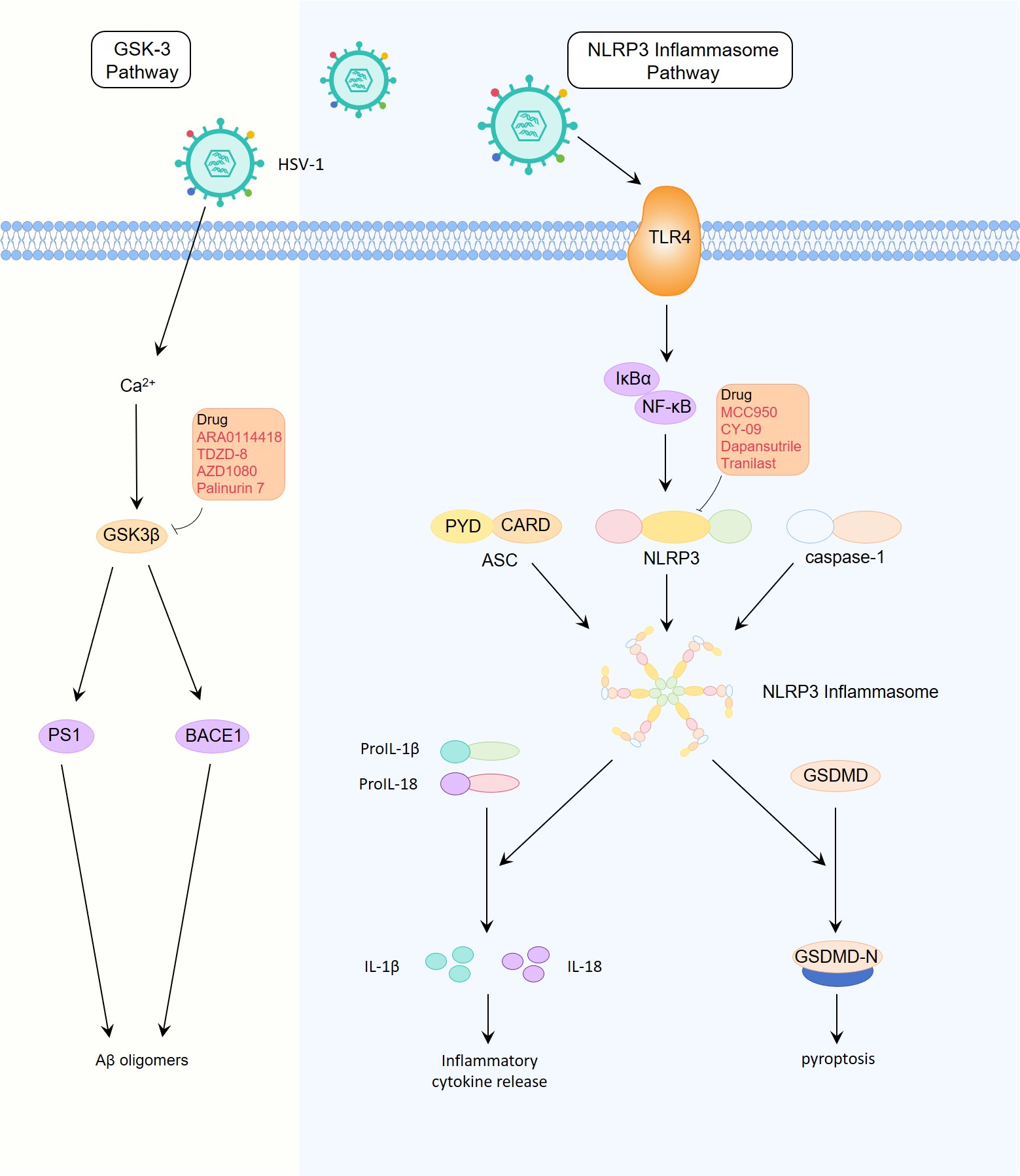
The relationship between Herpes Simplex Virus 1 (HSV-1) and Alzheimer's disease (AD) has become a hot topic in recent years at the intersection of neuroscience and virology. Multiple research efforts indicate a possible connection, but the establishment of a definitive causal relationship has yet to be resolved. Current scientific thinking suggests that latent HSV-1 in the brain becomes active when triggered by diverse stressors like stress, aging, and concurrent infections. The reactivation process potentially triggers AD progression through the development of β-amyloid plaques and tau protein hyperphosphorylation alongside neuroinflammatory responses, which result in neuronal injury. Current research is also investigating how HSV-1 infection alongside genetic factors such as APOE4 and traumatic brain injuries interact, aiming to elucidate their combined impact on AD risk or accelerate its progression.
Creative Biolabs is committed to enhancing AD research by providing high-quality antibody products. Recognizing the complex etiology of AD, in particular the potential impact of HSV-1 and other factors, we offer a comprehensive portfolio of antibodies against key proteins involved in AD pathology. In addition to conventional markers, antibodies to relevant viral antigens are also included. We invite researchers to explore our extensive catalog to find the specific antibody that is right for your AD research and drug discovery.
Please try the standard protocols which include: protocols, troubleshooting and guide.
Enzyme-linked Immunosorbent Assay (ELISA)
Flow Cytometry
Immunofluorescence (IF)
Immunohistochemistry (IHC)
Immunoprecipitation (IP)
Western Blot (WB)
Enzyme Linked Immunospot (ELISpot)
Proteogenomic
Other Protocols
