
By Research Area


Hot products 
-
Mouse Anti-AMACR Recombinant Antibody (CB34A) (CBMAB-CA034LY)

-
Rat Anti-AChR Recombinant Antibody (V2-12500) (CBMAB-0990-CN)

-
Mouse Anti-FAS2 Monoclonal Antibody (1D4) (CBMAB-0071-CN)

-
Mouse Anti-BAD (Phospho-Ser136) Recombinant Antibody (CBYY-0138) (CBMAB-0139-YY)

-
Rat Anti-CCR2 Recombinant Antibody (475301) (CBMAB-C1338-LY)

-
Mouse Anti-NSUN6 Recombinant Antibody (D-5) (CBMAB-N3674-WJ)

-
Mouse Anti-ADGRE2 Recombinant Antibody (V2-261270) (CBMAB-C0813-LY)

-
Mouse Anti-AAV-5 Recombinant Antibody (V2-503416) (CBMAB-V208-1402-FY)

-
Mouse Anti-ADIPOR2 Recombinant Antibody (V2-179983) (CBMAB-A1369-YC)

-
Mouse Anti-CCL18 Recombinant Antibody (64507) (CBMAB-C7910-LY)

-
Mouse Anti-ENPP1 Recombinant Antibody (CBFYE-0159) (CBMAB-E0375-FY)

-
Rabbit Anti-CAMK2A Recombinant Antibody (BA0032) (CBMAB-0137CQ)

-
Mouse Anti-ALPL Antibody (B4-78) (CBMAB-1009CQ)

-
Mouse Anti-CCT6A/B Recombinant Antibody (CBXC-0168) (CBMAB-C5570-CQ)

-
Rabbit Anti-ADRA1A Recombinant Antibody (V2-12532) (CBMAB-1022-CN)

-
Mouse Anti-GOLGA2 Recombinant Antibody (2C10) (CBMAB-G0602-LY)

-
Mouse Anti-CD83 Recombinant Antibody (HB15) (CBMAB-C1765-CQ)

-
Mouse Anti-CARTPT Recombinant Antibody (113612) (CBMAB-C2450-LY)

-
Mouse Anti-ABL2 Recombinant Antibody (V2-179121) (CBMAB-A0364-YC)

-
Mouse Anti-AOC3 Recombinant Antibody (CBYY-0014) (CBMAB-0014-YY)

Ferroptosis Research
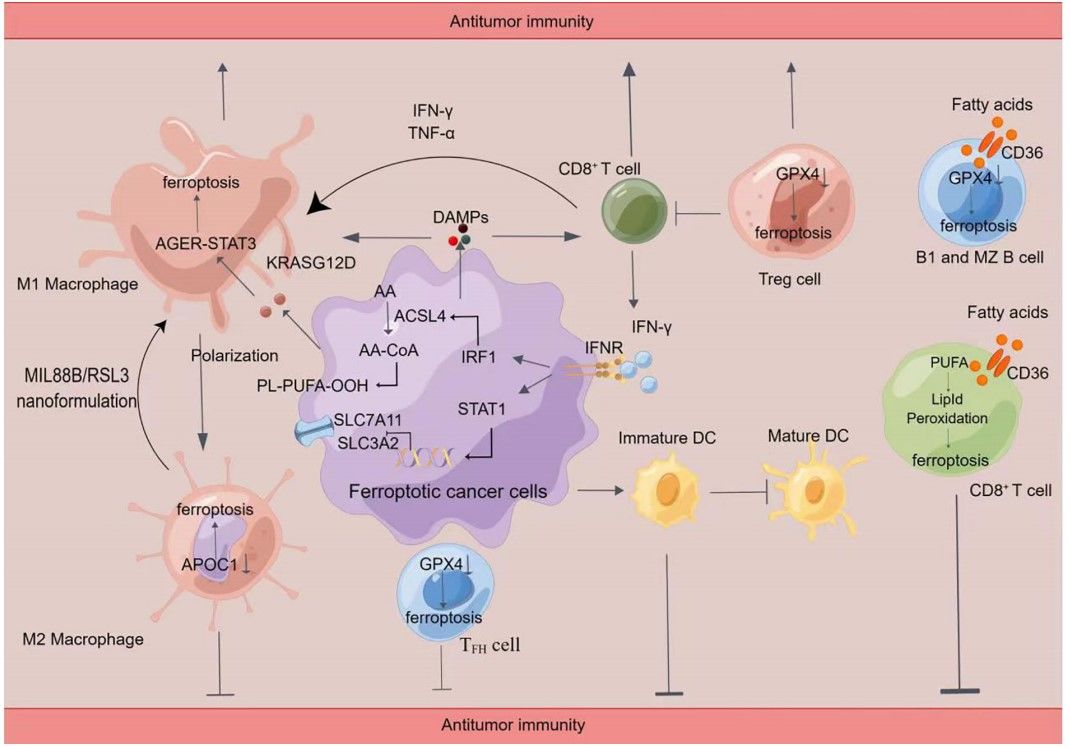
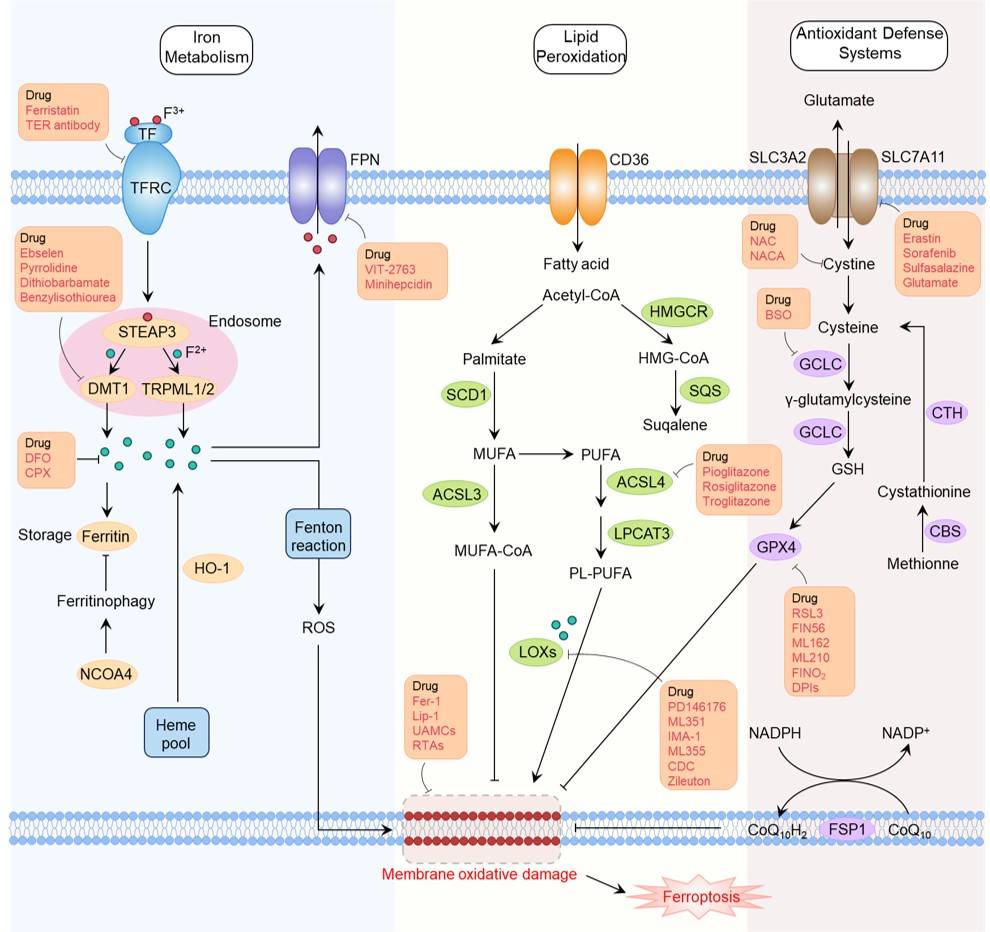
Ferroptosis is a distinct form of regulated cell death characterized by the iron-dependent accumulation of lipid hydroperoxides to lethal levels. First described in 2012, it is genetically, biochemically, and morphologically different from other cell death modalities such as apoptosis, necroptosis, and autophagy. The core mechanism of ferroptosis involves the failure of glutathione-dependent antioxidant defenses, particularly the inactivation of the enzyme glutathione peroxidase 4 (GPX4). This leads to unchecked lipid peroxidation and subsequent plasma membrane rupture. This process is tightly regulated by multiple factors, including iron metabolism, lipid metabolism, and amino acid metabolism, involving key proteins like SLC7A11, ACSL4, and FSP1.
The implications of ferroptosis are vast, spanning numerous pathological conditions. In oncology, inducing ferroptosis has emerged as a promising strategy to eliminate therapy-resistant cancer cells. Conversely, inhibiting ferroptosis holds therapeutic potential for treating conditions characterized by excessive cell death, such as neurodegenerative diseases (e.g., Alzheimer's and Parkinson's disease), ischemia-reperfusion injury, and certain kidney disorders. The intricate signaling networks that govern ferroptosis present a wealth of targets for novel drug discovery and development, making it a critical area of investigation for both basic and translational research.
Advancing our understanding of ferroptosis requires reliable and highly specific research tools. Creative Biolabs provides a comprehensive portfolio of high-performance antibodies targeting key proteins in the ferroptosis pathway. Our rigorously validated antibodies for markers such as GPX4, SLC7A11, ACSL4, NCOA4, and FTH1 ensure accuracy and reproducibility in your experiments, including Western Blot, IHC, and immunofluorescence. We invite you to explore our catalog of ferroptosis-related products, pathways, and technical literature to accelerate your next discovery.
Please try the standard protocols which include: protocols, troubleshooting and guide.
Enzyme-linked Immunosorbent Assay (ELISA)
Flow Cytometry
Immunofluorescence (IF)
Immunohistochemistry (IHC)
Immunoprecipitation (IP)
Western Blot (WB)
Enzyme Linked Immunospot (ELISpot)
Proteogenomics
Other Protocols
