
CCL22 Antibodies
Background
CCL22 is a small-molecular-weight chemokine secreted by antigen-presenting cells, which participates in the immune regulatory process by binding to and activating the CCR4 receptor. The protein encoded by this gene can specifically recruit regulatory T cells and Th2 cells to the inflammatory area, thereby maintaining immune tolerance and regulating the inflammatory response. Research has found that CCL22 plays a key regulatory role in the tumor microenvironment, autoimmune diseases and allergic reactions, and its expression level is closely related to various pathological conditions. This gene was first identified in 1997. The analysis of its three-dimensional structure provided a molecular basis for the development of immunotherapy targeting the CCR4 signaling pathway and has now become an important target in the research of tumor immunity and autoimmune disease treatment.
Structure of CCL22
CCL22 is a chemokine with a molecular weight of approximately 8-13 kDa, and its precise molecular weight varies slightly among species due to differences in glycosylation modifications.
| Species | Human | Mouse | Rhesus monkey | Rat | Rabbit |
| Molecular Weight (kDa) | 8.3 | 10.2 | 8.5 | 9.8 | 8.6 |
| Primary Structural Differences | Containing 76 amino acids, four conservative cysteine | The C-end extension sequence is relatively long | Homology with human was up to 90% | The N-terminal glycosylation sites are different | Conserved receptor binding domain |
This protein is composed of 76 amino acids, forming a typical chemokine folding structure: the N-terminal region forms a flexible receptor recognition site, the central part is composed of three anti-parallel β -folds as the structural core, and the C-terminal α -helix participates in dimerization regulation. Four conserved cysteine residues form two pairs of disulfide bonds (Cys11-Cys52, Cys12-Cys51), jointly maintaining the structural stability. In the active center, arginine at position 16 and valine at position 18 constitute the key receptor binding motifs. These structural features jointly determine its specific binding ability to the CCR4 receptor.
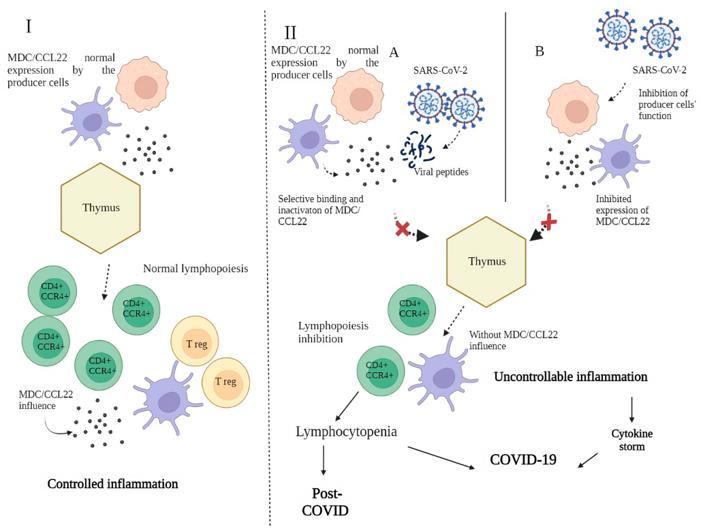 Fig. 1 Role of MDC/CCL22 in immunity and the SARS-CoV-2 infectious process.1
Key structural properties of CCL22:
- Typical chemokine folding configuration (conservative tritrans parallel β chain and N-terminal signal loop)
- The stable hydrophobic core is reinforced by two pairs of disulfide bonds (Cys11-Cys52 and Cys12-Cys51)
- N-terminal structural domain contains positively charged alkaline residue cluster
- Highly conservative "ELR" motif (Glu - Leu - Arg) regulation of immune cell chemotactic activity and signal specificity
Functions of CCL22
The main function of CCL22 is to mediate the chemotaxis of immune cells and the regulation of inflammation, while also participating in various immune-related physiological and pathological processes.
| Function | Description |
| Recruitment of immune cells | Specific chemoregulatory T cells and Th2 cells migrate to the inflammatory site and secondary lymphoid organs. |
| Maintenance of immune tolerance | By recruiting regulatory T cells into the tumor microenvironment and mucosal tissues, excessive immune responses can be suppressed. |
| Regulation of inflammatory response | Guide the aggregation of Th2 cells in allergic and autoimmune diseases and regulate the Th1/Th2 immune balance. |
| Tumor immune escape | Promote the infiltration of Treg cells in tumor tissues, inhibit the function of effector T cells, and assist in tumor immune escape. |
| Participation in tissue repair | During the period of inflammation regression, it participates in the process of tissue repair and reconstruction by regulating the distribution of immune cells. |
The binding of CCL22 to the receptor CCR4 exhibits typical chemokine gradient sensing characteristics. Its dose-effect curve shows significant chemotactic activity even in the low concentration range, which is consistent with the characteristics of G protein-coupled receptor signal cascade amplification, demonstrating its high efficiency in mediating directional migration in the microenvironment.
Applications of CCL22 and CCL22 Antibody in Literature
1. Yuan, Yexian, et al. "Macrophage-derived chemokine CCL22 establishes local LN-mediated adaptive thermogenesis and energy expenditure." Science Advances 10.26 (2024): eadn5229.https://doi.org/10.1126/sciadv.adn5229
Research has found that lymph nodes regulate the Browning of white fat by secreting CCL22. This signal activates immune cells to promote heat production, thereby effectively preventing obesity in mice and providing a new target for the treatment of obesity.
2. Mannewitz, Mareike, et al. "CCL22 as an independent prognostic factor in endometrial cancer patients." Translational Oncology 50 (2024): 102116. https://doi.org/10.1016/j.tranon.2024.102116
Research has found that the location and origin of CCL22 in endometrial cancer determine its prognosis: the secretion of cancer cells and distal M1 macrophages indicates a good prognosis, while the secretion of peritumoral stroma is associated with poor survival, suggesting its potential as a therapeutic target.
3. Danquah, Bright D., et al. "Mass Spectrometric analysis of antibody—Epitope peptide complex dissociation: Theoretical concept and practical procedure of binding strength characterization." Molecules 25.20 (2020): 4776. https://doi.org/10.3390/cells11132027
Research has found that in cervical cancer, CCL22 is mainly secreted by tumor-associated macrophages. It affects the tumor immune microenvironment by up-regulating the expression of CD206 and promoting the polarization of macrophages into the M2a subtype, which can serve as a potential therapeutic target.
4. Korobova, Zoia R., Natalia A. Arsentieva, and Areg A. Totolian. "Macrophage-derived chemokine MDC/CCL22: an ambiguous finding in COVID-19." International Journal of Molecular Sciences 24.17 (2023): 13083. https://doi.org/10.3390/ijms241713083
The study observed a decrease in the concentration of CCL22 in the plasma of patients in the acute phase of COVID-19 and those in recovery, and proposed two explanations: viral products blocking its activity, or impaired function of dendritic cells leading to a reduction in production.
5. Zhaoyang, Peng, et al. "CCL22 and Leptin associated with steroid resistance in childhood idiopathic nephrotic syndrome." Frontiers in Pediatrics 11 (2023): 1261034. https://doi.org/10.3389/fped.2023.1261034
Research has found that the levels of serum CCL22 and leptin in children with hormone-resistant nephrotic syndrome are significantly higher than those in hormone-sensitive patients. Moreover, the combined detection of the two can effectively predict hormone resistance, providing a reference for early clinical identification.
Creative Biolabs: CCL22 Antibodies for Research
Creative Biolabs specializes in the production of high-quality CCL22 antibodies for research and industrial applications. Our portfolio includes monoclonal antibodies tailored for ELISA, Flow Cytometry, Western blot, immunohistochemistry, and other diagnostic methodologies.
- Custom CCL22 Antibody Development: Tailor-made solutions to meet specific research requirements.
- Bulk Production: Large-scale antibody manufacturing for industry partners.
- Technical Support: Expert consultation for protocol optimization and troubleshooting.
- Aliquoting Services: Conveniently sized aliquots for long-term storage and consistent experimental outcomes.
For more details on our CCL22 antibodies, custom preparations, or technical support, contact us at email.
Reference
- Korobova, Zoia R., Natalia A. Arsentieva, and Areg A. Totolian. "Macrophage-derived chemokine MDC/CCL22: an ambiguous finding in COVID-19." International Journal of Molecular Sciences 24.17 (2023): 13083. https://doi.org/10.3390/ijms241713083
Anti-CCL22 antibodies
 Loading...
 Compare




Hot products 
-
Mouse Anti-AKT1/AKT2/AKT3 (Phosphorylated T308, T309, T305) Recombinant Antibody (V2-443454) (PTM-CBMAB-0030YC)

-
Mouse Anti-DMPK Recombinant Antibody (CBYCD-324) (CBMAB-D1200-YC)

-
Mouse Anti-CALR Recombinant Antibody (CBFYC-0763) (CBMAB-C0818-FY)

-
Mouse Anti-ADRB2 Recombinant Antibody (V2-180026) (CBMAB-A1420-YC)

-
Mouse Anti-Acetyl-α-Tubulin (Lys40) Recombinant Antibody (V2-623485) (CBMAB-CP2897-LY)

-
Mouse Anti-ARID1B Recombinant Antibody (KMN1) (CBMAB-A3546-YC)

-
Mouse Anti-BAD (Phospho-Ser136) Recombinant Antibody (CBYY-0138) (CBMAB-0139-YY)

-
Mouse Anti-FOXL1 Recombinant Antibody (CBXF-0845) (CBMAB-F0462-CQ)

-
Mouse Anti-4-Hydroxynonenal Recombinant Antibody (V2-502280) (CBMAB-C1055-CN)

-
Mouse Anti-CD24 Recombinant Antibody (HIS50) (CBMAB-C10123-LY)

-
Mouse Anti-GluRIIA Monoclonal Antibody (8B4D2) (CBMAB-0305-CN)

-
Rabbit Anti-Acetyl-Histone H4 (Lys16) Recombinant Antibody (V2-623415) (CBMAB-CP1021-LY)

-
Mouse Anti-AQP2 Recombinant Antibody (G-3) (CBMAB-A3359-YC)

-
Rat Anti-ADAM10 Recombinant Antibody (V2-179741) (CBMAB-A1103-YC)

-
Rabbit Anti-ENO2 Recombinant Antibody (BA0013) (CBMAB-0272CQ)

-
Mouse Anti-BBS2 Recombinant Antibody (CBYY-0253) (CBMAB-0254-YY)

-
Rat Anti-EMCN Recombinant Antibody (28) (CBMAB-E0280-FY)

-
Mouse Anti-CAT Recombinant Antibody (724810) (CBMAB-C8431-LY)

-
Mouse Anti-CDK7 Recombinant Antibody (CBYY-C1783) (CBMAB-C3221-YY)

-
Mouse Anti-C4B Recombinant Antibody (CBYY-C2996) (CBMAB-C4439-YY)

- AActivation
- AGAgonist
- APApoptosis
- BBlocking
- BABioassay
- BIBioimaging
- CImmunohistochemistry-Frozen Sections
- CIChromatin Immunoprecipitation
- CTCytotoxicity
- CSCostimulation
- DDepletion
- DBDot Blot
- EELISA
- ECELISA(Cap)
- EDELISA(Det)
- ESELISpot
- EMElectron Microscopy
- FFlow Cytometry
- FNFunction Assay
- GSGel Supershift
- IInhibition
- IAEnzyme Immunoassay
- ICImmunocytochemistry
- IDImmunodiffusion
- IEImmunoelectrophoresis
- IFImmunofluorescence
- IGImmunochromatography
- IHImmunohistochemistry
- IMImmunomicroscopy
- IOImmunoassay
- IPImmunoprecipitation
- ISIntracellular Staining for Flow Cytometry
- LALuminex Assay
- LFLateral Flow Immunoassay
- MMicroarray
- MCMass Cytometry/CyTOF
- MDMeDIP
- MSElectrophoretic Mobility Shift Assay
- NNeutralization
- PImmunohistologyp-Paraffin Sections
- PAPeptide Array
- PEPeptide ELISA
- PLProximity Ligation Assay
- RRadioimmunoassay
- SStimulation
- SESandwich ELISA
- SHIn situ hybridization
- TCTissue Culture
- WBWestern Blot
