
CD58 Antibodies
Background
CD58 is an immune co-stimulatory molecule mainly expressed on the surface of antigen-presenting cells. It was initially referred to as lymphocyte function-associated antigen 3 (LFA-3). This protein binds to its receptor CD2, forming an immune synapse that mediates cell adhesion and provides crucial co-stimulatory signals for T cell activation. Functionally, the interaction between CD58 and CD2 not only enhances the physical connection between immune cells but also promotes the release of cytokines and the killing effect of cytotoxic T cells, which is one of the important steps in the initiation of adaptive immune responses. As early as 1987, scientists successfully cloned and identified the cDNA sequence of CD58, and in the 1990s, the crystal structure of its binding with CD2 was resolved, providing crucial clues for understanding the immune cell recognition mechanism. As a relatively simple yet functionally crucial model molecule, the research on CD58 has greatly promoted people's understanding of the dynamics of immune synapses and the regulatory mechanisms of T cell activation.
Structure of CD58
CD58 is a relatively small transmembrane glycoprotein, whose molecular weight varies depending on the cell type and degree of glycosylation, approximately ranging from 40 to 70 kDa. There are certain differences in the molecular structure and immunological function of CD58 from different species sources..
| Species | Human | Mouse | Rat |
| Molecular Weight (kDa) | 45–70 | 40–45 | 40–45 |
| Primary Structural Differences | Contains IgC2-like and IgV-like domains; mainly in transmembrane form | Lacks the IgC2 domain; mainly in GPI-anchored form | Similar to mice, the GPI-anchored form is predominant |
Human CD58 is composed of 222 amino acids and belongs to the immunoglobulin superfamily. Its extracellular region contains an N-terminal IgV-like domain and a near-membrane IgC2-like domain, which are connected to the transmembrane region or the glycosylphosphatidylinositol (GPI) anchor site through a short stem region. The secondary structure of CD58 is mainly β-sheet, forming a stable immunoglobulin folding conformation through intramolecular disulfide bonds. The N-linked glycosylation site modification is crucial for maintaining the correct folding of the protein and its binding to the ligand CD2. Functionally, the hydrophobic amino acid residues in the IgV-like domain interact with the adhesion domain of CD2, forming the core binding interface in the immune synapse.
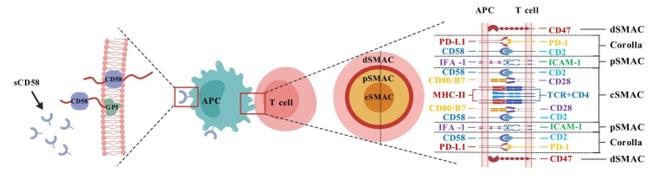 Fig. 1 CD58 isoform structure and its mediated assembly of immune synaptic interfaces.1
Key structural properties of CD58:
- The extracellular region contains IgV-like and IgC2-like domains, belonging to the immunoglobulin superfamily
- Anchor the cell membrane by transmembrane region or GPI
- IGV-like domains bind to T cell surface CD2, mediating immune adhesion and activation
- N-glycosylation modification maintains the protein conformation and binding function
Functions of CD58
The main function of CD58 is to mediate the adhesion and signal transmission between immune cells, and it plays a crucial role in the initiation stage of the adaptive immune response.
| Function | Description |
| Immune adhesion | As a ligand on the surface of antigen-presenting cells, CD58 binds to the CD2 receptor on T cells, forming a physical connection and stabilizing the interaction between immune cells. |
| T cell co-stimulation | While simultaneously recognizing the antigen peptide-MHC complex with the T cell receptor (TCR), the CD58-CD2 binding provides a second signal for T cell activation, promoting its proliferation and differentiation. |
| Immune synapse formation | Participating in the assembly of the immune synapse, it enables T cells to form a stable contact interface with antigen-presenting cells, improving the efficiency of signal transmission. |
| Enhanced cytotoxicity | In NK cells and cytotoxic T cells, the CD58-CD2 interaction can enhance their killing activity against target cells. |
| Inflammation regulation | By promoting T cell activation and cytokine release, it indirectly participates in the regulation and amplification of the inflammatory response. |
The binding of CD58 to CD2 is highly specific, and its affinity is influenced by glycosylation modification and the density distribution on the membrane. Unlike the cooperative binding property of hemoglobin, CD58-CD2, as a receptor-ligand pair, is more focused on mediating cell adhesion and the stability of immune synapses rather than the transport and release of oxygen.
Applications of CD58 and CD58 Antibody in Literature
1. Cao, Jiajia, et al. "A potential prognostic marker for hematologic neoplasms: CD58." Frontiers in Oncology 15 (2025): 1586842. https://doi.org/10.3389/fonc.2025.1586842
The article indicates that CD58 is a glycoprotein widely expressed on immune cells, which forms an immune synapse by binding to CD2 and activates T/NK cells. Its abnormal expression in hematological malignancies significantly affects prognosis and is associated with the resistance and immune rejection of CAR cell therapy. This article aims to explore the future prospects of CD58 in hematology.
2. Zhang, Yalu, et al. "CD58 Immunobiology at a Glance." Frontiers in immunology 12 (2021): 705260. https://doi.org/10.3389/fimmu.2021.705260
The article indicates that CD58 (LFA-3) is a co-stimulatory receptor widely expressed on tissue cells, which combines with CD2 on the surface of T/NK cells to form an immune synapse and activate the immune response. Its soluble form, sCD58, has an immunosuppressive effect in the tumor microenvironment. This article reviews the immunobiology of CD58 and its role in antiviral, autoimmune, transplant rejection and tumor immune escape.
3. Miao, Beiping, et al. "CMTM6 shapes antitumor T cell response through modulating protein expression of CD58 and PD-L1." Cancer Cell 41.10 (2023): 1817-1828. https://doi.org/10.1016/j.ccell.2023.08.008
Abnormal expression of immune checkpoint molecules enables tumors to achieve immune evasion. Studies have found that CMTM6 can simultaneously positively regulate the co-stimulatory molecule CD58 and the co-inhibitory molecule PD-L1, maintaining the expression of these two functionally opposite immune checkpoint ligands. The presence of CMTM6 and CD58 in tumor cells significantly affects T-cell interactions and the response to PD-1 therapy.
4. Wang, Chuanzheng, et al. "CD58 acts as a tumor promotor in hepatocellular carcinoma via activating the AKT/GSK-3β/β-catenin pathway." Journal of Translational Medicine 21.1 (2023): 539. https://doi.org/10.1186/s12967-023-04364-4
The study found that the expression of CD58 was upregulated in liver cancer, and its level was positively correlated with satellite lesions, vascular invasion and poor prognosis. CD58 and its soluble form sCD58 promote tumor proliferation, metastasis and stem cell maintenance by activating the AKT/GSK-3β/β-catenin pathway. Research indicates that CD58 is expected to become a new prognostic marker and therapeutic target for liver cancer.
5. Zhang, Yalu, et al. "Upregulated CD58 is associated with clinicopathological characteristics and poor prognosis of patients with pancreatic ductal adenocarcinoma." Cancer Cell International 21.1 (2021): 327. https://doi.org/10.1186/s12935-021-02037-0
The study found that CD58 was highly expressed in pancreatic ductal adenocarcinoma tissues (with a positive rate of 95.06%), and its level was significantly correlated with tumor grade, size, and the poorer overall survival and disease-free survival of patients. CD58 expression was associated with immune cell infiltration and markers of stemness and mesenchymal transformation. CD58 can serve as an independent prognostic marker for pancreatic cancer.
Creative Biolabs: CD58 Antibodies for Research
Creative Biolabs specializes in the production of high-quality CD58 antibodies for research and industrial applications. Our portfolio includes monoclonal and polyclonal antibodies tailored for ELISA, Flow Cytometry, Western blot, immunohistochemistry, and other diagnostic methodologies.
- Custom CD58 Antibody Development: Tailor-made solutions to meet specific research requirements.
- Bulk Production: Large-scale antibody manufacturing for industry partners.
- Technical Support: Expert consultation for protocol optimization and troubleshooting.
- Aliquoting Services: Conveniently sized aliquots for long-term storage and consistent experimental outcomes.
For more details on our CD58 antibodies, custom preparations, or technical support, contact us at email.
Reference
- Cao, Jiajia, et al. "A potential prognostic marker for hematologic neoplasms: CD58." Frontiers in Oncology 15 (2025): 1586842. Distributed under Open Access license CC BY 4.0, without modification. https://doi.org/10.3389/fonc.2025.1586842
Anti-CD58 antibodies
 Loading...
 Compare




Hot products 
- AActivation
- AGAgonist
- APApoptosis
- BBlocking
- BABioassay
- BIBioimaging
- CImmunohistochemistry-Frozen Sections
- CIChromatin Immunoprecipitation
- CTCytotoxicity
- CSCostimulation
- DDepletion
- DBDot Blot
- EELISA
- ECELISA(Cap)
- EDELISA(Det)
- ESELISpot
- EMElectron Microscopy
- FFlow Cytometry
- FNFunction Assay
- GSGel Supershift
- IInhibition
- IAEnzyme Immunoassay
- ICImmunocytochemistry
- IDImmunodiffusion
- IEImmunoelectrophoresis
- IFImmunofluorescence
- IGImmunochromatography
- IHImmunohistochemistry
- IMImmunomicroscopy
- IOImmunoassay
- IPImmunoprecipitation
- ISIntracellular Staining for Flow Cytometry
- LALuminex Assay
- LFLateral Flow Immunoassay
- MMicroarray
- MCMass Cytometry/CyTOF
- MDMeDIP
- MSElectrophoretic Mobility Shift Assay
- NNeutralization
- PImmunohistologyp-Paraffin Sections
- PAPeptide Array
- PEPeptide ELISA
- PLProximity Ligation Assay
- RRadioimmunoassay
- SStimulation
- SESandwich ELISA
- SHIn situ hybridization
- TCTissue Culture
- WBWestern Blot
