
MSRA Antibodies
Background
MSRA (methionine sulfoxide reductase A) is a key antioxidant repair enzyme, mainly present in eukaryotic cells. This enzyme maintains the REDOX balance of cells and the functional stability of proteins by specifically reducing oxidized methionine residues and repairing oxidized damaged proteins. Deep-sea pressure-resistant organisms and extreme environment microorganisms particularly rely on the efficient repair capacity of MSRA to cope with persistent oxidative stress. In 2002, scientists for the first time resolved the three-dimensional crystal structure of MSRA, revealing how its conformed CXXC active center achieved stereoselective reduction of methionine sulfoxide through a thiol - disulfide bond exchange reaction. This discovery not only promotes theoretical research in the field of oxidative stress, but also provides a molecular basis for the development of anti-aging drugs and antioxidant therapies. MSRA has become an important target in modern biomedical research due to its protective effect in neurodegenerative diseases (such as Alzheimer's disease) and cardiovascular diseases.
Structure of MSRA
MSRA (methionine sulfoxide reductase A) is a key antioxidant enzyme, and its structural characteristics determine its efficient methionine sulfoxide repair ability. The core structure of MSRA is based on the thioredoxin folding pattern and contains a conformed CXXC active site, enabling it to specifically recognize and reduce oxidized methionine residues.
The structure-function relationship of MSRA:
- MSRA CXXC active site (GCGPC die body) by cysteine residues of thiol - disulfide bond exchange reaction catalytic methionine sulfoxide reduction, and rely on thioredoxin provide resilience achieve sustained repair function.
- The thionedoxin folding domain of MSRA forms a stable β-α-β framework to maintain the correct conformation and efficient catalysis of the enzyme. This highly conjunctive structure remains consistent from bacteria to humans.
- MSRA's specific substrate binding pocket selectively recognizes methionine-s-sulfoxide and excludes R-type isomers, and its spatial conformation determines the stereospecificity of the enzyme.
- The N-terminal and C-terminal of different subtypes of MSRA contain targeted sequences to guide subcellular localization or participate in the regulation of protein-protein interactions, such as the localization signals of mitochondrial MSRA and the functional regulatory regions extended from the C-terminal in mammals.
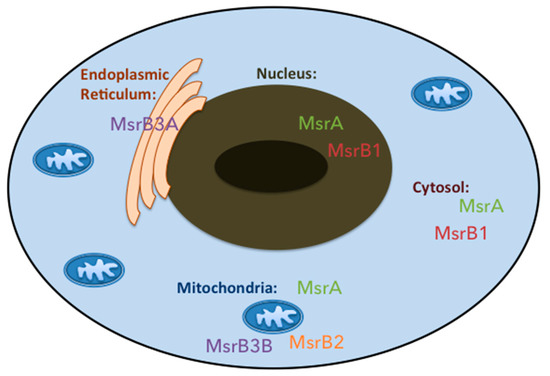 Fig. 1 MsrA and MsrB1 are distributed in the cytoplasm and nucleus of human cells.1
Key structural features of MSRA:
- CXXC Catalytic Activity Center (GCGPC)
- Thioredoxin folding domain
- Methionine-s-sulfoxide specific binding pocket
- Thioredoxin (Trx) -dependent reduction mechanism
- Subcellular localization signal sequences (such as mitochondrial-targeting peptides)
Functions of MSRA
MSRA (methionine sulfoxide reductase A) is a key enzyme in the cellular antioxidant defense system, mainly responsible for repairing oxidized damaged proteins.
| Function | Description |
| Methionine sulfoxide repair | Specifically reduce the oxidized methionine residues (Met-S-O) in proteins and restore protein functions. |
| Antioxidant defense | Maintain the REDOX balance of cells by repairing oxidized damaged proteins. |
| Anti-aging effect | Reduce the loss of protein function caused by oxidative stress and delay the process of cellular aging. |
| Neural protection | Protecting proteins from oxidative damage in the nervous system is associated with neurodegenerative diseases such as Alzheimer's disease. |
| Mitochondrial function maintenance | Mitochondrial subtypes (mtMSRA) special protection mitochondrial protein, stable energy metabolism. |
The catalytic efficiency of MSRA is strictly regulated by the thioredoxin system. Its substrate specificity (acting only on Met-S-O) forms a complementary antioxidant repair network with MSRB (acting on Met-R-O). In mammals, the expression level of MSRA is positively correlated with lifespan and stress resistance ability.
Applications of Myoglobin and Myoglobin Antibody in Literature
1. Hansel, Alfred, et al. "Mitochondrial targeting of the human peptide methionine sulfoxide reductase (MSRA), an enzyme‐involved in the repair of oxidized proteins." The FASEB Journal 16.8 (2002): 911-913. https://doi.org/10.1096/fj.01-0737fje
The article describes that peptidymethionine sulfoxide reductase (MSRA) plays an important role in cellular antioxidant defense by repairing oxidized damaged proteins and participating in regulatory processes. This enzyme is mainly located in the mitochondrial matrix, and its 23 amino acids at the N-terminal mediate mitochondrial targeting.
2. Vougier, Stéphanie, Jean Mary, and Bertrand Friguet. "Subcellular localization of methionine sulphoxide reductase A (MsrA): evidence for mitochondrial and cytosolic isoforms in rat liver cells." Biochemical Journal 373.2 (2003): 531-537. https://doi.org/10.1042/bj20030443
The article describes that the peptide methionine sulfoxide reductase MSRA plays a key role in cellular antioxidant defense by repairing oxidized damaged methionine. Its mitochondrial localization may be mediated by N-terminal signaling peptides, and oxidative modification phenomena exist in different subcellular compartages.
3. Zeng, Jiayu, et al. "Novel Visual Perspective for Tracking of Larval Development, Aging and Antiaging Drugs Screening by Fluorescent Sensing MsrA." Analytical Chemistry (2025). https://pubs.acs.org/doi/10.1021/acs.analchem.4c07050
This study developed a highly sensitive and specific MSRA fluorescent probe, SOMP, which can effectively monitor cell proliferation, zebrafish development and senescence process. It was also discovered for the first time that the anti-aging effect of curcumin is related to the MSRA-mediated REDOX pathway, providing a new tool for the study of senescence mechanisms and the screening of anti-aging drugs.
4. Abebe, Ameha Tsegaye, and Chung G. Kang. "Multi-sequence spreading random access (MSRA) for compressive sensing-based grant-free communication." IEEE Transactions on Communications 69.11 (2021): 7531-7543. https://doi.org/10.1109/TCOMM.2021.3103542
The multi-sequence spread spectrum Random Access (MSRA) scheme proposed in this study enhances code division diversity by allocating multiple spread spectrum sequences to each user, transforming multi-user detection into a well-state multi-measurement vector compressive sensing problem. Compared with the traditional scheme, it can improve the utilization rate of random access resources by 82%. Meanwhile, through the two-stage active user detection mechanism, the probability of missed detection decreases exponentially with the increase of frame length, reaching the lower limit of the failure rate of random access collisions.
5. Jiang, Xu, et al. "Engineering of Methionine Sulfoxide Reductase A with Expanded Substrate Scope for Deracemization of Sulfinyl Esters." ACS Sustainable Chemistry & Engineering 12.32 (2024): 11987-11996. https://pubs.acs.org/doi/10.1021/acssuschemeng.4c03022
In this study, the MSRA variant paMSRA-F59A with an expanded substrate range was developed through computer simulation docking and semi-rational mutation techniques. This variant exhibited excellent activity and enantioselectivity (yield ~50%, ee value 99%) against various thionyl esters, breaking through the limitation that the wild type was only applicable to methyl/ethyl groups. The cyclic deracemization of racemized thionyl esters was achieved by combining styrene monooxygenase (SMO), and (R) -thionyl esters were efficiently synthesized in a yield of >90% and an ee value of 99%, providing a new strategy for the green synthesis of chiral thionyl compounds.
Creative Biolabs: MSRA Antibodies for Research
Creative Biolabs focuses on providing high-quality MSRA (methionine sulfoxide reductase A) antibodies, which are suitable for scientific research and industrial applications. Our products include monoclonal antibodies, which have been strictly verified and are applicable to various experimental techniques such as ELISA, Flow Cytometry, Western blot, and immunohistochemistry (IHC).
- Custom MSRA Antibody Development: Tailor-made solutions to meet specific research requirements.
- Bulk Production: Large-scale antibody manufacturing for industry partners.
- Technical Support: Expert consultation for protocol optimization and troubleshooting.
- Aliquoting Services: Conveniently sized aliquots for long-term storage and consistent experimental outcomes.
For more details on our MSRA antibodies, custom preparations, or technical support, contact us at info@creative-biolabs.com.
Reference
- Lourenço dos Santos, Sofia, Isabelle Petropoulos, and Bertrand Friguet. "The oxidized protein repair enzymes methionine sulfoxide reductases and their roles in protecting against oxidative stress, in ageing and in regulating protein function." Antioxidants 7.12 (2018): 191. https://www.mdpi.com/2076-3921/7/12/191
Anti-MSRA antibodies
 Loading...
 Compare




Hot products 
- AActivation
- AGAgonist
- APApoptosis
- BBlocking
- BABioassay
- BIBioimaging
- CImmunohistochemistry-Frozen Sections
- CIChromatin Immunoprecipitation
- CTCytotoxicity
- CSCostimulation
- DDepletion
- DBDot Blot
- EELISA
- ECELISA(Cap)
- EDELISA(Det)
- ESELISpot
- EMElectron Microscopy
- FFlow Cytometry
- FNFunction Assay
- GSGel Supershift
- IInhibition
- IAEnzyme Immunoassay
- ICImmunocytochemistry
- IDImmunodiffusion
- IEImmunoelectrophoresis
- IFImmunofluorescence
- IGImmunochromatography
- IHImmunohistochemistry
- IMImmunomicroscopy
- IOImmunoassay
- IPImmunoprecipitation
- ISIntracellular Staining for Flow Cytometry
- LALuminex Assay
- LFLateral Flow Immunoassay
- MMicroarray
- MCMass Cytometry/CyTOF
- MDMeDIP
- MSElectrophoretic Mobility Shift Assay
- NNeutralization
- PImmunohistologyp-Paraffin Sections
- PAPeptide Array
- PEPeptide ELISA
- PLProximity Ligation Assay
- RRadioimmunoassay
- SStimulation
- SESandwich ELISA
- SHIn situ hybridization
- TCTissue Culture
- WBWestern Blot
