
TGF beta Antibodies
Background
TGF-beta functions as a multifunctional cytokine which primarily exists in various tissues and cells. The protein functions through specific receptor binding to control cell growth and differentiation and immune responses which support tissue homeostasis and repair processes. TGF-beta functions as a vital regulator that maintains cellular equilibrium during developmental stages and wound recovery processes. Scientists first identified TGF-beta during the 1980s as a fundamental regulator of cellular functions. Scientists have thoroughly examined the complex functional structure of TGF-beta since its discovery which has led to major advances in understanding cell signaling mechanisms and receptor interactions and biological molecular processes.
Structure of TGF-beta
The protein size of TGF-beta measures around 25 kDa. The protein weight shows minor variations between species because of different amino acid sequences and post-translational modifications.
| Species | Human | Mouse | Rat | Zebrafish | Chicken |
| Molecular Weight (kDa) | 25 | 24.5 | 25 | 23.8 | 24 |
| Primary Structural Differences | Contains specific disulfide bonds and a latency-associated peptide (LAP) that regulates activation | Similar to human TGF-beta, but with minor differences in the LAP sequence | Additional glycosylation sites compared to human TGF-beta | Shorter due to fewer amino acids in the mature peptide | Contains a unique domain in the pro-region not present in mammalian homologs |
TGF beta, a protein consisting of around 110 amino acids has a condensed form due, to its structure comprising beta sheets and alpha helices interwoven together intricately. It also includes an embedded latency associated peptide (LAP) which plays a role in managing its activation and availability within the body tissues. The latent state of the protein is essential for its controlled release, in tissues. The secondary structure of TGF beta mainly consists of beta sheets and alpha helices creating a hydrophobic core that helps to support the stability of LAP. The front end connects directly to the LAP while the back end handles receptor binding and signaling activation.
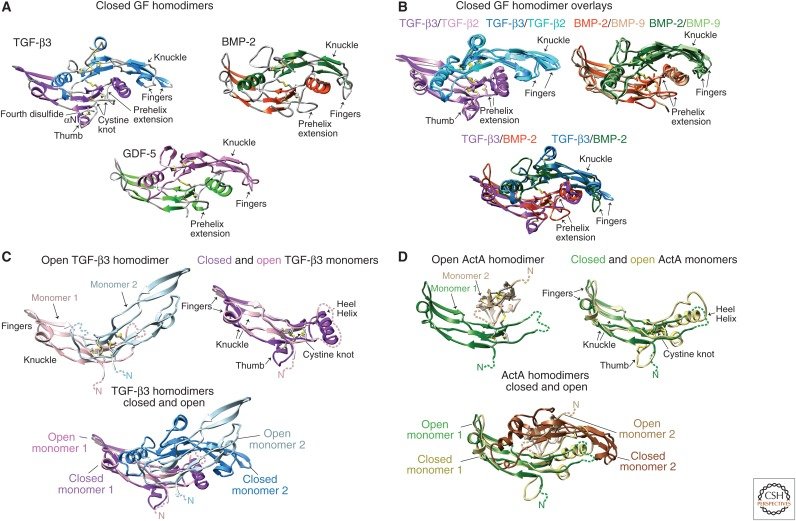 Fig. 1 Structures of transforming growth factor β (TGF-β) family growth factors (GFs). 1
Key structural properties of TGF-beta:
- Compact globular shape
- Embedded latency-associated peptide (LAP)
- Beta-sheets and alpha-helices
- Hydrophobic core for stability
- N-terminal bonding with LAP
- C-terminal signaling domain
Functions of TGF-beta
TGF-beta's primary function is to regulate cell growth and differentiation. However, it is also involved in various physiological processes, including immune system modulation and tissue fibrosis.
| Function | Description |
| Cell Growth Regulation | Controls cell proliferation and differentiation |
| Immune Modulation | Regulates immune responses and inflammation |
| Tissue Repair | Promotes wound healing and tissue regeneration |
| Fibrosis Development | Contributes to the formation of fibrous tissue |
| Apoptosis Regulation | Influences programmed cell death |
The signaling pathway of TGF-beta is highly conserved in contrast to other cytokines, indicating its fundamental role in cell regulation and tissue homeostasis.
Applications of TGF-beta and TGF-beta Antibody in Literature
1. Gomez-Gil, Veronica. "Therapeutic implications of TGFβ in cancer treatment: a systematic review." Cancers 13.3 (2021): 379. https://doi.org/10.3390/cancers13030379
The article highlights myoglobin as a key factor in rhabdomyolysis-induced acute kidney injury and introduces a high-affinity recombinant rabbit anti-myoglobin monoclonal antibody with broad species reactivity and strong diagnostic potential, potentially serving as a neutralizing antibody for RM-related diseases.
2. Connolly, Erin C., Julia Freimuth, and Rosemary J. Akhurst. "Complexities of TGF-β targeted cancer therapy." International journal of biological sciences 8.7 (2012): 964. https://doi.org/10.7150/ijbs.4564
This article delves into the intricate aspects of TGF-beta targeted cancer therapy. It scrutinizes the dual functions of TGF-beta as both a tumor suppressor and a tumor promoter, emphasizing the difficulties in creating effective TGF-beta inhibitors for cancer treatment.
3. Deng, Ziqin, et al. "TGF-β signaling in health, disease and therapeutics." Signal transduction and targeted therapy 9.1 (2024): 61. https://doi.org/10.1038/s41392-024-01764-w
This article provides a comprehensive overview of TGF-beta signaling in health, disease, and therapeutics. It highlights the diverse roles of TGF-beta in tissue homeostasis, immune regulation, and fibrosis, as well as its potential as a therapeutic target in various diseases.
4. Huang, Fei, and Ye-Guang Chen. "Regulation of TGF-β receptor activity." Cell & bioscience 2 (2012): 1-10. https://doi.org/10.1186/2045-3701-2-9
The article examines TGF beta receptor regulation mechanisms and demonstrates how activation and signaling processes occur through proteins and pathways that modify TGF beta responses.
5. Liu, Sijia, Jiang Ren, and Peter Ten Dijke. "Targeting TGFβ signal transduction for cancer therapy." Signal transduction and targeted therapy 6.1 (2021): 8. https://doi.org/10.1038/s41392-020-00436-9
This article discusses targeting TGF-beta signal transduction for cancer therapy. It examines strategies to inhibit TGF-beta signaling pathways, highlighting potential therapeutic approaches to combat cancer progression and metastasis.
6. Yan, Xiaohua, Xiangyang Xiong, and Ye-Guang Chen. "Feedback regulation of TGF-β signaling." Acta biochimica et biophysica Sinica 50.1 (2018): 37-50. https://doi.org/10.1093/abbs/gmx129
The article investigates how TGF-beta signaling gets regulated through feedback mechanisms. The article investigates TGF-beta signaling regulation through feedback mechanisms by focusing on Smad proteins and other regulatory factors that manage TGF-beta responses.
Creative Biolabs: TGF beta Antibodies for Research
Creative Biolabs produces premium TGF-beta antibodies for scientific research and industrial use. Our antibody collection includes monoclonal and polyclonal antibodies which work for ELISA and Flow Cytometry and Western blot and immunohistochemistry and other diagnostic methodologies.
- Custom TGF-beta Antibody Development: Bespoke antibody solutions to fulfill precise research needs.
- Bulk Production: High-volume antibody manufacturing for industrial collaboration.
- Technical Support: Specialized advice for optimizing protocols and resolving technical challenges.
- Aliquoting Services: Pre-measured aliquots for stable long-term storage and reliable experimental results.
For more details on our TGF-beta antibodies, custom preparations, or technical support, contact us at info@creative-biolabs.com.
Reference
- Hinck, Andrew P., Thomas D. Mueller, and Timothy A. Springer. "Structural biology and evolution of the TGF-β family." Cold Spring Harbor perspectives in biology 8.12 (2016): a022103. https://doi.org/10.1101/cshperspect.a022103
Anti-TGF beta antibodies
 Loading...
 Compare




Hot products 
- AActivation
- AGAgonist
- APApoptosis
- BBlocking
- BABioassay
- BIBioimaging
- CImmunohistochemistry-Frozen Sections
- CIChromatin Immunoprecipitation
- CTCytotoxicity
- CSCostimulation
- DDepletion
- DBDot Blot
- EELISA
- ECELISA(Cap)
- EDELISA(Det)
- ESELISpot
- EMElectron Microscopy
- FFlow Cytometry
- FNFunction Assay
- GSGel Supershift
- IInhibition
- IAEnzyme Immunoassay
- ICImmunocytochemistry
- IDImmunodiffusion
- IEImmunoelectrophoresis
- IFImmunofluorescence
- IGImmunochromatography
- IHImmunohistochemistry
- IMImmunomicroscopy
- IOImmunoassay
- IPImmunoprecipitation
- ISIntracellular Staining for Flow Cytometry
- LALuminex Assay
- LFLateral Flow Immunoassay
- MMicroarray
- MCMass Cytometry/CyTOF
- MDMeDIP
- MSElectrophoretic Mobility Shift Assay
- NNeutralization
- PImmunohistologyp-Paraffin Sections
- PAPeptide Array
- PEPeptide ELISA
- PLProximity Ligation Assay
- RRadioimmunoassay
- SStimulation
- SESandwich ELISA
- SHIn situ hybridization
- TCTissue Culture
- WBWestern Blot
