
IFIT3 Antibodies
Background
IFIT3 is a host defense protein induced by interferons, mainly expressed in immune cells and various tissue cells. This protein participates in regulating the innate immune response through its 34-peptide repeat domain. It can positively regulate the RIG-I-like receptor signaling pathway and the interferon cascade reaction, and also exerts dual effects of promoting or inhibiting cancer through influencing immune checkpoint molecules in the tumor microenvironment. In 2003, researchers first cloned and identified the human IFIT3 gene. Subsequent studies revealed that as a key member of the ISG family, it integrates antiviral signals and inflammatory responses through protein-protein interaction networks. With the development of structural biology, scientists have resolved its four-helix bundle folding mode and the structural basis for RNA binding, providing important evidence for understanding the multifaceted effects of this molecule in antiviral immunity, autoimmune diseases, and tumor immunotherapy.
Structure of IFIT3
The molecular weight of IFIT3 protein is approximately 55 kDa, and it varies slightly among different species due to differences in amino acid sequences.
| Species | Humans | Mice | Cow-njama | pigs | Cattle |
| Molecular Weight (kDa) | 55.3 | 54.8 | 55.1 | 55.0 | 55.2 |
| Primary Structural Differences | Contains 9 TPR motifs | High homology with humans | Highly conserved TPR domain | Sequence similarity about 88% | Consistent functional domains |
The IFIT3 protein consists of 478 amino acids. Its core structure is formed by multiple 34-peptide repeating sequences (TPR) arranged in a helix-turn-helix folding pattern. These TPR motifs form protein interaction platforms, enabling IFIT3 to simultaneously bind to multiple signaling molecules. The positively charged regions on the protein surface form RNA binding grooves, mediating its recognition of viral RNA. The C-terminal superhelical domain participates in homodimerization and heterodimerization with IFIT1/IFIT2, while the N-terminal variable region is responsible for binding to immune molecules such as TBK1 and RIG-I, jointly constituting the structural basis for regulating antiviral signal transduction.
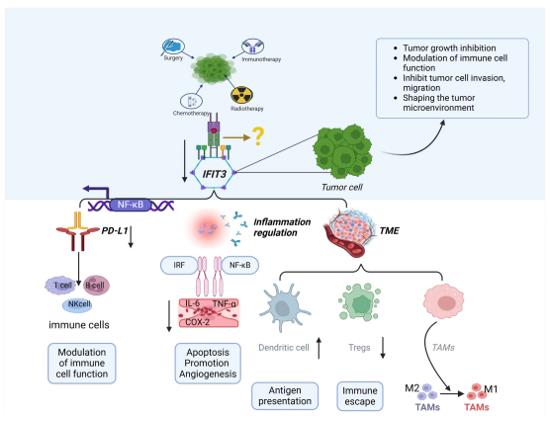 Fig. 1 The role of IFIT3 in tumor immunity and the tumor microenvironment (TME).1
Key structural features of IFIT3:
- Helix-turn-turn fold formed by tandem TPR motifs
- Positive-charged RNA binding groove
- Multiple protein interaction interfaces
- N-terminal and C-terminal functional domains coordinating immune signal transduction
Functions of IFIT3
The main function of IFIT3 is to regulate innate immune responses and viral defense. However, it is also involved in various physiological and pathological processes, including inflammatory responses, tumor progression, and regulation of cell proliferation.
| Function | Description |
| Antiviral immunity | As a key member of interferon-stimulated genes (ISGs), it inhibits viral replication by enhancing the RIG-I-like receptor signaling pathway. |
| Signal transduction regulation | As an adaptor protein for TBK1 kinase, it promotes the phosphorylation and nuclear translocation of IRF3, activating the type I interferon cascade. |
| RNA binding and translation regulation | By using the RNA binding groove, it recognizes viral RNA and regulates the translation efficiency of viral mRNA. |
| Protein interaction platform | Through the TPR domain, it forms homophilic/heterophilic dimers with members of the IFIT family, amplifying antiviral signals. |
| Tumor immune regulation | Regulates the expression of immune checkpoint molecules in the tumor microenvironment, influencing immune escape and tumor progression. |
IFIT3 integrates antiviral signals and inflammatory responses through its multi-protein interaction network mediated by the TPR domain. Changes in its expression level are closely related to viral infection, autoimmune diseases, and the prognosis of various cancers.
Applications of IFIT3 and IFIT3 Antibody in Literature
1. Wu, Rihan, Hao Yang, and Chunlei Liu. "IFIT3: a crucial mediator in innate immunity and tumor progression with therapeutic implications." Frontiers in Immunology 16 (2025): 1515718. https://doi.org/10.3389/fimmu.2025.1515718
The article indicates that the interferon-induced protein IFIT3 has dual functions of antiviral and tumor regulation. It regulates immunity through the interferon signal, RIG-I-like receptors, and NF-κB pathways, and affects the tumor microenvironment and immune evasion. As a new target for cancer immunotherapy, IFIT3 has significant clinical translational potential.
2. Sullivan, Owen M., et al. "IFIT3 RNA-binding activity promotes influenza A virus infection and translation efficiency." Journal of Virology 99.7 (2025): e00286-25. https://doi.org/10.1128/jvi.00286-25
The research has found that IFIT3 can directly bind to RNA and promote the expression and translation of the influenza A virus genes. The RNA binding site is composed of conserved amino acids. After mutation, the virus-promoting ability decreases, but it does not affect protein dimerization, revealing the key mechanism by which IFIT3 regulates viral infection.
3. Huang, Xiangyang, et al. "IFIT3 mediates TBK1 phosphorylation to promote activation of pDCs and exacerbate systemic sclerosis in mice." Clinical and Translational Medicine 14.9 (2024): e1800. https://doi.org/10.1002/ctm2.1800
The study found that the IFIT3/TBK1 signaling pathway is involved in the pathogenesis of scleroderma (SSc) by activating plasmacytoid dendritic cells (pDCs). Intervening in this pathway can inhibit the activation of pDCs and the release of cytokines. The IFIT3 knockout mouse model showed that targeting this pathway can alleviate skin and lung fibrosis, providing a new target for the treatment of SSc.
4. Li, Heng, et al. "UBE2O reduces the effectiveness of interferon-α via degradation of IFIT3 in hepatocellular carcinoma." Cell Death & Disease 14.12 (2023): 854. https://doi.org/10.1038/s41419-023-06369-9
The study found that UBE2O inhibits the efficacy of interferon-α by promoting the ubiquitination and degradation of IFIT3. Inhibiting UBE2O can upregulate the expression of IFIT3 and enhance interferon sensitivity. The K236 site of IFIT3 is a key ubiquitination modification site. Arsenic trioxide (ATO) can increase the level of IFIT3 by inhibiting UBE2O, providing a new strategy for enhancing interferon therapy.
5. Xu, Siyi, et al. "IFIT3 is increased in serum from patients with chronic hepatitis B virus (HBV) infection and promotes the anti-HBV effect of interferon alpha via JAK-STAT2 in vitro." Microbiology spectrum 10.6 (2022): e01557-22. https://doi.org/10.1128/spectrum.01557-22
The study found that IFIT3 enhances the antiviral effect of interferon-α against hepatitis B virus through the JAK-STAT pathway. IFIT3 promotes the phosphorylation of STAT2, upregulates the expression of ISGs, and inhibits the levels of hepatitis B surface antigen, e antigen and viral DNA. A decrease in IFIT3 expression weakens the efficacy of interferon, suggesting that it could be a potential target for the treatment of chronic hepatitis B.
Creative Biolabs: IFIT3 Antibodies for Research
Creative Biolabs specializes in the production of high-quality IFIT3 antibodies for research and industrial applications. Our portfolio includes monoclonal and polyclonal antibodies tailored for ELISA, Flow Cytometry, Western blot, immunohistochemistry, and other diagnostic methodologies.
- Custom IFIT3 Antibody Development: Tailor-made solutions to meet specific research requirements.
- Bulk Production: Large-scale antibody manufacturing for industry partners.
- Technical Support: Expert consultation for protocol optimization and troubleshooting.
- Aliquoting Services: Conveniently sized aliquots for long-term storage and consistent experimental outcomes.
For more details on our IFIT3 antibodies, custom preparations, or technical support, contact us at email.
Reference
- Wu, Rihan, Hao Yang, and Chunlei Liu. "IFIT3: a crucial mediator in innate immunity and tumor progression with therapeutic implications." Frontiers in Immunology 16 (2025): 1515718. Distributed under Open Access license CC BY 4.0, without modification. https://doi.org/10.3389/fimmu.2025.1515718
Anti-IFIT3 antibodies
 Loading...
 Compare




Hot products 
-
Mouse Anti-Gro Monoclonal Antibody (1) (CBMAB-0482-LY)

-
Mouse Anti-CD1C Recombinant Antibody (L161) (CBMAB-C2173-CQ)

-
Mouse Anti-FeLV g27 Recombinant Antibody (1) (CBMAB-V208-1714-FY)

-
Mouse Anti-A2M Recombinant Antibody (V2-178822) (CBMAB-A0036-YC)

-
Rat Anti-AChR Recombinant Antibody (V2-12500) (CBMAB-0990-CN)

-
Mouse Anti-CD33 Recombinant Antibody (P67.6) (CBMAB-C10189-LY)

-
Mouse Anti-BSN Recombinant Antibody (219E1) (CBMAB-1228-CN)

-
Mouse Anti-C1QC Recombinant Antibody (CBFYC-0600) (CBMAB-C0654-FY)

-
Mouse Anti-COL12A1 Recombinant Antibody (CBYY-C3117) (CBMAB-C4560-YY)

-
Mouse Anti-ALDOA Recombinant Antibody (A2) (CBMAB-A2316-YC)

-
Mouse Anti-ARHGDIA Recombinant Antibody (CBCNA-009) (CBMAB-R0415-CN)

-
Mouse Anti-EIF4G1 Recombinant Antibody (2A9) (CBMAB-A2544-LY)

-
Mouse Anti-CD24 Recombinant Antibody (SN3) (CBMAB-C1037-CQ)

-
Mouse Anti-GFAP Recombinant Antibody (20) (CBMAB-G2914-LY)

-
Mouse Anti-FAS2 Monoclonal Antibody (1D4) (CBMAB-0071-CN)

-
Mouse Anti-CEMIP Recombinant Antibody (3C12) (CBMAB-K0296-LY)

-
Mouse Anti-BAD (Phospho-Ser136) Recombinant Antibody (CBYY-0138) (CBMAB-0139-YY)

-
Mouse Anti-CASQ1 Recombinant Antibody (CBFYC-0863) (CBMAB-C0918-FY)

-
Mouse Anti-B2M Recombinant Antibody (CBYY-0050) (CBMAB-0050-YY)

-
Mouse Anti-ABL2 Recombinant Antibody (V2-179121) (CBMAB-A0364-YC)

- AActivation
- AGAgonist
- APApoptosis
- BBlocking
- BABioassay
- BIBioimaging
- CImmunohistochemistry-Frozen Sections
- CIChromatin Immunoprecipitation
- CTCytotoxicity
- CSCostimulation
- DDepletion
- DBDot Blot
- EELISA
- ECELISA(Cap)
- EDELISA(Det)
- ESELISpot
- EMElectron Microscopy
- FFlow Cytometry
- FNFunction Assay
- GSGel Supershift
- IInhibition
- IAEnzyme Immunoassay
- ICImmunocytochemistry
- IDImmunodiffusion
- IEImmunoelectrophoresis
- IFImmunofluorescence
- IGImmunochromatography
- IHImmunohistochemistry
- IMImmunomicroscopy
- IOImmunoassay
- IPImmunoprecipitation
- ISIntracellular Staining for Flow Cytometry
- LALuminex Assay
- LFLateral Flow Immunoassay
- MMicroarray
- MCMass Cytometry/CyTOF
- MDMeDIP
- MSElectrophoretic Mobility Shift Assay
- NNeutralization
- PImmunohistologyp-Paraffin Sections
- PAPeptide Array
- PEPeptide ELISA
- PLProximity Ligation Assay
- RRadioimmunoassay
- SStimulation
- SESandwich ELISA
- SHIn situ hybridization
- TCTissue Culture
- WBWestern Blot
