
SLC24A5 Antibodies
Background
The SLC24A5 gene encodes a transmembrane transport protein mainly expressed in skin melanocytes and belongs to the family of potassium-dependent sodium-calcium exchange proteins. This protein affects the synthesis and deposition of melanin by regulating the ion concentration and pH value within melanocytes, thereby participating in the pigmentation process of the skin, hair and eyes. A study in 2005 found that a specific mutation (rs1426654) on the SLC24A5 gene was one of the key genetic factors causing differences in skin color among Eurasian populations, and its evolution was closely related to the adaptability of vitamin D synthesis during human migration. The discovery and functional analysis of this gene not only deepen the understanding of the genetic basis of human skin color diversity, but also provide an important molecular target for the study of pigment-related diseases and evolutionary genetics.
Structure of SLC24A5
The SLC24A5 gene encodes a transmembrane transporter with a molecular weight of approximately 62 kDa. The specific molecular weight varies slightly among different species, mainly due to minor changes in amino acid sequences.
| Species | Human | Mouse | Zebrafish | Neanderthals |
| Molecular Weight (kDa) | ~62 | ~62 | ~61.5 | ~62 |
| Primary Structural Differences | The key mutation A111T leads to a reduction in skin pigmentation | Wild-type alleles maintain dark fur | Homologous genes are involved in pigmentation and embryonic development | Genomic sequencing confirmed its correlation with the skin color phenotype of ancient humans |
This protein is composed of approximately 500 amino acids and exhibits a typical transmembrane topological structure, with its primary structure containing multiple highly conserved transmembrane helical domains. The secondary structure of the SLC24A5 protein is mainly composed of α -helices, which repeatedly traverse the cell membrane to form a central pore for ion exchange. Its tertiary structure is assembled into a functional unit, and the key amino acid at position 111 (mostly alanine or threonine in humans) is located on a key transmembrane helix. The substitution at this site directly alters the ion transport activity of the protein, thereby regulating the calcium ion concentration and pH value within the melanosomes, and ultimately affecting the synthesis ratio of eumelanin to browomelanin. This molecular mechanism is one of the core genetic bases for the diversity of human skin pigment phenotypes.
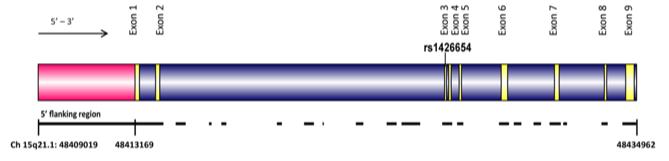 Fig. 1 The structure of the human SLC24A5 gene.1
Key structural properties of SLC24A5:
- Multiple transmembrane helical bundle structures
- Hydrophobic transmembrane regions form ion transport channels
- Key transmembrane domains are responsible for sodium/calcium ion exchange
Functions of SLC24A5
The main function of the SLC24A5 gene is to act as a potassium-dependent sodium-calcium exchanger within melanocytes and regulate pigmentation. In addition, it is also involved in a series of related physiological and evolutionary processes.
| Function | Description |
| Regulation of pigmentation | By exchanging Na⁺, K⁺ and Ca²⁺, the ion concentration and pH value within the melanosomes are regulated, thereby influencing the synthesis ratio of eumelanin to browomelanin. |
| Human skin color variation | The gene on a non synonymous mutations (rs1426654 A111T) is the key to cause skin color becomes shallow Eurasian population genetic factor, reflected the role of natural selection. |
| Adaptation to vitamin D synthesis | In high-latitude regions, the light skin color caused by allelic variations is conducive to ultraviolet absorption and promotes the biosynthesis of vitamin D, which is an environmental adaptive evolution. |
| Organelle ion homeostasis | Maintain the dynamic ionic balance within the cavity of the melanosome, a special organelle, to provide a suitable microenvironment for the activity of its internal enzymes (such as tyrosinase). |
| Disease association | Dysfunctions may be potentially associated with pigment-related diseases such as albinism and dyspigmentation, and are also a molecular marker for studying skin cancer risk. |
The ion transport activity of this protein is substrate-specific and electrically neutral (typically with 4 Na⁺exchanging for 1 Ca²⁺+1 K⁺). This unique stoichiometric relationship differs from other members of the sodium-calcium exchange protein family, making it play an irreplaceable regulatory role in the melanin synthesis pathway.
Applications of SLC24A5 and SLC24A5 Antibody in Literature
1. Mack, Maura, et al. "Two variants in SLC24A5 are associated with "Tiger-Eye" iris pigmentation in Puerto Rican Paso Fino horses." G3: Genes, Genomes, Genetics 7.8 (2017): 2799-2806. https://doi.org/10.1534/g3.117.043786
The article indicates that two mutations in the SLC24A5 gene (Tiger-Eye 1 homozygous or tiger-Eye 2 compound heterozygous) in Puerto Rican Pafinoma result in the Tiger eye phenotype, presenting as yellow/orange iris, but do not affect coat color or cause ocular abnormalities.
2. Giardina, Emiliano, et al. "Haplotypes in SLC24A5 gene as ancestry informative markers in different populations." Current Genomics 9.2 (2008): 110-114. https://doi.org/10.2174/138920208784139528
This study analyzed three polymorphic loci (rs1426654, etc.) within the SLC24A5 gene and confirmed in 471 samples from three continents that its haplotype is highly correlated with human migration and ancestral information, and can be used as an effective ancestral information marker for forensic inference.
3. Ginger, Rebecca S., et al. "SLC24A5 encodes a trans-Golgi network protein with potassium-dependent sodium-calcium exchange activity that regulates human epidermal melanogenesis." Journal of Biological Chemistry 283.9 (2008): 5486-5495. https://doi.org/10.1074/jbc.M707521200
Research has confirmed that the NCKX5 protein encoded by the human SLC24A5 gene directly regulates epidermal melanin production through its potassium-dependent sodium-calcium exchange activity. Its key single nucleotide polymorphism (rs1426654) is significantly associated with differences in natural skin color.
4. Mallick, Chandana Basu, et al. "The light skin allele of SLC24A5 in South Asians and Europeans shares identity by descent." PLoS genetics 9.11 (2013): e1003912. https://doi.org/10.1371/journal.pgen.1003912
Research has found that the rs1426654 polymorphism of the SLC24A5 gene contributes significantly to the differences in skin color among South Asian populations. Its derived alleles are distributed complexly across Eurasia, influenced by language, geography and population history, and there are signs of positive selection.
5. Williams, Ruth M., et al. "A functional approach to understanding the role of NCKX5 in Xenopus pigmentation." PloS one 12.7 (2017): e0180465. https://doi.org/10.1371/journal.pone.0180465
Studies using African clawed frogs as models have shown that the SLC24A5 gene (encoding NCKX5) regulates pigment formation in vivo. Knocking down this gene will reduce pigment deposition, and its complete ion-exchange activity may not be necessary for function.
Creative Biolabs: SLC24A5 Antibodies for Research
Creative Biolabs specializes in the production of high-quality SLC24A5 antibodies for research and industrial applications. Our portfolio includes monoclonal antibodies tailored for ELISA, Flow Cytometry, Western blot, immunohistochemistry, and other diagnostic methodologies.
- Custom SLC24A5 Antibody Development: Tailor-made solutions to meet specific research requirements.
- Bulk Production: Large-scale antibody manufacturing for industry partners.
- Technical Support: Expert consultation for protocol optimization and troubleshooting.
- Aliquoting Services: Conveniently sized aliquots for long-term storage and consistent experimental outcomes.
For more details on our SLC24A5 antibodies, custom preparations, or technical support, contact us at email.
Reference
- Mallick, Chandana Basu, et al. "The light skin allele of SLC24A5 in South Asians and Europeans shares identity by descent." PLoS genetics 9.11 (2013): e1003912. https://doi.org/10.1371/journal.pgen.1003912
Anti-SLC24A5 antibodies
 Loading...
 Compare




Hot products 
- AActivation
- AGAgonist
- APApoptosis
- BBlocking
- BABioassay
- BIBioimaging
- CImmunohistochemistry-Frozen Sections
- CIChromatin Immunoprecipitation
- CTCytotoxicity
- CSCostimulation
- DDepletion
- DBDot Blot
- EELISA
- ECELISA(Cap)
- EDELISA(Det)
- ESELISpot
- EMElectron Microscopy
- FFlow Cytometry
- FNFunction Assay
- GSGel Supershift
- IInhibition
- IAEnzyme Immunoassay
- ICImmunocytochemistry
- IDImmunodiffusion
- IEImmunoelectrophoresis
- IFImmunofluorescence
- IGImmunochromatography
- IHImmunohistochemistry
- IMImmunomicroscopy
- IOImmunoassay
- IPImmunoprecipitation
- ISIntracellular Staining for Flow Cytometry
- LALuminex Assay
- LFLateral Flow Immunoassay
- MMicroarray
- MCMass Cytometry/CyTOF
- MDMeDIP
- MSElectrophoretic Mobility Shift Assay
- NNeutralization
- PImmunohistologyp-Paraffin Sections
- PAPeptide Array
- PEPeptide ELISA
- PLProximity Ligation Assay
- RRadioimmunoassay
- SStimulation
- SESandwich ELISA
- SHIn situ hybridization
- TCTissue Culture
- WBWestern Blot
