
ADAM23 Antibodies
Background
ADAM23 is a membrane-bound glycoprotein belonging to the ADAM family (integrin metalloproteinases). It is mainly expressed in the nervous system of mammals, especially in the brain tissue where its content is abundant. This protein mediates cell adhesion and signal transduction through its extracellular domain's integrin domain and participates in processes such as neural development, synapse formation, and cell migration. ADAM23 is downregulated in various tumor tissues and is considered to play an important role in tumor suppression and the maintenance of the functions of the nervous system. This gene was first cloned and identified in 1998. Its structural feature is the lack of proteolytic enzyme activity and it mainly regulates cell behavior by interacting with other integrins or cell surface receptors. The study of ADAM23 not only deepens our understanding of neural development and tumor biology, but also provides potential molecular targets for the diagnosis and treatment of related diseases.
Structure of ADAM23
The protein encoded by the ADAM23 gene has a molecular weight of approximately 87 kDa. Its size varies among different species, mainly due to minor changes in the amino acid sequence. This protein contains approximately 820 amino acids and belongs to the ADAM family in structure. It possesses typical metalloprotease domains and integrin-removing domains. The ADAM23 protein mediates intercellular interactions through multiple functional domains in its extracellular region. Its structure includes a unique cysteine-rich region and a transmembrane domain, enabling it to anchor to the cell membrane and participate in signal transduction. In terms of secondary structure, ADAM23 exhibits a complex folding pattern, maintaining the stability of its spatial conformation through multiple disulfide bonds. Unlike many proteins in the ADAM family, ADAM23 lacks proteolytic enzyme activity. Its function is mainly achieved through specific binding to other membrane proteins or extracellular matrix components, and this structural feature enables it to play a unique regulatory role in biological processes such as nervous system development and tumor suppression.
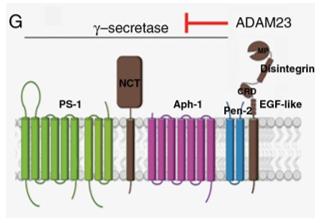 Fig. 1 Schematic diagram of the membrane topology of the ADAM23 and GS.1
Key structural properties of ADAM23:
- Typical composition of the ADAM family domain
- Domain variation lacking proteolytic enzyme activity
- The extracellular conformation stabilized by disulfide bonds
Functions of ADAM23
The main function of the ADAM23 gene is to mediate cell adhesion and signal transduction, and it plays a crucial role in the development of the nervous system. However, this gene is also involved in various physiological and pathological processes, including tumor suppression and regulation of synaptic plasticity.
| Function | Description |
| Neural Developmental Regulation | ADAM23 binds to integrins through its integrin-binding domain, regulating neuronal migration and axon guidance. |
| Cell Adhesion Mediation | Mediates specific adhesion between cells and between cells and extracellular matrix, maintaining tissue integrity. |
| Tumor suppressor function | It is expressed at a lower level in various tumors and inhibits tumor invasion and metastasis by regulating intercellular interactions. |
| Synaptic formation support | Participates in the formation of the connection between presynaptic and postsynaptic membranes, maintaining the stability of neurotransmitter transmission. |
| Signal Transduction Regulation | Interacts with other membrane receptors, activates or inhibits intracellular signaling pathways, and regulates cell proliferation and differentiation. |
The ADAM23 protein lacks enzymatic activity and its function is entirely dependent on the protein interaction network. This structural-function characteristic enables it to act as a molecular bridge in cell communication, participating in tissue development and disease occurrence by regulating the homeostasis of the cellular microenvironment.
Applications of ADAM23 and ADAM23 Antibody in Literature
1. Jandrey, Elisa Helena Farias, et al. "A novel program of infiltrative control in astrocytomas: ADAM23 depletion promotes cell invasion by activating γ-secretase complex." Neuro-Oncology Advances 5.1 (2023): vdad147. https://doi.org/10.1093/noajnl/vdad147
The article indicates that the downregulation of ADAM23 prompts astrocytomas to shift from proliferation to invasion, by activating γ-secretase to promote Aβ deposition and NICD release. Inhibiting γ-secretase can block the invasion of tumors with low ADAM23 expression, providing a potential therapeutic strategy for this subtype.
2. Kozar-Gillan, Nina, et al. "LGI3/2–ADAM23 interactions cluster Kv1 channels in myelinated axons to regulate refractory period." Journal of Cell Biology 222.4 (2023): e202211031. https://doi.org/10.1083/jcb.202211031
The article indicates that ADAM23, by binding to LGI2/3, maintains the aggregation and stability of Kv1 potassium channels near the axonal proximal zone, and affects the refractory period to achieve high-frequency discharge. This reveals a new mechanism for regulating axonal physiology through the regulation of channels beneath the myelin sheath.
3. Markus-Koch, Annett, et al. "ADAM23 promotes neuronal differentiation of human neural progenitor cells." Cellular & Molecular Biology Letters 22.1 (2017): 16. https://doi.org/10.1186/s11658-017-0045-1
The article indicates that the upregulation of ADAM23 during the differentiation of human neural progenitor cells promotes the generation of neurons and axon growth, while its downregulation induces apoptosis. It affects cell fate by regulating specific signaling pathways, revealing its crucial role in neural development.
4. Hirano, Yoko, et al. "Biallelic LGI1 and ADAM23 variants cause hippocampal epileptic encephalopathy via the LGI1–ADAM22/23 pathway." Brain 148.10 (2025): 3514-3522. https://doi.org/10.1093/brain/awaf202
The article indicates that the double allelic variation of LGI1 leads to a reduction in the binding of secretion and ADAM22, resulting in neonatal epileptic encephalopathy. The severity of the condition is related to the residual function. The variation of ADAM23 is associated with fatal epilepsy, jointly defining the disease spectrum of the LGI1-ADAM22/23 pathway.
5. Rigon, Laura, et al. "ADAM23, a gene related to LGI1, is not linked to autosomal dominant lateral temporal epilepsy." Epilepsy research and treatment 2011.1 (2011): 258365. https://doi.org/10.1155/2011/258365
The article indicates that ADAM23 interacts with LGI1 to regulate neuronal excitability. However, through a linkage analysis using microsatellite markers from 13 Italian families, it was ruled out that ADAM23 is the main pathogenic gene for autosomal dominant lateral temporal lobe epilepsy.
Creative Biolabs: ADAM23 Antibodies for Research
Creative Biolabs specializes in the production of high-quality ADAM23 antibodies for research and industrial applications. Our portfolio includes monoclonal and polyclonal antibodies tailored for ELISA, Flow Cytometry, Western blot, immunohistochemistry, and other diagnostic methodologies.
- Custom ADAM23 Antibody Development: Tailor-made solutions to meet specific research requirements.
- Bulk Production: Large-scale antibody manufacturing for industry partners.
- Technical Support: Expert consultation for protocol optimization and troubleshooting.
- Aliquoting Services: Conveniently sized aliquots for long-term storage and consistent experimental outcomes.
For more details on our ADAM23 antibodies, custom preparations, or technical support, contact us at email.
Reference
- Jandrey, Elisa Helena Farias, et al. "A novel program of infiltrative control in astrocytomas: ADAM23 depletion promotes cell invasion by activating γ-secretase complex." Neuro-Oncology Advances 5.1 (2023): vdad147. Distributed under Open Access license CC BY 4.0, and cropped from the original figure.https://doi.org/10.1093/noajnl/vdad147
Anti-ADAM23 antibodies
 Loading...
 Compare




Hot products 
-
Mouse Anti-FLT1 Recombinant Antibody (11) (CBMAB-V0154-LY)

-
Mouse Anti-AAV8 Recombinant Antibody (V2-634028) (CBMAB-AP022LY)

-
Mouse Anti-ALB Recombinant Antibody (V2-363290) (CBMAB-S0173-CQ)

-
Mouse Anti-CASP7 Recombinant Antibody (10-01-62) (CBMAB-C2005-LY)

-
Mouse Anti-APCS Recombinant Antibody (CBYC-A663) (CBMAB-A3054-YC)

-
Mouse Anti-B2M Recombinant Antibody (CBYY-0050) (CBMAB-0050-YY)

-
Mouse Anti-AKT1 (Phosphorylated S473) Recombinant Antibody (V2-505430) (PTM-CBMAB-0067LY)

-
Mouse Anti-AKT1/AKT2/AKT3 (Phosphorylated T308, T309, T305) Recombinant Antibody (V2-443454) (PTM-CBMAB-0030YC)

-
Mouse Anti-FLI1 Recombinant Antibody (CBXF-0733) (CBMAB-F0435-CQ)

-
Mouse Anti-APP Recombinant Antibody (DE2B4) (CBMAB-1122-CN)

-
Mouse Anti-CEMIP Recombinant Antibody (3C12) (CBMAB-K0296-LY)

-
Mouse Anti-ATM Recombinant Antibody (2C1) (CBMAB-A3970-YC)

-
Mouse Anti-AMIGO2 Recombinant Antibody (CBYY-C0756) (CBMAB-C2192-YY)

-
Mouse Anti-BMI1 Recombinant Antibody (CBYC-P026) (CBMAB-P0108-YC)

-
Mouse Anti-BrdU Recombinant Antibody (IIB5) (CBMAB-1038CQ)

-
Mouse Anti-CA9 Recombinant Antibody (CBXC-2079) (CBMAB-C0131-CQ)

-
Mouse Anti-CORO1A Recombinant Antibody (4G10) (V2LY-1206-LY806)

-
Rabbit Anti-DLK1 Recombinant Antibody (9D8) (CBMAB-D1061-YC)

-
Mouse Anti-HTLV-1 gp46 Recombinant Antibody (CBMW-H1006) (CBMAB-V208-1154-FY)

-
Mouse Anti-ALPL Antibody (B4-78) (CBMAB-1009CQ)

- AActivation
- AGAgonist
- APApoptosis
- BBlocking
- BABioassay
- BIBioimaging
- CImmunohistochemistry-Frozen Sections
- CIChromatin Immunoprecipitation
- CTCytotoxicity
- CSCostimulation
- DDepletion
- DBDot Blot
- EELISA
- ECELISA(Cap)
- EDELISA(Det)
- ESELISpot
- EMElectron Microscopy
- FFlow Cytometry
- FNFunction Assay
- GSGel Supershift
- IInhibition
- IAEnzyme Immunoassay
- ICImmunocytochemistry
- IDImmunodiffusion
- IEImmunoelectrophoresis
- IFImmunofluorescence
- IGImmunochromatography
- IHImmunohistochemistry
- IMImmunomicroscopy
- IOImmunoassay
- IPImmunoprecipitation
- ISIntracellular Staining for Flow Cytometry
- LALuminex Assay
- LFLateral Flow Immunoassay
- MMicroarray
- MCMass Cytometry/CyTOF
- MDMeDIP
- MSElectrophoretic Mobility Shift Assay
- NNeutralization
- PImmunohistologyp-Paraffin Sections
- PAPeptide Array
- PEPeptide ELISA
- PLProximity Ligation Assay
- RRadioimmunoassay
- SStimulation
- SESandwich ELISA
- SHIn situ hybridization
- TCTissue Culture
- WBWestern Blot
