
HOXB13 Antibodies
Background
HOXB13 is a homologous box transcription factor gene and belongs to the B cluster of the HOX gene family. This gene is mainly expressed in specific organs of vertebrates such as the prostate and colon, and participates in regulating key biological processes such as cell differentiation, tissue development, and organ morphogenesis. Studies have shown that HOXB13 plays a significant role in the proliferation and maintenance of prostate epithelial cells by binding to the target DNA sequence and regulating the transcriptional activity of downstream genes. This gene was first identified in the 1990s. Its abnormal expression or mutation is associated with a variety of diseases, especially a significantly increased risk of hereditary prostate cancer. Due to its clear tissue specificity and significant regulatory functions, HOXB13 has become an important molecular model for studying developmental biology, tumorigenesis and targeted therapy, providing key clues for understanding gene regulatory networks and disease mechanisms.
Structure of HOXB13
HOXB13 is a protein with a molecular weight of approximately 33 kDa. Its weight varies slightly among different mammalian species due to differences in non-coding sequences of regulatory regions.
| Species | Human | Mouse | Rat |
| Molecular Weight (kDa) | 33.1 | 33.0 | 33.2 |
| Primary Structural Differences | Contains 284 amino acids, with typical homologous alien box structure domain | The amino acid sequence is highly homologous, and the DNA binding domain is completely conserved | The core functional domain is consistent with that of humans, but there are differences in the N-terminal regulatory regions |
The HOXB13 protein contains a homologous box domain composed of approximately 60 amino acids, which folds into three α-helicles, forming a typical helical - turning - helix (HTH) structure, with the third helix serving as a recognition helix to bind to a specific DNA sequence. Its overall three-dimensional structure forms a tight spherical domain, which is stabilized through hydrophobic action. The N-terminal and C-terminal regions of this protein contain transcriptional regulatory modules, which precisely control the development and differentiation processes of target organs such as the prostate and colon by interacting with different co-regulatory factors.
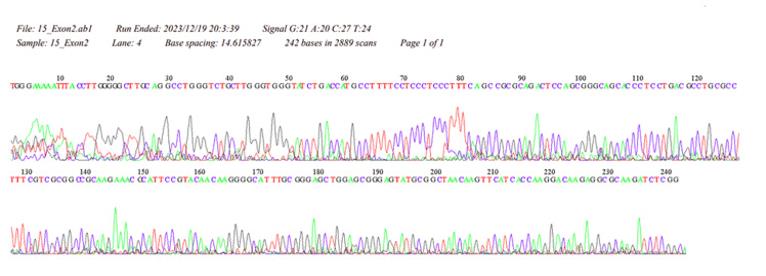 Fig. 1 The sequence of HOXB13.1
Key structural properties of HOXB13:
- Conserved homologous box DNA binding domain
- Helix-turn-helix (HTH) core 3D conformation
- Specific N-terminal transcriptional regulatory regions
Functions of HOXB13
The main function of the HOXB13 gene is to act as a transcription factor to regulate organ development and cell differentiation. However, it also plays a role in a variety of pathophysiological processes, including tumorigenesis and hormone response regulation.
| Function | Description |
| Organ morphogenesis | In the embryonic development of organs such as the prostate and colon, it regulates cell fate determination and tissue-specific differentiation. |
| Gene transcriptional regulation | By binding to specific DNA sequences through its homeobox domain, it activates or represses transcription of downstream target genes. |
| Tumor suppression and promotion | In prostate cancer, specific mutations (such as G84E) significantly increase the genetic risk; However, in some contexts, it may inhibit metastasis. |
| Hormone signal regulation | With the androgen receptor (AR) on the interaction of hormone signaling pathways affect prostatic cell proliferation and survival. |
| Maintenance of stem cell homeostasis | In certain adult tissue (such as prostate epithelial) involved in the maintenance of stem cells/progenitor cells and regulation. |
Unlike the widely expressed "housekeeping" transcription factors, HOXB13 exhibits strict tissue and spatiotemporal expression specificity, which determines the precision and criticality of its function, especially its role as a "molecular switch" in the development and disease of the prostate.
Applications of HOXB13 and HOXB13 Antibody in Literature
1. ZÅowocka-PerÅowska, Elżbieta, Aleksandra ToÅoczko-Grabarek, and Jan LubiÅski. "Germline HOXB13 mutation p. G84E do not confer an increased bladder or kidney cancer risk in polish population." Hereditary Cancer in Clinical Practice 20.1 (2022): NA-NA. https://doi.org/10.1186/s13053-021-00208-8
In this paper, the HOXB13 p.G84E mutation was detected in 1,418 patients with bladder cancer and 813 patients with renal cancer in Poland. It was found that the frequencies were 0.2% and 0.4% respectively, and there were no significant differences compared with healthy controls. The results indicated that this mutation was not associated with the incidence of bladder cancer and kidney cancer in the Polish population.
2. Kalds, Peter, et al. "Ovine HOXB13: expanding the gene repertoire of sheep tail patterning and implications in genetic improvement." Communications Biology 5.1 (2022): 1196. https://doi.org/10.1038/s42003-022-04199-7
The article indicates that the HOXB13 gene is an important regulatory factor for the tail length of sheep. This discovery enhances the understanding of the genetic mechanism of tail type and will promote molecular marker-based breeding to optimize sheep production and animal welfare.
3. Sulaiman, Kazhal M., Rebwar M. Hama Salih, and Rebwar Hamasalih. "Study of HOXB13 Gene Variants in Prostate Cancer Patients." Cureus 16.10 (2024). https://doi.org/10.7759/cureus.72513
In this study, mutations in the HOXB13 gene were found in 33 patients with prostate cancer (a total of 21 cases), while no mutations were detected in the 23 controls. This mutation, along with advanced age, family history, smoking and high PSA levels, jointly suggests its potential value in risk stratification.
4. Aspuria, Paul-Joseph, et al. "HOXB13 controls cell state through super-enhancers." Experimental Cell Research 393.1 (2020): 112039. https://doi.org/10.1016/j.yexcr.2020.112039
The article indicates that HOXB13 is abnormally highly expressed in poorly differentiated sarcomas and is a key factor in maintaining cellular state. Its overexpression inhibits the differentiation of mesenchymal progenitor cells, while knockdown promotes the bone differentiation of rhabdoid tumors and inhibits tumor growth.
5. Jeong, Eun-A., et al. "A Comprehensive Analysis of HOXB13 Expression in Hepatocellular Carcinoma." Medicina 60.5 (2024): 716. https://doi.org/10.3390/medicina60050716
Research has found that high expression of HOXB13 in hepatocellular carcinoma is associated with a poor prognosis and promotes the invasion and migration of cancer cells. The expression of this gene is associated with the infiltration of various immune cells and molecules such as MMP9, and it is a potential therapeutic target.
Creative Biolabs: HOXB13 Antibodies for Research
Creative Biolabs specializes in the production of high-quality HOXB13 antibodies for research and industrial applications. Our portfolio includes monoclonal antibodies tailored for ELISA, Flow Cytometry, Western blot, immunohistochemistry, and other diagnostic methodologies.
- Custom HOXB13 Antibody Development: Tailor-made solutions to meet specific research requirements.
- Bulk Production: Large-scale antibody manufacturing for industry partners.
- Technical Support: Expert consultation for protocol optimization and troubleshooting.
- Aliquoting Services: Conveniently sized aliquots for long-term storage and consistent experimental outcomes.
For more details on our HOXB13 antibodies, custom preparations, or technical support, contact us at email.
Reference
- Sulaiman, Kazhal M., Rebwar M. Hama Salih, and Rebwar Hamasalih. "Study of HOXB13 Gene Variants in Prostate Cancer Patients." Cureus 16.10 (2024). https://doi.org/10.7759/cureus.72513
Anti-HOXB13 antibodies
 Loading...
 Compare




Hot products 
-
Mouse Anti-ALDOA Recombinant Antibody (A2) (CBMAB-A2316-YC)

-
Mouse Anti-BZLF1 Recombinant Antibody (BZ.1) (CBMAB-AP705LY)

-
Mouse Anti-ACVR1C Recombinant Antibody (V2-179685) (CBMAB-A1041-YC)

-
Mouse Anti-ASTN1 Recombinant Antibody (H-9) (CBMAB-1154-CN)

-
Rat Anti-ABCC11 Recombinant Antibody (V2-179001) (CBMAB-A0236-YC)

-
Mouse Anti-ALB Recombinant Antibody (V2-180650) (CBMAB-A2186-YC)

-
Mouse Anti-BIRC5 Recombinant Antibody (6E4) (CBMAB-CP2646-LY)

-
Rabbit Anti-ATF4 Recombinant Antibody (D4B8) (CBMAB-A3872-YC)

-
Mouse Anti-CDKL5 Recombinant Antibody (CBFYC-1629) (CBMAB-C1689-FY)

-
Mouse Anti-CD247 Recombinant Antibody (6B10.2) (CBMAB-C1583-YY)

-
Mouse Anti-CRYAB Recombinant Antibody (A4345) (CBMAB-A4345-YC)

-
Mouse Anti-ALB Recombinant Antibody (V2-55272) (CBMAB-H0819-FY)

-
Mouse Anti-ABCA3 Recombinant Antibody (V2-178911) (CBMAB-A0145-YC)

-
Mouse Anti-EGR1 Recombinant Antibody (CBWJZ-100) (CBMAB-Z0289-WJ)

-
Mouse Anti-CAT Recombinant Antibody (724810) (CBMAB-C8431-LY)

-
Mouse Anti-GluRIIA Monoclonal Antibody (8B4D2) (CBMAB-0305-CN)

-
Rabbit Anti-Acetyl-Histone H4 (Lys16) Recombinant Antibody (V2-623415) (CBMAB-CP1021-LY)

-
Mouse Anti-B2M Recombinant Antibody (CBYY-0050) (CBMAB-0050-YY)

-
Mouse Anti-GGT1 Recombinant Antibody (1F9) (CBMAB-G3273-LY)

-
Mouse Anti-ENO2 Recombinant Antibody (H14) (CBMAB-E1341-FY)

- AActivation
- AGAgonist
- APApoptosis
- BBlocking
- BABioassay
- BIBioimaging
- CImmunohistochemistry-Frozen Sections
- CIChromatin Immunoprecipitation
- CTCytotoxicity
- CSCostimulation
- DDepletion
- DBDot Blot
- EELISA
- ECELISA(Cap)
- EDELISA(Det)
- ESELISpot
- EMElectron Microscopy
- FFlow Cytometry
- FNFunction Assay
- GSGel Supershift
- IInhibition
- IAEnzyme Immunoassay
- ICImmunocytochemistry
- IDImmunodiffusion
- IEImmunoelectrophoresis
- IFImmunofluorescence
- IGImmunochromatography
- IHImmunohistochemistry
- IMImmunomicroscopy
- IOImmunoassay
- IPImmunoprecipitation
- ISIntracellular Staining for Flow Cytometry
- LALuminex Assay
- LFLateral Flow Immunoassay
- MMicroarray
- MCMass Cytometry/CyTOF
- MDMeDIP
- MSElectrophoretic Mobility Shift Assay
- NNeutralization
- PImmunohistologyp-Paraffin Sections
- PAPeptide Array
- PEPeptide ELISA
- PLProximity Ligation Assay
- RRadioimmunoassay
- SStimulation
- SESandwich ELISA
- SHIn situ hybridization
- TCTissue Culture
- WBWestern Blot
