
Ly6a Antibodies
Background
Ly6a (also known as Sca-1) is a protein anchored to the cell surface. It was initially discovered in mouse lymphocytes and later was confirmed to be widely expressed in hematopoietic stem cells and various tissue stem cells. As an important marker in stem cell research, it has long been used to identify cells with regenerative potential. Recent studies have found that Ly6a plays a key role in tissue repair, tumor occurrence, and infection - it can be utilized by nucleated Fusobacterium to drive colorectal cancer, and can also mediate the crossing of AAV virus through the blood-brain barrier. These findings have transformed it from a simple marker into a key molecule connecting stem cell biology and gene therapy.
Structure of Ly6a
Ly6a (also known as Sca-1) is a glycosylphosphatidylinositol-anchored protein. The molecular weights vary slightly among different species. Its basic characteristics are as shown in the table below:
| Species | Human | Mouse | Rat |
| Molecular Weight (kDa) | 15 | 18 | 16 |
| Primary Structural Differences | Functionally replaced by genes such as LY6E, structure similar to rat | Highly glycosylated, containing LU domain, most thoroughly studied | Highly homologous to mouse, with splicing variants |
The Ly6a protein contains approximately 130 amino acids and is anchored to the outer surface of the cell membrane through GPI. Its core structure includes the characteristic LY6 domain, which is formed by 8-10 cysteine residues and contains multiple disulfide bonds to maintain the stable three-dimensional conformation of the protein. This unique structure enables Ly6a to participate in cell signal transduction as a co-receptor, regulating stem cell self-renewal and differentiation. Unlike soluble myoglobin, Ly6a is fixed to the cell membrane through lipid anchoring, allowing it to interact with other membrane proteins and soluble ligands on the cell surface, and play a regulatory role in the maintenance of hematopoietic stem cells, lymphocyte activation, and tissue regeneration.
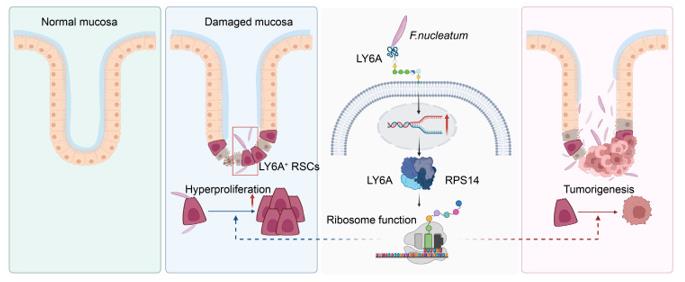 Fig. 1 Fusobacterium nucleatum Targets LY6A⁺Resident Stem Cells to Promote Colorectal Cancer Initiation.1
The key structural characteristics of Ly6a (Sca-1):
- Trimeric protein folding: Disulfide bonds stabilize three cyclic structures
- GPI membrane anchoring: No transmembrane region, anchored outside the membrane
- Cysteine-rich: Disulfide bonds maintain protein stability
- Sulfation modification: Presence of N/O-sulfated sites
- LU domain: Mediating protein interactions
- Lipid raft localization: Enriched in membrane microregions to participate in signal transduction
Functions of Ly6a
The main function of Ly6a (Sca-1) is to participate in stem cell regulation and cell signal transduction. However, it also plays a role in various physiological and pathological processes, including tissue repair, immune regulation, and pathogen infection.
| Function | Description |
| Stem cell markers | Ly6a has long been used to identify and enrich hematopoietic stem cells and various tissue stem cells, and is an important tool in regenerative medicine research. |
| Tissue injury repair | When the intestinal tissue is damaged, the LY6A+ resident stem cells are activated to participate in the repair process; under infection conditions, they can be hijacked by pathogens to drive abnormal proliferation. |
| Pathogen receptor | Fusobacterium nucleatum uses LY6A as a receptor to bind to intestinal stem cells, facilitating bacterial colonization and promoting the occurrence of colorectal cancer. |
| Virus vector receptor | As the membrane receptor of AAV-PHP.B virus, it mediates its efficient passage through the blood-brain barrier and plays a crucial role in the gene delivery to the nervous system. |
| Immune Regulation | Expresses in activated lymphocytes and participates in the regulation of T-cell responses; its deficiency can affect the expression of immunoglobulin light chains in intestinal B cells. |
| Tumor Progression | In leukemia, high expression of this tumor marker can enhance the ability of matrix degradation, promote tumor invasion and progression, and shorten the survival period of the host. |
Ly6a exhibits diverse functional characteristics in different tissues and physiological scenarios. Its dual identity as a receptor and a marker makes it an important molecule that connects stem cell biology, infection and tumor research, and gene therapy.
Applications of Ly6a and Ly6a Antibody in Literature
1. Wang, Qinying, et al. "Fusobacterium nucleatum promotes colorectal cancer through neogenesis of tumor stem cells." The Journal of Clinical Investigation 135.3 (2025). https://doi.org/10.1172/JCI181595
This study reveals that Fusobacterium nucleatum invades intestinal stem cells through the LY6A receptor, upregulates RPS14 to promote their excessive proliferation, and converts the repair stem cells into tumor stem cells, thereby driving the occurrence of colorectal cancer. This discovery provides a new target for cancer prevention and treatment.
2. Huang, Qin, et al. "Delivering genes across the blood-brain barrier: LY6A, a novel cellular receptor for AAV-PHP. B capsids." PloS one 14.11 (2019): e0225206. https://doi.org/10.1371/journal.pone.0225206
This study reveals that LY6A is the key receptor for the AAV-PHP.B viral vector to cross the blood-brain barrier and efficiently infect the central nervous system. This discovery explains the differences of the virus in different mouse strains and provides an important basis for the development of gene therapy vectors for human neurological diseases.
3. Marín-Llera, Jessica Cristina, et al. "SCA-1/Ly6A mesodermal skeletal progenitor subpopulations reveal differential commitment of early limb bud cells." Frontiers in Cell and Developmental Biology 9 (2021): 656999. https://doi.org/10.3389/fcell.2021.656999
In this study, two distinct subpopulations of skeletal progenitor cells with differential expression of SCA-1 (LY6A) were identified in the early limb buds. The SCA-1+ cells exhibited stronger osteogenic and tendon differentiation capabilities, but weaker chondrogenic ability. This indicates that SCA-1 regulates the differentiation fate of skeletal progenitor cells during early embryonic development.
4. Hsu, Yu-Chiao, et al. "Acute lymphoid leukemia cells with greater stem cell antigen-1 (Ly6a/Sca-1) expression exhibit higher levels of metalloproteinase activity and are more aggressive in vivo." PLoS One 9.2 (2014): e88966. https://doi.org/10.1371/journal.pone.0088966
This study found that the stem cell antigen Sca-1 (LY6A) is highly expressed in acute lymphoblastic leukemia and can promote tumor invasion. The mechanism is related to the upregulation of matrix metalloproteinases and the enhancement of the ability to degrade the tissue matrix, ultimately leading to accelerated leukemia progression and shortened host survival period.
5. Jones, Morgan A., et al. "Investigating B cell development, natural and primary antibody responses in Ly-6A/Sca-1 deficient mice." PLoS One 11.6 (2016): e0157271. https://doi.org/10.1371/journal.pone.0157271
This study found that the absence of Sca-1 did not affect the primary antibody response or B-cell development in mice, but it led to a significant increase in the expression of immunoglobulin λ light chain in the intestinal lamina propria B cells, and an increase in serum IgA-λ levels. This suggests that Sca-1 may have a specific role in regulating intestinal mucosal immunity.
Creative Biolabs: Ly6a Antibodies for Research
Creative Biolabs specializes in the production of high-quality Ly6a antibodies for research and industrial applications. Our portfolio includes monoclonal and polyclonal antibodies tailored for ELISA, Flow Cytometry, Western blot, immunohistochemistry, and other diagnostic methodologies.
- Custom Ly6a Antibody Development: Tailor-made solutions to meet specific research requirements.
- Bulk Production: Large-scale antibody manufacturing for industry partners.
- Technical Support: Expert consultation for protocol optimization and troubleshooting.
- Aliquoting Services: Conveniently sized aliquots for long-term storage and consistent experimental outcomes.
For more details on our Ly6a antibodies, custom preparations, or technical support, contact us at email.
Reference
- Wang, Qinying, et al. "Fusobacterium nucleatum promotes colorectal cancer through neogenesis of tumor stem cells." The Journal of Clinical Investigation 135.3 (2025). Distributed under Open Access license CC BY 4.0, without modification. https://doi.org/10.1172/JCI181595
Anti-Ly6a antibodies
 Loading...
 Compare




Hot products 
-
Mouse Anti-ADAM29 Recombinant Antibody (V2-179787) (CBMAB-A1149-YC)

-
Mouse Anti-AHCYL1 Recombinant Antibody (V2-180270) (CBMAB-A1703-YC)

-
Mouse Anti-GFAP Recombinant Antibody (5) (CBMAB-G0346-LY)

-
Mouse Anti-B2M Recombinant Antibody (CBYY-0050) (CBMAB-0050-YY)

-
Mouse Anti-CD2AP Recombinant Antibody (BR083) (CBMAB-BR083LY)

-
Mouse Anti-CD24 Recombinant Antibody (SN3) (CBMAB-C1037-CQ)

-
Mouse Anti-BIRC7 Recombinant Antibody (88C570) (CBMAB-L0261-YJ)

-
Mouse Anti-Acetyl-α-Tubulin (Lys40) Recombinant Antibody (V2-623485) (CBMAB-CP2897-LY)

-
Human Anti-SARS-CoV-2 Spike Recombinant Antibody (CBC05) (CBMAB-CR005LY)

-
Mouse Anti-AMH Recombinant Antibody (5/6) (CBMAB-A2527-YC)

-
Mouse Anti-AFDN Recombinant Antibody (V2-58751) (CBMAB-L0408-YJ)

-
Mouse Anti-AMOT Recombinant Antibody (CBYC-A564) (CBMAB-A2552-YC)

-
Mouse Anti-CD24 Recombinant Antibody (HIS50) (CBMAB-C10123-LY)

-
Mouse Anti-CGAS Recombinant Antibody (CBFYM-0995) (CBMAB-M1146-FY)

-
Mouse Anti-BBS2 Recombinant Antibody (CBYY-0253) (CBMAB-0254-YY)

-
Rabbit Anti-ADRA1A Recombinant Antibody (V2-12532) (CBMAB-1022-CN)

-
Mouse Anti-ENO2 Recombinant Antibody (H14) (CBMAB-E1341-FY)

-
Mouse Anti-ATM Recombinant Antibody (2C1) (CBMAB-A3970-YC)

-
Mouse Anti-AGO2 Recombinant Antibody (V2-634169) (CBMAB-AP203LY)

-
Mouse Anti-BRCA2 Recombinant Antibody (CBYY-1728) (CBMAB-2077-YY)

- AActivation
- AGAgonist
- APApoptosis
- BBlocking
- BABioassay
- BIBioimaging
- CImmunohistochemistry-Frozen Sections
- CIChromatin Immunoprecipitation
- CTCytotoxicity
- CSCostimulation
- DDepletion
- DBDot Blot
- EELISA
- ECELISA(Cap)
- EDELISA(Det)
- ESELISpot
- EMElectron Microscopy
- FFlow Cytometry
- FNFunction Assay
- GSGel Supershift
- IInhibition
- IAEnzyme Immunoassay
- ICImmunocytochemistry
- IDImmunodiffusion
- IEImmunoelectrophoresis
- IFImmunofluorescence
- IGImmunochromatography
- IHImmunohistochemistry
- IMImmunomicroscopy
- IOImmunoassay
- IPImmunoprecipitation
- ISIntracellular Staining for Flow Cytometry
- LALuminex Assay
- LFLateral Flow Immunoassay
- MMicroarray
- MCMass Cytometry/CyTOF
- MDMeDIP
- MSElectrophoretic Mobility Shift Assay
- NNeutralization
- PImmunohistologyp-Paraffin Sections
- PAPeptide Array
- PEPeptide ELISA
- PLProximity Ligation Assay
- RRadioimmunoassay
- SStimulation
- SESandwich ELISA
- SHIn situ hybridization
- TCTissue Culture
- WBWestern Blot
