
TFPI Antibodies
Background
TFPI is a serine protease inhibitor protein synthesized by vascular endothelial cells, mainly present in plasma and on the surface of blood vessels. This protein negatively regulates the exogenous coagulation pathway by inhibiting the complex formed by tissue factor and coagulation factor VIIa, thereby maintaining the homeostasis of blood coagulation and anticoagulation balance. Its regulatory role in the pathogenesis of thrombotic diseases and hemorrhagic diseases has received extensive attention. The genetic structure of TFPI was first elucidated in the late 1980s, and related studies not only deepened the understanding of the regulatory network of the coagulation cascade reaction, but also provided key targets for the development of anticoagulant drugs. The multi-domain functional characteristics of TFPI and its precise interactions with other coagulation factors have become important research models in the fields of hematology and molecular medicine.
Structure of TFPI
TFPI is a serine protease inhibitor with a molecular weight of approximately 33 kDa. The molecular weight varies among different subtypes, mainly due to the selective splicing of exons, which leads to changes in the composition of protein domains.
| Species | Human | Mouse | Rat | Rabbit |
|---|---|---|---|---|
| Molecular Weight (kDa) | ~33 | ~32.5 | ~32.8 | ~33.2 |
| Primary Structural Differences | Contains Kunitz domains 1, 2, 3 and the C-terminal basic region | The Kunitz domain is highly conserved | The function of the domain is similar to that of humans | Often used in early blood coagulation research models |
TFPI is mainly synthesized by vascular endothelial cells. Its protein primary structure contains multiple functional domains: three consecutive Kunitz-type inhibitory domains (respectively inhibiting FVIIa/TF, FXa, and possibly other proteases) and a C-terminal rich in basic amino acids. This protein forms stable functional modules through its secondary structure. The Kunitz domains present a classic β-sheet conformation and can precisely recognize and bind to the active center of the target protease. Among them, the Kunitz domain 2 directly interacts with FXa, while domain 1 is responsible for inhibiting the FVIIa/TF complex. This modular structure is the structural basis for its stepwise coagulation inhibition regulation.
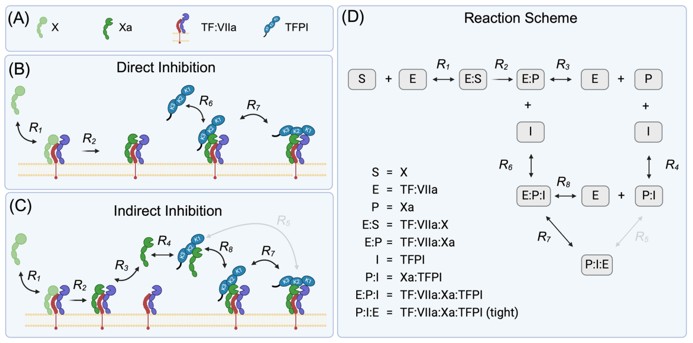 Fig. 1 Proposed mechanisms of TFPI inhibition of factor X activation.1
Key structural properties of TFPI:
- Modular multi-domain configuration
- Domain structure through flexible steering connection between peptides
- Each Kunitz domain possesses a conserved protease-binding loop
- The C-terminal basic region binds to cell surface phospholipids by electrostatic interactions
Functions of TFPI
The core function of TFPI is to act as a key physiological inhibitor in the coagulation cascade reaction. However, it is also involved in regulating various pathological physiological processes such as inflammatory responses, cell proliferation and migration.
| Function | Description |
|---|---|
| Coagulation Inhibition | As the main physiological anticoagulant protein, it negatively regulates the extrinsic coagulation pathway by inhibiting the TF/FVIIa complex and FXa. |
| Anticoagulant effect | It forms a local anticoagulant barrier on the surface of the vascular endothelium, preventing the formation of pathological blood clots and maintaining the fluid state of the blood. |
| Inflammation Regulation | By inhibiting the TF/FVIIa signaling pathway, it indirectly reduces the inflammatory response and cytokine release mediated by coagulation. |
| Cellular Behavior Regulation | TFPI can affect the proliferation, migration and apoptosis of endothelial cells and smooth muscle cells through a protease-independent pathway. |
| Tumor Biology | It is expressed abnormally in various cancer cells, which may affect the growth, angiogenesis, and metastasis processes of the tumors. |
The inhibitory kinetics of TFPI exhibits a two-stage characteristic: its Kunitz-1 domain first binds to FXa, and the resulting TFPI-FXa complex then efficiently inhibits TF/FVIIa. This cascade amplification mechanism enables it to achieve efficient coagulation regulation at a low concentration, which is significantly different from the action curve of a single-target inhibitor.
Applications of TFPI and TFPI Antibody in Literature
1. Santiago, Fabian, et al. "A new look at TFPI inhibition of factor X activation." PLoS computational biology 20.11 (2024): e1012509. https://doi.org/10.1371/journal.pcbi.1012509
This article, through experimental data and model analysis, verifies the direct and indirect inhibitory pathways of the coagulation inhibitor TFPI in the regulation of coagulation, and reveals the necessity of the direct binding pathway under blood flow conditions for the inhibitory activity.
2. Tian, Songhai, et al. "Identification of TFPI as a receptor reveals recombination-driven receptor switching in Clostridioides difficile toxin B variants." Nature Communications 13.1 (2022): 6786. https://doi.org/10.1038/s41467-022-33964-9
This study reveals that tissue factor pathway inhibitor (TFPI) is a novel host receptor for Clostridium difficile toxin B (TcdB). Different subtypes change the receptor binding sites through genetic micro-recombination, achieving specific recognition of TFPI or Frizzled proteins, providing a new target for therapeutic strategies.
3. Winckers, Kristien, et al. "Platelet full length TFPI-α in healthy volunteers is not affected by sex or hormonal use." PLoS One 12.2 (2017): e0168273. https://doi.org/10.1371/journal.pone.0168273
The article indicates that the full-length TFPI contained in platelets is a potent anticoagulant substance. Its release is not affected by plasma TFPI levels, gender or contraceptive drugs, and plays a crucial role in locally inhibiting thrombosis, especially when plasma TFPI levels are low.
4. Xu, Cheng, et al. "Low expression of TFPI-2 associated with poor survival outcome in patients with breast cancer." BMC cancer 13.1 (2013): 118. https://doi.org/10.1186/1471-2407-13-118
This study found that the low expression or negative expression of TFPI-2 protein in breast cancer tissues was significantly associated with tumor progression, increased risk of recurrence, and poorer postoperative survival. TFPI-2 is a potential independent prognostic indicator for breast cancer.
5. Sletten, M., et al. "Elevated TFPI is a prognostic factor in hepatocellular carcinoma: Putative role of miR-7-5p and miR-1236-3p." Thrombosis Research 241 (2024): 109073. https://doi.org/10.1016/j.thromres.2024.109073
The study found that TFPI expression was significantly increased in hepatocellular carcinoma, and it was associated with poor prognosis. miR-7-5p and miR-1236-3p were identified as novel miRNAs that regulate TFPI and can inhibit the proliferation of cancer cells.
Creative Biolabs: TFPI Antibodies for Research
Creative Biolabs specializes in the production of high-quality TFPI antibodies for research and industrial applications. Our portfolio includes monoclonal antibodies tailored for ELISA, Flow Cytometry, Western blot, immunohistochemistry, and other diagnostic methodologies.
- Custom TFPI Antibody Development: Tailor-made solutions to meet specific research requirements.
- Bulk Production: Large-scale antibody manufacturing for industry partners.
- Technical Support: Expert consultation for protocol optimization and troubleshooting.
- Aliquoting Services: Conveniently sized aliquots for long-term storage and consistent experimental outcomes.
For more details on our TFPI antibodies, custom preparations, or technical support, contact us at email.
Reference
- Santiago, Fabian, et al. "A new look at TFPI inhibition of factor X activation." PLoS computational biology 20.11 (2024): e1012509. Distributed under Open Access license CC BY 4.0, without modification. https://doi.org/10.1371/journal.pcbi.1012509
Anti-TFPI antibodies
 Loading...
 Compare




Hot products 
- AActivation
- AGAgonist
- APApoptosis
- BBlocking
- BABioassay
- BIBioimaging
- CImmunohistochemistry-Frozen Sections
- CIChromatin Immunoprecipitation
- CTCytotoxicity
- CSCostimulation
- DDepletion
- DBDot Blot
- EELISA
- ECELISA(Cap)
- EDELISA(Det)
- ESELISpot
- EMElectron Microscopy
- FFlow Cytometry
- FNFunction Assay
- GSGel Supershift
- IInhibition
- IAEnzyme Immunoassay
- ICImmunocytochemistry
- IDImmunodiffusion
- IEImmunoelectrophoresis
- IFImmunofluorescence
- IGImmunochromatography
- IHImmunohistochemistry
- IMImmunomicroscopy
- IOImmunoassay
- IPImmunoprecipitation
- ISIntracellular Staining for Flow Cytometry
- LALuminex Assay
- LFLateral Flow Immunoassay
- MMicroarray
- MCMass Cytometry/CyTOF
- MDMeDIP
- MSElectrophoretic Mobility Shift Assay
- NNeutralization
- PImmunohistologyp-Paraffin Sections
- PAPeptide Array
- PEPeptide ELISA
- PLProximity Ligation Assay
- RRadioimmunoassay
- SStimulation
- SESandwich ELISA
- SHIn situ hybridization
- TCTissue Culture
- WBWestern Blot
