
ABCD1 Antibodies
Background
The ABCD1 gene encodes a transmembrane transporter located on the peroxisomal membrane, which is mainly responsible for transporting very long-chain fatty acids from the cytoplasm into the peroxisomes for β-oxidation degradation. Mutations in this gene can lead to abnormal accumulation of very long-chain fatty acids in the body, especially in the white matter of the brain and the adrenal cortex, causing X-linked adrenal leukodystrophy. This disease was first described in 1910 and has diverse clinical manifestations, ranging from rapid progression of the brain type in childhood to relatively slow adrenal medullary neuropathy in adulthood. The protein encoded by this gene, as an important member of the ABC transporter protein family, and the elucidation of its structure and function provide crucial evidence for understanding the molecular mechanisms of peroxisomal diseases and lipid metabolism disorders.
Structure of ABCD1
The protein encoded by the ABCD1 gene has a molecular weight of approximately 75 kDa and is composed of 745 amino acids. This protein is located on the membrane of the peroxisome and contains a transmembrane domain and a nucleotide-binding domain. Its protein structure consists of six transmembrane helices and a cytoplasmic side ATP-binding region, forming a functional transport channel. The ABCD1 protein sequence is highly conserved among different species, especially in the nucleotide-binding domain region. This protein uses ATP hydrolysis for energy supply and transports very long-chain fatty acids from the cytoplasm to the peroxisome for β-oxidation. Abnormal protein function can lead to metabolic disorders of very long-chain fatty acids and cause X-linked adrenal leukodystrophy.
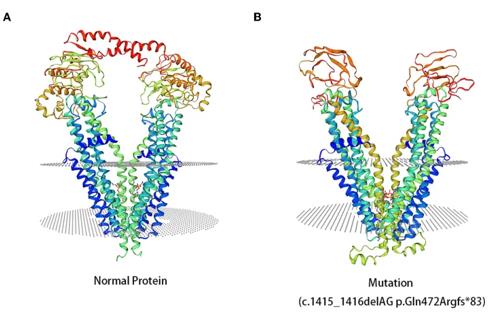 Fig. 1 3D computer model (SWISS-MODEL) shows the predicted structures of the ABCD1 protein.1
The key structural features of the protein encoded by the ABCD1 gene:
- Six transmembrane helices form a hydrophobic channel
- The nucleotide binding domain is located on the cytoplasmic side
- The ATP binding region provides the energy for transport
- The peroxisome targeting signal ensures proper localization
Functions of ABCD1
The main function of the ABCD1 gene is to transport very long-chain fatty acids to the peroxisomes for β-oxidation and degradation. This protein plays a crucial role in lipid metabolism:
| Function | Description |
| Fatty acid transport | Mediates the transport of very long-chain fatty acids from the cytoplasm into the peroxisomes. |
| Lipid metabolism regulation | Maintains the intracellular homeostasis of very long-chain fatty acids. |
| Peroxisome function | Ensures the normal metabolic activity of the peroxisomes. |
| Cellular protective effect | Prevents lipid toxicity caused by abnormal accumulation of very long-chain fatty acids. |
| Tissue-specific function | Particularly crucial in the adrenal glands and white matter of the brain. |
Deficiency of ABCD1 function leads to metabolic disorders of very long-chain fatty acids, with decreased substrate affinity resulting in reduced transport efficiency, causing abnormal deposition of fatty acids in tissues.
Applications of ABCD1 and ABCD1 Antibody in Literature
1. He, Raoli, et al. "Novel mutations in the ABCD1 gene caused adrenomyeloneuropathy in the Chinese population." Frontiers in Neurology 14 (2023): 1126729. https://doi.org/10.3389/fneur.2023.1126729
This study reported three cases of adult-onset spastic paraplegia. Through imaging, biochemical and genetic tests, they were diagnosed as adrenal medullary neurofibrosis. The study identified two new mutations in the ABCD1 gene, emphasizing the importance of this gene testing in the etiological diagnosis of adult spastic paraplegia.
2. Buda, Agnieszka, et al. "ABCD1 transporter deficiency results in altered cholesterol homeostasis." Biomolecules 13.9 (2023): 1333. https://doi.org/10.3390/biom13091333
The study found that the deficiency of ABCD1 leads to the accumulation of very long-chain fatty acids and cholesterol esters, affecting cholesterol metabolism. This process involves changes in the expression of genes such as SOAT1, NCEH1 and ABCA1, suggesting that therapeutic strategies aimed at reducing very long-chain fatty acids and cholesterol may be effective for X-linked adrenoleukodystrophy.
3. Zuo, Xinxin, and Zeyu Chen. "From gene to therapy: a review of deciphering the role of ABCD1 in combating X-linked adrenoleukodystrophy." Lipids in health and disease 23.1 (2024): 369. https://doi.org/10.1186/s12944-024-02361-0
This review comprehensively elaborates on the genetic and biochemical mechanisms of X-linked adrenoleukodystrophy, with a particular focus on the impact of ABCD1 gene mutations. The article assesses the existing therapies and their limitations, emphasizes the need to further clarify its pathogenesis, and calls for strengthening international cooperation to promote biomarker research.
4. Martinović, Ksenija, et al. "Abcd1 deficiency accelerates cuprizone-induced oligodendrocyte loss and axonopathy in a demyelinating mouse model of X-linked adrenoleukodystrophy." Acta Neuropathologica Communications 11.1 (2023): 98. https://doi.org/10.1186/s40478-023-01595-w
The study, using Abcd1 gene knockout mice and demyelination models, found that the ABCD1 deficiency made mature oligodendrocytes more sensitive to damage, leading to increased cell death and aggravated axonal damage. This indicates that the ABCD1 deficiency directly affects the oligodendrocyte-axon unit, increasing its vulnerability in demyelinating lesions.
5. Matsukawa, Takashi, et al. "In-frame deletion variant of ABCD1 in a sporadic case of adrenoleukodystrophy." Human Genome Variation 12.1 (2025): 5. https://doi.org/10.1038/s41439-025-00309-z
The study reported a novel deletion mutation (c.1469_71delTGG) in the ABCD1 gene of a patient with adrenal medullary neurofibromatosis. Although this variant has no clear significance in the ClinVar database, clinical assessment and biochemical analysis confirmed its pathogenicity, emphasizing the importance of functional validation of intronic deletions.
Creative Biolabs: ABCD1 Antibodies for Research
Creative Biolabs specializes in the production of high-quality ABCD1 antibodies for research and industrial applications. Our portfolio includes monoclonal and polyclonal antibodies tailored for ELISA, Flow Cytometry, Western blot, immunohistochemistry, and other diagnostic methodologies.
- Custom ABCD1 Antibody Development: Tailor-made solutions to meet specific research requirements.
- Bulk Production: Large-scale antibody manufacturing for industry partners.
- Technical Support: Expert consultation for protocol optimization and troubleshooting.
- Aliquoting Services: Conveniently sized aliquots for long-term storage and consistent experimental outcomes.
For more details on our ABCD1 antibodies, custom preparations, or technical support, contact us at email.
Reference
- He, Raoli, et al. "Novel mutations in the ABCD1 gene caused adrenomyeloneuropathy in the Chinese population." Frontiers in Neurology 14 (2023): 1126729. Distributed under Open Access license CC BY 4.0, without modification. https://doi.org/10.3389/fneur.2023.1126729
Anti-ABCD1 antibodies
 Loading...
 Compare




Hot products 
-
Mouse Anti-14-3-3 Pan Recombinant Antibody (V2-9272) (CBMAB-1181-LY)

-
Mouse Anti-CD24 Recombinant Antibody (2Q1282) (CBMAB-C1624-CN)

-
Mouse Anti-GDF5 Recombinant Antibody (1F4) (CBMAB-G2740-LY)

-
Mouse Anti-ACVR1C Recombinant Antibody (V2-179685) (CBMAB-A1041-YC)

-
Mouse Anti-ADIPOR2 Recombinant Antibody (V2-179983) (CBMAB-A1369-YC)

-
Mouse Anti-AMH Recombinant Antibody (5/6) (CBMAB-A2527-YC)

-
Mouse Anti-ACTB Recombinant Antibody (V2-179553) (CBMAB-A0870-YC)

-
Rat Anti-CCR2 Recombinant Antibody (475301) (CBMAB-C1338-LY)

-
Mouse Anti-HTLV-1 gp46 Recombinant Antibody (CBMW-H1006) (CBMAB-V208-1154-FY)

-
Mouse Anti-CASQ1 Recombinant Antibody (CBFYC-0863) (CBMAB-C0918-FY)

-
Mouse Anti-ATG5 Recombinant Antibody (9H197) (CBMAB-A3945-YC)

-
Mouse Anti-AQP2 Recombinant Antibody (G-3) (CBMAB-A3359-YC)

-
Mouse Anti-BIRC3 Recombinant Antibody (16E63) (CBMAB-C3367-LY)

-
Rabbit Anti-ABL1 (Phosphorylated Y245) Recombinant Antibody (V2-505716) (PTM-CBMAB-0465LY)

-
Mouse Anti-AZGP1 Recombinant Antibody (CBWJZ-007) (CBMAB-Z0012-WJ)

-
Mouse Anti-ATP1B1 Recombinant Antibody (E4) (CBMAB-0463-LY)

-
Mouse Anti-GOLGA2 Recombinant Antibody (2C10) (CBMAB-G0602-LY)

-
Mouse Anti-ENO2 Recombinant Antibody (H14) (CBMAB-E1341-FY)

-
Mouse Anti-CD2AP Recombinant Antibody (BR083) (CBMAB-BR083LY)

-
Rabbit Anti-AKT3 Recombinant Antibody (V2-12567) (CBMAB-1057-CN)

- AActivation
- AGAgonist
- APApoptosis
- BBlocking
- BABioassay
- BIBioimaging
- CImmunohistochemistry-Frozen Sections
- CIChromatin Immunoprecipitation
- CTCytotoxicity
- CSCostimulation
- DDepletion
- DBDot Blot
- EELISA
- ECELISA(Cap)
- EDELISA(Det)
- ESELISpot
- EMElectron Microscopy
- FFlow Cytometry
- FNFunction Assay
- GSGel Supershift
- IInhibition
- IAEnzyme Immunoassay
- ICImmunocytochemistry
- IDImmunodiffusion
- IEImmunoelectrophoresis
- IFImmunofluorescence
- IGImmunochromatography
- IHImmunohistochemistry
- IMImmunomicroscopy
- IOImmunoassay
- IPImmunoprecipitation
- ISIntracellular Staining for Flow Cytometry
- LALuminex Assay
- LFLateral Flow Immunoassay
- MMicroarray
- MCMass Cytometry/CyTOF
- MDMeDIP
- MSElectrophoretic Mobility Shift Assay
- NNeutralization
- PImmunohistologyp-Paraffin Sections
- PAPeptide Array
- PEPeptide ELISA
- PLProximity Ligation Assay
- RRadioimmunoassay
- SStimulation
- SESandwich ELISA
- SHIn situ hybridization
- TCTissue Culture
- WBWestern Blot
