
IGHG3
IGHG3 (Immunoglobulin Heavy Constant Gamma 3 (G3m Marker)) is a Protein Coding gene. Diseases associated with IGHG3 include Heavy Chain Disease and Gamma Heavy Chain Disease. Among its related pathways are Creation of C4 and C2 activators and Role of phospholipids in phagocytosis. Gene Ontology (GO) annotations related to this gene include antigen binding. An important paralog of this gene is IGHG1.
Full Name
Immunoglobulin heavy constant gamma 3
Function
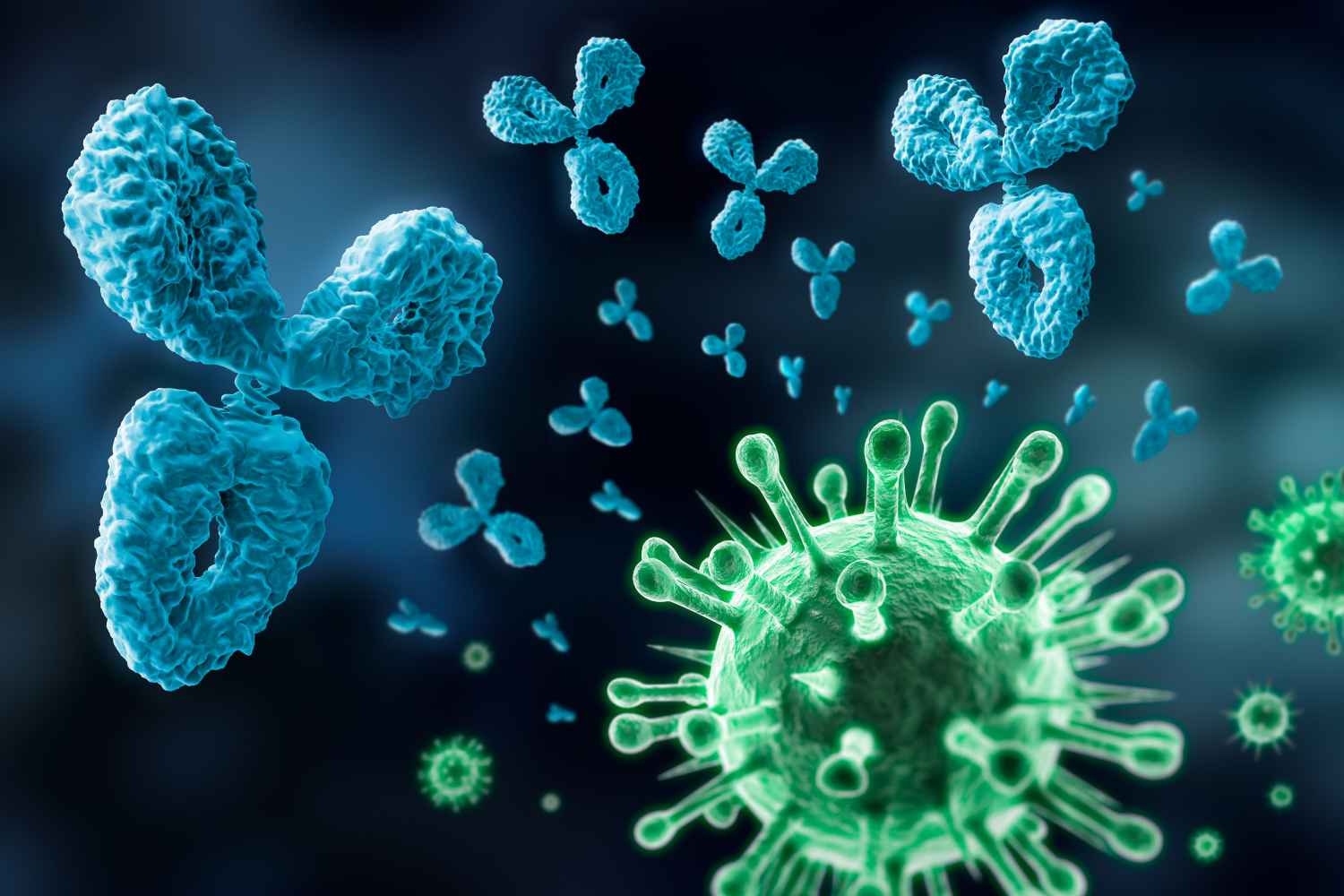
Constant region of immunoglobulin heavy chains. Immunoglobulins, also known as antibodies, are membrane-bound or secreted glycoproteins produced by B lymphocytes. In the recognition phase of humoral immunity, the membrane-bound immunoglobulins serve as receptors which, upon binding of a specific antigen, trigger the clonal expansion and differentiation of B lymphocytes into immunoglobulins-secreting plasma cells. Secreted immunoglobulins mediate the effector phase of humoral immunity, which results in the elimination of bound antigens (PubMed:22158414, PubMed:20176268).
The antigen binding site is formed by the variable domain of one heavy chain, together with that of its associated light chain. Thus, each immunoglobulin has two antigen binding sites with remarkable affinity for a particular antigen. The variable domains are assembled by a process called V-(D)-J rearrangement and can then be subjected to somatic hypermutations which, after exposure to antigen and selection, allow affinity maturation for a particular antigen (PubMed:17576170, PubMed:20176268).
The antigen binding site is formed by the variable domain of one heavy chain, together with that of its associated light chain. Thus, each immunoglobulin has two antigen binding sites with remarkable affinity for a particular antigen. The variable domains are assembled by a process called V-(D)-J rearrangement and can then be subjected to somatic hypermutations which, after exposure to antigen and selection, allow affinity maturation for a particular antigen (PubMed:17576170, PubMed:20176268).
Biological Process
B cell receptor signaling pathway Source: GO_Central
Complement activation, classical pathway Source: GO_Central
Defense response to bacterium Source: GO_Central
Innate immune response Source: GO_Central
Phagocytosis, engulfment Source: GO_Central
Phagocytosis, recognition Source: GO_Central
Positive regulation of B cell activation Source: GO_Central
Retina homeostasis Source: UniProtKB
Complement activation, classical pathway Source: GO_Central
Defense response to bacterium Source: GO_Central
Innate immune response Source: GO_Central
Phagocytosis, engulfment Source: GO_Central
Phagocytosis, recognition Source: GO_Central
Positive regulation of B cell activation Source: GO_Central
Retina homeostasis Source: UniProtKB
Cellular Location
Secreted; Cell membrane
PTM
N-linked glycans at Asn-322 are noncore fucosylated and the vast majority are diantennary species with a bisecting GlcNAc. Among them the most dominant glycans are HexNAc5Hex4, HexNAc5Hex5, and HexNAc5Hex5Sia1.
N-linked glycans at Asn-227 are diantennary core fucosylated structures without bisecting GlcNAc (HexNAc4Hex4Fuc1, HexNAc4Hex5Fuc1, and HexNAc4Hex5Fuc1Sia1).
O-linked glycans are non-, mono- and disialylated core 1-type O-glycans.
N-linked glycans at Asn-227 are diantennary core fucosylated structures without bisecting GlcNAc (HexNAc4Hex4Fuc1, HexNAc4Hex5Fuc1, and HexNAc4Hex5Fuc1Sia1).
O-linked glycans are non-, mono- and disialylated core 1-type O-glycans.
View more
Anti-IGHG3 antibodies
+ Filters
 Loading...
 Compare
Target: IGHG3
Host: Rabbit
Antibody Isotype: IgG
Specificity: Human
Clone: RM119
Application*: ELISA, IHC
More Infomation



Hot products 
For Research Use Only. Not For Clinical Use.
(P): Predicted
* Abbreviations
- AActivation
- AGAgonist
- APApoptosis
- BBlocking
- BABioassay
- BIBioimaging
- CImmunohistochemistry-Frozen Sections
- CIChromatin Immunoprecipitation
- CTCytotoxicity
- CSCostimulation
- DDepletion
- DBDot Blot
- EELISA
- ECELISA(Cap)
- EDELISA(Det)
- ESELISpot
- EMElectron Microscopy
- FFlow Cytometry
- FNFunction Assay
- GSGel Supershift
- IInhibition
- IAEnzyme Immunoassay
- ICImmunocytochemistry
- IDImmunodiffusion
- IEImmunoelectrophoresis
- IFImmunofluorescence
- IGImmunochromatography
- IHImmunohistochemistry
- IMImmunomicroscopy
- IOImmunoassay
- IPImmunoprecipitation
- ISIntracellular Staining for Flow Cytometry
- LALuminex Assay
- LFLateral Flow Immunoassay
- MMicroarray
- MCMass Cytometry/CyTOF
- MDMeDIP
- MSElectrophoretic Mobility Shift Assay
- NNeutralization
- PImmunohistologyp-Paraffin Sections
- PAPeptide Array
- PEPeptide ELISA
- PLProximity Ligation Assay
- RRadioimmunoassay
- SStimulation
- SESandwich ELISA
- SHIn situ hybridization
- TCTissue Culture
- WBWestern Blot

Online Inquiry