
Ccl20 Antibodies
Background
Ccl20 is a small-molecular-weight chemokine secreted by various cell types and belongs to the CC subfamily. The protein encoded by this gene can specifically bind to and activate the CCR6 receptor on the cell membrane surface, thereby mediating the directional migration and tissue infiltration of lymphocytes (especially T cells and dendritic cells). Under physiological conditions, Ccl20 participates in mucosal immune surveillance and lymphoid organ development by regulating the recruitment of immune cells. During the pathological process, its overexpression is closely related to chronic inflammatory diseases, autoimmune disorders and the remodeling of the tumor microenvironment. This gene was first identified by the Yoshimura team in 1997. Its unique single-gene - single-receptor mode of action provides an important model for studying the regulation of chemokine networks and remains a key research object for exploring the mechanism of immune cell migration and developing related targeted drugs to this day.
Structure of Ccl20
Ccl20 is a small molecule chemokine with a molecular weight of approximately 8-10 kDa, and its precise weight varies by species and post-translational modifications. This protein is composed of 76 amino acids and forms a typical chemokine folding structure through conserved three pairs of disulfide bonds.
| Species | Human | Mouse | Rat | Rhesus monkey |
| Molecular Weight (kDa) | 8.8 | 8.6 | 8.7 | 8.9 |
| Primary Structural Differences | With four conservative cysteine, form characteristic CCL disulfide bond | 68% homology with the human sequence, and the receptor binding domain is conserved | The variation at the 23rd glycosylation site does not affect biological activity | Combined with anthropogenic sequence similarity was 95%, specificity of the same |
Its three-dimensional structure consists of an N-terminal loop region, three anti-parallel β sheets and a C-terminal α helix. The disulfide bond formed by cysteine at position 45 and cysteine at position 73 is crucial for maintaining conformational stability. Amino acids at positions 11 to 34 constitute the receptor binding domain, and the basic residues within it directly participate in the recognition and binding of the CCR6 receptor.
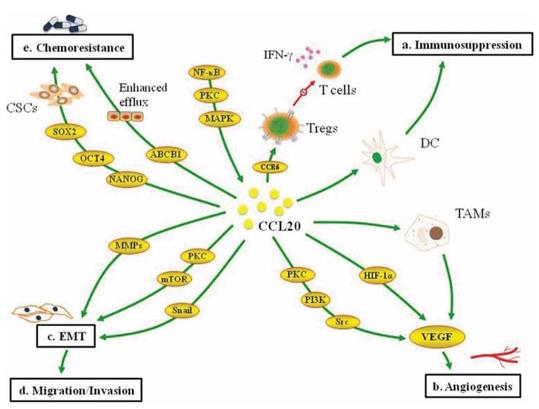 Fig. 1 Multifaceted roles of CCL20 in breast cancer progression.1
Key structural properties of Ccl20:
- Conservative chemokine folding configuration
- Hydrophobic core wrapped structural disulfide bond
- Alkaline amino acid receptor binding domain cluster is responsible for identifying CCR6
- Histidine at position 45 and aspartic acid at position 48 jointly maintain the conformational stability of the ligand binding pocket
Functions of Ccl20
The main function of Ccl20 is to mediate the directional migration of immune cells and tissue infiltration. However, this chemokine is also involved in a variety of pathophysiological processes, including inflammation initiation, immune surveillance and tissue repair, etc.
| Function | Description |
| Recruitment of immune cells | Specifically binding to the CCR6 receptor, it guides dendritic cells, T lymphocytes, etc. to aggregate towards the inflammatory site and mucosal tissue. |
| Mucosal immune surveillance | In the gut peyer's patch and continued to express in respiratory tract mucous membrane, maintain steady state immune barrier. |
| The inflammatory response is initiated | Under the stimulation of pathogen recognition or tissue damage signals, it is rapidly and massively secreted by epithelial cells and immune cells. |
| Regulation of the tumor microenvironment | In a variety of abnormal expression in tumor tissue, by recruiting specific immune cell subsets influence tumor progression and response to treatment. |
| Participation in tissue repair | In chronic inflammation state regulation of fibroblasts and endothelial cell activation, participate in fibrosis, and angiogenesis. |
The expression of Ccl20 is precisely regulated by multiple signaling pathways such as NF-κB and STAT3. Its secretion level can significantly increase within several hours after inflammatory stimulation, and the duration is much longer than that of most early chemokines, which reflects its special position in the process of the transformation from acute defense to chronic inflammation.
Applications of Ccl20 and Ccl20 Antibody in Literature
1. Xu, Chaochao, et al. "Fusobacterium nucleatum promotes colorectal cancer metastasis through miR-1322/CCL20 axis and M2 polarization." Gut microbes 13.1 (2021): 1980347. https://doi.org/10.1080/19490976.2021.1980347
This study confirmed that Fusobacterium nucleatum inhibits miR-1322 by activating the NF-κB pathway, promotes the expression of CCL20, and thereby induces M2 polarization of macrophages and tumor microenvironment reconstruction, ultimately accelerating the metastasis of colorectal cancer.
2. Wang, Dan, et al. "Colorectal cancer cell-derived CCL20 recruits regulatory T cells to promote chemoresistance via FOXO1/CEBPB/NF-κB signaling." Journal for immunotherapy of cancer 7.1 (2019): 215. https://doi.org/10.1186/s40425-019-0701-2
This study found that colorectal cancer cells secrete CCL20 through the FOXO1/CEBPB/NF-κB signaling axis, recruiting Treg cells and leading to 5-FU chemotherapy resistance. Targeting this pathway can reverse drug resistance.
3. Li, Hengzhen, et al. "VDR promotes pancreatic cancer progression in vivo by activating CCL20-mediated M2 polarization of tumor associated macrophage." Cell Communication and Signaling 22.1 (2024): 224. https://doi.org/10.1186/s12964-024-01578-x
This study reveals that in pancreatic cancer, VDR promotes CCL20 transcription by directly binding to the promoter, thereby recruiting and inducing macrophages to polarize towards M2 type, ultimately accelerating tumor progression. Targeting macrophages may enhance the efficacy of VDR therapy.
4. Liu, Qi, et al. "CCL20/CXCL5 Drives Crosstalk Between Anaplastic Thyroid Cancer Stem Cells and Tumor‐Associated Macrophages to Promote Tumor Progression." Advanced Science 12.17 (2025): 2405399. https://doi.org/10.1002/advs.202405399
This study reveals that in thyroid cancer, CCL20 secreted by M2-type macrophages enhances the stemness of cancer stem cells by activating the IRAK1/NF-κB pathway and promotes their secretion of CXCL5, which can recruit and maintain the M2 phenotype, thus forming a vicious cycle.
5. Fan, Tao, et al. "CCL20 promotes lung adenocarcinoma progression by driving epithelial-mesenchymal transition." International Journal of Biological Sciences 18.11 (2022): 4275.https://doi.org/10.7150/ijbs.73275
This study reveals that CCL20 promotes EMT and tumor progression in lung adenocarcinoma by activating the TNF pathway. Moreover, CCL20 and TGF-β synergistic inhibit the immune efficacy of PD-L1. Targeting CCL20 may improve immunotherapy resistance.
Creative Biolabs: Ccl20 Antibodies for Research
Creative Biolabs specializes in the production of high-quality Ccl20 antibodies for research and industrial applications. Our portfolio includes monoclonal antibodies tailored for ELISA, Flow Cytometry, Western blot, immunohistochemistry, and other diagnostic methodologies.
- Custom Ccl20 Antibody Development: Tailor-made solutions to meet specific research requirements.
- Bulk Production: Large-scale antibody manufacturing for industry partners.
- Technical Support: Expert consultation for protocol optimization and troubleshooting.
- Aliquoting Services: Conveniently sized aliquots for long-term storage and consistent experimental outcomes.
For more details on our Ccl20 antibodies, custom preparations, or technical support, contact us at email.
Reference
- Kwantwi, Louis Boafo, et al. "Multifaceted roles of CCL20 (CC motif chemokine ligand 20): mechanisms and communication networks in breast cancer progression." Bioengineered 12.1 (2021): 6923-6934. https://doi.org/10.1080/21655979.2021.1974765
Anti-Ccl20 antibodies
 Loading...
 Compare




Hot products 
-
Mouse Anti-AMIGO2 Recombinant Antibody (CBYY-C0756) (CBMAB-C2192-YY)

-
Mouse Anti-EPO Recombinant Antibody (CBFYR0196) (CBMAB-R0196-FY)

-
Mouse Anti-CD59 Recombinant Antibody (CBXC-2097) (CBMAB-C4421-CQ)

-
Mouse Anti-AP4E1 Recombinant Antibody (32) (CBMAB-A2996-YC)

-
Rat Anti-CD300A Recombinant Antibody (172224) (CBMAB-C0423-LY)

-
Mouse Anti-GOLGA2 Recombinant Antibody (2C10) (CBMAB-G0602-LY)

-
Mouse Anti-8-oxoguanine Recombinant Antibody (V2-7719) (CBMAB-1898CQ)

-
Mouse Anti-FN1 Monoclonal Antibody (71) (CBMAB-1241CQ)

-
Mouse Anti-BZLF1 Recombinant Antibody (BZ.1) (CBMAB-AP705LY)

-
Mouse Anti-AQP2 Recombinant Antibody (E-2) (CBMAB-A3358-YC)

-
Mouse Anti-CCN2 Recombinant Antibody (CBFYC-2383) (CBMAB-C2456-FY)

-
Mouse Anti-ADAM29 Recombinant Antibody (V2-179787) (CBMAB-A1149-YC)

-
Mouse Anti-GFAP Recombinant Antibody (5) (CBMAB-G0346-LY)

-
Mouse Anti-Acetyl SMC3 (K105/K106) Recombinant Antibody (V2-634053) (CBMAB-AP052LY)

-
Mouse Anti-ATP1B1 Recombinant Antibody (E4) (CBMAB-0463-LY)

-
Mouse Anti-CD24 Recombinant Antibody (SN3) (CBMAB-C1037-CQ)

-
Mouse Anti-ALX1 Recombinant Antibody (96k) (CBMAB-C0616-FY)

-
Mouse Anti-FLI1 Recombinant Antibody (CBXF-0733) (CBMAB-F0435-CQ)

-
Mouse Anti-DES Monoclonal Antibody (440) (CBMAB-AP1857LY)

-
Mouse Anti-CARTPT Recombinant Antibody (113612) (CBMAB-C2450-LY)

- AActivation
- AGAgonist
- APApoptosis
- BBlocking
- BABioassay
- BIBioimaging
- CImmunohistochemistry-Frozen Sections
- CIChromatin Immunoprecipitation
- CTCytotoxicity
- CSCostimulation
- DDepletion
- DBDot Blot
- EELISA
- ECELISA(Cap)
- EDELISA(Det)
- ESELISpot
- EMElectron Microscopy
- FFlow Cytometry
- FNFunction Assay
- GSGel Supershift
- IInhibition
- IAEnzyme Immunoassay
- ICImmunocytochemistry
- IDImmunodiffusion
- IEImmunoelectrophoresis
- IFImmunofluorescence
- IGImmunochromatography
- IHImmunohistochemistry
- IMImmunomicroscopy
- IOImmunoassay
- IPImmunoprecipitation
- ISIntracellular Staining for Flow Cytometry
- LALuminex Assay
- LFLateral Flow Immunoassay
- MMicroarray
- MCMass Cytometry/CyTOF
- MDMeDIP
- MSElectrophoretic Mobility Shift Assay
- NNeutralization
- PImmunohistologyp-Paraffin Sections
- PAPeptide Array
- PEPeptide ELISA
- PLProximity Ligation Assay
- RRadioimmunoassay
- SStimulation
- SESandwich ELISA
- SHIn situ hybridization
- TCTissue Culture
- WBWestern Blot
