
DSCAM Antibodies
Background
The DSCAM gene encodes a cell adhesion molecule that is highly expressed in the nervous system. Its most notable feature is the ability to produce tens of thousands of isoforms, which are mainly achieved through selective splicing of precursor mRNA. This diversity enables DSCAM to play a crucial role in neuronal recognition, axon guidance, and synapse formation, and is indispensable in the assembly of neural circuits in insects and vertebrates. This gene was first cloned in fruit flies, and subsequent studies have found that its mutations are closely related to Down syndrome - in humans, DSCAM presents a dosage effect due to its location on chromosome 21, and overexpression may lead to excessive neuronal growth and abnormal dendritic spines. Besides the nervous system, DSCAM is also involved in immune regulation and cell migration. Its complex alternative splicing regulatory mechanism has recently become a research hotspot in the fields of molecular evolution and neural development, providing an important model for understanding the genetic coding behind complex behaviors.
Structure of DSCAM
DSCAM is a transmembrane glycoprotein with a molecular weight of approximately 220 kDa, and there are variations among different species. These variations are mainly caused by alternative splicing rather than changes in the amino acid sequence itself.
| Species | Human | Mouse | Fruit flies | Zebrafish | Silkworm |
| Molecular Weight (kDa) | 220 | 220 | 210 | 225 | 215 |
| Primary Structural Differences | Contains all domains and has a rich variety of splicing isoforms | Highly similar to humans in terms of homology and domain composition | There are over 30,000 alternative splicing combinations of exon clusters | Multiple splicing sites, high diversity | Splicing regulatory mechanisms differ from those in vertebrates |
The DSCAM protein contains immunoglobulin domains, fibronectin type III repeat sequences, and a transmembrane region. Its extracellular domain generates tens of thousands of isoforms through the selective combination of multiple variable exon boxes. This structural diversity enables the protrusions of adjacent neurons to achieve self-avoidance through homology recognition, ensuring the precise connection of the neural network. The intracellular signaling region is involved in cytoskeleton reorganization and downstream signal transduction.
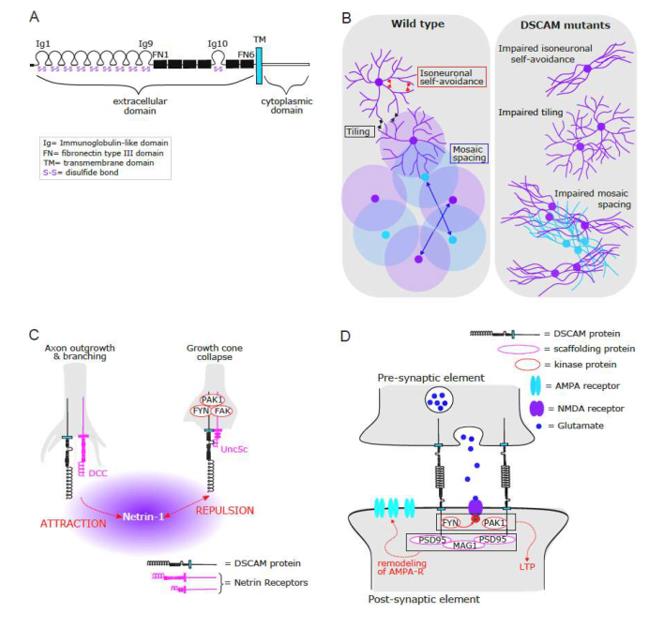 Fig. 1 Vertebrate DSCAM orchestrates neural circuit assembly.1
Key structural properties of DSCAM:
- Comprises ten immunoglobulin domains and six fibronectin type III repeat sequences
- The extracellular region generates tens of thousands of isoforms through four alternative spliced exon clusters
- Single-pass transmembrane domains and intracellular signal regions
- Adjacent homology recognition mediates the self-avoidance of neurites
Functions of DSCAM
The core function of DSCAM is to mediate the self-recognition and avoidance of nerve cells. Additionally, this gene is involved in processes such as synapse formation, axon guidance, and immune regulation.
| Function | Description |
| Neuronal self-avoidance | Through homology recognition, it prevents the branches of the same neuron from intertwining, ensuring the orderly arrangement of neural circuits. |
| Axonal guidance | It guides the growth cone to extend towards the target area, participating in the establishment of the connection between peripheral nerves and central nerves. |
| Synapse formation | It regulates the precise pairing of presynaptic and postsynaptic regions, influencing synaptic plasticity. |
| Cell immunity | It participates in the phagocytosis of blood cells and the recognition of pathogens in invertebrates such as fruit flies. |
| Association with Down syndrome | The human DSCAM gene is located on chromosome 21. Overexpression is associated with abnormal development of dendritic spines. |
The ligand binding of DSCAM shows a highly isoform-dependent characteristic. Different splicing combinations determine its recognition specificity, which has a similar logic to the clonal diversity of immune system receptors.
Applications of DSCAM and DSCAM Antibody in Literature
1. Lemieux, Maxime, et al. "Role of DSCAM in the development of neural control of movement and locomotion." International Journal of Molecular Sciences 22.16 (2021): 8511. https://doi.org/10.3390/ijms22168511
The article indicates that DSCAM, as a type of cell adhesion molecule, has recently attracted attention in the field of motor control in rodents. It influences the development and maintenance of motor nerve circuits by regulating mechanisms such as neuronal layering, axon guidance, synaptogenesis, and programmed cell death, and is particularly significant for the coordination functions of respiration and limb movement.
2. Ghafouri-Fard, Soudeh, et al. "A review on the carcinogenic roles of DSCAM-AS1." Frontiers in Cell and Developmental Biology 9 (2021): 758513. https://doi.org/10.3389/fcell.2021.758513
The article indicates that DSCAM-AS1 is a long non-coding RNA that is closely related to the occurrence and development of various cancers (such as breast cancer, non-small cell lung cancer, etc.). It exerts carcinogenic effects by regulating specific miRNAs (such as miR-577, etc.) and the Wnt/β-catenin signaling pathway.
3. Chen, Peng, et al. "DSCAM deficiency leads to premature spine maturation and autism-like behaviors." Journal of Neuroscience 42.4 (2022): 532-551. https://doi.org/10.1523/JNEUROSCI.1003-21.2021
Research has confirmed that the absence of the autism high-risk gene DSCAM accelerates the premature maturation of dendritic spines in young mice. The mechanism lies in the fact that the extracellular domain of DSCAM binds to the neural connection protein NLGN1, competitively blocking the interaction between NLGN1-NRXN1β. This process leads to excessive enhancement of glutamatergic transmission in the cortex and triggers autistic-like phenotypes such as social deficits and repetitive behaviors.
4. Cheng, Lin, et al. "DSCAM-AS1 promotes the development of prostate cancer." Discover Oncology 15.1 (2024): 113. https://doi.org/10.1007/s12672-024-00931-3
This study confirmed that the long non-coding RNA DSCAM-AS1 is upregulated in prostate cancer tissues and promotes cancer cell proliferation and metastasis by targeting miR-338-3p. Its expression level can serve as a potential biomarker for assessing poor prognosis in patients.
5. Liu, Hao, et al. "DSCAM gene triplication causes excessive GABAergic synapses in the neocortex in Down syndrome mouse models." PLoS Biology 21.4 (2023): e3002078. https://doi.org/10.1371/journal.pbio.3002078
The study found that in the mouse model of Down syndrome, due to the overexpression of the DSCAM gene in triplicate, the pyramidal neurons in the cerebral cortex of these mice would receive excessive GABAergic innervation from interneurons. This led to enhanced neuronal inhibition, and restoring the DSCAM expression level to normal could reverse this phenomenon, indicating that DSCAM is a key gene regulating the development and function of inhibitory synapses.
Creative Biolabs: DSCAM Antibodies for Research
Creative Biolabs specializes in the production of high-quality DSCAM antibodies for research and industrial applications. Our portfolio includes monoclonal and polyclonal antibodies tailored for ELISA, Flow Cytometry, Western blot, immunohistochemistry, and other diagnostic methodologies.
- Custom DSCAM Antibody Development: Tailor-made solutions to meet specific research requirements.
- Bulk Production: Large-scale antibody manufacturing for industry partners.
- Technical Support: Expert consultation for protocol optimization and troubleshooting.
- Aliquoting Services: Conveniently sized aliquots for long-term storage and consistent experimental outcomes.
For more details on our DSCAM antibodies, custom preparations, or technical support, contact us at email.
Reference
- Lemieux, Maxime, et al. "Role of DSCAM in the development of neural control of movement and locomotion." International Journal of Molecular Sciences 22.16 (2021): 8511. Distributed under Open Access license CC BY 4.0, without modification. https://doi.org/10.3390/ijms22168511
Anti-DSCAM antibodies
 Loading...
 Compare




Hot products 
-
Mouse Anti-HTLV-1 gp46 Recombinant Antibody (CBMW-H1006) (CBMAB-V208-1154-FY)

-
Mouse Anti-DLG1 Monolconal Antibody (4F3) (CBMAB-0225-CN)

-
Mouse Anti-ENO2 Recombinant Antibody (H14) (CBMAB-E1341-FY)

-
Mouse Anti-BRCA2 Recombinant Antibody (CBYY-1728) (CBMAB-2077-YY)

-
Mouse Anti-BACE1 Recombinant Antibody (CBLNB-121) (CBMAB-1180-CN)

-
Mouse Anti-GFAP Recombinant Antibody (5) (CBMAB-G0346-LY)

-
Mouse Anti-BMI1 Recombinant Antibody (CBYC-P026) (CBMAB-P0108-YC)

-
Mouse Anti-DHFR Recombinant Antibody (D0821) (CBMAB-D0821-YC)

-
Mouse Anti-CASP8 Recombinant Antibody (CBYY-C0987) (CBMAB-C2424-YY)

-
Mouse Anti-GOLGA2 Recombinant Antibody (2C10) (CBMAB-G0602-LY)

-
Mouse Anti-BLK Recombinant Antibody (CBYY-0618) (CBMAB-0621-YY)

-
Mouse Anti-ACTN4 Recombinant Antibody (V2-6075) (CBMAB-0020CQ)

-
Mouse Anti-FYN Recombinant Antibody (10) (CBMAB-S6332-CQ)

-
Mouse Anti-8-oxoguanine Recombinant Antibody (V2-7719) (CBMAB-1898CQ)

-
Rabbit Anti-ADRA1A Recombinant Antibody (V2-12532) (CBMAB-1022-CN)

-
Mouse Anti-ENO1 Recombinant Antibody (8G8) (CBMAB-E1329-FY)

-
Mouse Anti-AKT1 (Phosphorylated S473) Recombinant Antibody (V2-505430) (PTM-CBMAB-0067LY)

-
Rabbit Anti-ABL1 (Phosphorylated Y245) Recombinant Antibody (V2-505716) (PTM-CBMAB-0465LY)

-
Rabbit Anti-ALK (Phosphorylated Y1278) Recombinant Antibody (D59G10) (PTM-CBMAB-0035YC)

-
Rat Anti-4-1BB Recombinant Antibody (V2-1558) (CBMAB-0953-LY)

- AActivation
- AGAgonist
- APApoptosis
- BBlocking
- BABioassay
- BIBioimaging
- CImmunohistochemistry-Frozen Sections
- CIChromatin Immunoprecipitation
- CTCytotoxicity
- CSCostimulation
- DDepletion
- DBDot Blot
- EELISA
- ECELISA(Cap)
- EDELISA(Det)
- ESELISpot
- EMElectron Microscopy
- FFlow Cytometry
- FNFunction Assay
- GSGel Supershift
- IInhibition
- IAEnzyme Immunoassay
- ICImmunocytochemistry
- IDImmunodiffusion
- IEImmunoelectrophoresis
- IFImmunofluorescence
- IGImmunochromatography
- IHImmunohistochemistry
- IMImmunomicroscopy
- IOImmunoassay
- IPImmunoprecipitation
- ISIntracellular Staining for Flow Cytometry
- LALuminex Assay
- LFLateral Flow Immunoassay
- MMicroarray
- MCMass Cytometry/CyTOF
- MDMeDIP
- MSElectrophoretic Mobility Shift Assay
- NNeutralization
- PImmunohistologyp-Paraffin Sections
- PAPeptide Array
- PEPeptide ELISA
- PLProximity Ligation Assay
- RRadioimmunoassay
- SStimulation
- SESandwich ELISA
- SHIn situ hybridization
- TCTissue Culture
- WBWestern Blot
