
ENSA Antibodies
Background
ENSA is a small molecule protein widely present in eukaryotic cells, mainly involved in the dynamic regulation and signal transduction processes of the cytoskeleton. This protein plays a key role in maintaining the structural stability and polarity of cells by binding to α -adductor proteins, regulating the morphological changes of cell membranes and cell migration. ENSA was first discovered in 1996. Its unique phosphorylation regulatory mechanism - particularly through the activation pathway mediated by Greatwall kinase in the cell cycle - provides important clues for understanding the precise regulation of mitosis. As a specific inhibitor of PP2A phosphatase, the crystal structure analysis of ENSA and the study of its interaction with the B55 regulatory subunit have greatly promoted the progress in the fields of cell cycle regulation and cancer therapeutic targets. Its molecular mechanism has become one of the important research models in modern cell biology.
Structure of ENSA
ENSA is a small regulatory protein with a molecular weight of approximately 15-18 kDa, and its precise molecular weight varies slightly depending on species and post-translational modifications.
| Species | Human | Mice | Fruit flies | Yeast |
| Molecular Weight (kDa) | 17.2 | 17.0 | 16.8 | 15.6 |
| Primary Structural Differences | Containing conserved phosphorylation site (Ser67) | Highly homologous to humans | Simplify the regulatory structure | No PP2A inhibition function |
ENSA is composed of 136 amino acids and has a compact spherical structure, with its core made up of β -folds and short α -helices. The protein surface contains a highly conserved phosphorylation site (Ser67), which, upon phosphorylation by Greatwall kinase, triggers a conformational change, enabling it to bind to and inhibit the PP2A-B55 phosphatase complex. The activity regulation of ENSA depends on the cell cyclin-dependent phosphorylation/dephosphorylation cycle. The hydrophobic core in its tertiary structure maintains stability, while the flexible loop participates in specific interactions. This protein has maintained the conservation of its core functional regions during evolution, but it may exhibit adaptive differentiation of regulatory mechanisms in different species.
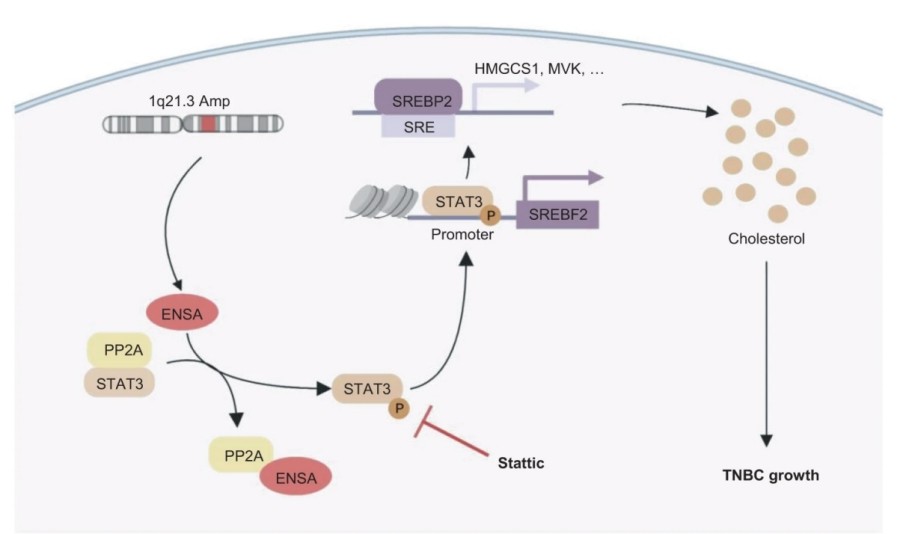 Fig. 1 ENSA Amplification Drives TNBC Progression via STAT3-SREBP2 Cholesterol Biosynthesis Axis.1
Key structural properties of ENSA:
- Conservative β -folded core structure
- Variable N/ C-terminal control region
- PP2A-B55 inhibitory domain
- Phosphorylation-dependent switching mechanism
Functions of ENSA
The core function of ENSA is to regulate the cell cycle process and participate in a variety of key cellular physiological processes simultaneously.
| Function | Description |
| PP2A phosphatase inhibition | After phosphorylation, it specifically inhibits the PP2A-B55 complex, maintaining the phosphorylation state of key mitotic proteins. |
| Cell cycle regulation | G2/M phase transition is controlled through CDK1-Greatwal-ENSA pathway to ensure correct chromosome segregation. |
| Maintenance of genomic stability | Prevent premature exit from mitosis and reduce the production of aneuploid cells. |
| Stress response | Regulating repair pathways during DNA damage and influencing cell fate determination (repair/apoptosis). |
| Establishment of cell polarity | Synergistic with cytoskeleton, involved in asymmetric division and cell differentiation. |
The activity regulation of ENSA exhibits bistable switch characteristics (phosphorylation activation/dephosphorylation inactivation), which forms a dynamic balance with the sustained activity of PP2A. This precise regulatory mechanism is crucial for the timing control of the cell cycle. Its dysfunction is closely related to various pathological processes such as cancer and neurodegenerative diseases.
Applications of ENSA and ENSA Antibody in Literature
1. Chen, Yi-Yu, et al. "Copy number amplification of ENSA promotes the progression of triple-negative breast cancer via cholesterol biosynthesis." Nature communications 13.1 (2022): 791. https://doi.org/10.1038/s41467-022-28452-z
The article indicates that the ENSA gene in the 1q21.3 region is frequently amplified and highly expressed in TNBC, promoting cholesterol synthesis and driving tumor progression by activating the STAT3/SREBP2 pathway. STAT3 inhibitors are effective against TNBC with high expression of ENSA, and ENSA antibodies may become potential targets.
2. Charrasse, Sophie, et al. "Ensa controls S-phase length by modulating Treslin levels." Nature communications 8.1 (2017): 206. https://doi.org/10.1038/s41467-017-00339-4
The article indicates that ENSA knockout prolongs the S phase by reducing the replication fork density, and the mechanism is that the Gwl/Ensa pathway regulates the ubiquitin-proteasome degradation of Treslin. Overexpression of Treslin can salvage the prolonged S phase, suggesting that ENSA antibodies can be used to study cell cycle regulation.
3. Ysselstein, Daniel, et al. "Endosulfine-alpha inhibits membrane-induced α-synuclein aggregation and protects against α-synuclein neurotoxicity." Acta neuropathologica communications 5.1 (2017): 3. https://doi.org/10.1186/s40478-016-0403-7
The article indicates that ENSA exerts neuroprotective effects by inhibiting the oligomerization of membrane-bound α -synuclein (aSyn). Research has found that the expression of ENSA is down-regulated in the brains of patients with synuclein, and its antibodies may become potential targets for the treatment of neurodegenerative diseases.
4. Hégarat, Nadia, et al. "PP2A/B55 and Fcp1 regulate Greatwall and Ensa dephosphorylation during mitotic exit." PLoS genetics 10.1 (2014): e1004004. https://doi.org/10.1371/journal.pgen.1004004
The article indicates that ENSA/ARPP19, as a substrate of Greatwall kinase, regulates the activity of PP2A/B55 through phosphorylation and affects the mitotic process. Research has found that Fcp1 phosphatase specifically dephosphorylates ENSA, and its antibody can be used to monitor cell cycle dynamics.
5. Gouttia, Odjo G., et al. "The MASTL-ENSA-PP2A/B55 axis modulates cisplatin resistance in oral squamous cell carcinoma." Frontiers in cell and developmental biology 10 (2022): 904719.https://doi.org/10.3389/fcell.2022.904719
The article indicates that the MASTL-ENSA/PP2A-B55 pathway regulates cisplatin resistance in oral squamous cell carcinoma. Studies have found that overexpression of ENSA-dependent MASTL promotes tumor survival, while the absence of ENSA or overexpression of B55α can enhance cisplatin sensitivity, suggesting that ENSA antibodies can be used for research on drug resistance mechanisms and treatment evaluation.
Creative Biolabs: ENSA Antibodies for Research
Creative Biolabs specializes in the production of high-quality ENSA antibodies for research and industrial applications. Our portfolio includes monoclonal and polyclonal antibodies tailored for ELISA, Flow Cytometry, Western blot, immunohistochemistry, and other diagnostic methodologies.
- Custom ENSA Antibody Development: Tailor-made solutions to meet specific research requirements.
- Bulk Production: Large-scale antibody manufacturing for industry partners.
- Technical Support: Expert consultation for protocol optimization and troubleshooting.
- Aliquoting Services: Conveniently sized aliquots for long-term storage and consistent experimental outcomes.
For more details on our ENSA antibodies, custom preparations, or technical support, contact us at email.
Reference
- Chen, Yi-Yu, et al. "Copy number amplification of ENSA promotes the progression of triple-negative breast cancer via cholesterol biosynthesis." Nature communications 13.1 (2022): 791. https://doi.org/10.1038/s41467-022-28452-z
Anti-ENSA antibodies
 Loading...
 Compare




Hot products 
-
Mouse Anti-dsDNA Recombinant Antibody (22) (CBMAB-AP1954LY)

-
Rat Anti-CD34 Recombinant Antibody (MEC 14.7) (CBMAB-C10196-LY)

-
Mouse Anti-ACO2 Recombinant Antibody (V2-179329) (CBMAB-A0627-YC)

-
Mouse Anti-ADV Recombinant Antibody (V2-503423) (CBMAB-V208-1364-FY)

-
Mouse Anti-APOE Recombinant Antibody (A1) (CBMAB-0078CQ)

-
Mouse Anti-APP Recombinant Antibody (DE2B4) (CBMAB-1122-CN)

-
Mouse Anti-C5AR1 Recombinant Antibody (R63) (CBMAB-C9553-LY)

-
Mouse Anti-ACTN4 Recombinant Antibody (V2-6075) (CBMAB-0020CQ)

-
Mouse Anti-ENPP1 Recombinant Antibody (CBFYE-0159) (CBMAB-E0375-FY)

-
Mouse Anti-GGT1 Recombinant Antibody (1F9) (CBMAB-G3273-LY)

-
Rabbit Anti-B2M Recombinant Antibody (CBYY-0059) (CBMAB-0059-YY)

-
Mouse Anti-ARHGAP5 Recombinant Antibody (54/P190-B) (CBMAB-P0070-YC)

-
Mouse Anti-CD2AP Recombinant Antibody (BR083) (CBMAB-BR083LY)

-
Mouse Anti-AKT1/AKT2/AKT3 (Phosphorylated T308, T309, T305) Recombinant Antibody (V2-443454) (PTM-CBMAB-0030YC)

-
Mouse Anti-DLL4 Recombinant Antibody (D1090) (CBMAB-D1090-YC)

-
Rabbit Anti-CCN1 Recombinant Antibody (CBWJC-3580) (CBMAB-C4816WJ)

-
Mouse Anti-2C TCR Recombinant Antibody (V2-1556) (CBMAB-0951-LY)

-
Mouse Anti-ACTG1 Recombinant Antibody (V2-179597) (CBMAB-A0916-YC)

-
Mouse Anti-C5b-9 Recombinant Antibody (aE11) (CBMAB-AO138LY)

-
Mouse Anti-CEMIP Recombinant Antibody (3C12) (CBMAB-K0296-LY)

- AActivation
- AGAgonist
- APApoptosis
- BBlocking
- BABioassay
- BIBioimaging
- CImmunohistochemistry-Frozen Sections
- CIChromatin Immunoprecipitation
- CTCytotoxicity
- CSCostimulation
- DDepletion
- DBDot Blot
- EELISA
- ECELISA(Cap)
- EDELISA(Det)
- ESELISpot
- EMElectron Microscopy
- FFlow Cytometry
- FNFunction Assay
- GSGel Supershift
- IInhibition
- IAEnzyme Immunoassay
- ICImmunocytochemistry
- IDImmunodiffusion
- IEImmunoelectrophoresis
- IFImmunofluorescence
- IGImmunochromatography
- IHImmunohistochemistry
- IMImmunomicroscopy
- IOImmunoassay
- IPImmunoprecipitation
- ISIntracellular Staining for Flow Cytometry
- LALuminex Assay
- LFLateral Flow Immunoassay
- MMicroarray
- MCMass Cytometry/CyTOF
- MDMeDIP
- MSElectrophoretic Mobility Shift Assay
- NNeutralization
- PImmunohistologyp-Paraffin Sections
- PAPeptide Array
- PEPeptide ELISA
- PLProximity Ligation Assay
- RRadioimmunoassay
- SStimulation
- SESandwich ELISA
- SHIn situ hybridization
- TCTissue Culture
- WBWestern Blot
