
HRP Antibodies
Background
HRP (horseradish peroxidase) is widely utilized in the fields of biochemistry and molecular biology due, to its ability to facilitate reactions that produce signals such as color changes or luminescence and fluorescence effects. By utilizing hydrogen peroxide for oxidizing its substrates this enzyme has been studied extensively with stages of its process elucidated through analysis. The discovery of HRP dates back, to the 1900s and its three dimensional structure was later determined using X ray crystallography. Its remarkable sensitivity and versatility have made it a crucial component, in a range of laboratory techniques, such, as immunohistochemistry, Western blotting and enzyme linked immunosorbent assays (ELISA). With its ability to magnify signals through processes HRP plays a role in these scientific methodologies.
Structure of HRP
The molecular weight of horseradish peroxidase (HRP) ranges from 34 to 44 kDa, with minor variations due to the presence of multiple isozymes and differences in glycosylation levels. These isoenzymes have widely varying isoelectric point profiles and are classified as alkaline isoenzymes, neutral isoenzymes and acidic isoenzymes.
| Name | HRP A | HRP B | HRP C1A | HRP C1B | HRP C2 | HRP C3 | HRP D |
| Molecular Weight (kDa) | 44 | 44 | 44 | 44 | 44 | 44 | 44 |
| PI | 6.1 | 6.9 | 8.9 | 8.7 | 8.5 | 8.3 | 9.0 |
| Type | acid isoenzyme | neutral isoenzyme | alkaline isoenzyme | alkaline isoenzyme | alkaline isoenzyme | alkaline isoenzyme | alkaline isoenzyme |
Horseradish peroxidase (HRP) a protein made up of 308 building blocks called amino acids has a shape mostly created by alpha helices structures within its framework. This enzyme features an iron containing unit known as heme that helps in speeding up chemical reactions involving hydrogen peroxide. The dark hue of HRP when mixed in liquid comes from this heme component. In HRP structure designations, from A, to J represent alpha helices entwined together to support and secure the heme component at its core. The histidine close, by creates a link with the iron in heme; meanwhile other histidine units are involved in binding to substrates and aiding in the enzymes role, in biological functions.
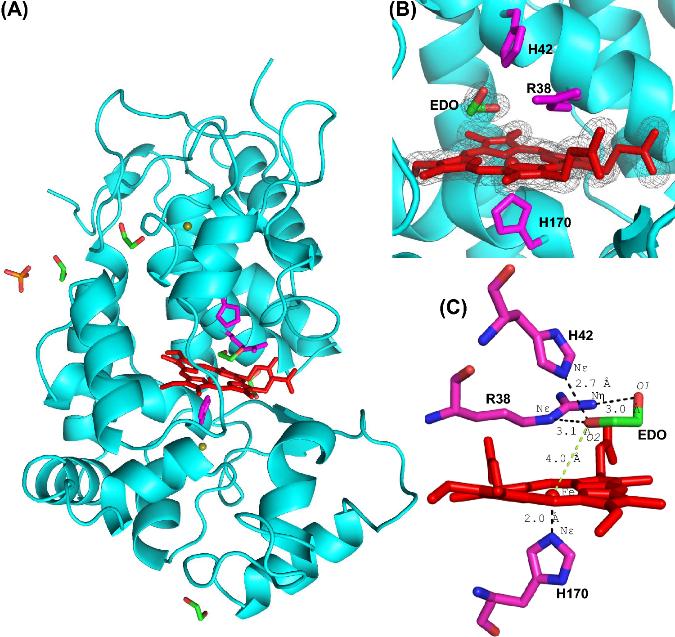 Fig. 1 The structure of recombinant ferric HRP.1
Key structural properties of HRP:
- Globular protein structure with a well-defined shape
- Heme prosthetic group essential for catalysis
- Single polypeptide chain with a molecular weight of 34 kDa
- Accessible active site located in a surface cleft
- Multiple disulfide bonds providing structural stability
Functions of HRP
Horseradish peroxidase's primary function is to catalyze the oxidation of substrates using hydrogen peroxide. However, it is also involved in various biological processes, including the detoxification of reactive oxygen species and the regulation of cellular redox balance.
| Function | Description |
| Catalytic Oxidation | Activates the oxidative properties of hydrogen peroxide (H2O2) to reduce H2O2 into water (H2O) while oxidizing particular substrates. |
| Detoxification | The enzyme breaks down dangerous organic substances and decreases the harmful effects of reactive oxygen species to safeguard cells and tissues. |
| Biosensor Development | These enzymes serve as components in biosensors which detect hydrogen peroxide and other environmental and biomedical analytes. |
The activity curve of horseradish peroxidase (HRP) is sigmoidal in contrast to many other enzymes' hyperbolic curves, indicating its cooperative binding properties and role as an efficient catalyst in amplifying signals in biochemical assays.
Applications of HRP and HRP Antibody in Literature
1. Lu, Bin, et al. "Effects of acetonitrile on horseradish peroxidase (HRP)-anti HRP antibody interaction." Biosensors and Bioelectronics 12.7 (1997): 619-625. https://doi.org/10.1016/S0956-5663(97)00015-8
The research examines how acetonitrile influences the HRP-anti-HRP antibody interaction by showing that this solvent affects both HRP activity and antibody binding properties. The study demonstrates that the antibody undergoes permanent conformational changes at particular acetonitrile concentrations which becomes essential for maximizing HRP-based assay and biosensor performance.
2. Chen, Lei L., et al. "Distribution of horseradish peroxidase (HRP)-anti-HRP immune complexes in mouse spleen with special reference to follicular dendritic cells." The Journal of cell biology 79.1 (1978): 184-199. https://doi.org/10.1083/jcb.79.1.184
The research demonstrates how anti-HRP antibodies spread throughout the central nervous system of immunized rats after blood-brain barrier disruption while showing their ability to penetrate and localize in brain tissues when the barrier is damaged. The research presents these antibodies as diagnostic tools while proposing their application for studying immune responses in neuroinflammatory diseases that result from blood-brain barrier dysfunction.
3. Baloyannis, Stavros J., and Nicholas K. Gonatas. "Distribution of anti-HRP antibodies in the central nervous system of immunized rats after disruption of the blood brain barrier." Journal of Neuropathology & Experimental Neurology 38.5 (1979): 519-531. https://doi.org/10.1097/00005072-197909000-00006
The research investigates how horseradish peroxidase (HRP)-anti-HRP immune complexes distribute throughout the mouse spleen with special attention to their presence in follicular dendritic cells. The study reveals details about immune cell interactions and response mechanisms while demonstrating how follicular dendritic cells function as antigen-presenting cells and immune complex traps.
4. Dotsikas, Yannis, and Yannis L. Loukas. "Improved performance of antigen-HRP conjugate-based immunoassays after the addition of anti-HRP antibody and application of a liposomal chemiluminescence marker." Analytical Sciences 28.8 (2012): 753-757. https://doi.org/10.2116/analsci.28.753
The research investigates how antigen-horseradish peroxidase (HRP) conjugates improve immunoassay performance. The combination of anti-HRP antibody with liposomal chemiluminescence markers enhances both sensitivity and accuracy in these assays. The new method demonstrates potential for detecting tiny antigen amounts in complex biological samples.
Creative Biolabs: HRP Antibodies for Research
Creative Biolabs leads the market as a top provider of premium horseradish peroxidase (HRP) antibodies which serve both research and industrial applications. Our company provides a wide selection of monoclonal antibodies which have been specifically designed for ELISA and Western blot applications as well as immunohistochemistry and flow cytometry and multiple diagnostic techniques.
- Custom HRP Antibody Development: Tailored solutions to address unique research challenges, precisely aligned with your specific needs.
- Bulk Production: Specialized in large-scale antibody manufacturing, providing robust solutions for industrial partners.
- Technical Support: Comprehensive expert consultation to optimize protocols and troubleshoot challenges.
- Aliquoting Services: Conveniently sized aliquots for long-term storage and consistent experimental outcomes.
You can reach us at email for information about our HRP antibodies and custom preparations and technical support.
Reference
- Nesa, Mst Luthfun, et al. "Crystal structure of ferric recombinant horseradish peroxidase." JBIC Journal of Biological Inorganic Chemistry 30.3 (2025): 221-227.
Anti-HRP antibodies
 Loading...
 Compare



Hot products 
- AActivation
- AGAgonist
- APApoptosis
- BBlocking
- BABioassay
- BIBioimaging
- CImmunohistochemistry-Frozen Sections
- CIChromatin Immunoprecipitation
- CTCytotoxicity
- CSCostimulation
- DDepletion
- DBDot Blot
- EELISA
- ECELISA(Cap)
- EDELISA(Det)
- ESELISpot
- EMElectron Microscopy
- FFlow Cytometry
- FNFunction Assay
- GSGel Supershift
- IInhibition
- IAEnzyme Immunoassay
- ICImmunocytochemistry
- IDImmunodiffusion
- IEImmunoelectrophoresis
- IFImmunofluorescence
- IGImmunochromatography
- IHImmunohistochemistry
- IMImmunomicroscopy
- IOImmunoassay
- IPImmunoprecipitation
- ISIntracellular Staining for Flow Cytometry
- LALuminex Assay
- LFLateral Flow Immunoassay
- MMicroarray
- MCMass Cytometry/CyTOF
- MDMeDIP
- MSElectrophoretic Mobility Shift Assay
- NNeutralization
- PImmunohistologyp-Paraffin Sections
- PAPeptide Array
- PEPeptide ELISA
- PLProximity Ligation Assay
- RRadioimmunoassay
- SStimulation
- SESandwich ELISA
- SHIn situ hybridization
- TCTissue Culture
- WBWestern Blot
