
OSBP Antibodies
Background
OSBP, as an important type of lipid transporter, mainly exists in the Golgi region of eukaryotic cells. This protein mediates the transport and distribution of cholesterol within cells by binding to oxysterol substances, and is also involved in regulating lipid metabolism balance and membrane structure dynamics. During the process of viral infection, OSBP has been confirmed to serve as a host factor required for the replication of various RNA viruses and has attracted much attention due to its crucial role in the assembly of viral replicators. Early research began in the 1980s with the exploration of cholesterol sensing mechanisms. With the breakthrough of cryo-electron microscopy technology, scientists gradually revealed the molecular mechanism by which OSBP mediates bidirectional lipid transport at membrane contact sites in the 2010s. Its unique domain organization and allosteric regulation characteristics provide an important model for understanding the functional evolution of lipid transporters and developing antiviral targeting strategies.
Structure of OSBP
OSBP is a medium-sized protein with a molecular weight of approximately 95 kDa. This weight may exhibit slight variations across isoforms due to differences in domain composition and post-translational modifications.
| Species | Human | Mouse | Bovine | Yeast |
| Molecular Weight (kDa) | 95.2 | 94.8 | 94.9 | 78.6 |
| Primary Structural Differences | Conserved PH, FFAT, and ORD domains | High sequence similarity to human | Minor variations in linker regions | Simplified domain architecture |
The OSBP protein contains 807 amino acids and adopts an elongated conformation through its multi-domain architecture. The protein structure features an N-terminal pleckstrin homology (PH) domain that targets membranes, a central two-phenylalanine (FFAT) motif for ER tethering, and a C-terminal oxysterol-binding related domain (ORD) that forms a hydrophobic pocket for lipid transfer. The ORD domain creates a tunnel-like structure capable of shuttling cholesterol between membranes, while regulatory elements control its sterol-sensing and lipid-transfer activities.
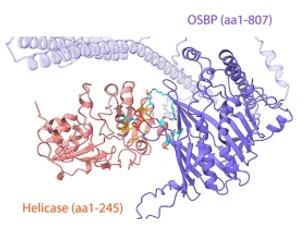 Fig. 1 The interaction model between helicase and OSBP is predicted by Alphafold3.1
Key structural properties of OSBP:
- The extension of more structure domain of conformation
- PH domain-mediated membrane targeting and localization
- Hydrophobic tunnels within the ORD domain are responsible for lipid transport
Functions of OSBP
The core function of the OSBP protein is to regulate the transport and distribution of cholesterol within cells. At the same time, it is also involved in various cellular activities, including the formation of membrane contact sites, viral replication and signal transduction.
| Function | Description |
| Cholesterol transport | Shuttling between the Golgi apparatus and the endoplasmic reticulum to transport cholesterol and maintain membrane lipid homeostasis. |
| Regulation of phosphatidylinositol | Regulate the phosphoinositol balance on the Golgi membrane through the PI4P/ cholesterol exchange reaction. |
| Formation of membrane contact sites | The PH domain and FFAT motif were used to connect different organelles to build a lipid exchange platform. |
| Virus replication support | Hijacked by various RNA viruses as host factors, it is used to construct viral replicators. |
| Signal pathway regulation | Indirectly affects Hedgehog, mTOR and other key signaling pathways by altering cholesterol distribution. |
The lipid exchange mechanism of OSBP exhibits a synergistic anti-transport feature - for each cholesterol molecule output, a PI4P molecule is simultaneously input. This bidirectional transport mode makes it the core regulator of cellular lipid balance.
Applications of OSBP and OSBP Antibody in Literature
1. Olkkonen, Vesa M. "OSBP-related proteins: liganding by glycerophospholipids opens new insight into their function." Molecules 18.11 (2013): 13666-13679. https://doi.org/10.3390/molecules181113666
Studies have shown that OSBP and its related proteins (ORPs/OSBPLs) are a class of lipid transfer proteins that can not only bind to sterols but also specifically bind to phospholipids (such as PI4P and PS). They regulate lipid transport and metabolism through membrane contact sites, and their functions far exceed the scope of their names.
2. Cigler, Marko, et al. "Orpinolide disrupts a leukemic dependency on cholesterol transport by inhibiting OSBP." Nature Chemical Biology 21.2 (2025): 193-202. https://doi.org/10.1038/s41589-024-01614-4
Researchers have discovered that the synthetic compound orpinolide has anti-leukemia activity. The mechanism is to disrupt the homeostasis of the Golgi apparatus, and the direct target is the oxidized steroid-binding protein (OSBP). This study confirmed that sterol transport targeting OSBP is a potential therapeutic strategy for leukemia.
3. Lin, Shaoli, et al. "Oxysterol binding protein (OSBP) contributes to hepatitis E virus replication." Virology Journal 21.1 (2024): 161. https://doi.org/10.1186/s12985-024-02438-3
Research has found that hepatitis E virus (HEV) can interact with the host protein OSBP by using its helicase and hinder the transport of OSBP to the Golgi apparatus. This interaction is crucial for the replication of HEV, revealing a new mechanism by which viruses hijack lipid regulators to promote their own replication.
4. de La Mora, Eugenio, et al. "Nanoscale architecture of a VAP-A-OSBP tethering complex at membrane contact sites." Nature communications 12.1 (2021): 3459. https://doi.org/10.1038/s41467-021-23799-1
The research revealed the structural mechanism by which OSBP collaboratively forms membrane contact sites with endoplasmic reticulum protein VAP.A. The unique "T-shaped" structure formed by the dimer of OSBP effectively Bridges and may promote intermembrane lipid transport.
5. Subramaniyan, Bharathiraja, et al. "Anti-SARS-CoV-2 Small Molecule Targeting of Oxysterol-Binding Protein (OSBP) Activates Cellular Antiviral Innate Immunity." ACS Infectious Diseases 11.5 (2025): 1064-1077. https://doi.org/10.1021/acsinfecdis.4c00631
Research has found that the compound OSW-1 targeting the lipid transporter OSBP can not only broadly inhibit the replication of various justice single-stranded RNA viruses (such as coronaviruses) by reducing the level of OSBP, but also regulate the host's innate immune responses such as type I and type III interferons. This indicates that OSBP is an important node connecting viral replication and cellular immunity.
Creative Biolabs: OSBP Antibodies for Research
Creative Biolabs specializes in the production of high-quality OSBP antibodies for research and industrial applications. Our portfolio includes monoclonal antibodies tailored for ELISA, Flow Cytometry, Western blot, immunohistochemistry, and other diagnostic methodologies.
- Custom OSBP Antibody Development: Tailor-made solutions to meet specific research requirements.
- Bulk Production: Large-scale antibody manufacturing for industry partners.
- Technical Support: Expert consultation for protocol optimization and troubleshooting.
- Aliquoting Services: Conveniently sized aliquots for long-term storage and consistent experimental outcomes.
For more details on our OSBP antibodies, custom preparations, or technical support, contact us at email.
Reference
- Lin, Shaoli, et al. "Oxysterol binding protein (OSBP) contributes to hepatitis E virus replication." Virology Journal 21.1 (2024): 161. https://doi.org/10.1186/s12985-024-02438-3
Anti-OSBP antibodies
 Loading...
 Compare




Hot products 
-
Mouse Anti-Gro Monoclonal Antibody (1) (CBMAB-0482-LY)

-
Mouse Anti-ATP1B3 Recombinant Antibody (1E9) (CBMAB-A4021-YC)

-
Mouse Anti-APOE Recombinant Antibody (A1) (CBMAB-0078CQ)

-
Mouse Anti-CARD11 Recombinant Antibody (CBFYC-0811) (CBMAB-C0866-FY)

-
Mouse Anti-ALOX5 Recombinant Antibody (33) (CBMAB-1890CQ)

-
Mouse Anti-ADGRL2 Recombinant Antibody (V2-58519) (CBMAB-L0166-YJ)

-
Mouse Anti-C5AR1 Recombinant Antibody (R63) (CBMAB-C9553-LY)

-
Mouse Anti-ACTB Recombinant Antibody (V2-179553) (CBMAB-A0870-YC)

-
Mouse Anti-GPR34 Recombinant Antibody (CBFYH-0457) (CBMAB-H1331-FY)

-
Mouse Anti-ENO1 Recombinant Antibody (CBYC-A950) (CBMAB-A4388-YC)

-
Rat Anti-ADGRE4 Recombinant Antibody (V2-160163) (CBMAB-F0011-CQ)

-
Rabbit Anti-ABL1 (Phosphorylated Y245) Recombinant Antibody (V2-505716) (PTM-CBMAB-0465LY)

-
Mouse Anti-BACE1 Recombinant Antibody (CBLNB-121) (CBMAB-1180-CN)

-
Mouse Anti-ESR1 Recombinant Antibody (Y31) (CBMAB-1208-YC)

-
Mouse Anti-NSUN6 Recombinant Antibody (D-5) (CBMAB-N3674-WJ)

-
Mouse Anti-C4B Recombinant Antibody (CBYY-C2996) (CBMAB-C4439-YY)

-
Human Anti-SARS-CoV-2 Spike Recombinant Antibody (CR3022) (CBMAB-CR014LY)

-
Mouse Anti-8-oxoguanine Recombinant Antibody (V2-7697) (CBMAB-1869CQ)

-
Mouse Anti-ASH1L Monoclonal Antibody (ASH5H03) (CBMAB-1372-YC)

-
Mouse Anti-ARHGDIA Recombinant Antibody (CBCNA-009) (CBMAB-R0415-CN)

- AActivation
- AGAgonist
- APApoptosis
- BBlocking
- BABioassay
- BIBioimaging
- CImmunohistochemistry-Frozen Sections
- CIChromatin Immunoprecipitation
- CTCytotoxicity
- CSCostimulation
- DDepletion
- DBDot Blot
- EELISA
- ECELISA(Cap)
- EDELISA(Det)
- ESELISpot
- EMElectron Microscopy
- FFlow Cytometry
- FNFunction Assay
- GSGel Supershift
- IInhibition
- IAEnzyme Immunoassay
- ICImmunocytochemistry
- IDImmunodiffusion
- IEImmunoelectrophoresis
- IFImmunofluorescence
- IGImmunochromatography
- IHImmunohistochemistry
- IMImmunomicroscopy
- IOImmunoassay
- IPImmunoprecipitation
- ISIntracellular Staining for Flow Cytometry
- LALuminex Assay
- LFLateral Flow Immunoassay
- MMicroarray
- MCMass Cytometry/CyTOF
- MDMeDIP
- MSElectrophoretic Mobility Shift Assay
- NNeutralization
- PImmunohistologyp-Paraffin Sections
- PAPeptide Array
- PEPeptide ELISA
- PLProximity Ligation Assay
- RRadioimmunoassay
- SStimulation
- SESandwich ELISA
- SHIn situ hybridization
- TCTissue Culture
- WBWestern Blot
