
PLAP Antibodies
Background
PLAP is a membrane-bound glycoprotein that mainly exists in the syncytiotrophoblast of the mammalian placenta. As a member of the alkaline phosphatase family, it participates in various physiological processes by hydrolyzing phosphate ester bonds, especially playing a key role during pregnancy. It was first discovered in placental tissue in the 1930s and is distinguished from other alkaline phosphatase subtypes (such as hepatic type and bone type) due to its unique thermal stability (remaining active after being heated at 65°C for 30 minutes). In 1965, scientists first confirmed that PLAP could be used as a tumor marker and was abnormally highly expressed in germ cell tumors such as spermatogastoma. This discovery significantly promoted the diagnostic research of reproductive system tumors.
Structure of PLAP
PLAP is a glycoprotein with a molecular weight of approximately 67kDa. Its molecular weight varies among different species, mainly due to the different degrees of glycosylation modification. The following is a comparison among various species:
| Species | Human | Mouse | Cattle | Rhesus monkey |
| Molecular Weight (kDa) | 67 | 65 | 68 | 66 |
| Primary Structural Differences | Contains 3 N- glycosylation sites | Just two glycosylation sites, 156th as alanine | Sugar chain compounds containing high mannose | Glycosylation pattern and human similarity of 92% |
PLAP is a dimer glycoprotein composed of 507 amino acids, featuring a unique bimetallic ion catalytic center. Its structural core contains two zinc ions (Zn1 and Zn2) and one magnesium ion, which coordinate and combine with key residues such as Asp91 and His92 respectively to form a stable catalytic structure. The most notable feature of this protein is its thermal stability, which is mainly attributed to the Cys468-Cys469 disulfide bond and the glycosylation modification at the Asn120/Asn303 sites. In terms of catalytic mechanisms, the Arg166 residue is responsible for stabilizing the substrate phosphate group, while the conserved Ser92-Ala93-Gly94 sequence forms the key oxygen anion hole.
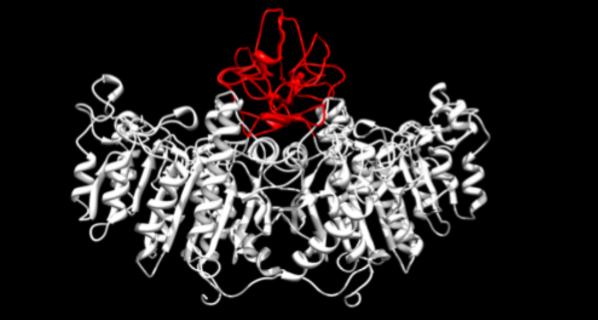 Fig. 1 ChimAP 3D structure modeled on PLAP.1
Key structural properties of PLAP:
- Unique bimetallic catalytic center structure
- Glycation modified dimer configuration
- Core of thermal stability
- Conservative catalytic triad
Functions of PLAP
PLAP core functionality is catalytic hydrolysis reaction of phosphate key, is mainly responsible for metabolic regulation of the placenta. Meanwhile, this enzyme also plays an important role in a variety of pathophysiological processes, including tumorigenesis and immune regulation.
| Function | Description |
| Phosphate metabolism | Hydrolyzed monoesters of phosphate maintain the phosphate balance of placental tissue and support fetal development. |
| Tumor marker | Seminoma in abnormally high expression in germ cell tumors, promoting tumor cell energy metabolism. |
| Immune regulation | By regulating the levels of inflammatory factors, it affects the immune microenvironment at the maternal-fetal interface. |
| Hypoxia adaptation | Remained active in the region of the placental hypoxia, and support the growth and development of fetal under anoxic condition. |
| Clinical diagnosis | Serum PLAP level detection is used for pregnancy monitoring and tumor screening. |
PLAP has unique thermal stability (activity retention >80% after being treated at 65°C for 30 minutes) and is an ideal clinical detection marker. Its activity increases with gestational weeks and reaches its peak in the third trimester of pregnancy, directly supporting fetal development.
Applications of PLAP and PLAP Antibody in Literature
1. Reiswich, Viktor, et al. "Pattern of placental alkaline phosphatase (PLAP) expression in human tumors: a tissue microarray study on 12,381 tumors." The Journal of Pathology: Clinical Research 7.6 (2021): 577-589. https://doi.org/10.1002/cjp2.237
The research of the article shows that PLAP is an important marker of testicular germ cell tumors (96% of seminomas). The study, through microarray analysis of 16,166 tumor tissues, found that PLAP was moderately to strongly positive in 21% of the tumors, including endometrial cancer (28%), gastric cancer (22%), etc. It is notable that the expression of PLAP was positively correlated with the progression of colorectal cancer (p<0.01), but negatively correlated with the stage of endometrial cancer (p=0.0043). Low-level PLAP expression can be seen in more tumor types and cannot be used alone as a diagnostic basis for germ cell tumors.
2. Saini, Deepti, et al. "Targeting the active site of the placental isozyme of alkaline phosphatase by phage-displayed scFv antibodies selected by a specific uncompetitive inhibitor." BMC biotechnology 5 (2005): 1-13. https://doi.org/10.1186/1472-6750-5-33
In this study, the PLAP-specific non-competitive inhibitor L-Phe-Gly was utilized to screen out specific scFv antibody fragments from the synthetic antibody library. This inhibitor can bind to the enzyme-substrate complex, revealing the subtle differences among the isoenzymes of alkaline phosphatase. Through the co-incubation system of PLAP and substrate p-nitrophenyl phosphate (pNPP), the scFv antibody that could specifically recognize the active site region of PLAP was successfully isolated, and its regulatory effect on enzyme activity was verified. This method overcomes the technical difficulty that traditional antibodies have difficulty distinguishing highly similar isoenzymes.
3. Apodaca, G., and K. E. Mostov. "Transcytosis of placental alkaline phosphatase-polymeric immunoglobulin receptor fusion proteins is regulated by mutations of Ser664." Journal of Biological Chemistry 268.31 (1993): 23712-23719. https://doi.org/10.1016/S0021-9258(19)49519-7
In this study, the PLAP-pIgR fusion protein was constructed and it was found that the phosphorylation of Ser664 is a key signal for transcellular transport. The transport rate of PLAP/WT was 27%, that of PLAP/Ala was only 5%, while that of simulated phosphorylation of PLAP/Asp reached 22%, confirming that this site regulates the transport efficiency.
4. Bossi, M., M. F. Hoylaerts, and J. L. Millan. "Modifications in a flexible surface loop modulate the isozyme-specific properties of mammalian alkaline phosphatases." Journal of Biological Chemistry 268.34 (1993): 25409-25416. https://doi.org/10.1016/S0021-9258(19)74407-X
In this study, by constructing chimeric enzymes PLAP-T and TNAP-P, it was found that the cyclic structure on the surface of alkaline phosphatase determines the characteristics of isoenzymes. The thermal stability of PLAP-T is close to that of TNAP, and it loses the binding ability of four anti-PLAP monoclonal antibodies. This domain also regulates the collagen-binding properties, but does not affect IgG binding. The results indicated that the surface cyclic structure determined the enzyme stability, conformational characteristics and protein interaction specificity.
5. Berger, Joel, et al. "COOH-terminal requirements for the correct processing of a phosphatidylinositol-glycan anchored membrane protein." Journal of Biological Chemistry 263.20 (1988): 10016-10021. https://doi.org/10.1016/S0021-9258(19)81619-8
Studies have found that PLAP anchors cell membranes through phosphatidylinositol glycan (PI-G). Transfection experiments showed that the C-terminal of the PLAP precursor protein needed to contain at least 17 consecutive hydrophobic amino acids to complete PI-G modification and membrane anchoring. When the C-terminal hydrophobic sequence shortens to 13 residues, PLAP transforms into a soluble secretory protein. The key requirements are to maintain the hydrophobicity of the C-terminal and the minimum length, and the specific amino acid sequence can be replaced.
Creative Biolabs: PLAP Antibodies for Research
Creative Biolabs specializes in the production of high-quality PLAP antibodies for research and industrial applications. Our portfolio includes monoclonal antibodies tailored for IHC, ELISA, WB, flow cytometry applications and other diagnostic methodologies.
- Custom PLAP Antibody Development: Tailor-made solutions to meet specific research requirements.
- Bulk Production: Large-scale antibody manufacturing for industry partners.
- Technical Support: Expert consultation for protocol optimization and troubleshooting.
- Aliquoting Services: Conveniently sized aliquots for long-term storage and consistent experimental outcomes.
For more details on our PLAP antibodies, custom preparations, or technical support, contact us at info@creative-biolabs.com.
Reference
- Kiffer-Moreira, Tina, et al. "Catalytic signature of a heat-stable, chimeric human alkaline phosphatase with therapeutic potential." PLoS One 9.2 (2014): e89374. https://doi.org/10.1371/journal.pone.0089374
Anti-PLAP antibodies
 Loading...
 Compare




Hot products 
- AActivation
- AGAgonist
- APApoptosis
- BBlocking
- BABioassay
- BIBioimaging
- CImmunohistochemistry-Frozen Sections
- CIChromatin Immunoprecipitation
- CTCytotoxicity
- CSCostimulation
- DDepletion
- DBDot Blot
- EELISA
- ECELISA(Cap)
- EDELISA(Det)
- ESELISpot
- EMElectron Microscopy
- FFlow Cytometry
- FNFunction Assay
- GSGel Supershift
- IInhibition
- IAEnzyme Immunoassay
- ICImmunocytochemistry
- IDImmunodiffusion
- IEImmunoelectrophoresis
- IFImmunofluorescence
- IGImmunochromatography
- IHImmunohistochemistry
- IMImmunomicroscopy
- IOImmunoassay
- IPImmunoprecipitation
- ISIntracellular Staining for Flow Cytometry
- LALuminex Assay
- LFLateral Flow Immunoassay
- MMicroarray
- MCMass Cytometry/CyTOF
- MDMeDIP
- MSElectrophoretic Mobility Shift Assay
- NNeutralization
- PImmunohistologyp-Paraffin Sections
- PAPeptide Array
- PEPeptide ELISA
- PLProximity Ligation Assay
- RRadioimmunoassay
- SStimulation
- SESandwich ELISA
- SHIn situ hybridization
- TCTissue Culture
- WBWestern Blot
