
V5 Tag Antibodies
Background
V5 Tag is a short peptide-tagged protein widely used in molecular biology research, composed of 14 amino acids (GKPIPNPLLGLDST). This tag is usually expressed by fusing with the target protein through genetic engineering methods, thereby achieving the detection, purification and tracking of recombinant proteins. Due to its high specificity and sensitivity, V5 Tag is widely used in experiments such as Western blot, immunofluorescence and co-immunoprecipitation, helping researchers analyze the expression, localization and interaction of proteins. Since its development in the 1990s, V5 Tag has become an important tool in protein function research, significantly promoting the development of experimental techniques in fields such as gene expression analysis, proteomics, and cell signal transduction.
Structure of V5 Tag
V5 Tag is an artificially designed small molecule polypeptide tag, composed of 14 amino acids, with a molecular weight of approximately 1.6 kDa. Its sequence is highly consistent across different species and applications, with no natural variation, thus possessing excellent specificity and universality.
This tag is usually fused to the C-terminal or N-terminal of the target protein through genetic engineering technology, without affecting the correct folding and function of the protein. The secondary structure of V5 Tag is mainly flexible and randomly curled, facilitating the full exposure of the epitopes recognized by antibodies. Its core recognition sequence is a linear epitope derived from parainfluenza virus, which can specifically bind to high-affinity monoclonal antibodies and is widely used in protein detection, purification and intracellular localization research.
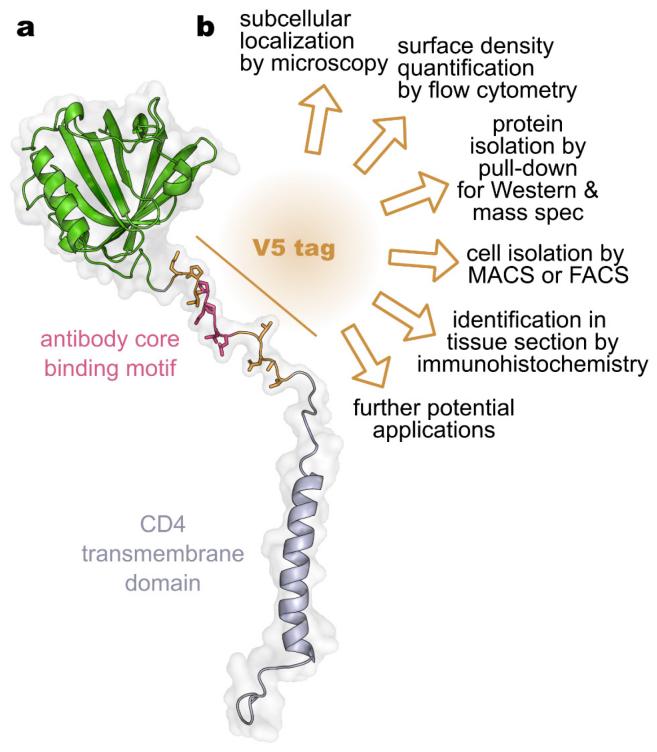 Fig. 1 V5-tagged synthetic protein for molecular imaging.1
Key structural properties of V5 Tag:
- Artificially synthesized linear short peptide structure
- Stable hydrophilic epitope sequence (GKPIPNPLLGLDST)
- The antibody recognition site exposed at the C-terminal
- Small molecule amino acids such as alanine and proline form flexible junction regions
Functions of V5 Tag
The main function of V5 Tag is to serve as a protein labeling and detection tool in genetic engineering. Its specific functions are as follows:
| Function | Description |
| Protein detection | The V5 epitope is recognized by specific antibodies and is used in detection techniques such as Western blot and immunofluorescence. |
| Protein purification | Efficiently separate and enrich recombinant proteins by using magnetic beads or chromatography columns conjugated with anti-V5 antibodies. |
| Subcellular localization research | By fluorescently labeling V5 antibodies, the distribution and dynamic changes of target proteins within cells can be tracked in real time. |
| Research on protein-protein interactions | In Co-IP or Pull-down experiments, the formation and binding partners of the protein complex were verified through V5 tags. |
| Stable expression guarantee | Short and non-cytotoxic, it can achieve high fusion efficiency and correct protein folding in various host cells. |
The antibody binding curve of V5 Tag shows a high-affinity linear characteristic, which is different from the binding mode of natural protein epitopes, indicating that it is specially designed for efficient and specific experimental applications.
Applications of V5 Tag and V5 Tag Antibody in Literature
1. Zeghal, Manel, et al. "Development of a V5-tag–directed nanobody and its implementation as an intracellular biosensor of GPCR signaling." Journal of Biological Chemistry 299.9 (2023). https://doi.org/10.1016/j.jbc.2023.105107
This paper developed a nanobody NbV5 with a V5 tag, which can replace large fluorescent proteins, significantly reduce the size of labeled molecules, and lower the interference with protein functions. It has been successfully applied in live cell imaging and protein-protein interaction studies, providing an efficient tool for cell signal transduction research.
2. Fritschle, Katja, et al. "The V5-epitope tag for cell engineering and its use in immunohistochemistry and quantitative flow cytometry." Biology 14.7 (2025): 890. https://doi.org/10.3390/biology14070890
This study systematically evaluated murine and humanized anti-V5 tag antibodies and optimized their application in the detection of cell and tissue samples. By improving the immunohistochemical method, the interference of mouse tissue background was effectively eliminated, confirming the reliability of the V5 tag in detecting modified cells and heterologous fusion proteins, providing a practical tool for synthetic biology research and cell therapy development.
3. Traore, Ephrahime S., et al. "Heme binding to HupZ with a C-terminal tag from group A Streptococcus." Molecules 26.3 (2021): 549. https://doi.org/10.3390/molecules26030549
This study characterized the HupZ protein with the V5-His6 tag through various technical means and found that its weak heme degradation activity was related to the His6 tag rather than the protein itself. Heme binding is oxygen-dependent and can induce the formation of advanced oligomeric structures and heme stacking of proteins, suggesting that exogenous tags may significantly affect the functional research results of heme utilization proteins.
4. Randall, Richard E., et al. "Single-cycle parainfluenza virus type 5 vectors for producing recombinant proteins, including a humanized anti-V5 tag antibody." Journal of General Virology 106.1 (2025): 002061. https://doi.org/10.1099/jgv.0.002061
In this study, a recombinant viral system expressing humanized anti-V5 tag antibodies was constructed using the PIV5 vector. Experiments have shown that this system can efficiently express antibodies in various cells, with the yield of CHO cells reaching 20-50 mg/L after infection, providing a new solution for the safe and efficient production of recombinant proteins in vitro and in vivo.
5. Mrestani, Achmed, et al. "Nanoscaled RIM clustering at presynaptic active zones revealed by endogenous tagging." Life Science Alliance 6.12 (2023). https://doi.org/10.26508/lsa.202302021
In this study, the RIM gene of fruit flies was edited using CRISPR/Cas9 technology, and V5 and HA tags were introduced respectively. The research found that the insertion of V5 tags disrupted the calcium-triggered synaptic release function, while HA tags maintained normal neural transmission and steady-state plasticity. Moreover, super-resolution imaging revealed the nanoscale cluster distribution characteristics of RIM proteins in the active region.
Creative Biolabs: V5 Tag Antibodies for Research
Creative Biolabs specializes in the production of high-quality V5 Tag antibodies for research and industrial applications. Our portfolio includes monoclonal antibodies tailored for ELISA, Flow Cytometry, Western blot, immunohistochemistry, and other diagnostic methodologies.
- Custom V5 Tag Antibody Development: Tailor-made solutions to meet specific research requirements.
- Bulk Production: Large-scale antibody manufacturing for industry partners.
- Technical Support: Expert consultation for protocol optimization and troubleshooting.
- Aliquoting Services: Conveniently sized aliquots for long-term storage and consistent experimental outcomes.
For more details on our V5 Tag antibodies, custom preparations, or technical support, contact us at email.
Reference
- Fritschle, Katja, et al. "The V5-epitope tag for cell engineering and its use in immunohistochemistry and quantitative flow cytometry." Biology 14.7 (2025): 890. https://doi.org/10.3390/biology14070890
Anti-V5 Tag antibodies
 Loading...
 Compare




Hot products 
-
Mouse Anti-APC Recombinant Antibody (CBYC-A661) (CBMAB-A3036-YC)

-
Rat Anti-AChR Recombinant Antibody (V2-12500) (CBMAB-0990-CN)

-
Mouse Anti-ALDOA Recombinant Antibody (A2) (CBMAB-A2316-YC)

-
Mouse Anti-ANXA7 Recombinant Antibody (A-1) (CBMAB-A2941-YC)

-
Rabbit Anti-ADRA1A Recombinant Antibody (V2-12532) (CBMAB-1022-CN)

-
Human Anti-SARS-CoV-2 S1 Monoclonal Antibody (CBFYR-0120) (CBMAB-R0120-FY)

-
Mouse Anti-HTLV-1 gp46 Recombinant Antibody (CBMW-H1006) (CBMAB-V208-1154-FY)

-
Mouse Anti-CRTAM Recombinant Antibody (CBFYC-2235) (CBMAB-C2305-FY)

-
Mouse Anti-BAD (Phospho-Ser136) Recombinant Antibody (CBYY-0138) (CBMAB-0139-YY)

-
Mouse Anti-ATG5 Recombinant Antibody (9H197) (CBMAB-A3945-YC)

-
Mouse Anti-FPR2 Recombinant Antibody (1D6) (CBMAB-F2628-CQ)

-
Mouse Anti-CD24 Recombinant Antibody (2Q1282) (CBMAB-C1624-CN)

-
Mouse Anti-CD164 Recombinant Antibody (CBFYC-0077) (CBMAB-C0086-FY)

-
Mouse Anti-GIPC2 Recombinant Antibody (10) (CBMAB-G0476-LY)

-
Mouse Anti-AMOT Recombinant Antibody (CBYC-A564) (CBMAB-A2552-YC)

-
Rat Anti-4-1BB Recombinant Antibody (V2-1558) (CBMAB-0953-LY)

-
Mouse Anti-ATP1B3 Recombinant Antibody (1E9) (CBMAB-A4021-YC)

-
Rat Anti-FABP3 Recombinant Antibody (CBXF-2299) (CBMAB-F1612-CQ)

-
Rabbit Anti-ABL1 (Phosphorylated Y245) Recombinant Antibody (V2-505716) (PTM-CBMAB-0465LY)

-
Mouse Anti-ACKR3 Recombinant Antibody (V2-261265) (CBMAB-C1023-LY)

- AActivation
- AGAgonist
- APApoptosis
- BBlocking
- BABioassay
- BIBioimaging
- CImmunohistochemistry-Frozen Sections
- CIChromatin Immunoprecipitation
- CTCytotoxicity
- CSCostimulation
- DDepletion
- DBDot Blot
- EELISA
- ECELISA(Cap)
- EDELISA(Det)
- ESELISpot
- EMElectron Microscopy
- FFlow Cytometry
- FNFunction Assay
- GSGel Supershift
- IInhibition
- IAEnzyme Immunoassay
- ICImmunocytochemistry
- IDImmunodiffusion
- IEImmunoelectrophoresis
- IFImmunofluorescence
- IGImmunochromatography
- IHImmunohistochemistry
- IMImmunomicroscopy
- IOImmunoassay
- IPImmunoprecipitation
- ISIntracellular Staining for Flow Cytometry
- LALuminex Assay
- LFLateral Flow Immunoassay
- MMicroarray
- MCMass Cytometry/CyTOF
- MDMeDIP
- MSElectrophoretic Mobility Shift Assay
- NNeutralization
- PImmunohistologyp-Paraffin Sections
- PAPeptide Array
- PEPeptide ELISA
- PLProximity Ligation Assay
- RRadioimmunoassay
- SStimulation
- SESandwich ELISA
- SHIn situ hybridization
- TCTissue Culture
- WBWestern Blot
