
FOXA2 Antibodies
Background
FOXA2, as a transcription factor belonging to the forkhead box protein family, is highly expressed in the endoderm and its derived organs during embryonic development. This protein specifically binds to the DNA sequences of target genes through its unique forkhead domain, regulating key biological processes such as cell differentiation, metabolic homeostasis, and organ formation. As a pioneer factor, FOXA2 can remodel the chromatin structure, enabling previously closed gene loci to acquire transcriptional activity, playing a central role in the development of the liver, pancreas, and lungs. This gene was first identified in rodent models, and its dysfunction is closely related to diabetes, liver cancer, and congenital developmental defects. Through structural biology research, scientists have resolved the high-resolution crystal structure of the complex between FOXA2 and DNA. This breakthrough not only deepens the understanding of transcriptional regulatory mechanisms but also provides a theoretical basis for targeted treatment of related diseases.
Structure of FOXA2
FOXA2 is a relatively small transcription factor with a molecular weight of approximately 47.8 kDa. This value varies slightly among different species, mainly due to minor changes in the amino acid sequence.
| Species | Human | Mouse | Rat | Bovine | Zebrafish |
| Molecular Weight (kDa) | 47.8 | 47.6 | 47.6 | 47.9 | 48.1 |
| Primary Structural Differences | The ankyrin domain is highly conserved | 98% homology with human | Very similar to mice | The C-terminal transcription activation region showed slight variation | There are two isoforms of FOXA2 protein |
This protein contains approximately 457 amino acids and its core feature is a highly conserved forkhead domain. This domain consists of three α-helices and two large ring-like structures, forming a typical helix-ring-helix-folding pattern. Structural biology analysis shows that this domain achieves sequence-specific binding by recognizing and inserting into the major groove of the DNA double helix. The two ring-like regions (wings) in the winged helix structure interact stably with the DNA backbone, while the third α-helix directly embeds into the recognition site to ensure the precise positioning of the target gene promoter.
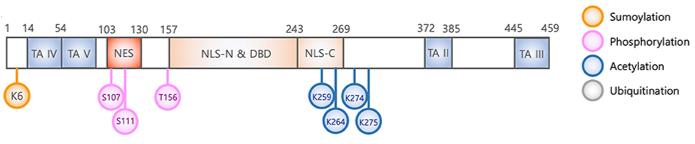 Fig. 1 Schematic diagram of FOXA2.1
Key structural properties of FOXA2:
- The fork-head domain consists of three α -helical rings and two wing-shaped rings
- Identify the helix directly embedded in the major groove of DNA
- The C-terminal region is rich in basic amino acids and is involved in nuclear localization
- N-terminal region mediated chromatin remodeling, auxiliary open target genes
Functions of FOXA2
The main function of FOXA2 is to regulate the development of the endoderm and metabolic homeostasis. Additionally, it is involved in several physiological processes, including glucose homeostasis maintenance, cell proliferation, and organ formation.
| Function | Description |
| Endoderm Development | FOXA2 is highly expressed during the early stage of endoderm development, guiding the regional differentiation of the foregut, midgut and hindgut. |
| Metabolic Regulation | Directly binding to insulin response elements in liver cells, it regulates the expression of key enzymes involved in gluconeogenesis and maintains blood sugar balance. |
| Organ Formation | It participates in the epithelial morphogenesis of multiple organs such as the pancreas, lungs, and liver, and induces the differentiation of progenitor cells into functional cells. |
| Chromatin Remodeling | As a pioneer factor, FOXA2 opens the compact chromatin structure, granting transcriptional permission to silenced gene loci. |
| Disease Association | Genetic mutations or abnormal gene expression are closely related to the occurrence and development of congenital developmental defects, diabetes, and hepatocellular carcinoma. |
The binding kinetics of FOXA2 to DNA exhibits a synergistic effect. Its affinity for the nucleosome binding site is significantly higher than that of other transcription factors, reflecting its unique biological status as a chromatin opening factor.
Applications of FOXA2 and FOXA2 Antibody in Literature
1. Choi, Woosuk, Shawn Choe, and Gee W. Lau. "Inactivation of FOXA2 by respiratory bacterial pathogens and dysregulation of pulmonary mucus homeostasis." Frontiers in immunology 11 (2020): 515. https://doi.org/10.3389/fimmu.2020.00515
The article indicates that FOXA2 is a key factor regulating the mucous homeostasis of the airway. In a healthy state, it inhibits the differentiation of goblet cells and the production of mucin; during infection, its expression is downregulated, leading to excessive mucus secretion, clearance disorders, and persistent infection, thereby accelerating the progression of chronic lung diseases.
2. Belaguli, Narasimhaswamy S., et al. "Forkhead box protein A2 (FOXA2) protein stability and activity are regulated by sumoylation." PloS one 7.10 (2012): e48019. https://doi.org/10.1371/journal.pone.0048019
The study found that the FOXA2 protein is modified by SUMO-1 at the site K6. This modification promotes the stability and transcriptional activity of the FOXA2 protein, and is crucial for maintaining its expression and function in various cancer cells.
3. Kawasaki, Kenta, et al. "FOXA2 promotes metastatic competence in small cell lung cancer." Nature Communications 16.1 (2025): 4865. https://doi.org/10.1038/s41467-025-60141-5
The research has found that FOXA2 is a key driver for multi-organ metastasis in small cell lung cancer (SCLC). ASCL1 directly regulates the expression of FOXA2 by binding to its promoter, thereby inducing the fetal neuroendocrine gene program and significantly promoting distant metastasis of the tumor.
4. Wang, Zifeng, et al. "FOXA2 rewires AP-1 for transcriptional reprogramming and lineage plasticity in prostate cancer." Nature Communications 15.1 (2024): 4914. https://doi.org/10.1038/s41467-024-49234-9
Studies have shown that FOXA2 is a core transcription factor that regulates the development and diseases of multiple organs. In the lungs, it maintains mucus homeostasis, and its absence leads to goblet cell hyperplasia and infection. In cancer cells, FOXA2 is stabilized through SUMO modification and driven by ASCL1, collaborating with AP-1 to reprogram genes and jointly promoting the metastasis of small cell lung cancer and the plasticity of prostate cancer lineage.
5. Kumar, Anil, et al. "Ginger nanoparticles mediated induction of Foxa2 prevents high-fat diet-induced insulin resistance." Theranostics 12.3 (2022): 1388. https://doi.org/10.7150/thno.62514
Studies have shown that oral administration of ginger-derived nanoparticles (GDNP) effectively prevents obesity and insulin resistance induced by a high-fat diet and extends the lifespan of mice by protecting the intestinal epithelial FOXA2 from Akt-1-mediated phosphorylation inactivation, thereby restoring its function and maintaining signal homeostasis.
Creative Biolabs: FOXA2 Antibodies for Research
Creative Biolabs specializes in the production of high-quality FOXA2 antibodies for research and industrial applications. Our portfolio includes monoclonal and polyclonal antibodies tailored for ELISA, Flow Cytometry, Western blot, immunohistochemistry, and other diagnostic methodologies.
- Custom FOXA2 Antibody Development: Tailor-made solutions to meet specific research requirements.
- Bulk Production: Large-scale antibody manufacturing for industry partners.
- Technical Support: Expert consultation for protocol optimization and troubleshooting.
- Aliquoting Services: Conveniently sized aliquots for long-term storage and consistent experimental outcomes.
For more details on our FOXA2 antibodies, custom preparations, or technical support, contact us at email.
Reference
- Choi, Woosuk, Shawn Choe, and Gee W. Lau. "Inactivation of FOXA2 by respiratory bacterial pathogens and dysregulation of pulmonary mucus homeostasis." Frontiers in immunology 11 (2020): 515. Distributed under Open Access license CC BY 4.0, without modification. https://doi.org/10.3389/fimmu.2020.00515
Anti-FOXA2 antibodies
 Loading...
 Compare



Hot products 
-
Mouse Anti-DMD Recombinant Antibody (D1190) (CBMAB-D1190-YC)

-
Mouse Anti-CGAS Recombinant Antibody (CBFYM-0995) (CBMAB-M1146-FY)

-
Mouse Anti-B2M Recombinant Antibody (CBYY-0050) (CBMAB-0050-YY)

-
Mouse Anti-AFM Recombinant Antibody (V2-634159) (CBMAB-AP185LY)

-
Mouse Anti-ABL2 Recombinant Antibody (V2-179121) (CBMAB-A0364-YC)

-
Mouse Anti-AP4E1 Recombinant Antibody (32) (CBMAB-A2996-YC)

-
Mouse Anti-ATM Recombinant Antibody (2C1) (CBMAB-A3970-YC)

-
Rat Anti-CCR2 Recombinant Antibody (475301) (CBMAB-C1338-LY)

-
Mouse Anti-ENPP1 Recombinant Antibody (CBFYE-0159) (CBMAB-E0375-FY)

-
Mouse Anti-GLP1R Recombinant Antibody (4F3) (CBMAB-G0521-LY)

-
Mouse Anti-CD83 Recombinant Antibody (HB15) (CBMAB-C1765-CQ)

-
Rabbit Anti-ABL1 (Phosphorylated Y185) Recombinant Antibody (V2-443434) (PTM-CBMAB-0001YC)

-
Mouse Anti-CCDC6 Recombinant Antibody (CBXC-0106) (CBMAB-C5397-CQ)

-
Mouse Anti-AGO2 Recombinant Antibody (V2-634169) (CBMAB-AP203LY)

-
Mouse Anti-GFAP Recombinant Antibody (24) (CBMAB-G2927-LY)

-
Mouse Anti-AGK Recombinant Antibody (V2-258056) (CBMAB-M0989-FY)

-
Mouse Anti-FTH1 Recombinant Antibody (CBXF-1896) (CBMAB-F3426-CQ)

-
Mouse Anti-CCN2 Recombinant Antibody (CBFYC-2383) (CBMAB-C2456-FY)

-
Mouse Anti-NSUN6 Recombinant Antibody (D-5) (CBMAB-N3674-WJ)

-
Mouse Anti-EMP3 Recombinant Antibody (CBFYE-0100) (CBMAB-E0207-FY)

- AActivation
- AGAgonist
- APApoptosis
- BBlocking
- BABioassay
- BIBioimaging
- CImmunohistochemistry-Frozen Sections
- CIChromatin Immunoprecipitation
- CTCytotoxicity
- CSCostimulation
- DDepletion
- DBDot Blot
- EELISA
- ECELISA(Cap)
- EDELISA(Det)
- ESELISpot
- EMElectron Microscopy
- FFlow Cytometry
- FNFunction Assay
- GSGel Supershift
- IInhibition
- IAEnzyme Immunoassay
- ICImmunocytochemistry
- IDImmunodiffusion
- IEImmunoelectrophoresis
- IFImmunofluorescence
- IGImmunochromatography
- IHImmunohistochemistry
- IMImmunomicroscopy
- IOImmunoassay
- IPImmunoprecipitation
- ISIntracellular Staining for Flow Cytometry
- LALuminex Assay
- LFLateral Flow Immunoassay
- MMicroarray
- MCMass Cytometry/CyTOF
- MDMeDIP
- MSElectrophoretic Mobility Shift Assay
- NNeutralization
- PImmunohistologyp-Paraffin Sections
- PAPeptide Array
- PEPeptide ELISA
- PLProximity Ligation Assay
- RRadioimmunoassay
- SStimulation
- SESandwich ELISA
- SHIn situ hybridization
- TCTissue Culture
- WBWestern Blot
