
GZMB Antibodies
Background
The GZMB gene encodes granzyme B, a serine protease that plays a crucial role in the human immune system. It is mainly found in the cytoplasmic granules of cytotoxic T lymphocytes and natural killer cells. When immune cells recognize and attack cells infected by viruses or tumor cells, GZMB enters the cytoplasm of the target cells through the perforin-dependent pathway, cuts and activates the key apoptotic enzymes of the caspase family, thereby initiating a series of cascading reactions, ultimately leading to DNA fragmentation and programmed cell death of the target cells. This precise killing mechanism makes GZMB one of the core weapons for the body to eliminate abnormal cells. GZMB was first independently discovered and cloned by multiple research teams in 1987. Subsequent studies have shown that it not only participates in immune surveillance but also plays an important role in various pathological processes such as graft-versus-host disease and autoimmune diseases. Through in-depth research on the structure and function of GZMB, scientists have not only clarified the molecular mechanism of cytotoxic lymphocytes killing target cells but also provided important theoretical basis and potential drug targets for tumor immunotherapy and intervention of transplant immune rejection.
Structure of GZMB
The GZMB gene encodes granzyme B, which is a glycoprotein with a molecular weight of approximately 32 kDa. There are certain differences in molecular weight and structure among GZMB from different species, as shown in the table below:
| Species | Human | Mouse | Rat |
| Molecular Weight (kDa) | 32 | 30 | 30 |
| Primary Structural Differences | Containing 2 N-glycosylation sites | The glycosylation pattern is different from that of humans | Highly homologous to rats |
The GZMB protein is composed of 247 amino acids and is synthesized in an inactive enzyme precursor form. After the signal peptide is removed by protease, it forms a mature enzyme. Its tertiary structure exhibits typical features of serine protease folding, including two domains: the N-terminal catalytic domain contains the classic His-Asp-Ser catalytic triad, and Ser-195 acts as a nucleophilic reagent to participate in substrate hydrolysis; the C-terminal domain is involved in substrate recognition and binding. The substrate binding pocket of GZMB has a unique conformation, preferentially cleaving peptide bonds after the Asp residue. This characteristic enables it to efficiently activate the caspase cascade reaction. The positively charged residues around the active center help to interact with negatively charged substrates or inhibitors, thereby precisely regulating its protease activity.
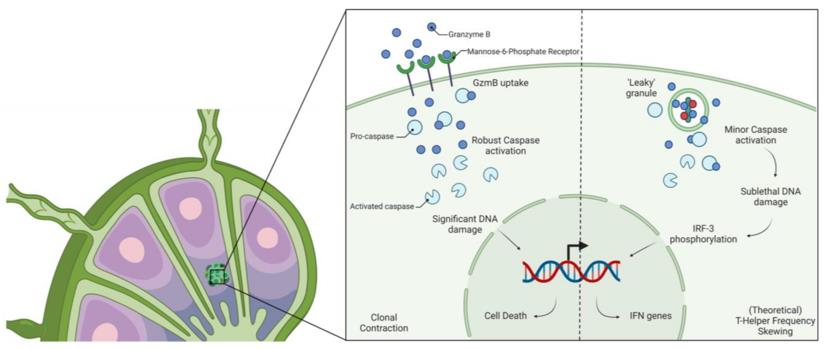 Fig. 1 Schematic representation of the novel roles of GzmB in T cell development.1
Key structural properties of GZMB:
- Typical serine protease fold structure
- The active center containing the His-Asp-Ser catalytic triad
- The substrate-binding pocket specifically recognizes Asp residues
- N-glycosylation sites affecting protein stability and secretion
- Positively charged areas of the surface promote interaction with the substrate
Functions of GZMB
The core function of granzyme B encoded by the GZMB gene is to induce apoptosis in target cells, and it also plays multiple roles in immune regulation:
| Function | Description |
| Induction of cell apoptosis | After entering the target cell, it cuts the key enzymes of the caspase family, activates the cascade reaction, leading to DNA fragmentation and programmed cell death. |
| Antiviral defense | Directly cuts viral proteins or activates antiviral pathways, eliminating cells infected by viruses. |
| Matrix remodeling | Degradation of extracellular matrix components, promoting the infiltration and migration of immune cells in the tissue. |
| Inflammation regulation | Cuts the precursors of inflammatory factors or receptors, regulating the intensity and duration of the immune response. |
| Participation in transplant rejection | Mediates receptor tissue damage in graft-versus-host disease, affecting the survival of the graft. |
The enzymatic activity of granzyme B exhibits a typical substrate saturation curve. Its catalytic efficiency for substrates containing Asp residues is much higher than that of other members of the granzyme family. This characteristic enables it to precisely initiate the apoptotic signal without causing non-specific damage.
Applications of GZMB and GZMB Antibody in Literature
1. Tibbs, Ellis, and Xuefang Cao. "Emerging canonical and non-canonical roles of granzyme B in health and disease." Cancers 14.6 (2022): 1436. https://doi.org/10.3390/cancers14061436
The article indicates that granzyme B is not only a key effector molecule for CTL and NK cells in killing infections and tumors, but also plays a non-canonical role in regulatory immune cells and tissue development and repair. Its mechanism of action is more complex than previously thought.
2. Wang, Xinyue, et al. "Rescue RM/CS-AKI by blocking strategy with one-dose anti-myoglobin RabMAb." Nature Communications 16.1 (2025): 1044. https://doi.org/10.1155/2022/3426717
The article indicates that the transcriptional levels of GZMB, NRP1, SERPINB9 and ITPR1 in the Treg cells of patients with psoriasis are significantly reduced, which is associated with the decline in inhibitory function and the activity of the disease. ITPR1 may affect the expression of GZMB, and calcium treatment can increase its transcriptional level.
3. Liang, Zhuoshuai, et al. "C1QA, C1QB, and GZMB are novel prognostic biomarkers of skin cutaneous melanoma relating tumor microenvironment." Scientific reports 12.1 (2022): 20460. https://doi.org/10.1038/s41598-022-24353-9
The article indicates that based on the transcriptome data of melanoma, six core tumor microenvironment-related genes such as CCL4 were screened out. Among them, high expression of GZMB, C1QA and C1QB is associated with a favorable prognosis and they are potential immune prognostic markers.
4. Jeong, Ki-Heon, et al. "Association of GZMB polymorphisms and susceptibility to non-segmental vitiligo in a Korean population." Scientific Reports 11.1 (2021): 397. https://doi.org/10.1038/s41598-020-79705-0
The article indicates that non-segmental vitiligo patients have five SNPs (such as rs2236337) in the GZMB gene that are significantly associated with disease susceptibility, and these form a risk haplotype. The study shows that the polymorphism of the GZMB gene is related to the onset of vitiligo.
5. Wang, Zhenhao, et al. "Tuberculosis infection related hemophagocytic lymphohistiocytosis diagnosed in patient with GZMB mutation: A case report and literature review." Medicine 101.35 (2022): e30283. https://doi.org/10.1097/MD.0000000000030283
The article reports a case of a patient with secondary hemophagocytic syndrome who was detected to have GZMB gene mutations and tuberculosis infection through mNGS. The GZMB mutation was discovered for the first time in secondary HLH, and mNGS is helpful for rapid diagnosis of rare infectious causes.
Creative Biolabs: GZMB Antibodies for Research
Creative Biolabs specializes in the production of high-quality GZMB antibodies for research and industrial applications. Our portfolio includes monoclonal and polyclonal antibodies tailored for ELISA, Flow Cytometry, Western blot, immunohistochemistry, and other diagnostic methodologies.
- Custom GZMB Antibody Development: Tailor-made solutions to meet specific research requirements.
- Bulk Production: Large-scale antibody manufacturing for industry partners.
- Technical Support: Expert consultation for protocol optimization and troubleshooting.
- Aliquoting Services: Conveniently sized aliquots for long-term storage and consistent experimental outcomes.
For more details on our GZMB antibodies, custom preparations, or technical support, contact us at email.
Reference
- Tibbs, Ellis, and Xuefang Cao. "Emerging canonical and non-canonical roles of granzyme B in health and disease." Cancers 14.6 (2022): 1436. Distributed under Open Access license CC BY 4.0, without modification. https://doi.org/10.3390/cancers14061436
Anti-GZMB antibodies
 Loading...
 Compare




Hot products 
-
Mouse Anti-A2M Recombinant Antibody (V2-178822) (CBMAB-A0036-YC)

-
Rat Anti-AChR Recombinant Antibody (V2-12500) (CBMAB-0990-CN)

-
Mouse Anti-BRCA2 Recombinant Antibody (CBYY-0790) (CBMAB-0793-YY)

-
Mouse Anti-CD63 Recombinant Antibody (CBXC-1200) (CBMAB-C1467-CQ)

-
Human Anti-SARS-CoV-2 Spike Recombinant Antibody (CR3022) (CBMAB-CR014LY)

-
Rat Anti-CCR2 Recombinant Antibody (475301) (CBMAB-C1338-LY)

-
Mouse Anti-dsDNA Recombinant Antibody (22) (CBMAB-AP1954LY)

-
Mouse Anti-CCN2 Recombinant Antibody (CBFYC-2383) (CBMAB-C2456-FY)

-
Mouse Anti-ENO2 Recombinant Antibody (H14) (CBMAB-E1341-FY)

-
Mouse Anti-AP4E1 Recombinant Antibody (32) (CBMAB-A2996-YC)

-
Mouse Anti-AMIGO2 Recombinant Antibody (CBYY-C0756) (CBMAB-C2192-YY)

-
Mouse Anti-GIPC2 Recombinant Antibody (10) (CBMAB-G0476-LY)

-
Mouse Anti-CSPG4 Recombinant Antibody (CBFYM-1050) (CBMAB-M1203-FY)

-
Human Anti-SARS-CoV-2 S1 Monoclonal Antibody (CBFYR-0120) (CBMAB-R0120-FY)

-
Mouse Anti-ABL2 Recombinant Antibody (V2-179121) (CBMAB-A0364-YC)

-
Mouse Anti-CD1C Recombinant Antibody (L161) (CBMAB-C2173-CQ)

-
Mouse Anti-4-Hydroxynonenal Recombinant Antibody (V2-502280) (CBMAB-C1055-CN)

-
Mouse Anti-CCDC6 Recombinant Antibody (CBXC-0106) (CBMAB-C5397-CQ)

-
Mouse Anti-ATG5 Recombinant Antibody (9H197) (CBMAB-A3945-YC)

-
Mouse Anti-ADGRE2 Recombinant Antibody (V2-261270) (CBMAB-C0813-LY)

- AActivation
- AGAgonist
- APApoptosis
- BBlocking
- BABioassay
- BIBioimaging
- CImmunohistochemistry-Frozen Sections
- CIChromatin Immunoprecipitation
- CTCytotoxicity
- CSCostimulation
- DDepletion
- DBDot Blot
- EELISA
- ECELISA(Cap)
- EDELISA(Det)
- ESELISpot
- EMElectron Microscopy
- FFlow Cytometry
- FNFunction Assay
- GSGel Supershift
- IInhibition
- IAEnzyme Immunoassay
- ICImmunocytochemistry
- IDImmunodiffusion
- IEImmunoelectrophoresis
- IFImmunofluorescence
- IGImmunochromatography
- IHImmunohistochemistry
- IMImmunomicroscopy
- IOImmunoassay
- IPImmunoprecipitation
- ISIntracellular Staining for Flow Cytometry
- LALuminex Assay
- LFLateral Flow Immunoassay
- MMicroarray
- MCMass Cytometry/CyTOF
- MDMeDIP
- MSElectrophoretic Mobility Shift Assay
- NNeutralization
- PImmunohistologyp-Paraffin Sections
- PAPeptide Array
- PEPeptide ELISA
- PLProximity Ligation Assay
- RRadioimmunoassay
- SStimulation
- SESandwich ELISA
- SHIn situ hybridization
- TCTissue Culture
- WBWestern Blot
