
SAGE1 Antibodies
Background
SAGE1 is a functional protein specifically expressed mainly in the testicular tissue of mammals. Its structure has typical characteristics of zinc finger proteins and can participate in the transcriptional regulation of germ cell development by binding to specific DNA sequences. The protein encoded by this gene plays a significant role in spermatogenesis, especially closely related to the differentiation regulation of spermatogonial stem cells. First discovered in 2004 through genomic screening technology, SAGE1 was named for its specific high expression during spermatogenesis. Recent studies have found that the abnormal expression of this gene is associated with male infertility. The precise molecular mechanism research of this gene provides new molecular targets for the diagnosis and treatment of reproductive system diseases.
Structure of SAGE1
SAGE1 is a testicular specific zinc finger protein with a molecular weight of approximately 60-65 kDa. Its precise molecular weight varies by species and transcript splicing form:
| Species | Human | Mouse | Rat |
| Molecular Weight (kDa) | 64.8 | 63.2 | 65.1 |
| Primary Structural Differences | Contains seven C2H2-type zinc finger domains | There is an amino acid substitution in the structure of the third zinc finger | The carboxyl terminal extension sequence is longer |
The primary structure of this protein contains 153 amino acids, among which the conserved cysteine and histidine residues form the core framework of the zinc finger structure. Its secondary structure is mainly composed of alternating α -helices and β -folds, forming a typical DNA-binding domain. The "H-C junction segment "located between the second and third zinc fingers has a key regulatory function. The basic amino acids in this region specifically bind to the DNA groove to achieve the recognition and regulation of the promoter of the target gene.
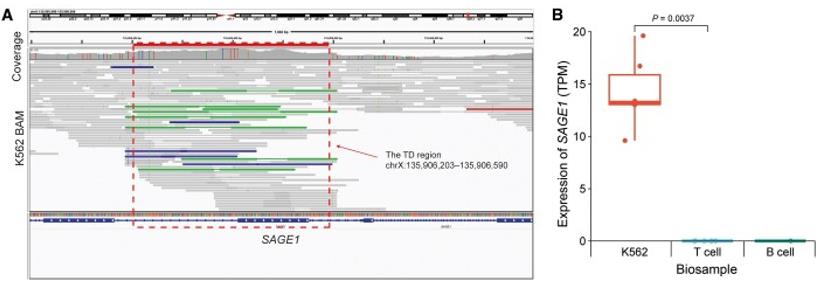 Fig. 1 A SAGE1-related TD detected from K562 cell line.1
Key structural properties of SAGE1:
- Typical C2H2-type zinc finger domain array
- The domains are connected through flexible linker regions
- Zinc ions coordinate with conserved cysteine/histidine residues
- Contains carboxyl terminal check and ratify a signal sequence
- DNA binding surface is rich in alkaline amino acid residues
Functions of SAGE1
The core function of the SAGE1 gene is to participate in the transcriptional regulation of the spermatogenesis process. Its specific physiological functions include:
| Function | Description |
| Regulation of germ cell development | By binding to the promoter region of the target gene, the expression program of genes related to spermatogenesis is activated. |
| Regulation of the meiosis process | Regulate chromosome coupling and dissociation-related genes during the meiosis of spermatocytes. |
| Stem cell maintenance | Influence of self-renewal and differentiation of spermatogonial stem cells balance, stable germ cell pool. |
| Epigenetic regulation | Participate in the recruitment of chromatin remodeling complexes and alter the epigenetic state of germ cells. |
| Maintenance of fertility | Gene knockout experiments have shown that its deletion can lead to spermatogenic disorders and male infertility. |
The DNA binding characteristics of this gene exhibit a synergistic binding mode, and its affinity increases with the increase in the number of zinc finger domains. This is consistent with the multi-site binding features of typical transcription factors, reflecting its functional characteristics as a major regulatory factor in reproductive development.
Applications of SAGE1 and SAGE1 Antibody in Literature
1. Maheswaran, Emeaga, et al. "Lack of ADAM2, CALR3 and SAGE1 cancer/testis antigen expression in lung and breast cancer." PLoS One 10.8 (2015): e0134967. https://doi.org/10.1371/journal.pone.0134967
This study detected the expression of cancer testicular antigens ADAM2, CALR3 and SAGE1 in lung cancer and breast cancer. The results showed that these antigens were only found in the testicles in normal tissues, but were not expressed in all tested lung cancer and breast cancer samples, and demethylating drugs could not induce their expression. Studies have shown that these three antigens are not suitable as immunotherapy targets for lung cancer and breast cancer.
2. Lim, Jasmine, et al. "OCT2, SSX and SAGE1 reveal the phenotypic heterogeneity of spermatocytic seminoma reflecting distinct subpopulations of spermatogonia." The Journal of pathology 224.4 (2011): 473-483. https://doi.org/10.1002/path.2919
Research has found that there are two subtypes of spermatoblastoma: OCT2 and SSX2-4. The SAGE1 protein is only expressed in specific germ cells such as type B spermatogonial cells after puberty. This expression pattern supports that the tumor originated from spermatogonia and reveals its heterogeneity.
3. Yang X, Zheng G, et al. "Pindel-TD: a tandem duplication detector based on a pattern growth approach." Genomics, Proteomics & Bioinformatics 22.1 (2024): qzae008. https://doi.org/10.1093/gpbjnl/qzae008
This study developed a new tool, Pindel-TD, for efficient detection of tandem repeats. Using this tool, it was found that the SAGE1 gene in K562 cancer cells was highly expressed due to tandem repeats in exon 7.
4. Yang, Yang, et al. "Identification of novel characteristics in TP53-mutant hepatocellular carcinoma using bioinformatics." Frontiers in genetics 13 (2022): 874805. https://doi.org/10.3389/fgene.2022.874805
This study, through bioinformatics analysis, found that TP53 is the most common mutant gene in hepatocellular carcinoma, and its mutation can lead to an increased tumor mutation burden and poor prognosis. Ten key genes, including SAGE1, were analyzed and screened out, providing new insights for precise individualized treatment and prognosis prediction of liver cancer.
5. Davis, Lindsay, et al. "Identification of genes whose expression overlaps age boundaries and correlates with risk groups in paediatric and adult acute myeloid leukaemia." Cancers 12.10 (2020): 2769. https://doi.org/10.3390/cancers12102769
This study compared the gene expression of acute myeloid leukemia in children and adults and found that the expression of tumor antigens such as SAGE1 was significantly different in different risk subgroups and was related to the event-free survival rate of patients, providing new insights into the molecular mechanism of this disease.
Creative Biolabs: SAGE1 Antibodies for Research
Creative Biolabs specializes in the production of high-quality SAGE1 antibodies for research and industrial applications. Our portfolio includes monoclonal antibodies tailored for ELISA, Flow Cytometry, Western blot, immunohistochemistry, and other diagnostic methodologies.
- Custom SAGE1 Antibody Development: Tailor-made solutions to meet specific research requirements.
- Bulk Production: Large-scale antibody manufacturing for industry partners.
- Technical Support: Expert consultation for protocol optimization and troubleshooting.
- Aliquoting Services: Conveniently sized aliquots for long-term storage and consistent experimental outcomes.
For more details on our SAGE1 antibodies, custom preparations, or technical support, contact us at email.
Reference
- Yang X, Zheng G, et al. "Pindel-TD: a tandem duplication detector based on a pattern growth approach." Genomics, Proteomics & Bioinformatics 22.1 (2024): qzae008. https://doi.org/10.1093/gpbjnl/qzae008
Anti-SAGE1 antibodies
 Loading...
 Compare




Hot products 
-
Mouse Anti-ADGRL2 Recombinant Antibody (V2-58519) (CBMAB-L0166-YJ)

-
Mouse Anti-CD59 Recombinant Antibody (CBXC-2097) (CBMAB-C4421-CQ)

-
Mouse Anti-APOH Recombinant Antibody (4D9A4) (CBMAB-A3249-YC)

-
Mouse Anti-ALPL Antibody (B4-78) (CBMAB-1009CQ)

-
Mouse Anti-CD63 Recombinant Antibody (CBXC-1200) (CBMAB-C1467-CQ)

-
Mouse Anti-ENO1 Recombinant Antibody (CBYC-A950) (CBMAB-A4388-YC)

-
Mouse Anti-ENO2 Recombinant Antibody (H14) (CBMAB-E1341-FY)

-
Mouse Anti-CD24 Recombinant Antibody (2Q1282) (CBMAB-C1624-CN)

-
Mouse Anti-AGK Recombinant Antibody (V2-258056) (CBMAB-M0989-FY)

-
Mouse Anti-APC Recombinant Antibody (CBYC-A661) (CBMAB-A3036-YC)

-
Mouse Anti-EIF4G1 Recombinant Antibody (2A9) (CBMAB-A2544-LY)

-
Mouse Anti-AMIGO2 Recombinant Antibody (CBYY-C0756) (CBMAB-C2192-YY)

-
Mouse Anti-CCNH Recombinant Antibody (CBFYC-1054) (CBMAB-C1111-FY)

-
Mouse Anti-ADIPOR2 Recombinant Antibody (V2-179983) (CBMAB-A1369-YC)

-
Mouse Anti-BCL6 Recombinant Antibody (CBYY-0442) (CBMAB-0445-YY)

-
Mouse Anti-BLNK Recombinant Antibody (CBYY-0623) (CBMAB-0626-YY)

-
Mouse Anti-ENO1 Recombinant Antibody (8G8) (CBMAB-E1329-FY)

-
Mouse Anti-APOE Recombinant Antibody (A1) (CBMAB-0078CQ)

-
Rat Anti-C5AR1 Recombinant Antibody (8D6) (CBMAB-C9139-LY)

-
Mouse Anti-CD19 Recombinant Antibody (CBXC-1224) (CBMAB-C1491-CQ)

- AActivation
- AGAgonist
- APApoptosis
- BBlocking
- BABioassay
- BIBioimaging
- CImmunohistochemistry-Frozen Sections
- CIChromatin Immunoprecipitation
- CTCytotoxicity
- CSCostimulation
- DDepletion
- DBDot Blot
- EELISA
- ECELISA(Cap)
- EDELISA(Det)
- ESELISpot
- EMElectron Microscopy
- FFlow Cytometry
- FNFunction Assay
- GSGel Supershift
- IInhibition
- IAEnzyme Immunoassay
- ICImmunocytochemistry
- IDImmunodiffusion
- IEImmunoelectrophoresis
- IFImmunofluorescence
- IGImmunochromatography
- IHImmunohistochemistry
- IMImmunomicroscopy
- IOImmunoassay
- IPImmunoprecipitation
- ISIntracellular Staining for Flow Cytometry
- LALuminex Assay
- LFLateral Flow Immunoassay
- MMicroarray
- MCMass Cytometry/CyTOF
- MDMeDIP
- MSElectrophoretic Mobility Shift Assay
- NNeutralization
- PImmunohistologyp-Paraffin Sections
- PAPeptide Array
- PEPeptide ELISA
- PLProximity Ligation Assay
- RRadioimmunoassay
- SStimulation
- SESandwich ELISA
- SHIn situ hybridization
- TCTissue Culture
- WBWestern Blot
