
AHCY Antibodies
Background
The AHCY gene encodes S-adenosine homocysteine hydrolase, which exists in the eukaryotic cytoplasm as a key regulatory protein of methyl transfer reactions. This enzyme catalyzes the reversible reaction of S-adenosine homocysteine hydrolysis to homocysteine and adenosine, thereby maintaining the dynamic balance of the intracellular methylation cycle. Its activity directly regulates the S-adenosylmethionine-dependent methylation process, influencing a variety of physiological functions including DNA modification and signal transduction. The discovery of this gene can be traced back to the research on the methyl metabolism pathway in the 1970s. Its protein structure was analyzed by X-ray crystallography in the 1990s, revealing a unique dimer conformation and catalytic mechanism. The functional research of this gene continuously deepens the understanding system of epigenetic regulation, metabolic diseases and cellular homeostasis.
Structure of AHCY
The molecular weight of S-adenosine homocysteine hydrolase encoded by the AHCY gene is approximately 47.6 kDa. Its molecular weight is highly conserved among different mammals because the core function of this enzyme in methyl metabolism has an extremely low tolerance for amino acid sequence variations.
| Species | Human | Mouse | Bovine | Rat |
| Molecular Weight (kDa) | About 47.6 | About 47.5 | About 47.7 | About 47.6 |
| Primary Structural Differences | Catalyze the hydrolysis of SAH and regulate global methylation | Highly homologous in function, it is used in metabolic disease models | Catalytic efficiency is slightly different | Often used in the study of the liver metabolism |
This protein is composed of approximately 432 amino acids, and its tertiary structure exhibits a typical α/β folding pattern. The active center contains a highly conserved catalytic triplet (aspartic acid, histidine, aspartic acid), which is responsible for mediating the hydrolysis reaction. Its tetramer structure is composed of two closely interacting dimers, each of which can bind to the substrate NAD+, a key cofactor necessary for its reversible catalytic reaction. The positively charged grooves on the surface of proteins are dedicated to recognizing and binding to negatively charged S-adenosine homocysteine substrate molecules.
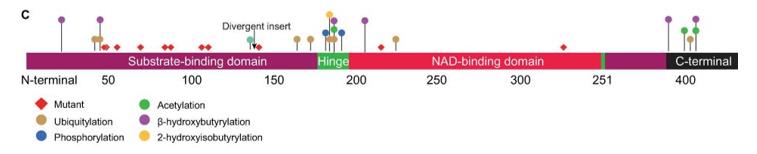 Fig. 1 The different functional modules of human AHCY are represented.1
Key structural properties of AHCY:
- Conservative α/β folded core domain
- Four dimer interface into the substrate combined channel
- NAD⁺cofactor-binding pockets maintain catalytic reversibility
- Histidine - aspartic acid catalyzes the triple-mediated hydrolysis reaction
- Positively charged substrate recognition grooves specifically bind S-adenosine homocysteine
Functions of AHCY
The core function of S-adenosine homocysteine hydrolase encoded by the AHCY gene is to regulate the methylation cycle of cells. In addition, it is also deeply involved in multiple physiological and pathological processes, including gene expression regulation, cell signal transduction and the maintenance of metabolic homeostasis.
| Function | Description |
| Methylation cycle regulation | Catalyze the hydrolysis of S-adenosine homocysteine to relieve its inhibition of methyltransferase products, thereby maintaining the continuous progress of intracellular methylation reactions. |
| Epigenetic regulation | By controlling the level of SAH, it indirectly affects epigenetic modifications such as DNA methylation and histone methylation, and regulates gene expression. |
| Homocysteine metabolism | Its catalytic reaction is reversible, participates in the generation and remethylation cycle of homocysteine, and is associated with the risk of cardiovascular diseases. |
| Cell Proliferation and Differentiation | The methylation process dependent on methyl donor SAM is crucial for the cell cycle, stem cell differentiation and tissue development. |
| Liver Metabolism and Detoxification | It has a relatively high activity in the liver and participates in the methylation metabolism and detoxification processes of various substances. |
The catalytic kinetics of this enzyme exhibits typical reversible reaction characteristics, with its equilibrium constant approaching 1. This enables it to sensitively respond to changes in the concentrations of SAH and adenosine within cells, thereby precisely playing the role of a "throttle valve" in methylation metabolism.
Applications of AHCY and AHCY Antibody in Literature
1. Vizán, Pedro, Luciano Di Croce, and Sergi Aranda. "Functional and pathological roles of AHCY." Frontiers in cell and developmental biology 9 (2021): 654344. https://doi.org/10.3389/fcell.2021.654344
The article indicates that adenosine homocystease (AHCY) is a highly conserved key metabolic enzyme that regulates cell methylation through reversible hydrolysis of S-adenosine homocysteine (SAH). This enzyme is crucial for development. Its deficiency can lead to embryo death and is associated with rare metabolic diseases in humans.
2. Tong, Ling, et al. "Prognostic value of serum exosomal AHCY expression in hepatitis B-induced liver cirrhosis." Frontiers in Medicine 8 (2021): 777452. https://doi.org/10.3389/fmed.2021.777452
This study detected the level of serum exosomal adenosine homocystease (AHCY) in patients with hepatitis B cirrhosis (HBV-LC). The results showed that serum exosomal AHCY was significantly elevated in advanced patients, positively correlated with the MELD score and could independently predict the survival prognosis of patients. Its predictive ability was superior to that of MELD and Child-Pugh scores.
3. Zhao, Lei, et al. "DNA methylation of AHCY may increase the risk of ischemic stroke." Bosnian journal of basic medical sciences 20.4 (2020): 471. https://doi.org/10.17305/bjbms.2020.4535
This study's analysis found that the DNA methylation level of the AHCY gene in patients with ischemic stroke was significantly higher than that in the control group, and this association existed in different genders and age groups. The results indicate that AHCY methylation is expected to become a potential diagnostic marker for ischemic stroke.
4. Li, Xiaodong, et al. "The values of AHCY and CBS promoter methylation on the diagnosis of cerebral infarction in Chinese Han population." BMC medical genomics 13.1 (2020): 163. https://doi.org/10.1186/s12920-020-00798-7
This study detected the methylation levels of the AHCY and CBS gene promoters in patients with cerebral infarction. The results showed that the overall difference in AHCY methylation was not significant, but the hypomethylation of the CBS promoter was significantly associated with the risk of cerebral infarction and could be used as a potential non-invasive diagnostic marker.
5. Belužić, Lucija, et al. "Knock-down of AHCY and depletion of adenosine induces DNA damage and cell cycle arrest." Scientific reports 8.1 (2018): 14012. https://doi.org/10.1038/s41598-018-32356-8
The article indicates that the reduction of AHCY activity leads to adenosine depletion, which in turn activates DNA damage responses, causes cell cycle arrest, and inhibits the proliferation of liver cancer cells. This suggests that AHCY may serve as a potential target for cancer treatment, and inducing adenosine depletion may become a new targeted therapeutic strategy.
Creative Biolabs: AHCY Antibodies for Research
Creative Biolabs specializes in the production of high-quality AHCY antibodies for research and industrial applications. Our portfolio includes monoclonal antibodies tailored for ELISA, Flow Cytometry, Western blot, immunohistochemistry, and other diagnostic methodologies.
- Custom AHCY Antibody Development: Tailor-made solutions to meet specific research requirements.
- Bulk Production: Large-scale antibody manufacturing for industry partners.
- Technical Support: Expert consultation for protocol optimization and troubleshooting.
- Aliquoting Services: Conveniently sized aliquots for long-term storage and consistent experimental outcomes.
For more details on our AHCY antibodies, custom preparations, or technical support, contact us at email.
Reference
- Vizán, Pedro, Luciano Di Croce, and Sergi Aranda. "Functional and pathological roles of AHCY." Frontiers in cell and developmental biology 9 (2021): 654344. https://doi.org/10.3389/fcell.2021.654344
Anti-AHCY antibodies
 Loading...
 Compare




Hot products 
-
Mouse Anti-DLG1 Monolconal Antibody (4F3) (CBMAB-0225-CN)

-
Mouse Anti-BAD (Phospho-Ser136) Recombinant Antibody (CBYY-0138) (CBMAB-0139-YY)

-
Mouse Anti-BIRC3 Recombinant Antibody (315304) (CBMAB-1214-CN)

-
Mouse Anti-8-oxoguanine Recombinant Antibody (V2-7697) (CBMAB-1869CQ)

-
Mouse Anti-CGAS Recombinant Antibody (CBFYM-0995) (CBMAB-M1146-FY)

-
Mouse Anti-FOXL1 Recombinant Antibody (CBXF-0845) (CBMAB-F0462-CQ)

-
Mouse Anti-CD83 Recombinant Antibody (HB15) (CBMAB-C1765-CQ)

-
Mouse Anti-CARD11 Recombinant Antibody (CBFYC-0811) (CBMAB-C0866-FY)

-
Mouse Anti-CDK7 Recombinant Antibody (CBYY-C1783) (CBMAB-C3221-YY)

-
Mouse Anti-CTNND1 Recombinant Antibody (CBFYC-2414) (CBMAB-C2487-FY)

-
Mouse Anti-ABL2 Recombinant Antibody (V2-179121) (CBMAB-A0364-YC)

-
Rat Anti-EPO Recombinant Antibody (16) (CBMAB-E1578-FY)

-
Mouse Anti-ADGRE2 Recombinant Antibody (V2-261270) (CBMAB-C0813-LY)

-
Mouse Anti-APP Recombinant Antibody (5C2A1) (CBMAB-A3314-YC)

-
Mouse Anti-BRCA2 Recombinant Antibody (CBYY-0790) (CBMAB-0793-YY)

-
Mouse Anti-CECR2 Recombinant Antibody (CBWJC-2465) (CBMAB-C3533WJ)

-
Rabbit Anti-Acetyl-Histone H4 (Lys16) Recombinant Antibody (V2-623415) (CBMAB-CP1021-LY)

-
Rabbit Anti-ALOX5AP Recombinant Antibody (CBXF-1219) (CBMAB-F0750-CQ)

-
Mouse Anti-CD8 Recombinant Antibody (C1083) (CBMAB-C1083-LY)

-
Mouse Anti-FN1 Monoclonal Antibody (71) (CBMAB-1241CQ)

- AActivation
- AGAgonist
- APApoptosis
- BBlocking
- BABioassay
- BIBioimaging
- CImmunohistochemistry-Frozen Sections
- CIChromatin Immunoprecipitation
- CTCytotoxicity
- CSCostimulation
- DDepletion
- DBDot Blot
- EELISA
- ECELISA(Cap)
- EDELISA(Det)
- ESELISpot
- EMElectron Microscopy
- FFlow Cytometry
- FNFunction Assay
- GSGel Supershift
- IInhibition
- IAEnzyme Immunoassay
- ICImmunocytochemistry
- IDImmunodiffusion
- IEImmunoelectrophoresis
- IFImmunofluorescence
- IGImmunochromatography
- IHImmunohistochemistry
- IMImmunomicroscopy
- IOImmunoassay
- IPImmunoprecipitation
- ISIntracellular Staining for Flow Cytometry
- LALuminex Assay
- LFLateral Flow Immunoassay
- MMicroarray
- MCMass Cytometry/CyTOF
- MDMeDIP
- MSElectrophoretic Mobility Shift Assay
- NNeutralization
- PImmunohistologyp-Paraffin Sections
- PAPeptide Array
- PEPeptide ELISA
- PLProximity Ligation Assay
- RRadioimmunoassay
- SStimulation
- SESandwich ELISA
- SHIn situ hybridization
- TCTissue Culture
- WBWestern Blot
