
CNN2 Antibodies
Background
The CNN2 gene encodes calponin-2, which is a myosin-binding protein mainly expressed in smooth muscle cells. This protein interacts with actin filaments in the cytoskeleton and participates in regulating smooth muscle contraction, cell migration, and mechanical stability, playing a crucial role in maintaining vascular tension and tissue structure. Studies have found that abnormal expression of CNN2 is closely related to cardiovascular diseases such as atherosclerosis, hypertension, and tumor metastasis. Since its identification in the 1990s, the structural and functional research has gradually revealed the mechanisms of the calcium protein family in cell mechanical signal transduction and pathological physiological regulation, providing a molecular basis for the exploration of target points for related diseases.
Structure of CNN2
The Calponin-2 molecule encoded by the CNN2 gene has a molecular weight of approximately 34 kDa. This protein is composed of about 300 amino acid residues and its molecular weight is relatively conserved among different mammalian species, with the main differences arising from minor amino acid sequence variations. The following table compares the situations of several representative species:
| Species | Human | Mouse | Rat |
| Molecular Weight (kDa) | ~34 | ~33.8 | ~34.1 |
| Primary Structural Differences | Contains three characteristic calreticulin repeat domains | Highly similar to humans and with a highly conserved structure | There are individual amino acid substitutions within the repeat domain. |
The primary structure of calprotectin 2 consists of three consecutive calprotectin homolog (CH) domains, which together form the basis for its binding to actin filaments. This protein adopts a highly α-helical secondary structure, and multiple α-helices further fold to form a compact globular domain. Its core functional region contains a conserved actin-binding site, which regulates the contraction of smooth muscle and cell motility through direct interaction with cytoskeletal proteins.
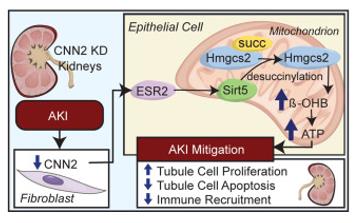 Fig. 1 Schematic diagram depicts knockdown of CNN2 enhanced ketogenesis to mitigate AKI.1
Key structural properties of CNN2:
- Contains three consecutive calcium-binding protein homolog (CH) domains
- Each domain is composed of a highly α-helical secondary structure.
- Core functional area has a conservative hydrophobic actin combined interface
- Specific serine/threonine phosphorylation sites regulate its binding activity to the cytoskeleton.
Functions of CNN2
The CNN2 gene encodes calcium-binding protein 2 (Calponin-2), which primarily functions in regulating smooth muscle contraction and cytoskeletal dynamics. Additionally, it is involved in various cellular physiological processes, including cell migration, mechanical sensing, and signal transduction.
| Function | Description |
| Smooth Muscle Contraction Regulation | By binding to actin filaments and inhibiting the activity of myosin ATPase, it finely regulates the contraction tension and speed of smooth muscle in a "braking" manner. |
| Cellular skeleton stability | As an actin cross-linking protein, it enhances the stability of the cellular skeleton network, maintaining cell morphology and mechanical integrity. |
| Cell Migration Regulation | In non-muscle cells such as fibroblasts and macrophages, the dynamic regulation of actin assembly affects the cell's motility, which is related to wound healing and immune responses. |
| Mechanical Signal Transduction | As a mechanical sensor, it converts the mechanical stress exerted on cells into intracellular biochemical signals, which affect gene expression and cell behavior. |
| Disease Pathological Association | Its abnormal expression or activity is closely related to the pathogenesis of various diseases such as atherosclerosis, hypertension, and tumor metastasis. |
The affinity of calprotectin 2 for actin is directly regulated by its phosphorylation status (differing from the regulation mechanism of myosin), enabling it to rapidly respond to intracellular signals and finely coordinate cytoskeleton remodeling and motility functions.
Applications of CNN2 and CNN2 Antibody in Literature
1. He, Jinghu, et al. "CNN2 silencing inhibits colorectal cancer development through promoting ubiquitination of EGR1." Life Science Alliance 6.7 (2023). https://doi.org/10.26508/lsa.202201639
The research has found that in colorectal cancer (CRC), the CNN2 protein forms a complex with YAP1 and EGR1, and promotes tumor progression by enhancing the stability of EGR1. CNN2 is highly expressed in CRC and is associated with poor prognosis. Targeting CNN2 may provide a new strategy for the treatment of CRC.
2. Bin, Xiaoyun, et al. "The role of H2-calponin antigen in cancer metastasis: presence of autoantibodies in liver cancer patients." International Journal of Molecular Sciences 24.12 (2023): 9864. https://doi.org/10.3390/ijms24129864
This study, using the SEREX technique, found that the antibody positive rate of CNN2 in the serum of liver cancer patients was significantly increased (54.8%), and its expression was related to the migration and invasion of cancer cells. This indicates that CNN2 is expected to become a potential new target for the diagnosis and treatment of liver cancer.
3. Gui, Yuan, et al. "Calponin 2 regulates ketogenesis to mitigate acute kidney injury." JCI insight 8.21 (2023): e170521. https://doi.org/10.1172/jci.insight.170521
The article indicates that in acute kidney injury (AKI), the expression of CNN2 is upregulated and it inhibits the activity of mitochondrial Sirt5 by interacting with ESR2, thereby hindering the de-succinylating of Hmgcs2 and the energy supply through ketone bodies. Knockdown of CNN2 can alleviate the damage and promote repair, suggesting that it could serve as a new therapeutic target for AKI.
4. Wei, Hongbo, et al. "Increased fibroblast functionality on CNN2-loaded titania nanotubes." International Journal of Nanomedicine (2012): 1091-1100. https://doi.org/10.2147/IJN.S28694
This article develops a highly sensitive fluorescence-based biosensor using quantum dots conjugated with plastic antibodies to detect myoglobin at femtomolar concentrations, providing a cost-effective, selective, and stable alternative for early myocardial infarction diagnosis in human serum.
5. Hsieh, Tzu-Bou, and Jian-Ping Jin. "Loss of Calponin 2 causes premature ovarian insufficiency in mice." Journal of Ovarian Research 17.1 (2024): 37. https://doi.org/10.1186/s13048-024-01346-y
The research found that knockout mice lacking the Cnn2 gene have reduced ovarian reserve, premature depletion of follicles, multiple follicles, and decreased fertility. This suggests that Calponin 2 plays a crucial role in follicle development, and its absence may provide a new pathological mechanism and therapeutic target for early-onset ovarian insufficiency.
Creative Biolabs: CNN2 Antibodies for Research
Creative Biolabs specializes in the production of high-quality CNN2 antibodies for research and industrial applications. Our portfolio includes monoclonal antibodies tailored for ELISA, Flow Cytometry, Western blot, immunohistochemistry, and other diagnostic methodologies.
- Custom CNN2 Antibody Development: Tailor-made solutions to meet specific research requirements.
- Bulk Production: Large-scale antibody manufacturing for industry partners.
- Technical Support: Expert consultation for protocol optimization and troubleshooting.
- Aliquoting Services: Conveniently sized aliquots for long-term storage and consistent experimental outcomes.
For more details on our CNN2 antibodies, custom preparations, or technical support, contact us at email.
Reference
- Gui, Yuan, et al. "Calponin 2 regulates ketogenesis to mitigate acute kidney injury." JCI insight 8.21 (2023): e170521. https://doi.org/10.1172/jci.insight.170521
Anti-CNN2 antibodies
 Loading...
 Compare




Hot products 
- AActivation
- AGAgonist
- APApoptosis
- BBlocking
- BABioassay
- BIBioimaging
- CImmunohistochemistry-Frozen Sections
- CIChromatin Immunoprecipitation
- CTCytotoxicity
- CSCostimulation
- DDepletion
- DBDot Blot
- EELISA
- ECELISA(Cap)
- EDELISA(Det)
- ESELISpot
- EMElectron Microscopy
- FFlow Cytometry
- FNFunction Assay
- GSGel Supershift
- IInhibition
- IAEnzyme Immunoassay
- ICImmunocytochemistry
- IDImmunodiffusion
- IEImmunoelectrophoresis
- IFImmunofluorescence
- IGImmunochromatography
- IHImmunohistochemistry
- IMImmunomicroscopy
- IOImmunoassay
- IPImmunoprecipitation
- ISIntracellular Staining for Flow Cytometry
- LALuminex Assay
- LFLateral Flow Immunoassay
- MMicroarray
- MCMass Cytometry/CyTOF
- MDMeDIP
- MSElectrophoretic Mobility Shift Assay
- NNeutralization
- PImmunohistologyp-Paraffin Sections
- PAPeptide Array
- PEPeptide ELISA
- PLProximity Ligation Assay
- RRadioimmunoassay
- SStimulation
- SESandwich ELISA
- SHIn situ hybridization
- TCTissue Culture
- WBWestern Blot
