
DTD2 Antibodies
Background
The DTD2 gene encodes a conserved adenosine triphosphatase, which is mainly present in the cytoplasm of eukaryotic cells. The product of this gene participates in maintaining the stability and functional integrity of tRNA by catalyzing the repair or metabolism of specific modified nucleotides (such as dihydrouridine) in tRNA. This supports efficient protein synthesis within the cell. Studies have found that DTD2 plays an important biological role in various organisms, and its functional deficiency may affect tRNA metabolism and lead to decreased translation fidelity. This gene has attracted attention due to its revelation of the tRNA quality control mechanism at the molecular level. The related research provides important clues for understanding gene expression regulation, RNA metabolism, and cellular homeostasis.
Structure of DTD2
The DTD2 gene encodes a conserved adenosine triphosphatase with a molecular weight of approximately 18.5 kDa. The molecular weight varies slightly among different eukaryotes, mainly due to the natural variations in amino acid sequences among species.
| Species | Human | Mouse | Yeast | Arabidopsis |
| Molecular Weight (kDa) | ~18.5 | ~18.4 | ~19.1 | ~18.8 |
| Primary Structural Differences | Having a conservative DTD structure domain | Maintaining the stability of tRNA | tRNA modification and repair | Affecting the fidelity of translation |
This protein is composed of approximately 160 amino acids and folds into a compact α/β domain. Its core structure includes a highly conserved ATP-binding pocket (P-loop) and a catalytic site for binding key divalent metal ions. These structures jointly facilitate the hydrolysis of ATP, providing energy for tRNA editing or repair reactions. The positively charged regions on the protein surface are considered crucial for recognizing and binding negatively charged tRNA molecules. This structural feature enables it to specifically distinguish between correct and abnormal tRNA molecules, thereby maintaining the accuracy of protein synthesis within the cell.
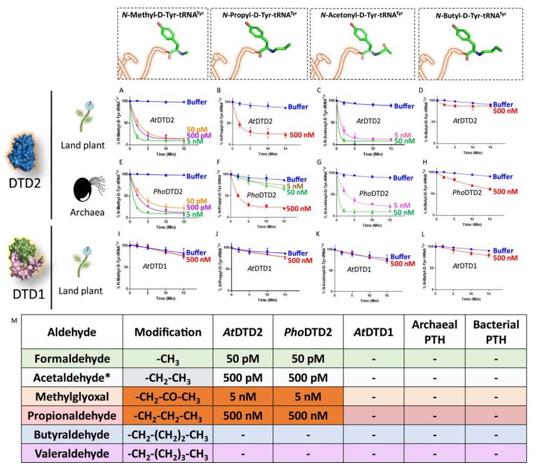 Fig. 1 D-aminoacyl-tRNA deacylase2 (DTD2) acts as a general aldehyde detoxification system.1
Key structural properties of DTD2:
- Compact α/β fold domain
- Core ATP-binding pocket (P-loop) and catalytic site
- Divalent metal ion binding sites are used to regulate enzyme activity
- Positively charged surface area is responsible for specific recognition and combination of tRNA molecules
Functions of DTD2
The main function of the DTD2 gene is to maintain the stability of tRNA and the accuracy of translation. Additionally, it is also involved in various regulatory processes within the cell.
| Function | Description |
| tRNA Editing/Repair | By hydrolyzing ATP, it catalyzes the repair of abnormal tRNA molecules and removes the incorrect amino acids carried during translation. |
| Translation Quality Control | As the "molecular proofreader", it distinguishes between correct and abnormal tRNAs to ensure the accuracy of protein synthesis. |
| Maintenance of Cellular Homeostasis | The absence of this function would lead to an imbalance in tRNA homeostasis, potentially causing protein misfolding and cellular stress responses. |
| Regulation of Growth and Development | In various biological models, this gene is crucial for normal growth and development. |
Unlike multi-subunit complexes with synergistic effects, DTD2 typically functions as a monomeric enzyme, and its activity depends on the precise recognition of individual tRNA substrates. This reflects its specific role as a "final checkpoint" in translation quality control.
Applications of DTD2 and DTD2 Antibody in Literature
1. Bhatt, Tarun K., Rani Soni, and Drista Sharma. "Recent updates on DTD (D-Tyr-tRNATyr Deacylase): An enzyme essential for fidelity and quality of protein synthesis." Frontiers in Cell and Developmental Biology 4 (2016): 32. https://doi.org/10.3389/fcell.2016.00032
The article indicates that D-Tyr-TRNA deacylase (DTD) is a key proofreading factor for cells to distinguish D/ L-type amino acids, and it can hydrolyze the wrongly formed D-AA-TRNA to maintain translation fidelity. There are two types of DTD1 and DTD2 in the human body, and their structures, functions and potential as drug targets deserve attention.
2. Kumar, Pradeep, et al. "A translation proofreader of archaeal origin imparts multi-aldehyde stress tolerance to land plants." Elife 12 (2024): RP92827. https://doi.org/10.7554/eLife.92827.3
The article indicates that the archaeogenic DTD2 enzyme in plants can specifically eliminate the stable adducts formed by physiological aldehydes such as formaldehyde and tRNA, protecting cells from aldehyde toxicity. Overexpression of DTD2 can enhance plant resistance to aldehyde stress, providing a new strategy for crop improvement.
3. Hosseiniyan Khatibi, Seyed Mahdi, et al. "Uncovering key molecular mechanisms in the early and late-stage of papillary thyroid carcinoma using association rule mining algorithm." Plos one 18.11 (2023): e0293335. https://doi.org/10.1371/journal.pone.0293335
In this study, key mrnas for staging papillary thyroid carcinoma were screened out through machine learning, and the accuracy rate of the SVM model in distinguishing early and advanced stages reached 83.5%. Among them, genes such as DTD2 have been identified as important markers in the early stage, providing a new direction for targeted therapy.
4. Kumar, Pradeep, et al. "A translation proofreader of archaeal origin imparts multi-aldehyde stress tolerance to land plants." Elife 12 (2024): RP92827. https://doi.org/10.7554/eLife.92827
The article indicates that the archaeogenic DTD2 in plants can eliminate the adducts formed by aldehydes and tRNA, and it is a key aldehyde detoxification enzyme. Overexpression of DTD2 can enhance plants' resistance to various aldehydes, providing a new strategy for crop stress-resistant breeding.
5. Mazeed, Mohd, et al. "Recruitment of archaeal DTD is a key event toward the emergence of land plants." Science Advances 7.6 (2021): eabe8890. https://doi.org/10.1126/sciadv.abe8890
Research has found that archaeogenic DTD2 can eliminate the adducts formed on tRNA by acetaldehyde produced by anaerobic stress, protecting the plant translation mechanism. This gene was transferred from methanogenic archaea to terrestrial plants and is a key gene for their adaptation to the terrestrial environment.
Creative Biolabs: DTD2 Antibodies for Research
Creative Biolabs specializes in the production of high-quality DTD2 antibodies for research and industrial applications. Our portfolio includes monoclonal antibodies tailored for ELISA, Flow Cytometry, Western blot, immunohistochemistry, and other diagnostic methodologies.
- Custom DTD2 Antibody Development: Tailor-made solutions to meet specific research requirements.
- Bulk Production: Large-scale antibody manufacturing for industry partners.
- Technical Support: Expert consultation for protocol optimization and troubleshooting.
- Aliquoting Services: Conveniently sized aliquots for long-term storage and consistent experimental outcomes.
For more details on our DTD2 antibodies, custom preparations, or technical support, contact us at email.
Reference
- Kumar, Pradeep, et al. "A translation proofreader of archaeal origin imparts multi-aldehyde stress tolerance to land plants." Elife 12 (2024): RP92827. https://doi.org/10.7554/eLife.92827.3
Anti-DTD2 antibodies
 Loading...
 Compare



Hot products 
-
Mouse Anti-AKR1C3 Recombinant Antibody (V2-12560) (CBMAB-1050-CN)

-
Mouse Anti-ENO1 Recombinant Antibody (8G8) (CBMAB-E1329-FY)

-
Rabbit Anti-CCL5 Recombinant Antibody (R0437) (CBMAB-R0437-CN)

-
Mouse Anti-GFAP Recombinant Antibody (5) (CBMAB-G0346-LY)

-
Mouse Anti-ALDOA Recombinant Antibody (A2) (CBMAB-A2316-YC)

-
Mouse Anti-C4B Recombinant Antibody (CBYY-C2996) (CBMAB-C4439-YY)

-
Rat Anti-CD34 Recombinant Antibody (MEC 14.7) (CBMAB-C10196-LY)

-
Mouse Anti-CIITA Recombinant Antibody (CBLC160-LY) (CBMAB-C10987-LY)

-
Mouse Anti-BANF1 Recombinant Antibody (3F10-4G12) (CBMAB-A0707-LY)

-
Mouse Anti-AAV-5 Recombinant Antibody (V2-503417) (CBMAB-V208-1369-FY)

-
Mouse Anti-AMACR Recombinant Antibody (CB34A) (CBMAB-CA034LY)

-
Mouse Anti-BPGM Recombinant Antibody (CBYY-1806) (CBMAB-2155-YY)

-
Mouse Anti-BAX Recombinant Antibody (CBYY-0216) (CBMAB-0217-YY)

-
Mouse Anti-AGK Recombinant Antibody (V2-258056) (CBMAB-M0989-FY)

-
Mouse Anti-AQP2 Recombinant Antibody (E-2) (CBMAB-A3358-YC)

-
Rabbit Anti-AKT2 (Phosphorylated S474) Recombinant Antibody (V2-556130) (PTM-CBMAB-0605LY)

-
Mouse Anti-ADIPOR2 Recombinant Antibody (V2-179983) (CBMAB-A1369-YC)

-
Mouse Anti-8-oxoguanine Recombinant Antibody (V2-7719) (CBMAB-1898CQ)

-
Rabbit Anti-ALOX5AP Recombinant Antibody (CBXF-1219) (CBMAB-F0750-CQ)

-
Mouse Anti-APOA1 Monoclonal Antibody (CBFYR0637) (CBMAB-R0637-FY)

- AActivation
- AGAgonist
- APApoptosis
- BBlocking
- BABioassay
- BIBioimaging
- CImmunohistochemistry-Frozen Sections
- CIChromatin Immunoprecipitation
- CTCytotoxicity
- CSCostimulation
- DDepletion
- DBDot Blot
- EELISA
- ECELISA(Cap)
- EDELISA(Det)
- ESELISpot
- EMElectron Microscopy
- FFlow Cytometry
- FNFunction Assay
- GSGel Supershift
- IInhibition
- IAEnzyme Immunoassay
- ICImmunocytochemistry
- IDImmunodiffusion
- IEImmunoelectrophoresis
- IFImmunofluorescence
- IGImmunochromatography
- IHImmunohistochemistry
- IMImmunomicroscopy
- IOImmunoassay
- IPImmunoprecipitation
- ISIntracellular Staining for Flow Cytometry
- LALuminex Assay
- LFLateral Flow Immunoassay
- MMicroarray
- MCMass Cytometry/CyTOF
- MDMeDIP
- MSElectrophoretic Mobility Shift Assay
- NNeutralization
- PImmunohistologyp-Paraffin Sections
- PAPeptide Array
- PEPeptide ELISA
- PLProximity Ligation Assay
- RRadioimmunoassay
- SStimulation
- SESandwich ELISA
- SHIn situ hybridization
- TCTissue Culture
- WBWestern Blot
