
EPX Antibodies
Background
EPX is a heme protease mainly present in eosinophils and belongs to the peroxidase family. This enzyme participates in the immune defense and inflammatory regulation processes of the body by catalyzing the reaction between hydrogen peroxide and halides to generate hypohalogenic acids with strong oxidizing properties, especially playing a key role in anti-parasitic infections and allergic reactions. EPX was first discovered in the 1970s. The study of its structure and function has provided an important foundation for understanding the mechanism of effect of eosinophils. The crystal structure analysis of this enzyme has revealed its specific binding sites to substrates, promoting the development of targeted therapeutic strategies for allergic diseases and autoimmune diseases. As a marker of eosinophil activation, the detection of EPX has become an important indicator for the clinical diagnosis of related diseases.
Structure of EPX
EPX is a heme protease with a molecular weight of approximately 68-77 kDa, and its molecular weight varies among different species:
| Species | Human | Mice | Rats |
| Molecular Weight (kDa) | 68-77 | ~70 | ~72 |
| Primary Structural Differences | Contains conserved catalytic domains | Highly homologous to humans | There is a small amount of amino acid variation |
EPX is composed of approximately 700 amino acids, and its tertiary structure contains multiple conserved α -helices and β -folds, forming a stable catalytic core. The active center of this enzyme contains a heme cogroup (iron-porphyrin complex), which enables it to catalyze the reaction of hydrogen peroxide with halides (such as chloride ions or bromide ions) to form hypochlorous acids (such as hypochlorous acid) with bactericidal effects. The secondary structure of EPX mainly consists of N-terminal precursor peptides, heavy chains and light chains. Among them, the heavy chains contain key catalytic sites, while the light chains are involved in stabilizing the overall conformation of the enzyme. Proximal histidine (His) directly coordinates with heme iron, while distal arginine (Arg) and glutamic acid (Glu) jointly regulate substrate binding and reactivity, ensuring its efficient REDOX function.
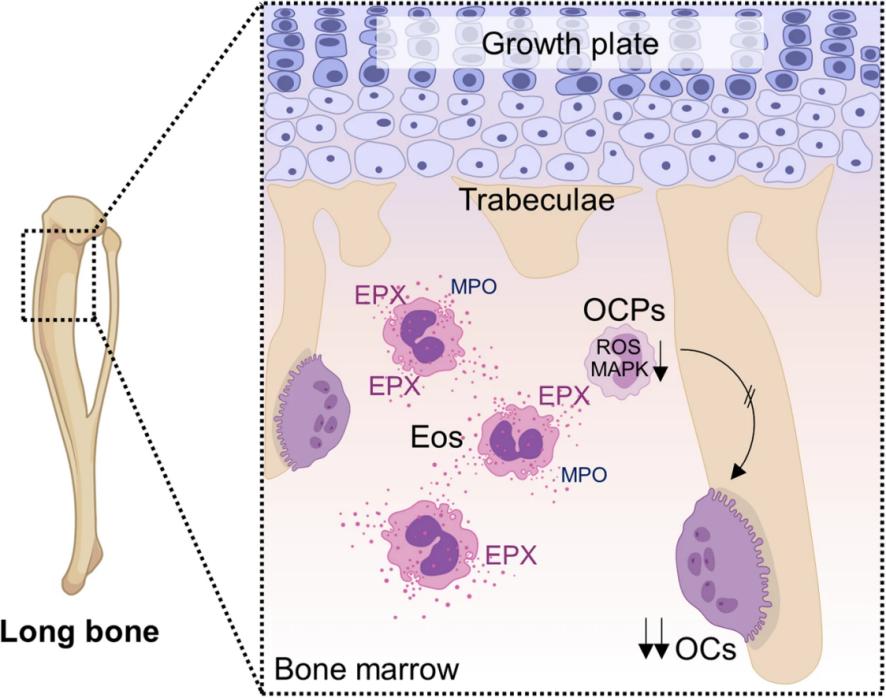 Fig. 1 Schematic overview of eosinophil-dependent osteoclast inhibition.1
Key structural properties of EPX:
- Multi-domain complex
- Hydrophobic active center
- Iron-porphyrin cofactor
- Key catalytic triad
- Disulfide bond network
Functions of EPX
The core functions and mechanism of action of EPX.
| Function | Description |
| Pathogen defense | Catalyze the formation of hypohalogen acids (such as hypochlorous acid), which directly kill parasites, bacteria and viruses. |
| Regulation of allergic reactions | By modifying inflammatory mediators through oxidation, it is involved in the pathological process of Th2 immune response such as asthma. |
| Tissue repair and remodeling | Regulate the cross-linking of extracellular matrix proteins and affect the process of wound repair and fibrosis. |
| Clearance of immune complexes | Oxidize and degrade antigen-antibody complexes to prevent tissue damage caused by immune deposits. |
| Amplification of oxidative stress | Reactive oxygen species (ROS) are produced, which have a dual role: they can kill pathogens and may also cause damage to host tissues. |
Clinical studies have shown that the level of serum EPX is positively correlated with the activation degree of eosinophils and has been used as a biomarker for eosinophilic-related diseases.
Applications of EPX and EPX Antibody in Literature
1. Kobayashi, Yoshiki, et al. "The Neutralization of the Eosinophil Peroxidase Antibody Accelerates Eosinophilic Mucin Decomposition." Cells 12.23 (2023): 2746. https://doi.org/10.3390/cells12232746
The article indicates that anti-EPX antibodies promote the release of dsDNA by eosinophils and participate in mucus formation, and their serum levels are related to the severity of ECRS. Neutralizing this antibody can break down mucus and restore hormone sensitivity, and may serve as a marker and therapeutic target for refractory eosinophilic airway inflammation.
2. Tang, Monica, et al. "Utility of eosinophil peroxidase as a biomarker of eosinophilic inflammation in asthma." Journal of Allergy and Clinical Immunology 154.3 (2024): 580-591. https://doi.org/10.1111/j.1399-3038.1995.tb00269.x
Research has found that eosinophil peroxidase (EPX) in serum and sputum can serve as a sensitive marker of eosinophilic inflammation in patients with asthma. 27% to 53% of asthma patients have elevated EPX levels. Sputum EPX is more sensitive than blood indicators in reflecting airway inflammation. Although mepolizumab can effectively reduce serum EPX, its improvement in airway inflammation (sputum EPX) is limited.
3. Liegeois, Maude A., et al. "Cellular and molecular features of asthma mucus plugs provide clues about their formation and persistence." Journal of Clinical Investigation 135.6 (2025): e186889. https://www.jci.org/articles/view/186889
Research has found that in the airway mucus plugs of asthma patients, there are double-positive granulocytes for eosinophilic peroxidase (EPX) and neutrophil elastase, suggesting that neutrophils may have phagocytosis the EPX released by eosinophils. Il-13-activated airway epithelial cells induce eosinophilic degranulation through CD11b and glycan-dependent pathways, revealing a new mechanism of mucus thrombus formation.
4. Andreev, Darja, et al. "Eosinophils preserve bone homeostasis by inhibiting excessive osteoclast formation and activity via eosinophil peroxidase." Nature Communications 15.1 (2024): 1067. https://doi.org/10.1038/s41467-024-45261-8
Research has found that eosinophils inhibit osteoclast differentiation and bone resorption activity by releasing peroxidase (EPX), thereby regulating bone homeostasis. Animal experiments have shown that the absence of eosinophils exacerbates bone loss, while their increase enhances bone mass. Human data also show that the number of eosinophils is positively correlated with bone mineral density, suggesting their key regulatory role in bone metabolism.
5. Uchida, Amiko M., et al. "Human differentiated eosinophils release IL-13 in response to IL-33 stimulation." Frontiers in immunology 13 (2022): 946643. https://doi.org/10.3389/fimmu.2022.946643
This study established a method for the in vitro differentiation of CD34+ cells into eosinophils and confirmed that the differentiated cells expressed characteristic markers such as eosinophil peroxidase (EPX). IL-33 significantly promotes the secretion of type 2 inflammatory factors such as IL-13 by differentiated cells through its receptor ST2, providing a new model for studying the role of eosinophils in allergic reactions.
Creative Biolabs: EPX Antibodies for Research
Creative Biolabs specializes in the production of high-quality EPX antibodies for research and industrial applications. Our portfolio includes monoclonal antibodies tailored for ELISA, Flow Cytometry, Western blot, immunohistochemistry, and other diagnostic methodologies.
- Custom EPX Antibody Development: Tailor-made solutions to meet specific research requirements.
- Bulk Production: Large-scale antibody manufacturing for industry partners.
- Technical Support: Expert consultation for protocol optimization and troubleshooting.
- Aliquoting Services: Conveniently sized aliquots for long-term storage and consistent experimental outcomes.
For more details on our EPX antibodies, custom preparations, or technical support, contact us at email.
Reference
- Andreev, Darja, et al. "Eosinophils preserve bone homeostasis by inhibiting excessive osteoclast formation and activity via eosinophil peroxidase." Nature Communications 15.1 (2024): 1067. https://doi.org/10.1038/s41467-024-45261-8
Anti-EPX antibodies
 Loading...
 Compare




Hot products 
-
Rat Anti-FABP3 Recombinant Antibody (CBXF-2299) (CBMAB-F1612-CQ)

-
Mouse Anti-BMI1 Recombinant Antibody (CBYC-P026) (CBMAB-P0108-YC)

-
Mouse Anti-AMH Recombinant Antibody (5/6) (CBMAB-A2527-YC)

-
Mouse Anti-CIITA Recombinant Antibody (CBLC160-LY) (CBMAB-C10987-LY)

-
Mouse Anti-AMACR Recombinant Antibody (CB34A) (CBMAB-CA034LY)

-
Mouse Anti-CFL1 Recombinant Antibody (CBFYC-1771) (CBMAB-C1833-FY)

-
Mouse Anti-FOSB Recombinant Antibody (CBXF-3593) (CBMAB-F2522-CQ)

-
Mouse Anti-GGT1 Recombinant Antibody (1F9) (CBMAB-G3273-LY)

-
Rabbit Anti-Acetyl-Histone H4 (Lys16) Recombinant Antibody (V2-623415) (CBMAB-CP1021-LY)

-
Mouse Anti-CDKL5 Recombinant Antibody (CBFYC-1629) (CBMAB-C1689-FY)

-
Mouse Anti-ARHGAP5 Recombinant Antibody (54/P190-B) (CBMAB-P0070-YC)

-
Mouse Anti-AZGP1 Recombinant Antibody (CBWJZ-007) (CBMAB-Z0012-WJ)

-
Rabbit Anti-AP2M1 (Phosphorylated T156) Recombinant Antibody (D4F3) (PTM-CBMAB-0610LY)

-
Rabbit Anti-CCL5 Recombinant Antibody (R0437) (CBMAB-R0437-CN)

-
Human Anti-SARS-CoV-2 Spike Recombinant Antibody (CBC05) (CBMAB-CR005LY)

-
Mouse Anti-ACTG1 Recombinant Antibody (V2-179597) (CBMAB-A0916-YC)

-
Mouse Anti-ADAM29 Recombinant Antibody (V2-179787) (CBMAB-A1149-YC)

-
Mouse Anti-ARG1 Recombinant Antibody (CBYCL-103) (CBMAB-L0004-YC)

-
Mouse Anti-Gro Monoclonal Antibody (1) (CBMAB-0482-LY)

-
Mouse Anti-GDF5 Recombinant Antibody (1F4) (CBMAB-G2740-LY)

- AActivation
- AGAgonist
- APApoptosis
- BBlocking
- BABioassay
- BIBioimaging
- CImmunohistochemistry-Frozen Sections
- CIChromatin Immunoprecipitation
- CTCytotoxicity
- CSCostimulation
- DDepletion
- DBDot Blot
- EELISA
- ECELISA(Cap)
- EDELISA(Det)
- ESELISpot
- EMElectron Microscopy
- FFlow Cytometry
- FNFunction Assay
- GSGel Supershift
- IInhibition
- IAEnzyme Immunoassay
- ICImmunocytochemistry
- IDImmunodiffusion
- IEImmunoelectrophoresis
- IFImmunofluorescence
- IGImmunochromatography
- IHImmunohistochemistry
- IMImmunomicroscopy
- IOImmunoassay
- IPImmunoprecipitation
- ISIntracellular Staining for Flow Cytometry
- LALuminex Assay
- LFLateral Flow Immunoassay
- MMicroarray
- MCMass Cytometry/CyTOF
- MDMeDIP
- MSElectrophoretic Mobility Shift Assay
- NNeutralization
- PImmunohistologyp-Paraffin Sections
- PAPeptide Array
- PEPeptide ELISA
- PLProximity Ligation Assay
- RRadioimmunoassay
- SStimulation
- SESandwich ELISA
- SHIn situ hybridization
- TCTissue Culture
- WBWestern Blot
