
IFITM1 Antibodies
Background
IFITM1 is a transmembrane protein induced by interferons and is widely expressed in various human tissue cells. This protein plays a significant role in antiviral immunity, cell proliferation and differentiation by regulating cell membrane properties and intracellular signaling pathways. Initially discovered in response to interferon stimulation, IFITM1 was later confirmed to effectively inhibit the invasion of various viruses. Its mechanism involves altering membrane fluidity and disrupting the process of virus membrane fusion. Recent studies have also revealed that IFITM1 is abnormally highly expressed in various tumors and participates in tumor occurrence and development by influencing the immune microenvironment, promoting angiogenesis, and enhancing cell migration ability. Due to its multiple functions in innate immunity and tumor biology, IFITM1 is becoming an important target for research on infectious diseases and cancer treatment.
Structure of IFITM1
IFITM1 is a transmembrane protein with a molecular weight of approximately 14 kDa. Its size varies slightly among different species, mainly due to the conservative variations in the amino acid sequence.
| Species | Human | Mouse | Pig | Monkey | Rat |
| Molecular Weight (kDa) | 14.1 | 14.0 | 14.2 | 14.1 | 14.0 |
| Primary Structural Differences | Induced by Interferon | High Homology | Sequence Similarity | Highly Conserved | Functionally Similar |
This protein is composed of approximately 125 amino acids and has a typical transmembrane structure, including a highly conserved hydrophobic domain and an intracellular region. Its structural characteristics determine its localization on the cell membrane and endosomal membrane, and it exerts antiviral effects by regulating membrane fluidity and lipid raft functions. The intracellular structure of the protein is involved in signal transduction and mediates the interferon response. The specific amino acid residues in the transmembrane domain of IFITM1 are crucial for its antiviral activity, and mutations at certain conserved sites can significantly affect its ability to inhibit viral invasion.
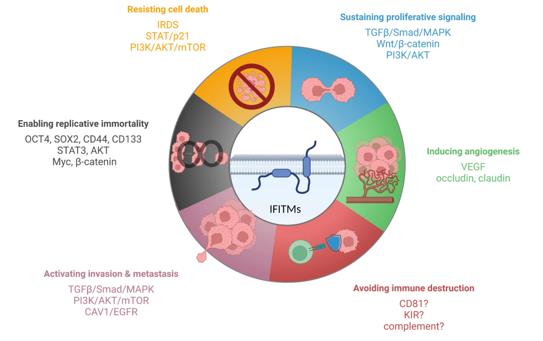 Fig. 1 IFITM proteins have been described to affect various cancer hallmarks.1
Key structural characteristics of IFITM1:
- Bifunctional transmembrane domain topology
- Highly conserved CD225 domain
- Palmitoylation modification site
- Membrane localization-related C-terminal region
Functions of IFITM1
The main function of IFITM1 is to mediate the antiviral response of cells and regulate tumor occurrence. However, it is also involved in various physiological and pathological processes, including immune regulation and cell proliferation.
| Function | Description |
| Antiviral Defense | IFITM1 inhibits the invasion of various RNA and DNA viruses by disrupting the fusion process of the viral membrane. It is a key effector molecule in the interferon signaling pathway. |
| Tumor Regulation | Abnormally highly expressed in various cancers, it participates in tumor progression by influencing the cell cycle, promoting angiogenesis, and enhancing migration ability. |
| Immune Regulation | Regulates the activation and differentiation of immune cells, influencing the inflammatory response and immune evasion in the tumor microenvironment. |
| Cell Adhesion and Migration | Involved in cell-cell interactions and extracellular matrix adhesion, influencing tissue homeostasis and the process of metastasis. |
| Cholesterol homeostasis | Regulates the transport and distribution of cholesterol within cells, influencing membrane fluidity and the formation of viral replication sites. |
The expression profile of IFITM1 is of a broad-spectrum inducible type. It is rapidly upregulated after interferon stimulation. Unlike constitutively expressed housekeeping genes, its level is relatively low in resting cells, but it sharply increases under viral infection or inflammatory stimulation, demonstrating its functional characteristics as a sentinel of innate immunity.
Applications of IFITM1 and IFITM1 Antibody in Literature
1. Friedlová, Nela, et al. "IFITM protein regulation and functions: Far beyond the fight against viruses." Frontiers in immunology 13 (2022): 1042368. https://doi.org/10.3389/fimmu.2022.1042368
The article indicates that interferon-induced transmembrane proteins (IFITMs) play a significant role in antiviral defense and tumor development. This article reviews the regulatory mechanisms and physiological/pathological functions of IFITM proteins, with a particular focus on their roles in tumor development and anti-tumor immunity.
2. Xu, Rong, et al. "Invasive FoxM1 phosphorylated by PLK1 induces the polarization of tumor-associated macrophages to promote immune escape and metastasis, amplified by IFITM1." Journal of Experimental & Clinical Cancer Research 42.1 (2023): 302. https://doi.org/10.1186/s13046-023-02872-1
The research has found that in lung cancer, PLK1 phosphorylates FoxM1, activates genes such as IFITM1, and promotes macrophage polarization, immune evasion and metastasis. Targeting FoxM1 is expected to become a new strategy for inhibiting the malignant progression of lung cancer.
3. Ishikawa-Sasaki, Kumiko, Takayuki Murata, and Jun Sasaki. "IFITM1 enhances nonenveloped viral RNA replication by facilitating cholesterol transport to the Golgi." PLoS Pathogens 19.5 (2023): e1011383. https://doi.org/10.1371/journal.ppat.1011383
The research found that IFITM1 can promote the transport of cholesterol to the Golgi apparatus, facilitating the accumulation of cholesterol at the RNA replication site of the Iatrophobia virus, thereby enhancing viral replication. This discovery reveals a new mechanism of IFITM1 in the replication of non-enveloped RNA viruses.
4. Kelemen, Andrea, et al. "IFITM1 expression determines extracellular vesicle uptake in colorectal cancer." Cellular and Molecular Life Sciences 78.21-22 (2021): 7009-7024. https://doi.org/10.1007/s00018-021-03949-w
The study found that cells with high expression of IFITM1 in colorectal cancer have strong proliferation ability, but have weak uptake ability for extracellular vesicles (EVs) derived from fibroblasts. This suggests heterogeneity in EV uptake within the tumor, which has significant reference value for cancer treatment strategies based on EVs.
5. Hussein, Hosni AM, et al. "IFITM1 expression is crucial to gammaherpesvirus infection, in vivo." Scientific reports 8.1 (2018): 14105. https://doi.org/10.1038/s41598-018-32350-0
The research has found that IFITM1 promotes the infection of γ-herpesviruses (such as EBV, KSHV), and it functions during the later stage of the virus entering the cells. Animal experiments have confirmed that silencing IFITM1 can significantly reduce the viral titer, indicating that IFITM1 is a key promoting factor for viral infections in the body.
Creative Biolabs: IFITM1 Antibodies for Research
Creative Biolabs specializes in the production of high-quality IFITM1 antibodies for research and industrial applications. Our portfolio includes monoclonal and polyclonal antibodies tailored for ELISA, Flow Cytometry, Western blot, immunohistochemistry, and other diagnostic methodologies.
- Custom IFITM1 Antibody Development: Tailor-made solutions to meet specific research requirements.
- Bulk Production: Large-scale antibody manufacturing for industry partners.
- Technical Support: Expert consultation for protocol optimization and troubleshooting.
- Aliquoting Services: Conveniently sized aliquots for long-term storage and consistent experimental outcomes.
For more details on our IFITM1 antibodies, custom preparations, or technical support, contact us at email.
Reference
- Friedlová, Nela, et al. "IFITM protein regulation and functions: Far beyond the fight against viruses." Frontiers in immunology 13 (2022): 1042368. Distributed under Open Access license CC BY 4.0, without modification. https://doi.org/10.3389/fimmu.2022.1042368
Anti-IFITM1 antibodies
 Loading...
 Compare



Hot products 
-
Mouse Anti-AKT1 (Phosphorylated S473) Recombinant Antibody (V2-505430) (PTM-CBMAB-0067LY)

-
Rat Anti-(1-5)-α-L-Arabinan Recombinant Antibody (V2-501861) (CBMAB-XB0003-YC)

-
Mouse Anti-4-Hydroxynonenal Recombinant Antibody (V2-502280) (CBMAB-C1055-CN)

-
Mouse Anti-ADGRL2 Recombinant Antibody (V2-58519) (CBMAB-L0166-YJ)

-
Mouse Anti-CD24 Recombinant Antibody (2Q1282) (CBMAB-C1624-CN)

-
Rat Anti-CD300A Recombinant Antibody (172224) (CBMAB-C0423-LY)

-
Mouse Anti-Acetyl-α-Tubulin (Lys40) Recombinant Antibody (V2-623485) (CBMAB-CP2897-LY)

-
Mouse Anti-ADGRE2 Recombinant Antibody (V2-261270) (CBMAB-C0813-LY)

-
Rat Anti-ADGRE4 Recombinant Antibody (V2-160163) (CBMAB-F0011-CQ)

-
Mouse Anti-DLG1 Monolconal Antibody (4F3) (CBMAB-0225-CN)

-
Rat Anti-CCR2 Recombinant Antibody (475301) (CBMAB-C1338-LY)

-
Mouse Anti-BrdU Recombinant Antibody (IIB5) (CBMAB-1038CQ)

-
Mouse Anti-CAPZB Recombinant Antibody (CBYY-C0944) (CBMAB-C2381-YY)

-
Rat Anti-CD34 Recombinant Antibody (MEC 14.7) (CBMAB-C10196-LY)

-
Mouse Anti-DLL4 Recombinant Antibody (D1090) (CBMAB-D1090-YC)

-
Mouse Anti-AAV9 Recombinant Antibody (V2-634029) (CBMAB-AP023LY)

-
Mouse Anti-FN1 Monoclonal Antibody (D6) (CBMAB-1240CQ)

-
Mouse Anti-CSPG4 Recombinant Antibody (CBFYM-1050) (CBMAB-M1203-FY)

-
Mouse Anti-AQP2 Recombinant Antibody (G-3) (CBMAB-A3359-YC)

-
Mouse Anti-EPO Recombinant Antibody (CBFYR0196) (CBMAB-R0196-FY)

- AActivation
- AGAgonist
- APApoptosis
- BBlocking
- BABioassay
- BIBioimaging
- CImmunohistochemistry-Frozen Sections
- CIChromatin Immunoprecipitation
- CTCytotoxicity
- CSCostimulation
- DDepletion
- DBDot Blot
- EELISA
- ECELISA(Cap)
- EDELISA(Det)
- ESELISpot
- EMElectron Microscopy
- FFlow Cytometry
- FNFunction Assay
- GSGel Supershift
- IInhibition
- IAEnzyme Immunoassay
- ICImmunocytochemistry
- IDImmunodiffusion
- IEImmunoelectrophoresis
- IFImmunofluorescence
- IGImmunochromatography
- IHImmunohistochemistry
- IMImmunomicroscopy
- IOImmunoassay
- IPImmunoprecipitation
- ISIntracellular Staining for Flow Cytometry
- LALuminex Assay
- LFLateral Flow Immunoassay
- MMicroarray
- MCMass Cytometry/CyTOF
- MDMeDIP
- MSElectrophoretic Mobility Shift Assay
- NNeutralization
- PImmunohistologyp-Paraffin Sections
- PAPeptide Array
- PEPeptide ELISA
- PLProximity Ligation Assay
- RRadioimmunoassay
- SStimulation
- SESandwich ELISA
- SHIn situ hybridization
- TCTissue Culture
- WBWestern Blot
