
IL11 Antibodies
Background
IL11 gene encoding a cytokine called interleukin 11, it is mainly expressed in bone marrow stromal cells and other cell types. This gene product can activate the JAK/STAT signaling pathway by binding to a specific receptor complex, thereby regulating the proliferation of hematopoietic stem cells, promoting the maturation of megakaryocytes and supporting platelet production. It also plays an important role in physiological processes such as embryonic development, bone metabolism and intestinal epithelial repair. This gene was first identified by researchers Paul et al. in 1990. Its abnormal expression is closely related to fibrotic diseases, inflammatory bowel disease and various malignant tumors. In-depth research on the IL11 signaling pathway not only reveals its dual role in physiology and pathology, but also provides a key molecular basis for the development of targeted therapeutic strategies.
Structure of IL11
IL11 is a cytokine protein with a molecular weight of approximately 19 kDa. This value may vary slightly among different species due to subtle differences in amino acid sequences.
| Species | Human | Mouse | Rat |
| Molecular Weight (kDa) | 19.0 | 18.9 | 19.1 |
| Primary Structural Differences | Conserved sequence with typical helical bundle structure | Have high homology with human IL11 | There are species-specific variations in amino acid sequences |
This protein is composed of 178 amino acids and presents a typical four-helix bundle structure (Up-Up-Down-Down). IL11 activates the downstream JAK/STAT signaling pathway by binding to IL11RA and gp130 receptors on the cell surface to form a complex. Its third and fourth helices play a key role in receptor recognition and binding.
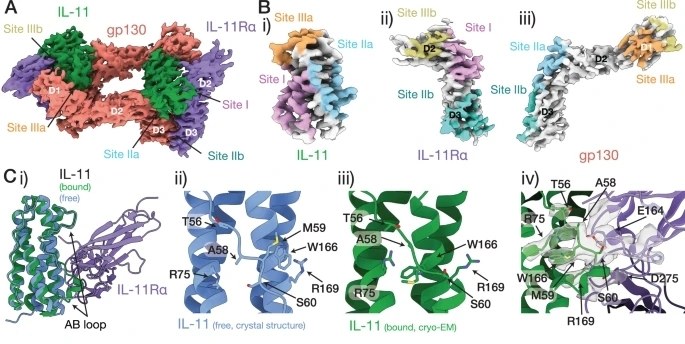 Fig. 1 Interactions forming the IL-11 signalling complex.1
Key structural properties of IL11:
- Four-helix bundle topological structure
- Hydrophobic core maintain stability between screw and participate in receptor
- Specific helical regions (such as helices C and D) directly interact with the IL11Rα and gp130 receptors
- The C-end region plays a key role in signal transduction and affinity regulation
Functions of IL11
The main function of the protein encoded by the IL11 gene (interleukin-11) is to regulate hematopoietic and immune responses, and it is also involved in various pathophysiological processes, including tissue repair and inflammatory regulation.
| Function | Description |
| Hematopoietic regulation | Promote the differentiation of megakaryocytes and platelet production to maintain normal hematopoietic function. |
| Immune regulation | Regulate the activity of B cells and T cells, and participate in the regulation of inflammatory responses and autoimmune processes. |
| Tissue repair | In the intestinal, lung and other epithelial tissues to promote cell proliferation and repair, enhance mucosal barrier function. |
| Influence of bone metabolism | Inhibit osteoclast differentiation and participate in bone remodeling process, which is associated with osteoporosis and other diseases. |
| Role of tumor microenvironment | In a wide variety of cancer by promoting cell proliferation, survival, and angiogenesis in tumor development. |
IL11 activates the JAK/STAT signaling pathway by binding to the IL11Rα and gp130 receptors. Its kinetic behavior exhibits the characteristics of rapid receptor binding and sustained signal activation, which is closely related to functional diversity.
Applications of IL11 and IL11 Antibody in Literature
1. Bai, et al. "Inhaled siRNA nanoparticles targeting IL11 inhibit lung fibrosis and improve pulmonary function post-bleomycin challenge." Science Advances 8.25 (2022): eabn7162. https://doi.org/10.1126/sciadv.abn7162
In this paper, an inhalable siIL11 nanoparticle was developed to block IL-11-mediated fibroblast differentiation by inhibiting ERK and SMAD2 pathways, reduce extracellular matrix deposition, improve lung function in pulmonary fibrosis models without systemic toxicity, and provide a novel therapeutic strategy for respiratory diseases.
2. Widjaja, Anissa A., et al. "Targeting endogenous kidney regeneration using anti-IL11 therapy in acute and chronic models of kidney disease." Nature Communications 13.1 (2022): 7497. https://doi.org/10.1038/s41467-022-35306-1
Research has found that IL11 inhibits GSK3β and upregulates SNAI1 by activating the ERK/p90RSK signaling pathway, leading to growth arrest and inflammation of renal tubular epithelial cells. Knockout of IL11 or its receptor, or the use of neutralizing antibodies, can both alleviate renal injury, fibrosis and inflammation, promote renal regeneration and functional recovery, indicating that targeting IL11 is a potential strategy for the treatment of acute and chronic kidney diseases.
3. Moon, Eui Jung, et al. "The HIF target MAFF promotes tumor invasion and metastasis through IL11 and STAT3 signaling." Nature communications 12.1 (2021): 4308. https://doi.org/10.1038/s41467-021-24631-6
Research has found that hypoxia directly activates the expression of IL11 by inducing the formation of a heterodimer between the transcription factor MAFF and BACH1. IL11 further activates the STAT3 signaling pathway, significantly promoting the invasion and metastasis of breast cancer. Inhibiting IL11 can effectively suppress tumor metastasis, indicating that targeting IL11 is a potential strategy for treating breast cancer.
4. Widjaja, Anissa A., et al. "IL11 stimulates IL33 expression and proinflammatory fibroblast activation across tissues." International Journal of Molecular Sciences 23.16 (2022): 8900. https://doi.org/10.3390/ijms23168900
Research has found that IL11 induces a strong pro-inflammatory response in various fibroblasts of the human body by activating the STAT3 and ERK signaling pathways, significantly upregulating key inflammatory factors and chemokines such as IL33, CCL20, and CXCL3/5/8, and triggering the pro-inflammatory secretory group. It has been confirmed that IL11 is an important pro-inflammatory factor and plays a core role in inflammation by inducing the IL33 alarm response.
5. Wenjun, et al. "Pharmacologic inhibition of IL11/STAT3 signaling increases MHC-I expression and T cell infiltration." Journal of translational medicine 21.1 (2023): 416. https://doi.org/10.1186/s12967-023-04079-6
This study reveals that IL11 inhibits STAT1 phosphorylation by activating STAT3 signaling, down-regulates MHC-I and CXCL9 expression, and leads to a reduction in CD8+ T cell infiltration and immune escape. Knockout of IL11 can inhibit the growth of colorectal cancer and improve prognosis. Competitive inhibition of IL11 can upregulate the expression of immune factors, indicating that targeting IL11 is a potential immunotherapy strategy for colorectal cancer.
Creative Biolabs: IL11 Antibodies for Research
Creative Biolabs specializes in the production of high-quality IL11 antibodies for research and industrial applications. Our portfolio includes monoclonal antibodies tailored for ELISA, Flow Cytometry, Western blot, immunohistochemistry, and other diagnostic methodologies.
- Custom IL11 Antibody Development: Tailor-made solutions to meet specific research requirements.
- Bulk Production: Large-scale antibody manufacturing for industry partners.
- Technical Support: Expert consultation for protocol optimization and troubleshooting.
- Aliquoting Services: Conveniently sized aliquots for long-term storage and consistent experimental outcomes.
For more details on our IL11 antibodies, custom preparations, or technical support, contact us at email.
Reference
- Metcalfe, Riley D., et al. "Structures of the interleukin 11 signalling complex reveal gp130 dynamics and the inhibitory mechanism of a cytokine variant." Nature Communications 14.1 (2023): 7543. https://doi.org/10.1038/s41467-023-42754-w
Anti-IL11 antibodies
Products List
 Loading...
 Compare


Hot products 
-
Mouse Anti-CCDC6 Recombinant Antibody (CBXC-0106) (CBMAB-C5397-CQ)

-
Mouse Anti-BIRC5 Recombinant Antibody (6E4) (CBMAB-CP2646-LY)

-
Mouse Anti-AMIGO2 Recombinant Antibody (CBYY-C0756) (CBMAB-C2192-YY)

-
Mouse Anti-ADAM29 Recombinant Antibody (V2-179787) (CBMAB-A1149-YC)

-
Rat Anti-CD34 Recombinant Antibody (MEC 14.7) (CBMAB-C10196-LY)

-
Mouse Anti-BCL6 Recombinant Antibody (CBYY-0435) (CBMAB-0437-YY)

-
Mouse Anti-DLL4 Recombinant Antibody (D1090) (CBMAB-D1090-YC)

-
Mouse Anti-CECR2 Recombinant Antibody (CBWJC-2465) (CBMAB-C3533WJ)

-
Mouse Anti-CD24 Recombinant Antibody (ALB9) (CBMAB-0176CQ)

-
Mouse Anti-BIRC3 Recombinant Antibody (16E63) (CBMAB-C3367-LY)

-
Mouse Anti-DHFR Recombinant Antibody (D0821) (CBMAB-D0821-YC)

-
Mouse Anti-CD1C Recombinant Antibody (L161) (CBMAB-C2173-CQ)

-
Mouse Anti-A2M Recombinant Antibody (V2-178822) (CBMAB-A0036-YC)

-
Human Anti-SARS-CoV-2 Spike Recombinant Antibody (CR3022) (CBMAB-CR014LY)

-
Mouse Anti-CASP8 Recombinant Antibody (CBYY-C0987) (CBMAB-C2424-YY)

-
Mouse Anti-APOH Recombinant Antibody (4D9A4) (CBMAB-A3249-YC)

-
Mouse Anti-CD2AP Recombinant Antibody (BR083) (CBMAB-BR083LY)

-
Mouse Anti-AAV-5 Recombinant Antibody (V2-503417) (CBMAB-V208-1369-FY)

-
Mouse Anti-CIITA Recombinant Antibody (CBLC160-LY) (CBMAB-C10987-LY)

-
Mouse Anti-CD247 Recombinant Antibody (6B10.2) (CBMAB-C1583-YY)

- AActivation
- AGAgonist
- APApoptosis
- BBlocking
- BABioassay
- BIBioimaging
- CImmunohistochemistry-Frozen Sections
- CIChromatin Immunoprecipitation
- CTCytotoxicity
- CSCostimulation
- DDepletion
- DBDot Blot
- EELISA
- ECELISA(Cap)
- EDELISA(Det)
- ESELISpot
- EMElectron Microscopy
- FFlow Cytometry
- FNFunction Assay
- GSGel Supershift
- IInhibition
- IAEnzyme Immunoassay
- ICImmunocytochemistry
- IDImmunodiffusion
- IEImmunoelectrophoresis
- IFImmunofluorescence
- IGImmunochromatography
- IHImmunohistochemistry
- IMImmunomicroscopy
- IOImmunoassay
- IPImmunoprecipitation
- ISIntracellular Staining for Flow Cytometry
- LALuminex Assay
- LFLateral Flow Immunoassay
- MMicroarray
- MCMass Cytometry/CyTOF
- MDMeDIP
- MSElectrophoretic Mobility Shift Assay
- NNeutralization
- PImmunohistologyp-Paraffin Sections
- PAPeptide Array
- PEPeptide ELISA
- PLProximity Ligation Assay
- RRadioimmunoassay
- SStimulation
- SESandwich ELISA
- SHIn situ hybridization
- TCTissue Culture
- WBWestern Blot
