
RBFOX1 Antibodies
Background
The RBFOX1 gene encodes an RNA-binding protein and functions as an important splicing regulatory factor in the mammalian nervous system. This protein mainly regulates the selective splicing of neuron-specific genes by binding to specific RNA sequences, thereby influencing the development of nerve cells, electrical signal conduction and synaptic plasticity. Research has found that functional abnormalities of RBFOX1 are closely related to various neurodevelopmental disorders such as autism spectrum disorder and epilepsy. Since its systematic identification in the early 21st century, this gene has become a key object in the study of neurobiology and disease mechanisms. The analysis of its multi-level regulatory network (including post-transcriptional modifications, subcellular localization and protein-protein interactions) has significantly advanced people's understanding of the molecular-level relationship between the diversity of the nervous system and the pathological mechanisms of diseases.
Structure of RBFOX1
RBFOX1 is an RNA-binding protein with a molecular weight of approximately 40 kDa. Its molecular weight varies among different species due to the diversity of splicing isomers, but the core RNA recognition motif (RRM) domain is highly conserved.
| Species | Human | Mouse | Zebrafish |
|---|---|---|---|
| Molecular Weight (kDa) | ~40 | ~39 | ~42 |
| Primary Structural Differences | Including two RRM and C-terminal domains, there were neuron-specific splicing variants | High sequence homology and highly conserved functions | Lineal homologous genes involved in early nervous system development |
This protein is composed of approximately 400 amino acids. Its primary structure contains two tandem RRM domains, forming a typical α-β folded secondary structure, which is responsible for specifically recognizing and binding to the (G)CAUG sequence on RNA precursors. This binding ability makes it a key factor in regulating the selective splicing of neuronal precursor mRNA, directly affecting neuronal excitability, cell differentiation and synaptic formation. The tertiary structure of proteins presents as a compact spherical shape. Its spatial conformation is stabilized through hydrophobic interactions and hydrogen bond networks, ensuring the precision of its splicing regulatory function.
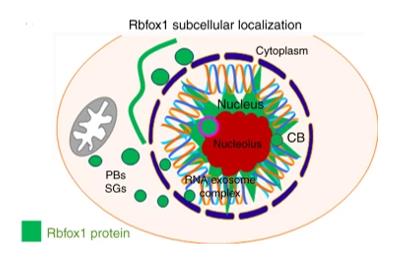 Fig. 1 Schematic drawing depicts a summary of subcellular localization of Rbfox1 protein.1
Key structural properties of RBFOX1:
- Identifying core contains two highly conserved RNA motif (RRM) domain structure
- Stable RNA-binding pockets are formed through hydrophobic residues
- The C-terminal region rich in proline-glycine mediates protein-protein interactions
- Combined with specific RNA sequences (G) CAUG motif, alternative splicing regulation
Functions of RBFOX1
The core function of the RBFOX1 gene is to regulate the selective splicing of mRNA, which is particularly crucial in the development of the central nervous system and the heart. Its function also extends to maintaining the stability of neuronal excitability and synaptic plasticity.
| Function | Description |
|---|---|
| Splicing regulation | As a key splicing factor, it binds to the (G)CAUG sequence of precursor mRNA to regulate the selective splicing of a large number of genes in neurons and cardiomyocytes. |
| Neural development | The splicing program controls the differentiation, migration and axon orientation of neurons, which is indispensable for the normal formation of the cerebral cortex and neural circuits. |
| Electrophysiological homeostasis | Regulating the splicing of ion channels (such as calcium and sodium channels) and synaptic proteins directly affects the excitability of neurons and the accuracy of signal transduction. |
| Disease association | Dysfunction is closely related to various diseases such as autism spectrum disorder, epilepsy, intellectual disability and cardiomyopathy. |
| Network Regulation | It works in synergy with other RNA-binding proteins (such as NOVA and MBNL) to form a complex post-transcriptional regulatory network, precisely controlling the spatiotemporal specificity of gene expression. |
RBFOX1 typically functions as an inhibitory splicing factor, promoting exon skipping by recruiting splicing inhibitory complexes. Its regulatory effect is highly specific to cell type and developmental stage, in contrast to the wide range of hemoglobin's cooperative oxygen transport.
Applications of RBFOX1 and RBFOX1 Antibody in Literature
1. Kucherenko, Mariya M., and Halyna R. Shcherbata. "Stress-dependent miR-980 regulation of Rbfox1/A2bp1 promotes ribonucleoprotein granule formation and cell survival." Nature communications 9.1 (2018): 312. https://doi.org/10.1038/s41467-017-02757-w
The article indicates that under stress, the RNA-binding protein Rbfox1 forms various nucleoplasmic RNP particles through phase separation, promoting cell survival. miR-980 regulates its level by targeting the Rbfox1 transcript of the long 3'utr, and its down-regulation can enhance granule formation and cell viability. Human RBFOX protein can also form membraneless organelles, which may be related to the relevant disease mechanism.
2. Hamada, Nanako, et al. "Essential role of the nuclear isoform of RBFOX1, a candidate gene for autism spectrum disorders, in the brain development." Scientific reports 6.1 (2016): 30805. https://doi.org/10.1038/srep30805
The article indicates that in the cortical development of mice, the absence of the dominant nuclear subtype RBFOX1-iso1 can impair neuronal migration, axon extension and dendrite development, and lead to electrophysiological abnormalities. Defects in these key processes may cause structural and functional abnormalities of cortical neurons, thereby participating in the pathological process of RBFOX1-related neurodevelopmental diseases.
3. Hamada, Nanako, et al. "Role of the cytoplasmic isoform of RBFOX1/A2BP1 in establishing the architecture of the developing cerebral cortex." Molecular Autism 6.1 (2015): 56. https://doi.org/10.1186/s13229-015-0049-5
The article indicates that in the cortical development of mice, knockdown of the cytoplasmic subtype RBFOX1-iso2 can damage the radial migration and peripheral translocation of neurons, and inhibit axon extension, dendritic branching and dendritic spinous maturation. These developmental abnormalities may constitute the pathological basis of RBFOX1-related neurodevelopmental disorders such as autism spectrum disorder.
4. Nikonova, Elena, et al. "Rbfox1 is required for myofibril development and maintaining fiber type–specific isoform expression in Drosophila muscles." Life science alliance 5.4 (2022). https://doi.org/10.26508/lsa.202101342
The article indicates that in the study of fruit fly muscle, Rbfox1 affects muscle fiber differentiation and structure by regulating fiber type-specific gene expression and splicing (such as the Troponin-I subtype). It works in synergy with the RNA-binding protein Bru1. Its absence can lead to abnormal contractions and feathering defects, revealing its key regulatory function in muscle development.
5. Umar, Sadiq, et al. "RBFOX1 Regulates Calcium Signaling and Enhances SERCA2 Translation." Cells 14.9 (2025): 664. https://doi.org/10.3390/cells14090664
The article indicates that mice with specific knockout of RBFOX1 in fruit cardiomyocytes exhibit calcium homeostasis disorder, and the mechanism is by binding to the 3'utr of Serca2 mRNA and enhancing the translation of SERCA2 protein. This leads to deterioration of cardiac function under stress load, revealing the key post-translational regulatory role of RBFOX1 in maintaining cardiac function.
Creative Biolabs: RBFOX1 Antibodies for Research
Creative Biolabs specializes in the production of high-quality RBFOX1 antibodies for research and industrial applications. Our portfolio includes monoclonal antibodies tailored for ELISA, Flow Cytometry, Western blot, immunohistochemistry, and other diagnostic methodologies.
- Custom RBFOX1 Antibody Development: Tailor-made solutions to meet specific research requirements.
- Bulk Production: Large-scale antibody manufacturing for industry partners.
- Technical Support: Expert consultation for protocol optimization and troubleshooting.
- Aliquoting Services: Conveniently sized aliquots for long-term storage and consistent experimental outcomes.
For more details on our RBFOX1 antibodies, custom preparations, or technical support, contact us at email.
Reference
- Kucherenko, Mariya M., and Halyna R. Shcherbata. "Stress-dependent miR-980 regulation of Rbfox1/A2bp1 promotes ribonucleoprotein granule formation and cell survival." Nature communications 9.1 (2018): 312. https://doi.org/10.1038/s41467-017-02757-w
Anti-RBFOX1 antibodies
 Loading...
 Compare




Hot products 
- AActivation
- AGAgonist
- APApoptosis
- BBlocking
- BABioassay
- BIBioimaging
- CImmunohistochemistry-Frozen Sections
- CIChromatin Immunoprecipitation
- CTCytotoxicity
- CSCostimulation
- DDepletion
- DBDot Blot
- EELISA
- ECELISA(Cap)
- EDELISA(Det)
- ESELISpot
- EMElectron Microscopy
- FFlow Cytometry
- FNFunction Assay
- GSGel Supershift
- IInhibition
- IAEnzyme Immunoassay
- ICImmunocytochemistry
- IDImmunodiffusion
- IEImmunoelectrophoresis
- IFImmunofluorescence
- IGImmunochromatography
- IHImmunohistochemistry
- IMImmunomicroscopy
- IOImmunoassay
- IPImmunoprecipitation
- ISIntracellular Staining for Flow Cytometry
- LALuminex Assay
- LFLateral Flow Immunoassay
- MMicroarray
- MCMass Cytometry/CyTOF
- MDMeDIP
- MSElectrophoretic Mobility Shift Assay
- NNeutralization
- PImmunohistologyp-Paraffin Sections
- PAPeptide Array
- PEPeptide ELISA
- PLProximity Ligation Assay
- RRadioimmunoassay
- SStimulation
- SESandwich ELISA
- SHIn situ hybridization
- TCTissue Culture
- WBWestern Blot
