
TNFRSF13B Antibodies
Background
TNFRSF13B is a transmembrane protein belonging to the tumor necrosis factor receptor superfamily, and it is mainly expressed on the surface of B lymphocytes and dendritic cells. This protein participates in regulating the activation, proliferation of B cells, and the class-switching of immunoglobulins by binding to its ligands (such as BAFF and APRIL), and plays a crucial role in maintaining the homeostasis of humoral immunity. This gene was identified in 2001 and its function in adaptive immunity was confirmed. Its loss of function or mutation is closely related to the onset of common variable immunodeficiency disease (CVID) and autoimmune diseases (such as systemic lupus erythematosus). Due to its clear signaling pathway and important immunoregulatory role, TNFRSF13B has become one of the core molecules in the study of the mechanism of B-cell-related immune diseases and the development of therapeutic targets, promoting a deeper understanding of the mechanisms of immune tolerance and antibody response regulation.
Structure of TNFRSF13B
TNFRSF13B is a transmembrane protein with a molecular weight of approximately 31 kDa. Its molecular weight may vary slightly due to glycosylation modifications and different splicing variants, but the core peptide chain structure is relatively conserved.
| Species | Human | Mouse | Rat |
| Molecular Weight (kDa) | ~31 | ~30 | ~30.5 |
| Primary Structural Differences | Contains the extracellular CRD domain and the intracellular TRAF binding domain | Extracellular domain highly homologous, similar signaling pathways | Corresponding basically to the functional domains of human proteins |
This protein is composed of approximately 293 amino acids. Its primary structure includes a signal peptide, an extracellular domain rich in cysteines (CRD), a transmembrane region, and an intracellular tail. Its tertiary structure is stabilized by multiple disulfide bonds in the extracellular domain, forming a functional interface that can bind to ligands (such as BAFF, APRIL). The key secondary structures include β-sheet folds, which form the ligand binding pocket. An important functional site is the TRAF binding motif located in the intracellular region. This motif interacts with TRAF proteins (such as TRAF2, TRAF6), transmitting activated signals downstream, thereby regulating the survival and antibody production of B cells.
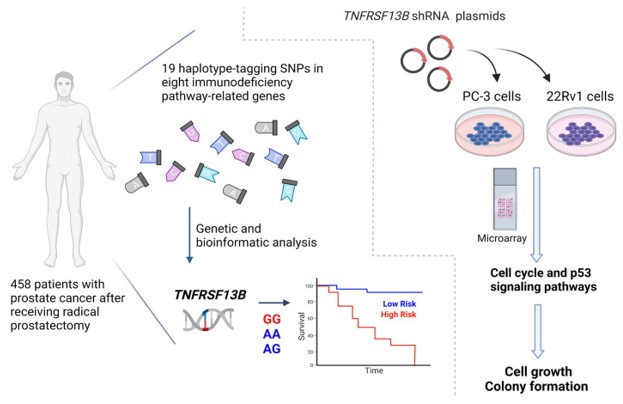 Fig. 1 Genetic and functional analyses identify the role of TNFRSF13B in prostate cancer progression.1
Key structural properties of TNFRSF13B:
- Extracellular domains rich in cysteine
- Transmembrane helix structure
- TRAF binding motifs in the cytoplasmic tail region
Functions of TNFRSF13B
The main function of TNFRSF13B (TACI) is to act as a key regulatory receptor for B cells. However, it is also involved in broader processes of immune homeostasis maintenance and autoimmune regulation.
| Function | Description |
| B-cell activation and survival | By binding to ligands BAFF and APRIL, it transmits signals to promote the proliferation, survival and maturation of B cells, which is an important switch in the acquired immune response. |
| Antibody Class Conversion | In T-cell-dependent antibody responses, it provides crucial co-stimulatory signals to B cells, driving the conversion of immunoglobulins from IgM to other isotypes such as IgG and IgA. |
| Maintenance of immune tolerance | Through negative signaling pathways, it participates in the elimination of autoreactive B cells, which is crucial for preventing autoimmune diseases (such as systemic lupus erythematosus). |
| Regulation of Plasma Cell Differentiation | The process of regulating the differentiation of B cells into antibody-secreting plasma cells directly affects the long-term humoral immunity of the body and the maintenance of antibody levels. |
| As a therapeutic target | Due to its clear regulatory function, this receptor has become a potential drug target for treating autoimmune diseases and certain B-cell lymphomas. |
The signal transduction of TNFRSF13B depends on its binding to TRAF adaptor proteins, thereby activating multiple pathways such as NF-κB and MAPK. This multi-pathway activation pattern enables it to finely regulate different B-cell fate decisions according to the microenvironment.
Applications of TNFRSF13B and TNFRSF13B Antibody in Literature
1. Li, Chia-Yang, et al. "TNFRSF13B is a potential contributor to prostate cancer." Cancer Cell International 22.1 (2022): 180. https://doi.org/10.1186/s12935-022-02590-2
The article indicates that variations in the TNFRSF13B gene are associated with the risk of postoperative recurrence of prostate cancer. The G-type variation of this gene can increase expression and promote tumor cell proliferation, suggesting that genes in the immune deficiency pathway may have a potential role in the progression of prostate cancer.
2. Platt, Jeffrey L., et al. "TNFRSF13B polymorphisms counter microbial adaptation to enteric IgA." JCI insight 6.14 (2021): e148208. https://doi.org/10.1172/jci.insight.148208
The article indicates that common mutations in the TNFRSF13B gene can lead to a deficiency of intestinal IgA, which in turn enhances the host's resistance to certain intestinal pathogens. Studies have shown that pathogens may utilize antibody signals to activate virulence, revealing the evolutionary advantage of the high frequency of this mutation.
3. Pulvirenti, Federica, et al. "Clinical associations of biallelic and monoallelic TNFRSF13B variants in Italian primary antibody deficiency syndromes." Journal of Immunology Research 2016.1 (2016): 8390356. https://doi.org/10.1155/2016/8390356
The study found that mutations in the TNFRSF13B gene are associated with CVID and IgAD. Double allelic mutations can alter the autoimmune manifestations and the function of memory B cells, but their clinical management significance is still limited.
4. Cascalho, Marilia, and Jeffrey L. Platt. "TNFRSF13B diversification fueled by B cell responses to environmental challenges—A hypothesis." Frontiers in immunology 12 (2021): 634544. https://doi.org/10.3389/fimmu.2021.634544
The article indicates that the TNFRSF13B gene regulates B cell differentiation and memory. Its high polymorphism is widely present in mammals and may be related to coordinating innate immunity, or promote the adaptive survival of species through contradictory mechanisms.
5. Hinterleitner, Clemens, et al. "Platelet-Expressed TNFRSF13B (TACI) predicts breast cancer progression." Frontiers in oncology 11 (2021): 642170. https://doi.org/10.3389/fonc.2021.642170
This study revealed that the expression of TNFRSF13B in platelets of breast cancer patients was upregulated, and its level was positively correlated with tumor stage and metastasis, suggesting that it can serve as a novel liquid biopsy marker for predicting the progression of breast cancer.
Creative Biolabs: TNFRSF13B Antibodies for Research
Creative Biolabs specializes in the production of high-quality TNFRSF13B antibodies for research and industrial applications. Our portfolio includes monoclonal antibodies tailored for ELISA, Flow Cytometry, Western blot, immunohistochemistry, and other diagnostic methodologies.
- Custom TNFRSF13B Antibody Development: Tailor-made solutions to meet specific research requirements.
- Bulk Production: Large-scale antibody manufacturing for industry partners.
- Technical Support: Expert consultation for protocol optimization and troubleshooting.
- Aliquoting Services: Conveniently sized aliquots for long-term storage and consistent experimental outcomes.
For more details on our TNFRSF13B antibodies, custom preparations, or technical support, contact us at email.
Reference
- Li, Chia-Yang, et al. "TNFRSF13B is a potential contributor to prostate cancer." Cancer Cell International 22.1 (2022): 180. Distributed under Open Access license CC BY 4.0, without modification. https://doi.org/10.1186/s12935-022-02590-2
Anti-TNFRSF13B antibodies
 Loading...
 Compare




Hot products 
- AActivation
- AGAgonist
- APApoptosis
- BBlocking
- BABioassay
- BIBioimaging
- CImmunohistochemistry-Frozen Sections
- CIChromatin Immunoprecipitation
- CTCytotoxicity
- CSCostimulation
- DDepletion
- DBDot Blot
- EELISA
- ECELISA(Cap)
- EDELISA(Det)
- ESELISpot
- EMElectron Microscopy
- FFlow Cytometry
- FNFunction Assay
- GSGel Supershift
- IInhibition
- IAEnzyme Immunoassay
- ICImmunocytochemistry
- IDImmunodiffusion
- IEImmunoelectrophoresis
- IFImmunofluorescence
- IGImmunochromatography
- IHImmunohistochemistry
- IMImmunomicroscopy
- IOImmunoassay
- IPImmunoprecipitation
- ISIntracellular Staining for Flow Cytometry
- LALuminex Assay
- LFLateral Flow Immunoassay
- MMicroarray
- MCMass Cytometry/CyTOF
- MDMeDIP
- MSElectrophoretic Mobility Shift Assay
- NNeutralization
- PImmunohistologyp-Paraffin Sections
- PAPeptide Array
- PEPeptide ELISA
- PLProximity Ligation Assay
- RRadioimmunoassay
- SStimulation
- SESandwich ELISA
- SHIn situ hybridization
- TCTissue Culture
- WBWestern Blot
