
ADAM17 Antibodies
Background
ADAM17 is an important transmembrane protease located on the cell membrane, belonging to the disintegrin and metalloproteinase family. This enzyme participates in various physiological and pathological processes such as inflammatory responses, cell proliferation, and migration by hydrolyzing the extracellular domains of various cell surface proteins. Notably, ADAM17 can cleave the precursor of tumor necrosis factor-α (TNF-α), converting it into an active form, thereby playing a crucial role in immune regulation. Since its formal identification in 1997, the research on its structure and functional mechanism has continued to deepen. It not only reveals its core position in cell communication pathways such as the EGFR signaling pathway, but also provides an important theoretical basis for the development of therapeutic targets for related diseases (such as cancer, autoimmune diseases).
Structure of ADAM17
ADAM17 is an important transmembrane protease with a molecular weight of approximately 85 kDa. This value varies slightly among different species, mainly due to differences in the degree of post-translational modifications such as glycosylation.
| Species | Human | Mouse | Rat |
| Molecular Weight (kDa) | About 85 | About 84 | About 83 |
| Primary Structural Differences | Contains leader peptide, catalytic domain structure and to integrate domain sample structure, across the membrane and cytoplasmic tail | Catalytic domain structure highly conservative, extracellular region sequence similarity | Having the typical metalloproteinase catalytic motif (HEXXHXXGXXHD) |
This protein is composed of 824 amino acids and belongs to the type I transmembrane protein. Its core structure includes a catalytic domain (containing a zinc ion binding site), a disintegrin-like domain, a transmembrane domain, and a relatively short intracellular tail region. The catalytic domain is responsible for substrate hydrolysis, while the disintegrin-like domain participates in protein interactions and regulates enzyme activity. ADAM17 plays a crucial role in cell signal transduction by recognizing and cleaving various membrane-bound proteins through its extracellular domain with specific structures.
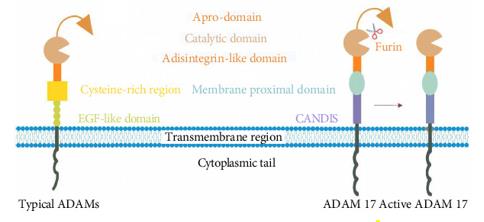 Fig. 1 The structure of classical ADAMs and ADAM17.1
Key structural properties of ADAM17:
- Modular transmembrane structure
- Catalytic active center
- Regulatory recognition site
- Key amino acid residues
Functions of ADAM17
The core function of ADAM17 (disintegrin-metalloproteinase 17) is to act as a crucial transmembrane "molecular scissors", hydrolyzing various cell surface proteins and thereby regulating important cellular signaling pathways. It plays a central role in a variety of physiological and pathological processes.
| Function | Description |
| Inflammation Regulation | By cutting and releasing precursor proteins such as tumor necrosis factor-α (TNF-α), it activates the inflammatory response, which is a key step in innate immunity. |
| Growth factor signaling | Various ligands that cleave the epidermal growth factor receptor (EGFR) (such as TGF-α) activate the EGFR pathway, driving cell proliferation, migration and survival. |
| Cell Adhesion and Migration | It mediates the detachment of adhesion molecules such as L-selectin, influencing leukocyte homing and recruitment at inflammatory sites; it also participates in the cleavage of integrin receptors, regulating cell-matrix interactions. |
| Tissue Repair and Regeneration | After tissue damage, it participates in the processes of epithelial repair, angiogenesis and wound healing by regulating the activity of growth factors and cytokines. |
| Pathological Process Association | Its abnormal activation is closely related to various diseases, including autoimmune disorders such as rheumatoid arthritis and inflammatory bowel disease, as well as the growth, invasion and metastasis of tumors. |
The functional activity of ADAM17 is precisely regulated at multiple levels, including transcription, post-translational modifications (such as cleavage of the precursor of the flynn protease), membrane localization, and endogenous inhibitors (such as TIMP3), ensuring that it is activated at the correct time and place.
Applications of ADAM17 and ADAM17 Antibody in Literature
1. Yan, Suyan, et al. "Progress of ADAM17 in Fibrosis‐Related Diseases." Mediators of Inflammation 2025.1 (2025): 9999723. https://doi.org/10.1155/mi/9999723
This article summarizes the mechanism of ADAM17 in fibrosis, focusing on its activation, function, regulation, and its impact on fibrosis damage in organs such as the kidney, liver, heart, and lungs. The aim is to provide ideas for the development of new therapies based on the ADAM17 signaling pathway.
2. Yan, Suyan, et al. "ADAM17/PTGS2 Facilitates Pulmonary Fibrosis by Regulating Ferroptosis." Journal of Cellular and Molecular Medicine 29.5 (2025): e70466. https://doi.org/10.1111/jcmm.70466
This study reveals that the ADAM17/PTGS2 pathway promotes pulmonary fibrosis by inducing ferroptosis in lung fibroblasts. Both patient and mouse experiments have confirmed that inhibiting ADAM17 can alleviate fibrosis, providing a new target for the treatment of pulmonary fibrosis.
3. Wang, Xiaoxiao, et al. "ADAM17 variant causes hair loss via ubiquitin ligase TRIM47–mediated degradation." JCI insight 9.13 (2024): e177588. https://doi.org/10.1172/jci.insight.177588
This study reveals that the dominant mutation of the ADAM17 gene enhances its binding to TRIM47, leading to its own degradation. This, in turn, inhibits the Notch pathway, depletes hair follicle stem cells, and causes hereditary hypotrichosis. This discovery elucidates a new pathogenic mechanism.
4. Zipeto, Donato, et al. "ACE2/ADAM17/TMPRSS2 interplay may be the main risk factor for COVID-19." Frontiers in immunology 11 (2020): 576745. https://doi.org/10.3389/fimmu.2020.576745
This article develops a highly sensitive fluorescence-based biosensor using quantum dots conjugated with plastic antibodies to detect myoglobin at femtomolar concentrations, providing a cost-effective, selective, and stable alternative for early myocardial infarction diagnosis in human serum.
5. Wang, Kai, et al. "Immunomodulatory role of metalloproteinase ADAM17 in tumor development." Frontiers in immunology 13 (2022): 1059376. https://doi.org/10.3389/fimmu.2022.1059376
This study reveals that ADAM17 is a transmembrane protease that regulates a key signal for tumor development. This article reviews its structure and function, and focuses on its role in tumor immune regulation and the prospects for the development of related targeted inhibitors.
Creative Biolabs: ADAM17 Antibodies for Research
Creative Biolabs specializes in the production of high-quality ADAM17 antibodies for research and industrial applications. Our portfolio includes monoclonal and polyclonal antibodies tailored for ELISA, Flow Cytometry, Western blot, immunohistochemistry, and other diagnostic methodologies.
- Custom ADAM17 Antibody Development: Tailor-made solutions to meet specific research requirements.
- Bulk Production: Large-scale antibody manufacturing for industry partners.
- Technical Support: Expert consultation for protocol optimization and troubleshooting.
- Aliquoting Services: Conveniently sized aliquots for long-term storage and consistent experimental outcomes.
For more details on our ADAM17 antibodies, custom preparations, or technical support, contact us at info@creative-biolabs.com.
Reference
- Yan, Suyan, et al. "Progress of ADAM17 in Fibrosis‐Related Diseases." Mediators of Inflammation 2025.1 (2025): 9999723. Distributed under Open Access license CC BY 4.0, without modification. https://doi.org/10.1155/mi/9999723
Anti-ADAM17 antibodies
 Loading...
 Compare



Hot products 
-
Mouse Anti-CD24 Recombinant Antibody (SN3) (CBMAB-C1037-CQ)

-
Mouse Anti-ENPP1 Recombinant Antibody (CBFYE-0159) (CBMAB-E0375-FY)

-
Mouse Anti-CHRNA9 Recombinant Antibody (8E4) (CBMAB-C9161-LY)

-
Mouse Anti-BLK Recombinant Antibody (CBYY-0618) (CBMAB-0621-YY)

-
Mouse Anti-CD24 Recombinant Antibody (ALB9) (CBMAB-0176CQ)

-
Mouse Anti-GFAP Recombinant Antibody (20) (CBMAB-G2914-LY)

-
Mouse Anti-FAS2 Monoclonal Antibody (1D4) (CBMAB-0071-CN)

-
Rabbit Anti-ALK (Phosphorylated Y1278) Recombinant Antibody (D59G10) (PTM-CBMAB-0035YC)

-
Rat Anti-C5AR1 Recombinant Antibody (8D6) (CBMAB-C9139-LY)

-
Mouse Anti-AAV-5 Recombinant Antibody (V2-503416) (CBMAB-V208-1402-FY)

-
Mouse Anti-AKT1 (Phosphorylated S473) Recombinant Antibody (V2-505430) (PTM-CBMAB-0067LY)

-
Mouse Anti-DHFR Recombinant Antibody (D0821) (CBMAB-D0821-YC)

-
Mouse Anti-BPGM Recombinant Antibody (CBYY-1806) (CBMAB-2155-YY)

-
Rabbit Anti-CCN1 Recombinant Antibody (CBWJC-3580) (CBMAB-C4816WJ)

-
Rabbit Anti-AKT2 (Phosphorylated S474) Recombinant Antibody (V2-556130) (PTM-CBMAB-0605LY)

-
Mouse Anti-EPO Recombinant Antibody (CBFYR0196) (CBMAB-R0196-FY)

-
Rat Anti-CD63 Recombinant Antibody (7G4.2E8) (CBMAB-C8725-LY)

-
Mouse Anti-CD8 Recombinant Antibody (C1083) (CBMAB-C1083-LY)

-
Mouse Anti-CALR Recombinant Antibody (CBFYC-0763) (CBMAB-C0818-FY)

-
Rabbit Anti-Acetyl-Histone H4 (Lys16) Recombinant Antibody (V2-623415) (CBMAB-CP1021-LY)

- AActivation
- AGAgonist
- APApoptosis
- BBlocking
- BABioassay
- BIBioimaging
- CImmunohistochemistry-Frozen Sections
- CIChromatin Immunoprecipitation
- CTCytotoxicity
- CSCostimulation
- DDepletion
- DBDot Blot
- EELISA
- ECELISA(Cap)
- EDELISA(Det)
- ESELISpot
- EMElectron Microscopy
- FFlow Cytometry
- FNFunction Assay
- GSGel Supershift
- IInhibition
- IAEnzyme Immunoassay
- ICImmunocytochemistry
- IDImmunodiffusion
- IEImmunoelectrophoresis
- IFImmunofluorescence
- IGImmunochromatography
- IHImmunohistochemistry
- IMImmunomicroscopy
- IOImmunoassay
- IPImmunoprecipitation
- ISIntracellular Staining for Flow Cytometry
- LALuminex Assay
- LFLateral Flow Immunoassay
- MMicroarray
- MCMass Cytometry/CyTOF
- MDMeDIP
- MSElectrophoretic Mobility Shift Assay
- NNeutralization
- PImmunohistologyp-Paraffin Sections
- PAPeptide Array
- PEPeptide ELISA
- PLProximity Ligation Assay
- RRadioimmunoassay
- SStimulation
- SESandwich ELISA
- SHIn situ hybridization
- TCTissue Culture
- WBWestern Blot
