
JAML Antibodies
Background
JAML is a transmembrane adhesion molecule mainly expressed on the surface of white blood cells and belongs to the family of junction adhesion molecules. The protein encoded by this gene participates in regulating the migration, activation and signal transduction processes of lymphocytes by mediating the interaction between immune cells, especially playing a key role in inflammatory responses and immune surveillance. JAML was first identified in the early 2000s. The analysis of its structure and function has deepened people's understanding of the communication mechanism of immune cells and provided an important molecular basis for the study of autoimmune diseases, transplant rejection and tumor immunotherapy.
Structure of JAML
The JAML gene encodes a transmembrane adhesion protein with a molecular weight of approximately 37 kDa. This value shows certain differences among different species, mainly due to minor changes in the degree of glycosylation modification and extracellular domain structure.
| Species | Human | Mouse | Rat |
| Molecular Weight (kDa) | About 37 | About 36 | About 37 |
| Primary Structural Differences | Extracellular region contains two domain Ig sample structure | Highly homologous to humans and functionally conserved | Similar sequences, involved in similar immune regulation |
This protein is composed of approximately 300 amino acids, and its primary structure includes a signal peptide, two extracellular immunoglobulin-like domains, a transmembrane region, and a cytoplasmic tail region. Its secondary structure is mainly β -folding, which together constitute immunoglobulin-like folding. This structure is the basis for its binding to ligands and mediating intercellular interactions. The functional activity of proteins depends on the specific binding of their extracellular domains to ligands, as well as the interaction between intracellular segments and signal transduction proteins.
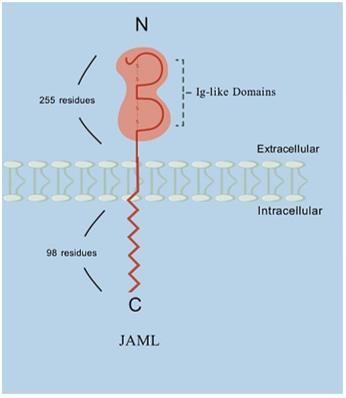 Fig. 1 Schematic representation of the structure of JAML.1
Key structural properties of JAML:
- Extracellular region contains two immune globulin structure domain
- Transmembrane domain stabilizes the localization of proteins on the cell membrane
- Intracellular tail contains signal die body
- Intramolecular disulfide bonds are formed through cysteine residues
Functions of JAML
The main function of JAML (Ligation-adhesion molecule-like protein) is to mediate the recognition and migration between immune cells. In addition, it is also involved in regulating the activation and proliferation of T cells as well as the precise progression of inflammatory responses.
| Function | Description |
| Migration of immune cells | By specifically binding to its ligands (such as CAR), it guides lymphocytes to cross the epithelial barrier and reach the site of infection or injury. |
| T-cell co-stimulation | Provide co-stimulatory signals for T cells, promote their activation, proliferation and cytokine secretion, and enhance adaptive immune responses. |
| Inflammatory regulation | After epithelial tissue injury, it mediates the recruitment of immune cells such as neutrophils, initiates and regulates local inflammatory responses. |
| Maintenance of immune homeostasis | Involved in maintaining mucosa barrier in immune surveillance and tolerance balance, its dysfunction is associated with autoimmune diseases. |
| Wound healing support | By coordinating the interaction between immune cells and epithelial cells, it promotes the process of tissue repair and regeneration. |
Unlike many receptors with a single high-affinity binding, JAML-mediated cell adhesion has dynamic and controllable characteristics, which enables it to precisely manage the residence and crossing of immune cells in a specific microenvironment, thereby playing a key role in immune surveillance and inflammation control.
Applications of JAML and JAML Antibody in Literature
1. Huang, Wei, et al. "JAML promotes acute kidney injury mainly through a macrophage-dependent mechanism." JCI insight 7.14 (2022): e158571. https://doi.org/10.1172/jci.insight.158571
This study for the first time reveals that JAML regulates inflammation in acute kidney injury through macrophage phenotypic transformation and apoptotic cell clearance, and it is a key mediating factor and biomarker, providing a new target for treatment.
2. Wu, Qian, et al. "Junctional adhesion molecule-like protein promotes tumor progression via the Wnt/β-catenin signaling pathway in lung adenocarcinoma." Journal of Translational Medicine 20.1 (2022): 260. https://doi.org/10.1186/s12967-022-03457-w
Studies have found that JAML is highly expressed in lung adenocarcinoma and promotes tumor progression by activating the Wnt/β-catenin pathway, indicating that it can serve as a potential therapeutic target and prognostic marker.
3. Dong, Zhilin, Ning Liu, and Meili Sun. "The distinct biological role of JAML positions it as a promising target for treating human cancers and a range of other diseases." Frontiers in Immunology 16 (2025): 1558488. https://doi.org/10.3389/fimmu.2025.1558488
Research has found that JAML, as a new member of the cell connection and adhesion molecule family, is widely expressed in various immune cells and plays a key role in regulating inflammation, immune responses, and the tumor microenvironment.
4. Liu, Yutong, et al. "Wenyang Jiedu Tongluo formula ameliorates diabetic kidney disease by regulating JAML/SIRT1 signaling to improve lipid metabolism in db/db mice." Frontiers in pharmacology 16 (2025): 1611585. https://doi.org/10.3389/fphar.2025.1611585
Research has found that the Wenyang Jideu Tongluo Formula effectively improves lipid metabolism disorders and kidney damage in mice with diabetic nephropathy by inhibiting the JAML/SIRT1 pathway, and has therapeutic potential.
5. Wu, Qian, et al. "Junctional adhesion molecule-like protein promotes tumor progression via the Wnt/β-catenin signaling pathway in lung adenocarcinoma." Journal of Translational Medicine 20.1 (2022): 260. https://doi.org/10.1186/s12967-022-03457-w
Studies have found that JAML is significantly highly expressed in lung adenocarcinoma tissues and promotes tumor proliferation and invasion by activating the Wnt/β-catenin pathway, indicating that it can serve as a potential prognostic biomarker and a new therapeutic target.
Creative Biolabs: JAML Antibodies for Research
Creative Biolabs specializes in the production of high-quality JAML antibodies for research and industrial applications. Our portfolio includes monoclonal antibodies tailored for ELISA, Flow Cytometry, Western blot, immunohistochemistry, and other diagnostic methodologies.
- Custom JAML Antibody Development: Tailor-made solutions to meet specific research requirements.
- Bulk Production: Large-scale antibody manufacturing for industry partners.
- Technical Support: Expert consultation for protocol optimization and troubleshooting.
- Aliquoting Services: Conveniently sized aliquots for long-term storage and consistent experimental outcomes.
For more details on our JAML antibodies, custom preparations, or technical support, contact us at email.
Reference
- Dong, Zhilin, Ning Liu, and Meili Sun. "The distinct biological role of JAML positions it as a promising target for treating human cancers and a range of other diseases." Frontiers in Immunology 16 (2025): 1558488. https://doi.org/10.3389/fimmu.2025.1558488
Anti-JAML antibodies
 Loading...
 Compare




Hot products 
-
Mouse Anti-HTLV-1 gp46 Recombinant Antibody (CBMW-H1006) (CBMAB-V208-1154-FY)

-
Mouse Anti-CAT Recombinant Antibody (724810) (CBMAB-C8431-LY)

-
Mouse Anti-CD2AP Recombinant Antibody (BR083) (CBMAB-BR083LY)

-
Mouse Anti-G6PD Recombinant Antibody (13B331) (CBMAB-G1553-LY)

-
Mouse Anti-BrdU Recombinant Antibody (IIB5) (CBMAB-1038CQ)

-
Rabbit Anti-AKT3 Recombinant Antibody (V2-12567) (CBMAB-1057-CN)

-
Mouse Anti-FN1 Monoclonal Antibody (D6) (CBMAB-1240CQ)

-
Mouse Anti-ADRB2 Recombinant Antibody (V2-180026) (CBMAB-A1420-YC)

-
Mouse Anti-ACTG1 Recombinant Antibody (V2-179597) (CBMAB-A0916-YC)

-
Mouse Anti-FYN Recombinant Antibody (10) (CBMAB-S6332-CQ)

-
Rabbit Anti-AP2M1 (Phosphorylated T156) Recombinant Antibody (D4F3) (PTM-CBMAB-0610LY)

-
Mouse Anti-BRD3 Recombinant Antibody (CBYY-0801) (CBMAB-0804-YY)

-
Mouse Anti-BBS2 Recombinant Antibody (CBYY-0253) (CBMAB-0254-YY)

-
Mouse Anti-DISP2 Monoclonal Antibody (F66A4B1) (CBMAB-1112CQ)

-
Mouse Anti-ABL2 Recombinant Antibody (V2-179121) (CBMAB-A0364-YC)

-
Mouse Anti-AMH Recombinant Antibody (5/6) (CBMAB-A2527-YC)

-
Mouse Anti-BRCA2 Recombinant Antibody (CBYY-1728) (CBMAB-2077-YY)

-
Mouse Anti-ACVR1C Recombinant Antibody (V2-179685) (CBMAB-A1041-YC)

-
Rabbit Anti-ABL1 (Phosphorylated Y185) Recombinant Antibody (V2-443434) (PTM-CBMAB-0001YC)

-
Mouse Anti-ALB Recombinant Antibody (V2-55272) (CBMAB-H0819-FY)

- AActivation
- AGAgonist
- APApoptosis
- BBlocking
- BABioassay
- BIBioimaging
- CImmunohistochemistry-Frozen Sections
- CIChromatin Immunoprecipitation
- CTCytotoxicity
- CSCostimulation
- DDepletion
- DBDot Blot
- EELISA
- ECELISA(Cap)
- EDELISA(Det)
- ESELISpot
- EMElectron Microscopy
- FFlow Cytometry
- FNFunction Assay
- GSGel Supershift
- IInhibition
- IAEnzyme Immunoassay
- ICImmunocytochemistry
- IDImmunodiffusion
- IEImmunoelectrophoresis
- IFImmunofluorescence
- IGImmunochromatography
- IHImmunohistochemistry
- IMImmunomicroscopy
- IOImmunoassay
- IPImmunoprecipitation
- ISIntracellular Staining for Flow Cytometry
- LALuminex Assay
- LFLateral Flow Immunoassay
- MMicroarray
- MCMass Cytometry/CyTOF
- MDMeDIP
- MSElectrophoretic Mobility Shift Assay
- NNeutralization
- PImmunohistologyp-Paraffin Sections
- PAPeptide Array
- PEPeptide ELISA
- PLProximity Ligation Assay
- RRadioimmunoassay
- SStimulation
- SESandwich ELISA
- SHIn situ hybridization
- TCTissue Culture
- WBWestern Blot
