
LRP4 Antibodies
Background
The LRP4 gene encodes a transmembrane protein called low-density lipoprotein receptor-associated protein 4, which plays a core role in the formation and maintenance of neuromuscular junctions. It promotes the aggregation of acetylcholine receptors by acting as a receptor for Agrin signals, binding to muscle-specific kinases and activating downstream pathways, thereby ensuring effective neural signal transmission. Research has found that mutations in the LRP4 gene are associated with various neuromuscular diseases, such as congenital myasthenia syndrome, highlighting its crucial role in maintaining synaptic structure and function. Since its functions were gradually clarified, LRP4 has become an important molecule for studying neural development and synaptic plasticity, deepening our understanding of intercellular signal transduction and the mechanisms of neurological diseases.
Structure of LRP4
LRP4 is a transmembrane protein with a molecular weight of approximately 200 kDa, and its precise molecular weight varies by species and splicing variant. The extracellular segment of this protein is composed of multiple functional domains, including the LDLa domain and immunoglobulin-like folds, which jointly mediate specific binding to ligands such as neural aggregation proteins. The intracellular segment contains conserved tyrosine residues and nuclear localization signals, which are responsible for intracellular signal transduction. LRP4 interacts with ligands through its extracellular domain, while its intracellular domain is involved in the activation of downstream signaling pathways. This multi-domain organizational structure enables it to serve as a key receptor for neuromuscular junction formation, precisely regulating the clustering of acetylcholine receptors and synaptic differentiation.
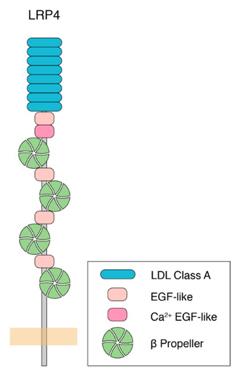 Fig. 1 Molecular structure of human LRP4.1
Key structural properties of LRP4:
- Extracellular section contains multiple LDLa structural domain and IgG ligand binding interface
- Single transmembrane helical connection of intracellular and extracellular functional regions
- Intracellular segment conserved tyrosine residues are involved in signal transduction
Functions of LRP4
The main function of LRP4 is to serve as a key receptor for the formation of neuromuscular junctions. However, this protein is also involved in a variety of physiological and pathological processes, including bone development and metabolic regulation.
| Function | Description |
| Neuromuscular junction formation | As a receptor of Agrin, it binds to MuSK and activates downstream signals, guiding acetylcholine receptors to aggregate on the postsynaptic membrane. |
| Synaptic maintenance | Continuously stabilize the connection structure between nerve and muscle cells to ensure the efficient transmission of movement signals. |
| Regulation of bone development | Participate in regulating osteoblast differentiation and bone formation, affect bone steady state. |
| Central nervous system function | Expressed in the central nervous system, it may be involved in synaptic plasticity and cognitive-related processes. |
| Disease association | The loss of function or mutations and congenital myasthenia syndrome, closely related to a variety of diseases such as bone dysplasia. |
The binding of LRP4 to ligands exhibits a high degree of specificity and affinity. The precise regulation of its signaling pathway plays a decisive role in both embryonic development and synaptic stability in adulthood.
Applications of LRP4 and LRP4 Antibody in Literature
1. Cao, Rangjuan, et al. "Intrafusal-fiber LRP4 for muscle spindle formation and maintenance in adult and aged animals." Nature Communications 14.1 (2023): 744. https://doi.org/10.1038/s41467-023-36454-8
This paper finds that LRP4 is a key factor regulating the formation and maintenance of muscle spindles. Studies have shown that LRP4 mutations can damage sensory nerve endings, and inducing Lrp4 knockout in adulthood can impair sensory synapses and motor coordination. LRP4 maintains muscle spindle function by regulating Egr3 expression and interacting with APP/APLP2, and also plays an important role in the aging process.
2. Liu, Zi-Yang, et al. "Agrin-Lrp4 pathway in hippocampal astrocytes restrains development of temporal lobe epilepsy through adenosine signaling." Cell & Bioscience 14.1 (2024): 66. https://doi.org/10.1186/s13578-024-01241-5
This study reveals that LRP4 and its ligand agrin in astrocytes play a key promoting role in the formation of epilepsy by regulating adenosine levels in the hippocampus. Specific knockout of this signaling pathway can reduce the frequency of spontaneous epileptic seizures, suggesting that it can serve as a potential new target for the treatment of temporal lobe epilepsy.
3. DePew, Alison T., and Timothy J. Mosca. "Conservation and innovation: versatile roles for LRP4 in nervous system development." Journal of Developmental Biology 9.1 (2021): 9. https://doi.org/10.3390/jdb9010009
This study reveals that LRP4 is a key synaptic organizer. It is not only known to mediate Agrin signals at neuromuscular junctions to promote synaptic development, but recent research also indicates that it plays an important role in the brain, participating in the construction of robust synaptic connections. Furthermore, the dysfunction of LRP4 is associated with a variety of neurological diseases, highlighting its extensive research value.
4. Yan, Min, et al. "LRP4 is required for the olfactory association task in the piriform cortex." Cell & Bioscience 12.1 (2022): 54. https://doi.org/10.1186/s13578-022-00792-9
Research has found that LRP4 is crucial for maintaining synaptic plasticity and olfactory function in the piriform cortex. Mice lacking the LRP4 functional domain have abnormally increased spinal density of piriform cortex neurons and excitatory synaptic current frequency, and show impaired olfactory food search ability.
5. Yan, Min, et al. "LRP4 LDLα repeats of astrocyte enhance dendrite arborization of the neuron." Molecular Brain 13.1 (2020): 166. https://doi.org/10.1186/s13041-020-00708-z
This study reveals that the LDLα domain of the LRP4 protein is crucial for maintaining body weight and survival rate. This domain can promote the dendritic branches of the pyramidal nerve tree in the cerebral cortex. Overexpression conditioned medium or astrocytes with this domain can enhance the complex dendritic branch structure.
Creative Biolabs: LRP4 Antibodies for Research
Creative Biolabs specializes in the production of high-quality LRP4 antibodies for research and industrial applications. Our portfolio includes monoclonal antibodies tailored for ELISA, Flow Cytometry, Western blot, immunohistochemistry, and other diagnostic methodologies.
- Custom LRP4 Antibody Development: Tailor-made solutions to meet specific research requirements.
- Bulk Production: Large-scale antibody manufacturing for industry partners.
- Technical Support: Expert consultation for protocol optimization and troubleshooting.
- Aliquoting Services: Conveniently sized aliquots for long-term storage and consistent experimental outcomes.
For more details on our LRP4 antibodies, custom preparations, or technical support, contact us at email.
Reference
- DePew, Alison T., and Timothy J. Mosca. "Conservation and innovation: versatile roles for LRP4 in nervous system development." Journal of Developmental Biology 9.1 (2021): 9. https://doi.org/10.3390/jdb9010009
Anti-LRP4 antibodies
 Loading...
 Compare




Hot products 
- AActivation
- AGAgonist
- APApoptosis
- BBlocking
- BABioassay
- BIBioimaging
- CImmunohistochemistry-Frozen Sections
- CIChromatin Immunoprecipitation
- CTCytotoxicity
- CSCostimulation
- DDepletion
- DBDot Blot
- EELISA
- ECELISA(Cap)
- EDELISA(Det)
- ESELISpot
- EMElectron Microscopy
- FFlow Cytometry
- FNFunction Assay
- GSGel Supershift
- IInhibition
- IAEnzyme Immunoassay
- ICImmunocytochemistry
- IDImmunodiffusion
- IEImmunoelectrophoresis
- IFImmunofluorescence
- IGImmunochromatography
- IHImmunohistochemistry
- IMImmunomicroscopy
- IOImmunoassay
- IPImmunoprecipitation
- ISIntracellular Staining for Flow Cytometry
- LALuminex Assay
- LFLateral Flow Immunoassay
- MMicroarray
- MCMass Cytometry/CyTOF
- MDMeDIP
- MSElectrophoretic Mobility Shift Assay
- NNeutralization
- PImmunohistologyp-Paraffin Sections
- PAPeptide Array
- PEPeptide ELISA
- PLProximity Ligation Assay
- RRadioimmunoassay
- SStimulation
- SESandwich ELISA
- SHIn situ hybridization
- TCTissue Culture
- WBWestern Blot
