
MED17 Antibodies
Background
The MED17 gene encodes a key subunit required for RNA polymerase I transcription and plays a central role in the synthesis of ribosomal RNA in eukaryotes. This gene is located in the region of human chromosome 13q12.3 and its expressed product, as a component of the transcription factor complex, participates in regulating the transcription initiation and extension of 47S precursor ribosomal RNA. Through this mechanism, MED17 indirectly affects the protein synthesis capacity within the cell, thereby regulating the cell growth and proliferation processes. This gene was first discovered and located by scientists when they were analyzing the transcriptional regulation mechanism of mammals. Subsequent studies revealed its structural position in the multi-protein complex and the interaction mode with other subunits. Based on its hub position in the gene expression regulatory network, MED17 has become an important research object for understanding the transcription mechanism and the molecular basis of related diseases.
Structure of MED17
MED17 is one of the key subunits of the mediator complex, with a molecular weight of approximately 25 kDa. There are slight differences among different species. This protein contains about 220 amino acids, and its secondary structure is mainly composed of α-helices. It also contains a conserved functional domain, which is responsible for interacting with other subunits. The structural analysis of the MED17 protein shows that it participates in the formation of the head module of the mediator complex, which directly binds to RNA polymerase II and plays a core role in transcriptional regulation.
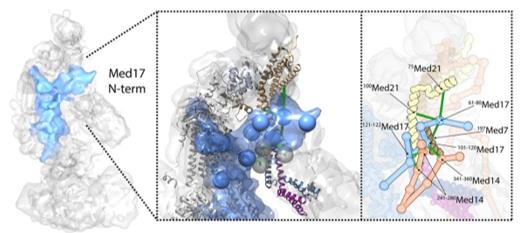 Fig. 1 Subunit Localization: Med17 is a subunit of the Head module.1
Key structural properties of MED17:
- As a component of the head module of the mediator complex
- Contains conserved functional domains that mediate protein interactions
- Contains specific amino acid sites that directly bind to RNA polymerase II
- Its helical region participates in maintaining the overall conformational stability of the complex
- Key residues regulate the efficiency of the transmission of transcriptional activation signals
Functions of MED17
The main function of the MED17 gene is to participate in the transcriptional regulation process. However, it is also involved in various cellular activities, including gene expression coordination and signal transduction regulation.
| Function | Description |
| Transcription Regulation | As the head module subunit of the mediator complex, MED17 directly participates in the transcription initiation process mediated by RNA polymerase II. |
| Signal Transmission | Connect the transcriptional activator with the basic transcription machinery to transmit regulatory signals. |
| Cell Growth Regulation | By influencing the synthesis of ribosomal RNA, it indirectly regulates the protein synthesis capacity within the cell and cell proliferation. |
| Developmental Support | Maintain the basal gene expression levels during embryonic development to ensure normal cell differentiation and tissue formation. |
| Stress Response | Involved in the transcriptional reprogramming of cells to respond to environmental changes, helping to maintain intracellular homeostasis. |
Unlike other transcription factors, MED17 mainly functions as a bridging molecule, and its regulatory efficiency depends on the cooperative interaction with other subunits in the complex.
Applications of MED17 and MED17 Antibody in Literature
1. Robinson, Philip J., et al. "Molecular architecture of the yeast Mediator complex." Elife 4 (2015): e08719. https://doi.org/10.7554/eLife.08719
The article indicates that the mediator complex is composed of 21 subunits and is crucial for the initiation of transcription in eukaryotes. Through the integration of multiple techniques such as cross-linking mass spectrometry and X-ray crystallography, we have resolved its full three-dimensional structure, and clarified the positioning, orientation and interaction interfaces of each subunit.
2. Liu, Zhongle, and Lawrence C. Myers. "Med5 (Nut1) and Med17 (Srb4) are direct targets of mediator histone H4 tail interactions." PLoS One 7.6 (2012): e38416. https://doi.org/10.1371/journal.pone.0038416
The research has found that Med17 is one of the main sites where the mediator binds to the tail of histone H4. It has a similar sequence of about 40 amino acids with Med5, which is rich in acidic residues. This may be used to bind to the positively charged tails of histones, providing a structural basis for understanding the direct interaction between the mediator and chromatin.
3. Nagulapalli, Malini, et al. "Evolution of disorder in Mediator complex and its functional relevance." Nucleic acids research 44.4 (2016): 1591-1612.https://doi.org/10.1093/nar/gkv1135
The research has found that Med17 is the core structural subunit of the mediator head module and maintains the integrity of the complex by extensively binding to other subunits. Its intrinsically disordered regions (IDRs) give the structure flexibility, making it a key functional hub. The absence of Med17 leads to the disintegration of the head module, which is crucial for cell survival.
4. Zhao, Xueyan, et al. "Integrative analysis of genome and transcriptome reveals a novel regulator for pork intramuscular fat content." Genetics Selection Evolution 57.1 (2025): 67. https://doi.org/10.1186/s12711-025-01014-9
The study found that the expression of the pig MED17 gene was significantly negatively correlated with intramuscular fat content. Its expression is regulated by a 2.02 Mb quantitative trait locus and, by influencing key genes related to adipocyte differentiation and lipid metabolism, it was the first to reveal that MED17 is a novel regulatory factor for pork quality traits.
5. Fazio, Alessandro, et al. "Genetic, Clinical and Neuroradiological Spectrum of MED-Related Disorders: An Updated Review." Genes 16.12 (2025): 1444. https://doi.org/10.3390/genes16121444
The study found that MED17 belongs to the MED disease family. Its pathogenic mutations can lead to neurodevelopmental disorders characterized by overall developmental delay, intellectual disability, hypotonia and epilepsy. This disease belongs to the disease spectrum related to transcriptional regulation disorders, and its clinical phenotype significantly overlaps with other defects in MED subunits.
Creative Biolabs: MED17 Antibodies for Research
Creative Biolabs specializes in the production of high-quality MED17 antibodies for research and industrial applications. Our portfolio includes monoclonal and polyclonal antibodies tailored for ELISA, Flow Cytometry, Western blot, immunohistochemistry, and other diagnostic methodologies.
- Custom MED17 Antibody Development: Tailor-made solutions to meet specific research requirements.
- Bulk Production: Large-scale antibody manufacturing for industry partners.
- Technical Support: Expert consultation for protocol optimization and troubleshooting.
- Aliquoting Services: Conveniently sized aliquots for long-term storage and consistent experimental outcomes.
For more details on our MED17 antibodies, custom preparations, or technical support, contact us at email.
Reference
- Robinson, Philip J., et al. "Molecular architecture of the yeast Mediator complex." Elife 4 (2015): e08719. Distributed under Open Access license CC BY 4.0, cropped from the original figure. https://doi.org/10.7554/eLife.08719
Anti-MED17 antibodies
 Loading...
 Compare



Hot products 
-
Rat Anti-AChR Recombinant Antibody (V2-12500) (CBMAB-0990-CN)

-
Mouse Anti-ALDOA Recombinant Antibody (A2) (CBMAB-A2316-YC)

-
Mouse Anti-FTH1 Recombinant Antibody (CBXF-1896) (CBMAB-F3426-CQ)

-
Mouse Anti-FN1 Monoclonal Antibody (71) (CBMAB-1241CQ)

-
Mouse Anti-CD33 Recombinant Antibody (P67.6) (CBMAB-C10189-LY)

-
Human Anti-SARS-CoV-2 S1 Monoclonal Antibody (CBFYR-0120) (CBMAB-R0120-FY)

-
Mouse Anti-CD83 Recombinant Antibody (HB15) (CBMAB-C1765-CQ)

-
Rabbit Anti-ATF4 Recombinant Antibody (D4B8) (CBMAB-A3872-YC)

-
Mouse Anti-ARG1 Recombinant Antibody (CBYCL-103) (CBMAB-L0004-YC)

-
Mouse Anti-APC Recombinant Antibody (CBYC-A661) (CBMAB-A3036-YC)

-
Mouse Anti-BAD (Phospho-Ser136) Recombinant Antibody (CBYY-0138) (CBMAB-0139-YY)

-
Mouse Anti-AFDN Recombinant Antibody (V2-58751) (CBMAB-L0408-YJ)

-
Mouse Anti-Acetyl-α-Tubulin (Lys40) Recombinant Antibody (V2-623485) (CBMAB-CP2897-LY)

-
Mouse Anti-CCS Recombinant Antibody (CBFYC-1093) (CBMAB-C1150-FY)

-
Mouse Anti-BrdU Recombinant Antibody (IIB5) (CBMAB-1038CQ)

-
Mouse Anti-AK4 Recombinant Antibody (V2-180419) (CBMAB-A1891-YC)

-
Mouse Anti-F11R Recombinant Antibody (402) (CBMAB-0026-WJ)

-
Mouse Anti-BBS2 Recombinant Antibody (CBYY-0253) (CBMAB-0254-YY)

-
Mouse Anti-CD24 Recombinant Antibody (ALB9) (CBMAB-0176CQ)

-
Mouse Anti-8-oxoguanine Recombinant Antibody (V2-7697) (CBMAB-1869CQ)

- AActivation
- AGAgonist
- APApoptosis
- BBlocking
- BABioassay
- BIBioimaging
- CImmunohistochemistry-Frozen Sections
- CIChromatin Immunoprecipitation
- CTCytotoxicity
- CSCostimulation
- DDepletion
- DBDot Blot
- EELISA
- ECELISA(Cap)
- EDELISA(Det)
- ESELISpot
- EMElectron Microscopy
- FFlow Cytometry
- FNFunction Assay
- GSGel Supershift
- IInhibition
- IAEnzyme Immunoassay
- ICImmunocytochemistry
- IDImmunodiffusion
- IEImmunoelectrophoresis
- IFImmunofluorescence
- IGImmunochromatography
- IHImmunohistochemistry
- IMImmunomicroscopy
- IOImmunoassay
- IPImmunoprecipitation
- ISIntracellular Staining for Flow Cytometry
- LALuminex Assay
- LFLateral Flow Immunoassay
- MMicroarray
- MCMass Cytometry/CyTOF
- MDMeDIP
- MSElectrophoretic Mobility Shift Assay
- NNeutralization
- PImmunohistologyp-Paraffin Sections
- PAPeptide Array
- PEPeptide ELISA
- PLProximity Ligation Assay
- RRadioimmunoassay
- SStimulation
- SESandwich ELISA
- SHIn situ hybridization
- TCTissue Culture
- WBWestern Blot
