
UNC13A Antibodies
Background
UNC13A is a highly conserved cytoplasmic protein that is mainly distributed in the presynaptic membrane region of mammalian neurons. This protein directly participates in regulating the maturation, anchoring, and release processes of neurotransmitter vesicles by interacting with various proteins and lipids. Thus, it plays a crucial role in neural signal transmission. The first clear functional characterization of this gene can be traced back to the 1990s. Subsequently, the domain analysis revealed the molecular mechanism by which it regulates synaptic plasticity through domains such as Munc13-homology domain (MUN). In-depth studies on UNC13A have significantly advanced the understanding of the working mechanism of presynaptic molecular machines in the field of neuroscience. Abnormalities in its function have been confirmed to be closely related to the occurrence and development of various neurodegenerative diseases, such as amyotrophic lateral sclerosis (ALS).
Structure of UNC13A
UNC13A is a large molecular protein with a molecular weight of approximately 200 kDa. Its exact value varies slightly among different species due to the minor differences in homologous sequences.
| Species | Human | Mouse | Zebrafish |
| Molecular Weight (kDa) | About 200 | About 198 | About 195 |
| Primary Structural Differences | Contains MUN, C2 and other functional domains | The structure is highly conservative and the functions are similar. | Homologous genes exist, and the core domain is retained |
This protein consists of approximately 1800 amino acids. Its functional core lies in the complex spatial conformation formed by the MUN domain and other components. This domain directly binds and catalyzes the assembly of the SNARE complex through specific hydrophobic pockets and protein interfaces, which is a key step in neurotransmitter release. Its functional activity strictly depends on the interaction between the calcium ion-sensing C2 domain and the cell membrane phospholipids. This mechanism precisely regulates the anchoring and activation state of synaptic vesicles, forming the molecular basis for regulating synaptic plasticity.
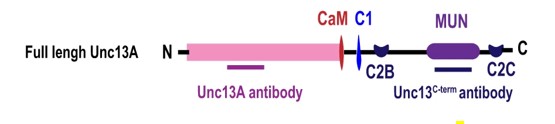 Fig. 1 Schematics of full-length Unc13A.1
Key structural properties of UNC13A:
- Modular multi-domain configuration (including domains such as MUN, C1, C2, etc.)
- MUN area form hydrophobic catalyst interface structure, is responsible for and c2-style protein interactions
- Calcium binding sites in the C2 domain bind to negatively charged membrane lipids and regulate membrane anchoring
Functions of UNC13A
The core function of the protein encoded by the UNC13A gene is to regulate the release of neurotransmitters at neuronal synapses. However, it is also involved in various neurophysiological processes such as synaptic plasticity regulation and maintenance of neuronal networks.
| Function | Description |
| Vesicle Activation | It catalyzes the initial assembly of the SNARE complex through its MUN domain, transforming the synaptic vesicle from a "resting state" to a "release-ready state", which is the key rate-limiting step for neurotransmitter release. |
| Calcium Ion Regulation of Release | Its C2 domain senses an increase in intracellular calcium ion concentration, causing UNC13A to bind to the presynaptic membrane, thereby precisely controlling the timing of vesicle release. |
| Synaptic Plasticity Regulation | As a key component of plasticity, its expression level and activity changes directly contribute to regulating long-term potentiation (LTP) or long-term depression (LTD) of synaptic efficacy. |
| Maintaining Neural Networks | By ensuring the fidelity of the release of basic neurotransmitters, it is crucial for the functional stability and signal transmission reliability of the neural network. |
| Disease-related | The dysfunction or abnormal expression of this gene is closely related to the pathological mechanisms of neurological and psychiatric diseases such as amyotrophic lateral sclerosis (ALS) and schizophrenia. |
Unlike the classic and collaborative multi-protein complexes (such as the SNARE complex itself), UNC13A is more like a molecular "catalyst" and "timer". Its function is highly substrate-specific (in terms of SNARE proteins) and its activation strictly depends on calcium signals, which ensures the high precision of neurotransmitter release in both time and space.
Applications of UNC13A and UNC13A Antibody in Literature
1. Pooryasin, Atefeh, et al. "Unc13A and Unc13B contribute to the decoding of distinct sensory information in Drosophila." Nature communications 12.1 (2021): 1932. https://doi.org/10.1038/s41467-021-22180-6
The article indicates that in the fruit fly brain, Unc13A is closer to calcium ion channels than Unc13B, and the difference regulates short-term plasticity and affects olfactory decoding: Unc13A promotes rapid signal transduction, and its reduction weakens various olfactory responses; A reduction in Unc13B leads to a positive shift in olfactory preferences.
2. Ma, X. Rosa, et al. "TDP-43 represses cryptic exon inclusion in the FTD–ALS gene UNC13A." Nature 603.7899 (2022): 124-130. https://doi.org/10.1038/s41586-022-04424-7
The article indicates that the loss of function of the TDP-43 protein can lead to abnormal splicing of the UNC13A gene, generating recessive exons and reducing protein expression. This process is directly related to the genetic risk of amyotrophic lateral sclerosis and frontotemporal dementia.
3. Brown, Anna-Leigh, et al. "TDP-43 loss and ALS-risk SNPs drive mis-splicing and depletion of UNC13A." Nature 603.7899 (2022): 131-137. https://doi.org/10.1038/s41586-022-04436-3
The article indicates that the loss of TDP-43 function leads to abnormal splicing of UNC13A and the generation of recessive exons, resulting in a decrease in its protein expression. The UNC13A gene variations associated with amyotrophic lateral sclerosis/frontotemporal dementia exacerbate this process, revealing key disease mechanisms and therapeutic targets.
4. Asadollahi, Reza, et al. "Pathogenic UNC13A variants cause a neurodevelopmental syndrome by impairing synaptic function." Nature genetics (2025): 1-14. https://doi.org/10.1038/s41588-025-02361-5
The article indicates that the UNC13A gene encodes key presynaptic proteins, and its germline variations can lead to neurodevelopmental syndromes, manifested as developmental delay, intellectual disability, epilepsy and movement disorders. Based on functional differences, this syndrome can be classified into three pathogenic subtypes: A, B and C.
5. Agra Almeida Quadros, Ana Rita, et al. "Cryptic splicing of stathmin-2 and UNC13A mRNAs is a pathological hallmark of TDP-43-associated Alzheimer's disease." Acta neuropathologica 147.1 (2024): 9. https://doi.org/10.1007/s00401-023-02655-0
The article indicates that the loss of TDP-43 function leads to abnormal splicing of recessive exons in the STMN2 and UNC13A genes. This phenomenon is directly related to the pathology of TDP-43 in neurodegenerative diseases such as Alzheimer's disease, but not to the deposition of Aβ or tau, suggesting its potential as a therapeutic target.
Creative Biolabs: UNC13A Antibodies for Research
Creative Biolabs specializes in the production of high-quality UNC13A antibodies for research and industrial applications. Our portfolio includes monoclonal antibodies tailored for ELISA, Flow Cytometry, Western blot, immunohistochemistry, and other diagnostic methodologies.
- Custom UNC13A Antibody Development: Tailor-made solutions to meet specific research requirements.
- Bulk Production: Large-scale antibody manufacturing for industry partners.
- Technical Support: Expert consultation for protocol optimization and troubleshooting.
- Aliquoting Services: Conveniently sized aliquots for long-term storage and consistent experimental outcomes.
For more details on our UNC13A antibodies, custom preparations, or technical support, contact us at email.
Reference
- Pooryasin, Atefeh, et al. "Unc13A and Unc13B contribute to the decoding of distinct sensory information in Drosophila." Nature communications 12.1 (2021): 1932. https://doi.org/10.1038/s41467-021-22180-6
Anti-UNC13A antibodies
 Loading...
 Compare



Hot products 
-
Mouse Anti-CCL18 Recombinant Antibody (64507) (CBMAB-C7910-LY)

-
Rabbit Anti-ALDOA Recombinant Antibody (D73H4) (CBMAB-A2314-YC)

-
Mouse Anti-BLK Recombinant Antibody (CBYY-0618) (CBMAB-0621-YY)

-
Mouse Anti-CA9 Recombinant Antibody (CBXC-2079) (CBMAB-C0131-CQ)

-
Mouse Anti-dsDNA Recombinant Antibody (22) (CBMAB-AP1954LY)

-
Mouse Anti-BIRC7 Recombinant Antibody (88C570) (CBMAB-L0261-YJ)

-
Mouse Anti-C5b-9 Recombinant Antibody (aE11) (CBMAB-AO138LY)

-
Mouse Anti-ARG1 Recombinant Antibody (CBYCL-103) (CBMAB-L0004-YC)

-
Human Anti-SARS-CoV-2 S1 Monoclonal Antibody (CBFYR-0120) (CBMAB-R0120-FY)

-
Mouse Anti-Acetyl SMC3 (K105/K106) Recombinant Antibody (V2-634053) (CBMAB-AP052LY)

-
Rabbit Anti-ALOX5AP Recombinant Antibody (CBXF-1219) (CBMAB-F0750-CQ)

-
Mouse Anti-FOXA3 Recombinant Antibody (2A9) (CBMAB-0377-YC)

-
Mouse Anti-BANF1 Recombinant Antibody (3F10-4G12) (CBMAB-A0707-LY)

-
Mouse Anti-CIITA Recombinant Antibody (CBLC160-LY) (CBMAB-C10987-LY)

-
Rabbit Anti-B2M Recombinant Antibody (CBYY-0059) (CBMAB-0059-YY)

-
Mouse Anti-dsRNA Recombinant Antibody (2) (CBMAB-D1807-YC)

-
Rabbit Anti-Acetyl-Histone H4 (Lys16) Recombinant Antibody (V2-623415) (CBMAB-CP1021-LY)

-
Mouse Anti-FOSB Recombinant Antibody (CBXF-3593) (CBMAB-F2522-CQ)

-
Mouse Anti-AMH Recombinant Antibody (5/6) (CBMAB-A2527-YC)

-
Human Anti-SARS-CoV-2 Spike Recombinant Antibody (CR3022) (CBMAB-CR014LY)

- AActivation
- AGAgonist
- APApoptosis
- BBlocking
- BABioassay
- BIBioimaging
- CImmunohistochemistry-Frozen Sections
- CIChromatin Immunoprecipitation
- CTCytotoxicity
- CSCostimulation
- DDepletion
- DBDot Blot
- EELISA
- ECELISA(Cap)
- EDELISA(Det)
- ESELISpot
- EMElectron Microscopy
- FFlow Cytometry
- FNFunction Assay
- GSGel Supershift
- IInhibition
- IAEnzyme Immunoassay
- ICImmunocytochemistry
- IDImmunodiffusion
- IEImmunoelectrophoresis
- IFImmunofluorescence
- IGImmunochromatography
- IHImmunohistochemistry
- IMImmunomicroscopy
- IOImmunoassay
- IPImmunoprecipitation
- ISIntracellular Staining for Flow Cytometry
- LALuminex Assay
- LFLateral Flow Immunoassay
- MMicroarray
- MCMass Cytometry/CyTOF
- MDMeDIP
- MSElectrophoretic Mobility Shift Assay
- NNeutralization
- PImmunohistologyp-Paraffin Sections
- PAPeptide Array
- PEPeptide ELISA
- PLProximity Ligation Assay
- RRadioimmunoassay
- SStimulation
- SESandwich ELISA
- SHIn situ hybridization
- TCTissue Culture
- WBWestern Blot
