
CDH2 Antibodies
Background
The CDH2 gene encodes a calcium-dependent transmembrane protein called N-cadherin, which is mainly distributed at the intercellular junctions in neural tissues, myocardium and skeletal muscles, and regulates embryonic development, tissue formation and synaptic plasticity by mediating intercellular adhesion and signal transduction. This gene was first identified in 1987. Its abnormal expression is closely related to the invasion and metastasis of various cancers, arrhythmia and neurodevelopmental disorders. As a core member of the cell adhesion molecule family, the CDH2 protein maintains tissue stability through a typical "calcium ion-dependent" domain. The study of its functional mechanism has greatly advanced the molecular understanding in fields such as cell communication, tumor microenvironment, and neurological diseases.
Structure of CDH2
N-cadherin encoded by the CDH2 gene is a transmembrane glycoprotein with a molecular weight of approximately 100-135 kDa. The specific molecular weight varies to some extent due to species, shear isomers and the degree of glycosylation modification. The extracellular region of this protein contains five tandem cadherin repeat domains (EC1-EC5), which form rigid structures in the presence of calcium ions and mediate specific homophilic intercellular adhesions. Its intracellular region is connected to the cytoskeleton through catenin, which conducts extracellular adhesion signals into the cell. The primary structure of N-cadherin is highly conserved among different species. However, subtle differences in key sites for its functional regulation (such as proteolytic cleavage sites and phosphorylation sites) may affect its specific manifestations in processes such as nervous system development, cardiac morphogenesis, and tumor metastasis.
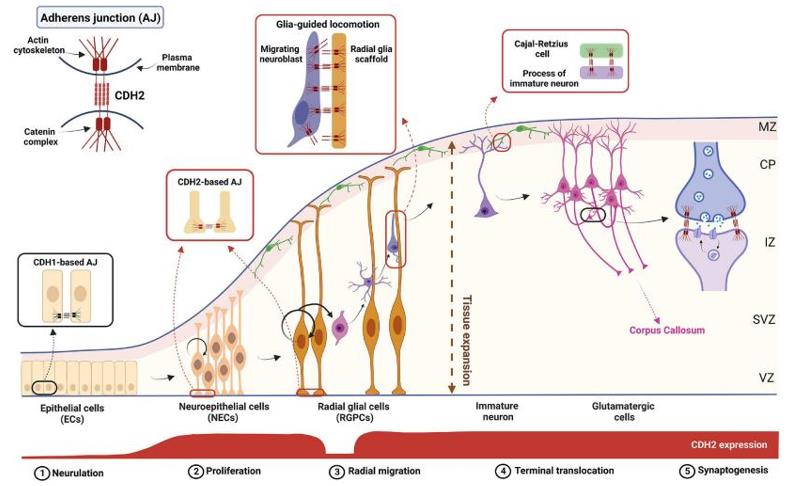 Fig. 1 The complex role of CDH2 during cortical development.1
Key structural properties of CDH2:
- Extracellular tandem repeat domains
- Transmembrane anchoring and intracellular junction domains
- Calcium ion-dependent rigid conformation
- Regulate sexual functional loci
Functions of CDH2
The N-cadherin encoded by the CDH2 gene mainly functions to mediate calcium ion-dependent intercellular homotypic adhesion and is widely involved in a variety of key physiological and pathological processes.
| Function | Description |
| Cell adhesion and tissue construction | Mediated by its extracellular domain structure type with specific recognition and stability of the adhesion between cells, is neural tube closure in embryonic development, form the basis of cardiac morphogenesis and muscle tissue. |
| Signal transduction | Its intracellular domain binds to the Catenin family, conducting adhesion signals into the cell and regulating cell polarity, gene expression and cytoskeletal rearrangement. |
| Synaptic plasticity | In the mature nervous system, it is involved in regulating the formation, maintenance and plasticity of synapses, and affects learning and memory functions. |
| Tumor invasion and metastasis | In many epithelial-derived tumors (such as breast cancer and prostate cancer), its abnormal expression is associated with epithelial-mesenchymal transition (EMT), promoting the detachment of cancer cells from the primary site and enhancing their migration and invasion abilities. |
| Cardiovascular diseases | In myocardial cells, its adhesion function is crucial for maintaining the structure and electrical conduction coordination of myocardial tissue. Abnormal function is associated with arrhythmia and cardiomyopathy. |
| Neurodevelopmental disorder | The expression or dysfunction and a variety of neurodevelopmental diseases (such as autism spectrum disorder, schizophrenia) the pathological mechanism of correlation. |
The function of N-cadherin is highly specific to cell type and developmental stage. Unlike myoglobin, which serves as a diffusible oxygen carrier, it acts as a "molecular anchor" and "signal hub" on the cell membrane. By precisely regulating the physical connections and bidirectional communication between cells, it plays a core role in tissue construction, homeostasis maintenance, and disease occurrence.
Applications of CDH2 and CDH2 Antibody in Literature
1. Wu, Shufei, et al. "The gene expression of CALD1, CDH2, and POSTN in fibroblast are related to idiopathic pulmonary fibrosis." Frontiers in Immunology 15 (2024): 1275064. https://doi.org/10.3389/fimmu.2024.1275064
Studies have found that the CALD1, CDH2 and POSTN genes are upregulated in pulmonary fibrosis, regulating the synthesis of collagen and α-SMA, and are potential therapeutic targets for IPF.
2. Parker, Jessica, et al. "Targeting N-cadherin (CDH2) and the malignant bone marrow microenvironment in acute leukaemia." Expert reviews in molecular medicine 25 (2023): e16. https://doi.org/10.1017/erm.2023.13
Studies have found that N-cadherin (CDH2) mediates cell adhesion in the bone marrow microenvironment of children with acute leukemia, can protect tumor cells from chemotherapy damage and prevent drug resistance and recurrence, and is currently a highly promising therapeutic target.
3. Situ, Yongli, et al. "CDH2 and CDH13 as potential prognostic and therapeutic targets for adrenocortical carcinoma." Cancer Biology & Therapy 25.1 (2024): 2428469. https://doi.org/10.1080/15384047.2024.2428469
Research has found that low expression of CDH2 and high expression of CDH13 affect the prognosis of adrenal cortical carcinoma (ACC). They exert their effects by regulating the cell cycle, metabolism and immune infiltration, and are potential precise therapeutic targets and biomarkers.
4. László, Zsófia I., and Zsolt Lele. "Flying under the radar: CDH2 (N-cadherin), an important hub molecule in neurodevelopmental and neurodegenerative diseases." Frontiers in neuroscience 16 (2022): 972059. https://doi.org/10.3389/fnins.2022.972059
Research has found that CDH2 is a member of the cadherin family. It not only regulates the development process of the nervous system, but recent studies have also revealed its significant role in various neurological diseases, making it a key molecule that has drawn renewed attention in this field.
5. Cai, Zhonglin, et al. "ALKBH5 in mouse testicular Sertoli cells regulates Cdh2 mRNA translation to maintain blood–testis barrier integrity." Cellular & Molecular Biology Letters 27.1 (2022): 101. https://doi.org/10.1186/s11658-022-00404-x
Research has found that ALKBH5 affects the translation of N-cadherin by regulating the m6A modification of CDH2 mRNA, thereby maintaining the integrity of the blood-testosterone barrier.
Creative Biolabs: CDH2 Antibodies for Research
Creative Biolabs specializes in the production of high-quality CDH2 antibodies for research and industrial applications. Our portfolio includes monoclonal antibodies tailored for ELISA, Flow Cytometry, Western blot, immunohistochemistry, and other diagnostic methodologies.
- Custom CDH2 Antibody Development: Tailor-made solutions to meet specific research requirements.
- Bulk Production: Large-scale antibody manufacturing for industry partners.
- Technical Support: Expert consultation for protocol optimization and troubleshooting.
- Aliquoting Services: Conveniently sized aliquots for long-term storage and consistent experimental outcomes.
For more details on our CDH2 antibodies, custom preparations, or technical support, contact us at email.
Reference
- László, Zsófia I., and Zsolt Lele. "Flying under the radar: CDH2 (N-cadherin), an important hub molecule in neurodevelopmental and neurodegenerative diseases." Frontiers in neuroscience 16 (2022): 972059. https://doi.org/10.3389/fnins.2022.972059
Anti-CDH2 antibodies
 Loading...
 Compare




Hot products 
-
Rabbit Anti-ALDOA Recombinant Antibody (D73H4) (CBMAB-A2314-YC)

-
Mouse Anti-AQP2 Recombinant Antibody (G-3) (CBMAB-A3359-YC)

-
Mouse Anti-C5b-9 Recombinant Antibody (aE11) (CBMAB-AO138LY)

-
Mouse Anti-APOH Recombinant Antibody (4D9A4) (CBMAB-A3249-YC)

-
Mouse Anti-CAPZB Recombinant Antibody (CBYY-C0944) (CBMAB-C2381-YY)

-
Mouse Anti-C4B Recombinant Antibody (CBYY-C2996) (CBMAB-C4439-YY)

-
Mouse Anti-GLP1R Recombinant Antibody (4F3) (CBMAB-G0521-LY)

-
Mouse Anti-ACKR3 Recombinant Antibody (V2-261265) (CBMAB-C1023-LY)

-
Mouse Anti-AP4E1 Recombinant Antibody (32) (CBMAB-A2996-YC)

-
Mouse Anti-AHCYL1 Recombinant Antibody (V2-180270) (CBMAB-A1703-YC)

-
Mouse Anti-AQP2 Recombinant Antibody (E-2) (CBMAB-A3358-YC)

-
Mouse Anti-DHFR Recombinant Antibody (D0821) (CBMAB-D0821-YC)

-
Mouse Anti-ENPP1 Recombinant Antibody (CBFYE-0159) (CBMAB-E0375-FY)

-
Mouse Anti-DMD Recombinant Antibody (D1190) (CBMAB-D1190-YC)

-
Mouse Anti-EGR1 Recombinant Antibody (CBWJZ-100) (CBMAB-Z0289-WJ)

-
Mouse Anti-EPO Recombinant Antibody (CBFYR0196) (CBMAB-R0196-FY)

-
Mouse Anti-AMOT Recombinant Antibody (CBYC-A564) (CBMAB-A2552-YC)

-
Mouse Anti-dsRNA Recombinant Antibody (2) (CBMAB-D1807-YC)

-
Mouse Anti-DISP2 Monoclonal Antibody (F66A4B1) (CBMAB-1112CQ)

-
Mouse Anti-CALR Recombinant Antibody (CBFYC-0763) (CBMAB-C0818-FY)

- AActivation
- AGAgonist
- APApoptosis
- BBlocking
- BABioassay
- BIBioimaging
- CImmunohistochemistry-Frozen Sections
- CIChromatin Immunoprecipitation
- CTCytotoxicity
- CSCostimulation
- DDepletion
- DBDot Blot
- EELISA
- ECELISA(Cap)
- EDELISA(Det)
- ESELISpot
- EMElectron Microscopy
- FFlow Cytometry
- FNFunction Assay
- GSGel Supershift
- IInhibition
- IAEnzyme Immunoassay
- ICImmunocytochemistry
- IDImmunodiffusion
- IEImmunoelectrophoresis
- IFImmunofluorescence
- IGImmunochromatography
- IHImmunohistochemistry
- IMImmunomicroscopy
- IOImmunoassay
- IPImmunoprecipitation
- ISIntracellular Staining for Flow Cytometry
- LALuminex Assay
- LFLateral Flow Immunoassay
- MMicroarray
- MCMass Cytometry/CyTOF
- MDMeDIP
- MSElectrophoretic Mobility Shift Assay
- NNeutralization
- PImmunohistologyp-Paraffin Sections
- PAPeptide Array
- PEPeptide ELISA
- PLProximity Ligation Assay
- RRadioimmunoassay
- SStimulation
- SESandwich ELISA
- SHIn situ hybridization
- TCTissue Culture
- WBWestern Blot
