GH1 Antibodies

Background

The GH1 gene encodes globulin, one of the subunits of hemoglobin, which is mainly found in vertebrate red blood cells. The protein expressed by this gene transports oxygen in the bloodstream by binding to oxygen molecules, thereby maintaining the aerobic metabolic function of the body's tissues. In high-altitude adaptation research, specific variations of the GH1 gene have been confirmed to be closely related to the regulation of blood oxygen affinity. This gene was first analyzed in the 1970s. The study of its three-dimensional structure has provided a key foundation for clarifying the quaternary structure of hemoglobin and the mechanism of its synergistic effects. As a classic model in human genetics research, the molecular characteristics of the GH1 gene have continuously driven breakthroughs in the treatment of blood diseases and evolutionary genetics.

Structure Function Application Advantage Our Products

Structure of GH1

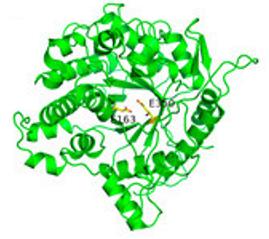
The molecular weight of the globulin subunit encoded by the GH1 gene is approximately 16.0 kDa, and its precise value varies slightly with species differences. This protein is composed of 146 amino acids and achieves oxygen transport function through the precise coordination of histidine residues and heme cofactors. The GH1 sequences of different mammals show a high degree of conservation, and the amino acid substitution at key sites directly affects the oxygen affinity of hemoglobin.

Species Human Mouse Bovine
Molecular Weight (kDa) 16.0 15.9 16.1
Primary Structural Differences Containing His92 heme coordination Val67 substitution affects the stability of the tetramer Glu6 variants enhance oxygenation

Fig. 1 The Cartoon Structure of a GH1 Family β-Glucosidase.Fig. 1 The Cartoon Structure of a GH1 Family β-Glucosidase.1

Key structural properties of GH1:

  • Form a typical α -helical folded conformation
  • Hydrophobic pockets precisely fit heme excipients
  • Histidine residues at E7 and F8 coordinate to regulate oxygenation balance
  • The β-chain tetrameric interface maintains the stability of the quaternary structure of hemoglobin

Functions of GH1

The β -globin encoded by the GH1 gene is the core component of hemoglobin tetramer, and its main physiological functions include:

Function Description
Oxygen transportation In the lung tissue efficiently combined with oxygen, oxygen through the blood circulation to the whole body organization.
Carbon dioxide removal Assist in transporting the carbon dioxide produced by metabolism from peripheral tissues to the lungs for excretion.
pH buffer regulation The blood acid-base balance is regulated at the capillary level through the Bohr effect of hemoglobin.
Nitric oxide metabolism Participate in transport and release of nitric oxide blood vessels and indirectly affect the vascular tension adjustment.
Genetic adaptation mechanism The functional differences caused by gene sequence variations constitute the molecular basis of high-altitude adaptation and anemia diseases.

Unlike the monomer high affinity of myoglobin, the hemoglobin formed by GH1 shows a typical S-shaped oxygen dissociation curve, achieving efficient oxygen transport and release through subunit synergistic effects.

Applications of GH1 and GH1 Antibody in Literature

1. Chagas, Rafael S., et al. "Mechanism of imidazole inhibition of a GH1 β‐glucosidase." FEBS Open Bio 13.5 (2023): 912-925. https://doi.org/10.1002/2211-5463.13595

Research has found that imidazole can bind to the conserved active center of GH1 β -glucosidase through a partially competitive inhibition mechanism, reducing substrate affinity and thereby affecting enzyme activity. This phenomenon may be widespread in the GH1 family and is of great significance for the study of recombinase.

2. Plaza-Vinuesa, Laura, et al. "Dual 6Pβ-galactosidase/6Pβ-glucosidase GH1 family for lactose metabolism in the probiotic bacterium Lactiplantibacillus plantarum WCFS1." Journal of Agricultural and Food Chemistry 71.28 (2023): 10693-10700. https://doi.org/10.1021/acs.jafc.3c01158

Research has found that the GH1 family protein Lp_3525 in Lactobacillus plantarum has a unique 6Pβ -galactosidase activity. This enzyme belongs to a novel bifunctive GH1 protein and can effectively hydrolyze lactose under intestinal conditions, providing new insights into alleviating lactose dyspepsia.

3. Khusnutdinova, Anna N., et al. "Moderately thermostable GH1 β-glucosidases from hyperacidophilic archaeon Cuniculiplasma divulgatum S5." FEMS microbiology ecology 100.9 (2024): fiae114. https://doi.org/10.1093/femsec/fiae114

Two GH1 family β -glucosidases, CIB12 and CIB13, were identified in hyperacidophilic archaea. They have a typical TIM-barrel structure, with an optimal temperature of 50° C. They mainly function as cellobiose hydrolase, which helps archaea utilize cellulose carbon sources in peptide environments and enhances environmental adaptability.

4. Park, Dongryeol, et al. "Bacillus velezensis GH1-13 enhances drought tolerance in rice by reducing the accumulation of reactive oxygen species." Frontiers in Plant Science 15 (2024): 1432494. https://doi.org/10.3389/fpls.2024.1432494

Research has found that the GH1-13 strain enhances the expression of antioxidant genes in rice by activating the jasmonic acid signaling pathway, effectively eliminating reactive oxygen species under drought stress, thereby significantly improving the drought tolerance of rice.

5. Huang X, Chen H, et al. "The clinical and genetic aspects of six individuals with GH1 variants and isolated growth hormone deficiency type II." Frontiers in Endocrinology 15 (2024): 1363050. https://doi.org/10.3389/fendo.2024.1363050

In this study, GH1 gene variations, including four de novo mutations, were identified in six Chinese families with type II isolated growth hormone deficiency. All patients presented with severe growth hormone deficiency and short stature. rhGH replacement therapy could effectively improve their height.

Creative Biolabs: GH1 Antibodies for Research

Creative Biolabs specializes in the production of high-quality GH1 antibodies for research and industrial applications. Our portfolio includes monoclonal antibodies tailored for ELISA, Flow Cytometry, Western blot, immunohistochemistry, and other diagnostic methodologies.

  • Custom GH1 Antibody Development: Tailor-made solutions to meet specific research requirements.
  • Bulk Production: Large-scale antibody manufacturing for industry partners.
  • Technical Support: Expert consultation for protocol optimization and troubleshooting.
  • Aliquoting Services: Conveniently sized aliquots for long-term storage and consistent experimental outcomes.

For more details on our GH1 antibodies, custom preparations, or technical support, contact us at email.

Reference

  1. Zhang, Xiaoling, et al. "Efficient Biotransformation of Icariin to Baohuoside I Using Two Novel GH1 β-Glucosidases." Molecules 29.22 (2024): 5280. https://doi.org/10.3390/molecules29225280
View more

Anti-GH1 antibodies

+ Filters
Loading...
Target: GH1
Host: Mouse
Antibody Isotype: IgG1
Specificity: Human
Clone: CBLG1-1100
Application*: E, P
Target: GH1
Host: Mouse
Antibody Isotype: IgG2b, κ
Specificity: Human, Mouse
Clone: g3H5
Application*: WB, E
Target: GH1
Host: Mouse
Antibody Isotype: IgG
Specificity: Human
Clone: CAP837
Application*: ICC, IHC, IP, WB
Target: GH1
Host: Mouse
Antibody Isotype: IgG2b, κ
Specificity: Human, Mouse
Clone: g3H5
Application*: Dot blot, ELISA, WB
Target: GH1
Host: Mouse
Antibody Isotype: IgG
Specificity: Human
Clone: CAP836
Application*: Dot blot, ELISA
Target: GH1
Host: Mouse
Antibody Isotype: IgG1
Specificity: Human
Clone: CB319A
Application*: ELISA
Target: GH1
Host: Mouse
Antibody Isotype: IgG1
Specificity: Human
Clone: CBXS-5944
Application*: E
Target: GH1
Host: Mouse
Antibody Isotype: IgG1, κ
Specificity: Human, Mouse
Clone: CBFYH-3433
Application*: E, WB
Target: GH1
Host: Mouse
Antibody Isotype: IgG2b, κ
Specificity: Human
Clone: CBLG1-1106
Application*: E, WB
Target: GH1
Host: Mouse
Antibody Isotype: IgG1
Specificity: Human
Clone: CBLG1-1105
Application*: IO
Target: GH1
Host: Mouse
Antibody Isotype: IgG1
Specificity: Human
Clone: CBLG1-1104
Application*: E (IA)
Target: GH1
Host: Mouse
Antibody Isotype: IgG2b, κ
Specificity: Human
Clone: CBLG1-1102
Application*: E, P, WB
Target: GH1
Host: Mouse
Antibody Isotype: IgG
Specificity: Human
Clone: CBLG1-1099
Application*: WB
Target: GH1
Host: Mouse
Antibody Isotype: IgG
Specificity: Rat
Clone: CBLG1-1098
Application*: WB
Target: GH1
Host: Mouse
Antibody Isotype: IgG2b, κ
Specificity: Human
Clone: CBLG1-1091
Application*: E, WB
Target: GH1
Host: Mouse
Antibody Isotype: IgG1
Specificity: Human
Clone: CBLG1-1090
Application*: E, R
Target: GH1
Host: Mouse
Antibody Isotype: IgG1
Specificity: Human
Clone: CBLG1-1088
Application*: IF, P, IP, WB
Target: GH1
Host: Mouse
Antibody Isotype: IgG1
Specificity: Human
Clone: CBLG1-1085
Application*: E
Target: GH1
Host: Mouse
Antibody Isotype: IgG1
Specificity: Human
Clone: CBLG1-1084
Application*: E, P, WB
Target: GH1
Host: Mouse
Antibody Isotype: IgG1
Specificity: Human
Clone: CBLG1-1083
Application*: E, WB
Target: GH1
Host: Mouse
Antibody Isotype: IgG1
Specificity: Human
Clone: CBLG1-1082
Application*: P, WB
Target: GH1
Host: Mouse
Antibody Isotype: IgG1
Specificity: Human
Clone: CBLG1-1081
Application*: IC, P
Target: GH1
Host: Mouse
Antibody Isotype: IgG2b, κ
Specificity: Human
Clone: CBLG1-1075
Application*: E, WB
Target: GH1
Host: Mouse
Antibody Isotype: IgG
Specificity: Human
Clone: CBLG1-1073
Application*: IC, P
Target: GH1
Host: Mouse
Antibody Isotype: IgG1
Specificity: Human
Clone: CBLG1-1071
Application*: E
Target: GH1
Host: Mouse
Antibody Isotype: IgG1
Specificity: Human
Clone: CBLG1-1070
Application*: IF, P, IP, WB
Target: GH1
Host: Mouse
Antibody Isotype: IgG2b
Specificity: Human
Clone: CBLG1-1065
Application*: E, WB
Target: GH1
Host: Mouse
Antibody Isotype: IgG1
Specificity: Human
Clone: CBLG1-1064
Application*: E, WB
Target: GH1
Host: Mouse
Antibody Isotype: IgG1, κ
Specificity: Human
Clone: CBLG1-1062
Application*: E
Target: GH1
Host: Mouse
Antibody Isotype: IgG1, κ
Specificity: Human
Clone: CBLG1-1061
Application*: E, P
Target: GH1
Host: Mouse
Antibody Isotype: IgG2a
Specificity: Human
Clone: YC6
Application*: IA, EC, R
Target: GH1
Host: Mouse
Antibody Isotype: IgG2b
Specificity: Human
Clone: PG3H5AT
Application*: E (IA), WB
Target: GH1
Host: Mouse
Antibody Isotype: IgG1
Specificity: Human
Clone: M12619GH1
Application*: E, IA
Target: GH1
Host: Mouse
Antibody Isotype: IgG1
Specificity: Human
Clone: M0410181
Application*: E, WB
Target: GH1
Host: Rat
Antibody Isotype: IgG1
Specificity: Human
Clone: KT19
Application*: E, SE
Target: GH1
Host: Mouse
Antibody Isotype: IgG1
Specificity: Human
Clone: Gh297C8
Application*: E
Target: GH1
Host: Mouse
Antibody Isotype: IgG1
Specificity: Human
Clone: GH-15
Application*: E, IH
Target: GH1
Host: Mouse
Antibody Isotype: IgG1
Specificity: Human
Clone: 1
Application*: E
Target: GH1
Host: Mouse
Antibody Isotype: IgG1
Specificity: Human
Clone: GA-8
Application*: P
Target: GH1
Host: Rabbit
Antibody Isotype: IgG
Specificity: Human
Clone: CBLG1-2758
Application*: WB
Target: GH1
Host: Mouse
Antibody Isotype: IgG2
Specificity: Human
Clone: 8J33
Application*: WB
Target: GH1
Host: Mouse
Antibody Isotype: IgG1
Specificity: Human
Clone: 7C8
Application*: IA
Target: GH1
Host: Mouse
Antibody Isotype: IgG2
Specificity: Human
Clone: 6J33
Application*: N, WB
Target: GH1
Host: Mouse
Antibody Isotype: IgG1
Specificity: Human
Clone: 5E615
Application*: E
Target: GH1
Host: Mouse
Antibody Isotype: IgG2a, κ
Specificity: Human
Clone: 3H284
Application*: E
Target: GH1
Host: Mouse
Antibody Isotype: IgG
Specificity: Human
Clone: 16k134
Application*: E, WB
Target: GH1
Host: Mouse
Antibody Isotype: IgG1
Specificity: Cattle
Clone: 10K232
Application*: E, F
Target: GH1
Host: Mouse
Antibody Isotype: IgG1, κ
Specificity: Human
Clone: 090-12210
Application*: IA/E
Target: GH1
Host: Mouse
Antibody Isotype: IgG2a, κ
Specificity: Human
Clone: CBLG1-095
Application*: IH, WB
Target: GH1
Host: Mouse
Antibody Isotype: IgG1, κ
Specificity: Human
Clone: CBLG1-094
Application*: E
Target: GH1
Host: Mouse
Antibody Isotype: IgG1
Specificity: Human
Clone: YC8
Application*: IA
Target: GH1
Host: Mouse
Antibody Isotype: IgG2b
Specificity: Human
Clone: SPM106
Application*: F
Target: GH1
Host: Mouse
Antibody Isotype: IgG1
Specificity: Human
Clone: GhB9
Application*: E, SE
Target: GH1
Host: Mouse
Antibody Isotype: IgG1
Specificity: Human
Clone: GH-45
Application*: IH, IC/IF, P
Target: GH1
Host: Mouse
Antibody Isotype: IgG1
Specificity: Human
Clone: Gh29
Application*: E
Target: GH1
Host: Mouse
Antibody Isotype: IgG1
Specificity: Human
Clone: 7
Application*: E, F
Target: GH1
Host: Mouse
Antibody Isotype: IgG
Specificity: Human
Clone: 4k9
Application*: E, WB
Target: GH1
Host: Mouse
Antibody Isotype: IgG1
Specificity: Human
Clone: 3E2
Application*: E, IP, R
Target: GH1
Host: Mouse
Antibody Isotype: IgG2b
Specificity: Rat
Clone: 222517
Application*: WB
Target: GH1
Host: Mouse
Antibody Isotype: IgG2b
Specificity: Human
Clone: 178902
Application*: WB
Target: GH1
Host: Mouse
Antibody Isotype: IgG1, κ
Specificity: Human
Clone: 12K264
Application*: E
Target: GH1
Host: Mouse
Antibody Isotype: IgG2a
Specificity: Horse, Human
Clone: CBFYH-0347
Application*: E
Target: GH1
Host: Mouse
Antibody Isotype: IgG2a, κ
Specificity: Human
Clone: CBFYH-0345
Application*: IH, WB
Target: GH1
Host: Mouse
Antibody Isotype: IgG1, κ
Specificity: Human
Clone: CBFYH-0344
Application*: E, IA
Target: GH1
Host: Mouse
Antibody Isotype: IgG1
Specificity: Human
Clone: CBFYH-0342
Application*: E, IP, R
Target: GH1
Host: Rat
Antibody Isotype: IgG2a
Specificity: Human
Clone: KT34
Application*: E, WB
Target: GH1
Host: Mouse
Antibody Isotype: IgG
Specificity: Human
Clone: GH/1371
Application*: F, P, IF
Target: GH1
Host: Mouse
Antibody Isotype: IgG1, κ
Specificity: Human
Clone: CBFYH-0343
Application*: E
Target: GH1
Host: Mouse
Antibody Isotype: IgG2b
Specificity: Human
Clone: CBFYH-0348
Application*: F, IF, P
Target: GH1
Host: Mouse
Antibody Isotype: IgG1
Specificity: Human
Clone: CBLG1-1070
Application*: P
Target: GH1
Host: Rabbit
Antibody Isotype: IgG
Specificity: Human
Clone: CBLG1-1065
Application*: E
Target: GH1
Host: Mouse
Antibody Isotype: IgG1
Specificity: Human
Clone: CBLG1-1064
Application*: E
Target: GH1
Host: Mouse
Antibody Isotype: IgG2b, κ
Specificity: Human
Clone: CBLG1-1062
Application*: IH
Target: GH1
Host: Mouse
Antibody Isotype: IgG1
Specificity: Human
Clone: CBLG1-1061
Application*: E, IF, IH
Target: GH1
Host: Rabbit
Antibody Isotype: IgG
Specificity: Human
Clone: CBLG1-2758
Application*: WB, IP, P
Target: GH1
Host: Mouse
Antibody Isotype: IgG2b, κ
Specificity: Human
Clone: 090-12210
Application*: IH
Target: GH1
Host: Mouse
Antibody Isotype: IgG2b
Specificity: Rat
Clone: CBLG1-095
Application*: WB, IH
Target: GH1
Host: Mouse
Antibody Isotype: IgG2b
Specificity: Rat
Clone: CBLG1-094
Application*: WB
Target: GH1
Host: Mouse
Antibody Isotype: IgG1, κ
Specificity: Mouse, Rat
Clone: CBFYH-0347
Application*: WB, IP, IF, E
Target: GH1
Host: Mouse
Antibody Isotype: IgG1, κ
Specificity: Human, Mouse, Rat
Clone: CBFYH-0345
Application*: WB, IP, IF, E, P
Target: GH1
Host: Mouse
Antibody Isotype: IgG1
Specificity: Human
Clone: CBFYH-0344
Application*: WB, IP, E
Target: GH1
Host: Mouse
Antibody Isotype: IgG1
Specificity: Human
Clone: CBFYH-0342
Application*: WB, IP, E
Target: GH1
Host: Rabbit
Antibody Isotype: IgG
Specificity: Human
Clone: CBFYH-0343
Application*: WB, IP, IH
Target: GH1
Host: Mouse
Antibody Isotype: IgG1
Specificity: Human
Clone: CBFYH-0348
Application*: WB, P, IP, IF
Target: GH1
Host: Rabbit
Antibody Isotype: IgG
Specificity: Human
Clone: 5E9
Application*: E, IH
Target: GH1
Host: Mouse
Antibody Isotype: IgG1
Specificity: Human
Clone: CBT2519
Application*: F
Target: GH1
Host: Mouse
Antibody Isotype: IgG
Specificity: Mouse
Clone: CBLG1-1063
Application*: E, WB
Target: GH1
Host: Mouse
Antibody Isotype: IgG
Specificity: Mouse, Rat
Clone: CBLG1-3167
Application*: WB
Target: GH1
Host: Mouse
Antibody Isotype: IgG1
Specificity: Cattle
Clone: 8.F.23
Application*: E
Target: GH1
Host: Mouse
Antibody Isotype: IgG2a
Specificity: Horse, Human
Clone: 5B4
Application*: E
More Infomation
Submit A Review Fig.3 Signaling pathways in cancers. (Creative Biolabs Authorized) Fig.4 Protocols troubleshootings & guides. (Creative Biolabs Authorized) Submit A Review Fig.3 Signaling pathways in cancers. (Creative Biolabs Authorized) Fig.4 Protocols troubleshootings & guides. (Creative Biolabs Authorized)
For Research Use Only. Not For Clinical Use.
(P): Predicted
* Abbreviations
  • AActivation
  • AGAgonist
  • APApoptosis
  • BBlocking
  • BABioassay
  • BIBioimaging
  • CImmunohistochemistry-Frozen Sections
  • CIChromatin Immunoprecipitation
  • CTCytotoxicity
  • CSCostimulation
  • DDepletion
  • DBDot Blot
  • EELISA
  • ECELISA(Cap)
  • EDELISA(Det)
  • ESELISpot
  • EMElectron Microscopy
  • FFlow Cytometry
  • FNFunction Assay
  • GSGel Supershift
  • IInhibition
  • IAEnzyme Immunoassay
  • ICImmunocytochemistry
  • IDImmunodiffusion
  • IEImmunoelectrophoresis
  • IFImmunofluorescence
  • IGImmunochromatography
  • IHImmunohistochemistry
  • IMImmunomicroscopy
  • IOImmunoassay
  • IPImmunoprecipitation
  • ISIntracellular Staining for Flow Cytometry
  • LALuminex Assay
  • LFLateral Flow Immunoassay
  • MMicroarray
  • MCMass Cytometry/CyTOF
  • MDMeDIP
  • MSElectrophoretic Mobility Shift Assay
  • NNeutralization
  • PImmunohistologyp-Paraffin Sections
  • PAPeptide Array
  • PEPeptide ELISA
  • PLProximity Ligation Assay
  • RRadioimmunoassay
  • SStimulation
  • SESandwich ELISA
  • SHIn situ hybridization
  • TCTissue Culture
  • WBWestern Blot
online inquiry
Online Inquiry